5 questions to Larry Fink and André Hoffman at Davos 2026
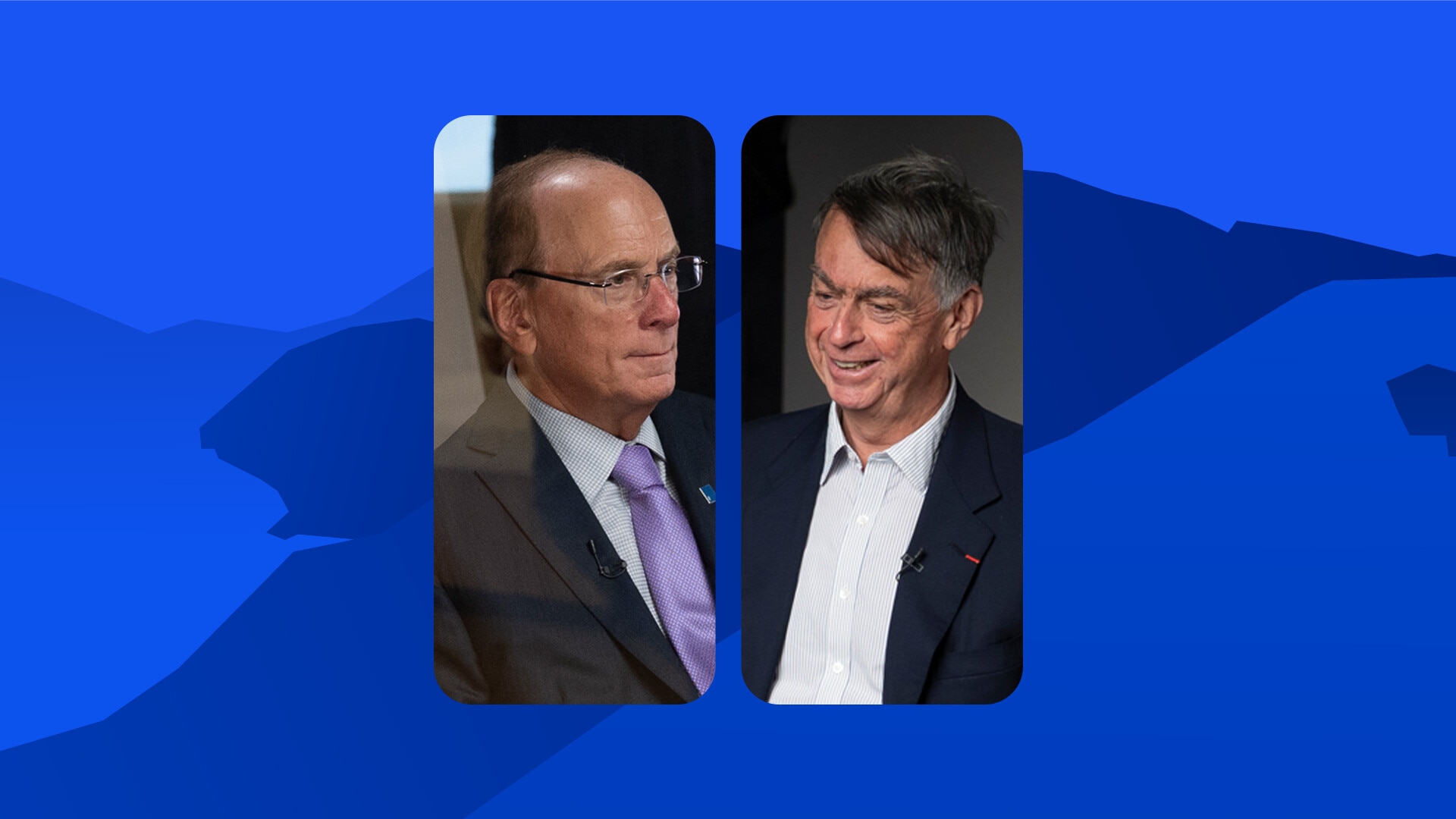
Larry Fink and André Hoffman at Davos 2026. Image: World Economic Forum
- Amid shifting alliances and eroding trust, leaders are gathering in Davos to explore new mechanisms for collaboration.
- Participants at the Annual Meeting 2026 are examining the challenges and innovations driving the future, rebuilding trust and moving the world forward together.
- We spoke to the World Economic Forum's interim co-chairs, Larry Fink and André Hoffman, on the sidelines of the Meeting.
As leaders gather in Davos, we asked the World Economic Forum’s interim co-chairs about their vision for the future, hopes for what Davos 2026 will achieve, why dialogue is more needed than ever, and reasons for optimism.
The context is an extraordinary Davos with some of the highest participation ever from business, public figures and heads of state, signalling a strong appetite for dialogue, despite the tumultuous geopolitical moment.
Larry Fink spoke about 'disarming change' and how leaders need to 'listen'.
For a 'particularly challenging' year ahead, André Hoffman said, "Humanity is what is going to make a difference".
Laurence D. Fink, Chair and CEO, BlackRock; Interim Co-Chair, World Economic Forum
Gayle Markovitz: We're at the beginning of 2026. When you look ahead, what defines this moment for you?
Larry Fink: I think every era we talk about new change and historic changes but I truly believe the change that we're seeing technologically is real and it is disarming for so many people. So, our role as business leaders, as governments, as civil society, is to try to work together, to try to plan how we could best effectuate the change from technology. And the change of technology can only work if we broaden society across the whole economic strata. And that, to me, is why conversation is so important.
Gayle Markovitz: And what do you think are the biggest factors that will have an impact on economic growth in the year ahead?
Larry Fink: Well, over the last 10 years, it's fair to say that economic growth has been narrowing in the world. It is narrowing by country. Some countries are huge beneficiaries of it and some are not. But it's also narrowing in those countries that have benefited from it. And so, for technology to work, we have to diffuse that technology across the spectrum. Throughout the world, we need to diffuse the technology so it can work for everyone. We need to diffuse that technology that advances society, not hinders.
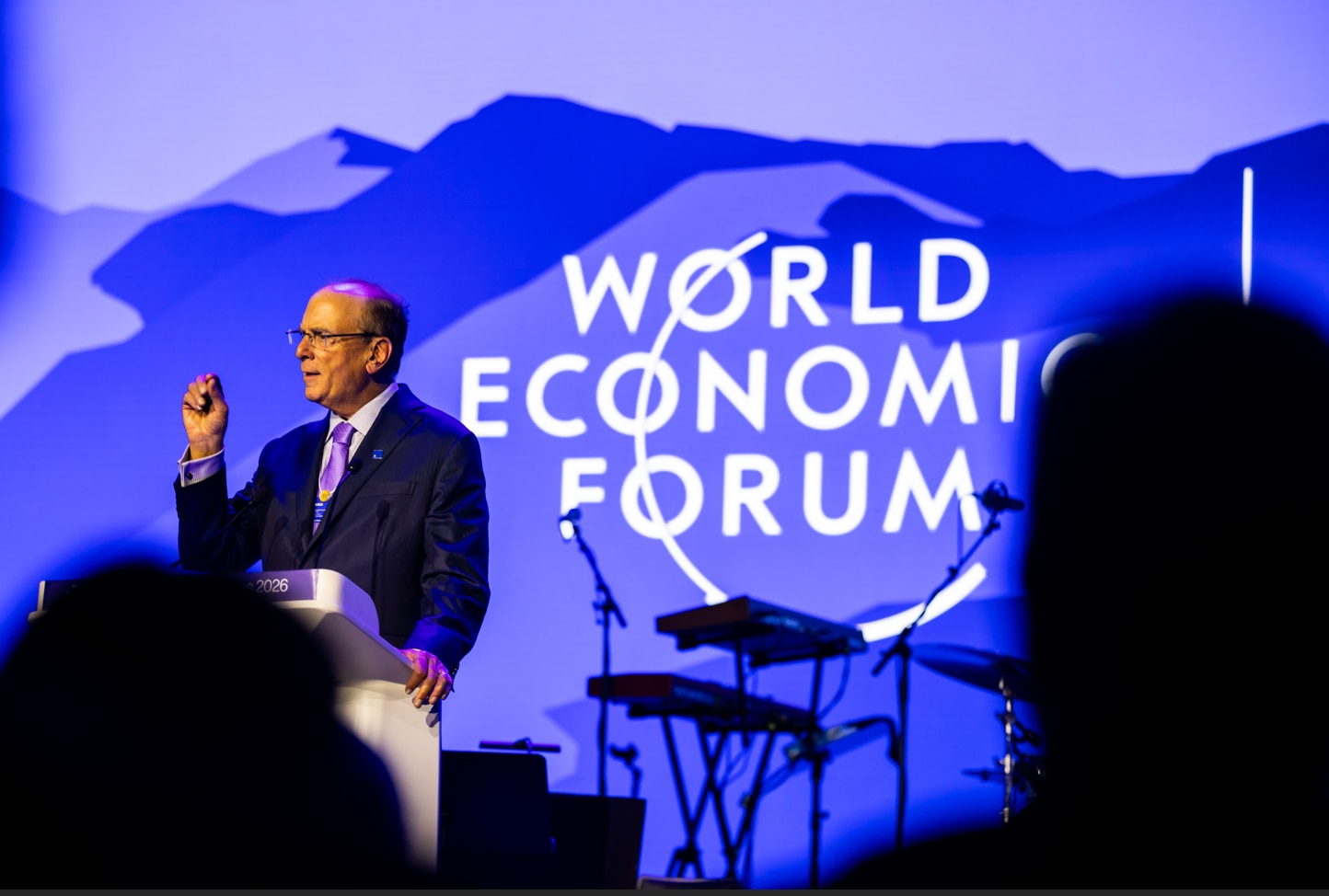
Gayle Markovitz: Do you feel that there are reasons to be optimistic about the world today at this tricky moment?
Larry Fink: I think there are great reasons for optimism. I've lived my life being optimistic. I believe all the noise that frightens us is the mechanism by which we resolve problems. I worry about things we don't talk about. But I really do believe what is in the headlines everywhere, in many cases, they evolve, they change, they are mitigated. And I believe, over the last 50 years, the optimists have prevailed.
That is not to say there's not moments of sheer pessimism that really worked but pessimism only works for a short period of time. And in most cases when we had big corrections, we had big corrections because those are problems we did not discuss; we did talk.
They were not part of the headlines and they popped in front of us, and the market and society had some large changes. But today in this strident period of time, this period of time of great polarization, I still believe there's great and ample reason to be optimistic.
Gayle Markovitz: And what's your message to the world leaders here at Davos this week?
Larry Fink: Listen. The most important thing we must do is listen. We're not going to agree on everything. In fact, I'm sure we're going to disagree. But can we find a way to have a conversation – openly disagree? But through the disagreement, can we deepen our understanding of each other?
Can we mitigate some of the extremities of those disagreements? Can we find ways to understand better? To me, that is the mission. And this is why I am so involved in the whole mission of the World Economic Forum, to make sure that we are a platform for dialogue, when it's so important today in this world of polarization. And I really do believe we have a real deep mission.
This is from all the political leaders who are here today. This is for all the CEOs who are there. This is for all the civil societies and NGOs [that] are here. Our job is to find solutions. You know, we have a number of thousands of people here. Our job has to be focusing on the billions of people who are outside these rooms, outside this town, that we are building a better future for more.
Gayle Markovitz: And in that context, what's the role of the World Economic Forum moving forward?
Larry Fink: I think the World Economic Forum is the only place in the world that brings business leaders, political leaders and civil society, and to the scale that we are providing this platform and having a mission of dialogue, I think it is unparalleled. And I would also say it is more necessary than ever before.
It is more necessary than ever before to have that conversation. To have maybe those open disagreements, but maybe that disagreement will lead to a deeper and better understanding, so we can all move forward – not for the people in these hallways but for the rest of the world.
André Hoffman, Vice-Chairman, Roche Holding; Interim Co-Chair, World Economic Forum
Gayle Markovitz: Could you set the scene for us? We're at the beginning of 2026. Many participants are saying we're entering a new era. Do you agree with this opinion?
André Hoffmann: Well, one of the reasons why we have the Annual Meeting in January is because it allows leaders [who] come here to have a sort of perspective about what the world is going to look like over the next year. At a time that's reasonably quiet, you know, it's after the Christmas festivities, it is after the holiday and you can get into the mood for the year to come.
And yes, this year it looks particularly challenging. There are a number of things coming towards us which we are going to have to deal with in a strategic and well-informed way. And coming to Davos in the spirit of dialogue will be the best way to prepare for this.
Gayle Markovitz: And despite that context, do you see reasons to be optimistic about our future right now?
André Hoffmann: Well, the thing we always have to remember is that the planet depends on humanity. Humanity is what is going to make a difference. Each individual coming here today can have in their daily life actions that help us to support our strategic imperative.
The thing we need to not lose sight of is that future, in the long term, as the Risks report [Global Risks Report] has shown, depends very much on the quality of our environment. We are currently degrading planet Earth and that is a dangerous thing to do.
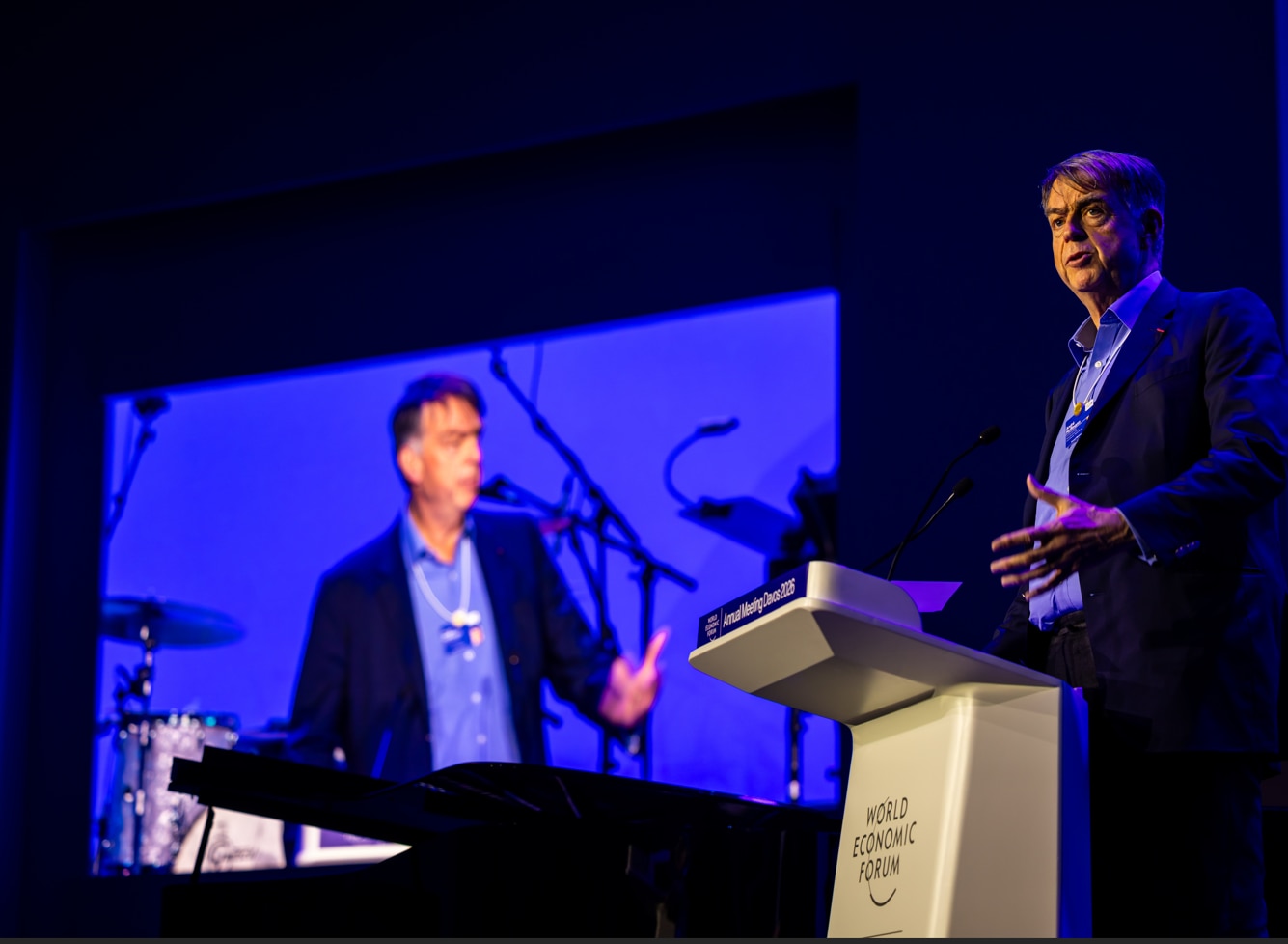
Gayle Markovitz: Your Davos op-ed makes the case for reinventing capitalism to a system that respects the boundaries of our planet. Why do you think this approach can succeed?
André Hoffmann: Well, I think that what they taught us at business school is that you manage what you measure. So far, we haven't really spent much time measuring the impact we as humanity are having on the planet. By this I mean the consequences of our dealing on the social capital, us as a group, on the human capital, as individually, each one of us and of course, nature, the planet itself, life.
And I think that if we want to really manage for the long term, we need to take into account the impact we are having on these three big capitals before concentrating on creating value. In other words, we cannot make a profit without taking into account the cost of that profit. And these are not just financial, they also impact.
Gayle Markovitz: This year's theme is 'Spirit of Dialogue' at Davos. Why is this idea so relevant right now?
André Hoffmann: As you know, we have a situation on an international geopolitical front, which is more fractured than ever. I think we could say quite with conviction that we never had such a complex geopolitical environment since 1945. And here we are in a situation where we have an opportunity to take a bit of time to reflect and to listen to other people's opinions.
We might agree or disagree but collectively we will get to a conclusion which will help us to make the world a better place. So I think that spirit of dialogue, hearing from others, sharing with others, together collaborating for our common future, is what's happening here at the Annual Meeting. And I'm very much thinking, I'm convinced, that this is what we need for the future.
Gayle Markovitz: And in this really difficult context, why do you think the World Economic Forum will remain a relevant platform?
André Hoffmann: It is the only and by definition the leading international platform for private-public cooperation. Here you can come, people can listen and you can discuss the future. This is not only a question of theorizing or trying to project the future; it's much more a question about engaging meaningful action, the outcomes of which we really rather urgently need.
If we don't look at the common... If you don't look at the global common in a coherent way, we are not going to resolve the turbulent environment we just mentioned.
I would just like to summarize what I think the theme this year is. We did speak about a spirit of dialogue, but what we really looked at was the strategic imperatives in the future. And I think we could sum it up in one simple sentence, which is: we are trying to provide the framework for resilient growth thanks to innovation within planetary boundaries. And that is a real challenge.
License and Republishing
World Economic Forum articles may be republished in accordance with the Creative Commons Attribution-NonCommercial-NoDerivatives 4.0 International Public License, and in accordance with our Terms of Use.
The views expressed in this article are those of the author alone and not the World Economic Forum.

Forum Stories newsletter
Bringing you weekly curated insights and analysis on the global issues that matter.
More on Forum in FocusSee all

Kaya Bülbül and Kate Whiting
January 30, 2026


