Opinion
How to avoid food security crises in Africa’s megacities
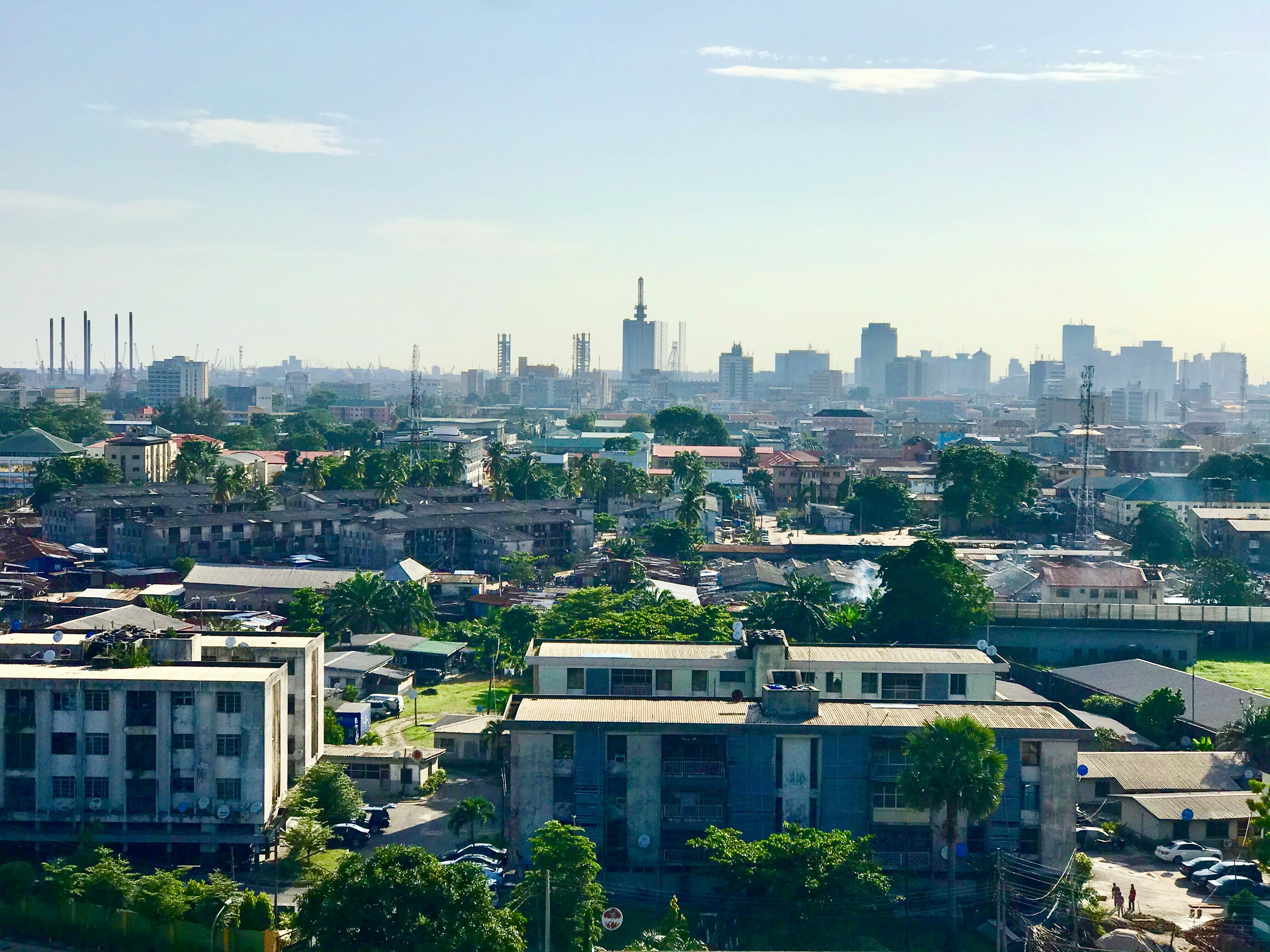
A hungry megacity … Lagos Image: Unsplash/Obinna Okerekeocha
- As Africa urbanizes, growing reliance on food imports has increased exposure to global supply and price shocks.
- Simultanous shocks, such as extreme weather and political instability, could endanger urban food supply, threatening starvation and civil unrest.
- Stress-testing different scenarios with global food suppliers, governments and multilateral organizations could help build preparedness and resilience.
Only 40 years ago, the urban population of sub-Saharan Africa was just over 100 million; today, the UN estimates this figure at 560 million. The continent contains some of the fastest growing urban areas on the planet with Cairo, greater Lagos, Kinshasa and Dar es Salaam each being home to more than 10 million people and still growing.
How does urbanization affect African food systems?
While urban poverty can be acute, many people move to cities in search of a better life. The agglomeration effect of cities drives economic growth and produces better paying jobs. Cities can stimulate investment and entrepreneurship – witness the vibrant startup cultures in cities such as Accra, Lagos and Nairobi. The density of cities also reduces the costs for states to support their citizens with education, healthcare and physical infrastructure.
The growth of Africa’s cities profoundly affects food systems. Historically, cities on the continent have relied on domestic food supplies; but increasingly, they have come to depend heavily on imports. Though statistics do not allow for a neat disaggregation of imports by metropolitan and rural locations, they do suggest dramatic increases in recent years into urban Africa.
In part, this trend reflects the difficulty of moving food overland in Africa – the result of poor infrastructure and high transport costs. Shifting diets have also played a role. Urban middle classes have shifted their demand away from domestically produced staples. Bread and noodles produced from imported rice and wheat require less time for preparation and cooking and are thus attractive to urban households.
These dietary shifts reflect the constraints of urban lifestyles. Relative to rural areas, urban residents have more limited cooking facilities and more costly fuel sources. Urbanization also brings higher opportunity costs for women’s time. In this sense, the dietary shifts observed in Africa reflect the changing economic and social dimensions of urban life.
How vulnerable are Africa’s food systems?
There are risks associated with cities’ dependencies on food imports. Numerous scenario studies have demonstrated the possibility of a major challenge to global food supplies – for example, if simultaneous poor weather in several regions coincided with political instability or geoeconomic confrontation affecting trade (as identified in the Global Risks Report 2026). Were the food shock linked to a fuel price shock (as happened after Russia’s invasion of Ukraine), increased transport costs might also reduce the movement of domestic food supplies into cities.
In these circumstances, limited global supplies would be directed to markets and populations able to pay the greatest premium. In a world of pervasive and interconnected inequalities, shocks to food supplies and prices would be felt unevenly, with Africa’s rapidly growing urban populations among those facing the greatest exposure.
We have thankfully not seen a major recent episode of large-scale urban hunger, but its consequences could be profound. There are few tools to meet an urban food crisis. Poor urban consumers lack the social buffers and informal insurance networks that can help protect households in rural areas. Beyond individual hunger and suffering, sharp disruptions to urban food access have historically placed severe strain on social and political systems, particularly in rapidly growing cities. Such pressures could also increase displacement within and across regions, with wider implications for neighbouring countries and global systems.
It is true that the global food system has shown resilience to recent shocks, such as the pandemic and the Ukraine war. But we have been lucky; both these events coincided with relatively benign crop-growing conditions. In a period of genuine global food scarcity, it remains an open question how global markets and geopolitical interests would allocate limited supplies across regions. The pandemic scramble to stockpile vaccine doses does not inspire confidence.
Is the global community prepared?
We believe the risks are real. How can they be reduced? Global trade in grain is dominated by a relatively small number of companies. These are sophisticated organizations with the capacity to respond to a broad range of plausible scenarios. But that’s what the banks said in the early 2000s.
It would be valuable to find a way to stress-test the global commodity trading system. Can it adapt to major shocks in a way that maintains grain supplies to vulnerable regions? What are the key choke points? There appears to be limited publicly documented effort to wargame a global food crisis at the level of detail required to assess risks to rapidly growing urban populations in Africa.
Designing and conducting such stress tests would require coordination among grain traders, governments and multilateral institutions, including those representing affected regions. Clearly, the grain-trading companies would need to be involved, along with governments and multilateral organizations. But this may be easier said than done: At a time of a retreat from multilateralism, finding an entity with the authority and capacity to conduct such an experiment is itself challenging.
Beyond this kind of exercise, we envision a potential role for emergency intervention stocks – but only if very carefully designed. Such intervention stocks would fill a role somewhat analogous to that of central banks in preventing bank runs. But building the institutional structures and credibility needed to support a system of this kind, and avoiding negative unexpected outcomes, would be challenging and is an area that would benefit from new research.
A moment for new ideas
Finally, bolstering the domestic capacity of the countries themselves to feed their metropolises would be a win-win, improving rural livelihoods and increasing food security. This is of course a central part of the economic development agenda.
We offer no new suggestions, but note that the global development sector is experiencing a Schumpeterian moment. Recent reductions in development aid are likely to have severe humanitarian consequences, compounding existing pressures on food systems and social protection in many low- and middle-income countries. This moment offers both challenge and opportunity: one that many African leaders and policymakers are already actively engaging with.
Don't miss any update on this topic
Create a free account and access your personalized content collection with our latest publications and analyses.
License and Republishing
World Economic Forum articles may be republished in accordance with the Creative Commons Attribution-NonCommercial-NoDerivatives 4.0 International Public License, and in accordance with our Terms of Use.
The views expressed in this article are those of the author alone and not the World Economic Forum.
Stay up to date:
Cities and Urbanization
Related topics:


Forum Stories newsletter
Bringing you weekly curated insights and analysis on the global issues that matter.
More on Global RisksSee all

Mads Krogsgaard Thomsen and Richard Hatchett
January 23, 2026


