Africa at Davos 2026: Young population provides a bright outlook
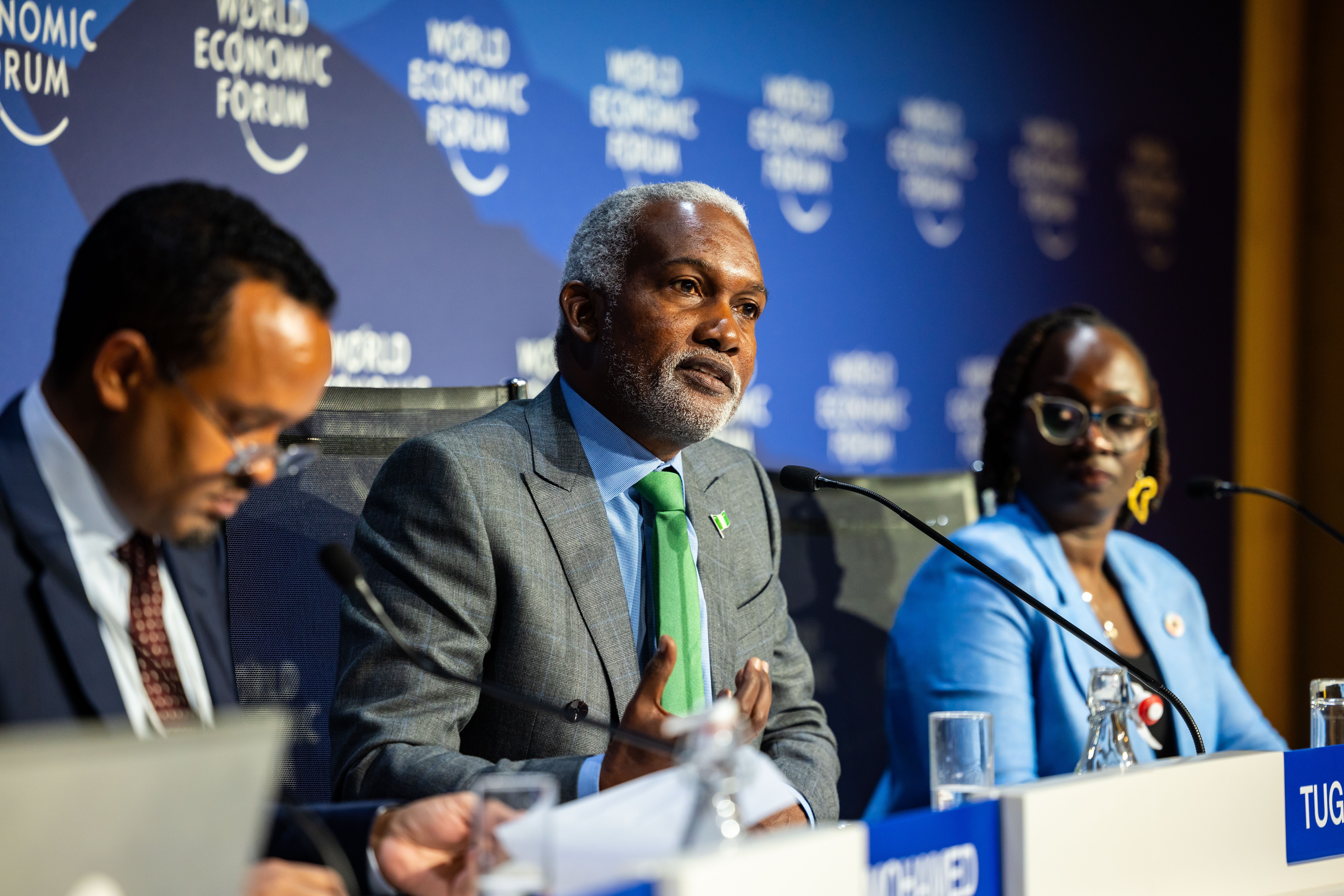
Ahmed Shide Mohamed, Minister of Finance of Ethiopia; Yusuf Maitama Tuggar, Minister of Foreign Affairs of Nigeria; and Angela Oduor Lungati, Executive Director, Ushahidi, Kenya, discuss jobs prospects in African countries at the World Economic Forum Annual Meeting 2026. Image: Ciaran McCrickard / World Economic Forum
- Political and business leaders, entrepreneurs, activists and representatives from African countries participated in the World Economic Forum Annual Meeting 2026.
- They discussed major issues for the continent including education and youth employment, technology, critical minerals and agriculture – including blue foods.
- Following on from its G20 Presidency, the government of South Africa also announced that the country would host a high-level event with the World Economic Forum in 2027.
Whether they become “agri-preneurs”, “tech-preneurs” or something else entirely, the potential of Africa’s youthful population is a major source of optimism for the continent. But harnessing this potential will require investment in education, infrastructure and industries, according to discussions at Davos.
By 2030, 40% of the world’s young people will be African. By 2050, Africa will account for 85% of the expected increase in the global working-age population (those aged 15-64 years old), with its own nearly doubling to 1.56 billion. As these people enter the workforce and even build their own businesses, African countries must create the right conditions for them to thrive.
“We have to imagine a future that is sustainable,” said Julius Maada Bio, President of the Republic of Sierra Leone, during a panel discussion about Africa's role in the future global economy. “We have a population that is very young and we have to make sure we can sustain the growth path on which we have embarked and that means that we have to invest increasingly in developing that population.”
As artificial intelligence and shifting geopolitics redefine competitiveness for countries around the world, preparation is key for all nations. This should involve investing in infrastructure and in supporting people through education. But issues with connectivity and energy supply continue to hamper Africa’s preparedness, according to Bio.
To help address Africa's energy future, the Forum and the International Atomic Energy Agency (IAEA) convened leaders on nuclear energy in Africa during Davos. More than 24 countries across the continent are exploring civil nuclear options – in particular, small modular reactors (SMRs) that can deliver reliable, flexible and low-carbon energy at scale.
Action is needed elsewhere too. While the continent’s youth are “full of energy and creativity,” Bio said, “we must invest in their education so they will know how to translate all of this into useful purpose for the continent”.
Investing in people is key, agreed Rachel Glennerster, President, Center for Global Development. “A third of the East Asian miracle came just because they had a lot of young people and now Africa is going to be the continent with a lot of young people.”
Replacing lost development aid
A significant drop in overseas development finance over the last two years will affect many African countries, however. The loss of development aid from USAID and other organizations, should compel African countries to work more with the private sector, according to Wamkele Keabetswe Mene, Secretary-General of the African Continental Free Trade Area (AfCFTA) Secretariat. As much as the drop in development aid is a crisis in the short term, in the medium to long term, he said the private sector could work closely with governments and development finance institutions to unlock the required finance.
Private investment in Africa will likely be more forthcoming in a less fragmented market. Both foreign and African businesses currently face significant challenges navigating the continent’s many different currencies, underdeveloped industries, high infrastructure, transport and logistics costs, and the resulting constraints on the movement of people.
As a continent of 1.4 billion people, with a combined GDP of $3.4 trillion from consumer and business spending, Africa will remain “a continent of potential” without greater economic integration, said Mene.
Greater integration would help to support small and mid-sized businesses as well as larger firms. “Simplify compliance, reduce that friction and red tape, so that we are spending less time navigating bureaucracy and more time actually selling beyond our borders, so that our businesses can operate in different African countries,” said Angela Oduor Lungati, Executive Director, Ushahidi, the non-profit open-access software company, during the “Africa’s Job Engine” panel.
As the AfCFTA, which has been ratified by more than 50 countries, moves out of the negotiation stage and into implementation, it should help to unlock this potential. And it couldn’t come at a more significant time globally, as recent fluctuations in geopolitics and world trade have disrupted markets and supply chains everywhere, including in Africa.
An African stablecoin could also help here, according to Vera Songwe, Chairperson and Founder, Liquidity and Sustainability Facility, which serves emerging markets. Highlighting the capital controls that make it difficult to trade throughout the continent, she discussed plans for an African stablecoin platform, which would be backed by fiat currencies (via the IMF’s SDR) and so would “mirror Africa's trade with the rest of the world”.
Strengthening Africa's industries
A more integrated African market would also create a stronger base for African industries. While she believes minerals will continue to be an important revenue source for Africa, Glennerster pointed out that mines do not employ a relatively large number of people. “You need something that’s much more inclusive as a growth strategy,” she explained. Africa’s “abundance of land” means agriculture could play a key role in the continent’s continued development.
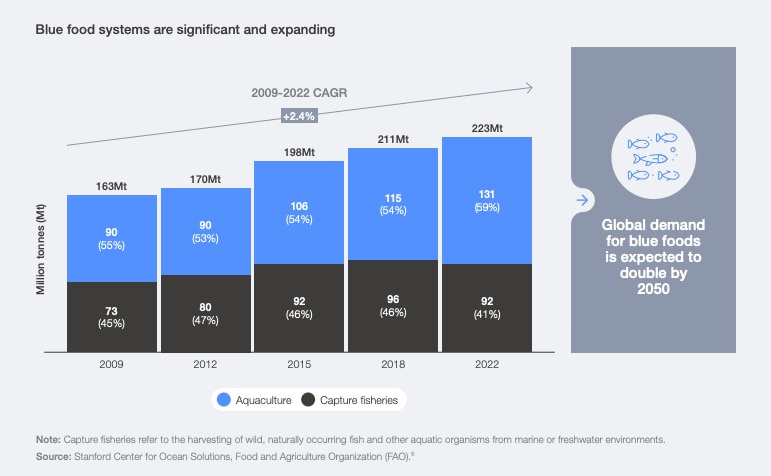
Africa could also use “blue foods” – animals and plants caught or farmed in oceans or freshwater – to support sustainable development and growth. Blue foods could lead to a possible 25% reduction in the per capita protein gap, the creation of 3 million new jobs and add $17 billion to GDP in Africa, according to a recent Forum report, Investing in Blue Foods: Innovation and Partnerships for Impact.
For countries like Sierra Leone, food security is a flagship issue and agriculture is crucial to this. “It is the best when it comes to creating jobs because of the different stages from production to value addition,” President Bio said, explaining that it creates employment opportunities throughout the entire value chain, including more jobs in remote areas and for women. Empowering women can create a multiplier effect by spreading upward social mobility throughout the local community too, according to Bio.
African women in the agricultural sector are also benefitting from the use of new technology. Speaking at a panel about innovation in food and agriculture, Alice Ruhweza, President of the Alliance for a Green Revolution in Africa (AGRA), said the use of transaction data and satellite imagery for risk assessment are helping to “unlock finance for farmers who have never even had a credit score”.
“We're seeing more mobile-based advisory services reaching people faster. SMS has been very powerful in terms of voice-based platforms that deliver weather [reports], pest outbreak warnings and market prices in local languages,” she explained. “That's all been exciting and women are the centre of all of this.”
Young people are leading on this innovation too. Speaking on another panel, Agriculture Evolution, Ruhweza pointed to the wealth of youth-led innovation happening across the continent, which “doesn’t get showcased enough”.
Building on past progress
During South Africa’s G20 Presidency, from December 2024 to November 2025, the country implemented programmes and initiatives on debt sustainability, building inclusive growth and boosting cross-border cooperation in Africa.
At the Annual Meeting, the South African government said it would build on these achievements, including through a high-level World Economic Forum event to be held in South Africa in 2027. The event will underscore the role of emerging and developing economies in addressing global challenges and highlight “Africa's rising strategic role in the global economy”, Trade Minister Parks Tau said. He added that growth is increasingly driven by African firms, especially in fintech, digital services, logistics, renewables, agribusinesses and creative industries.
A “growing wave” of youth-led start-ups across Africa are already attracting global investment, according to Tau. And Africa’s youth will continue to play a crucial role in the continent’s economic future. His prediction echoed throughout discussions this week, underlining the fact that Africa’s young people are widely seen as a source of new ideas, entrepreneurial activity, energy and innovation in sectors as diverse as technology, creative industries and agriculture. This rising demographic will be crucial to Africa’s long-term growth and global competitiveness.
Don't miss any update on this topic
Create a free account and access your personalized content collection with our latest publications and analyses.
License and Republishing
World Economic Forum articles may be republished in accordance with the Creative Commons Attribution-NonCommercial-NoDerivatives 4.0 International Public License, and in accordance with our Terms of Use.
The views expressed in this article are those of the author alone and not the World Economic Forum.
Stay up to date:
Africa
Related topics:


Forum Stories newsletter
Bringing you weekly curated insights and analysis on the global issues that matter.
More on Geographies in DepthSee all

Abdulla bin Ahmed Al Khalifa
February 25, 2026


