Why AI's water problem might actually be an opportunity
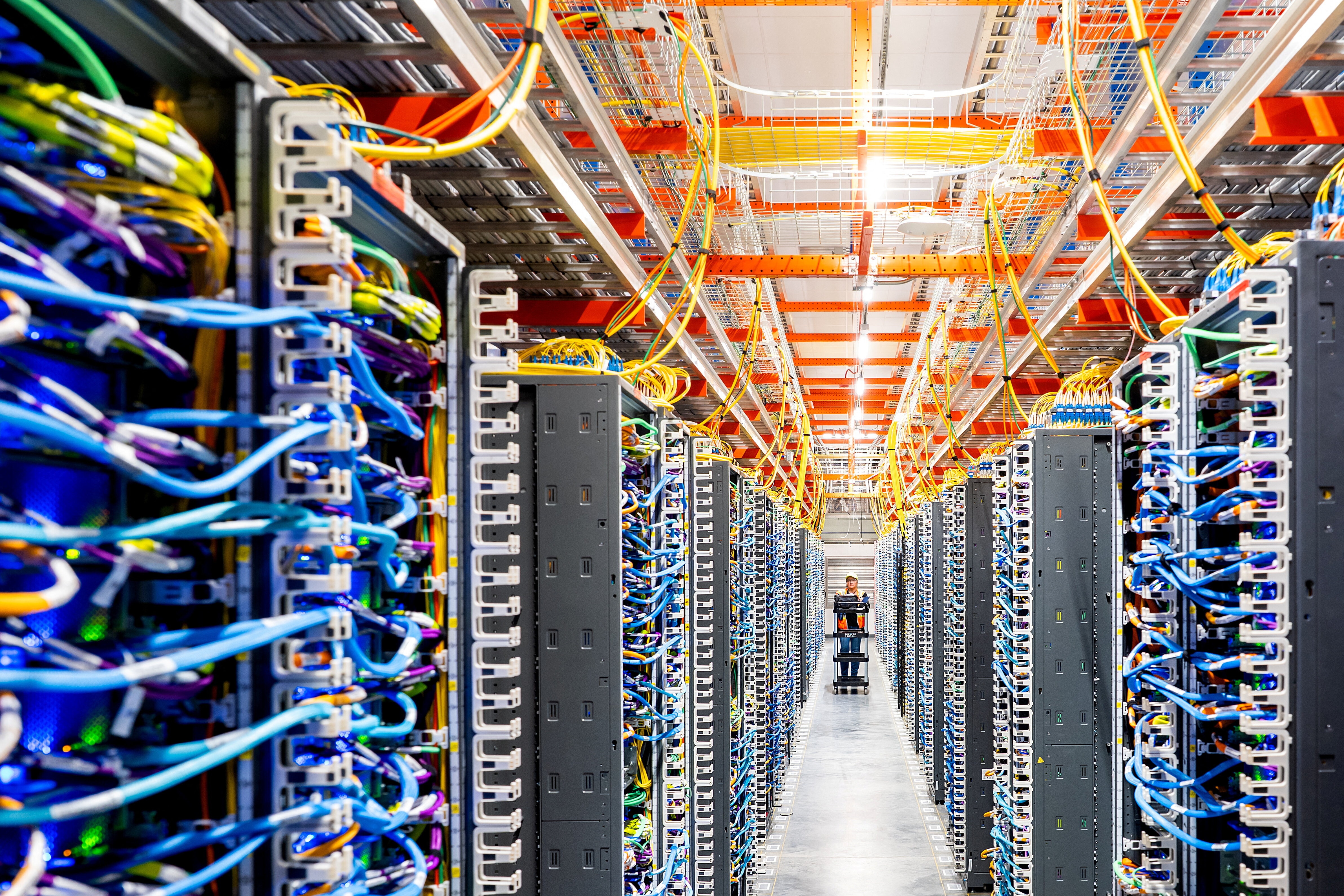
It is crucial that we square AI's economic potential with the demands it places on our water systems. Image: REUTERS/Noah Berger for AWS
- Water stress is already a global challenge, and demand from the growing AI economy is adding to the pressure.
- Data centres and chipmakers can consume more water than entire communities.
- Managed well, the need to respond to AI's demands on our water system can become a catalyst for a transition to greater water security.
Every GPU, every data centre, every extra megawatt of power used to fuel AI depends on reliable supplies of water. Without enough water, the AI revolution will wither, not grow. But in the need to rethink water supplies for the AI era there lies an opportunity.
According to the World Bank, four billion people live in water-scarce areas. By 2030, global demand will exceed sustainable supply by up to 40%, and 1.6 billion people will lack access to safe drinking water. AI’s rapidly growing water demand is fueling new tensions between industries and communities who already feel there isn’t enough to go around.
It’s often said that history repeats itself, and when it comes to water that’s a cause for guarded optimism. Every industrial revolution – from 19th-century textile mills to modern-day electrification – has tested the limits of our water and wastewater systems. Our predecessors, sometimes after reaching a point of crisis, turned these challenges into opportunities. The infrastructure we have today – from wastewater treatment plants to hydroelectric dams – are the result of previous “water transitions” that reconciled the demands of a growing economy with the need for broad-based growth and human development.
Now the AI revolution is forcing us to rethink water again. Managed poorly, this could become a zero-sum contest between people and progress. Managed well, we can use the AI revolution as a catalyst for something larger: a transition to greater water security.
How much water do data centres consume?
Water underpins the AI supercycle’s entire value chain. Data centres are often the most visible AI water consumer. Even with efficient cooling, a single hyperscale data centre (~130 megawatts) can use 171 million liters of water annually. But what is less visible is that AI-related chip manufacturing and power generation consume even more water than data centres. Taken together, these three sectors make up an “AI economy” whose demand for water is rising rapidly.
Right now, the AI economy consumes 23 cubic kilometers of water a year. By 2050, this is predicted to more than double (up 129%) to more than 54 cubic kilometers (roughly 14 trillion US gallons), according to new research by Global Water Intelligence and Xylem. In other words, our world needs to find an extra 31 cubic kilometers of water a year for the AI economy to run. That’s enough to supply every human being on Earth with an extra 3,820 liters of freshwater a year.
Squaring AI growth with water capacity
The issue isn’t just that AI needs water, but the location and timing of its demand. Around 40% of the world’s data centres are clustered in areas of high or extremely high water stress, and demand peaks during summer, when communities and farmers already face shortages.
Semiconductor fabricators face a similar challenge. Already, nearly a third of the world’s semiconductor fabs are in water-stressed areas. However, a single liter of the ultrapure water they need consumes up to four liters of freshwater. With rising chip complexity, the sector’s water demand will increase more than 600% by 2050, even before water-intensive materials like lithium and copper are taken into account.
With all of that said, the AI economy’s water consumption is less intense than heavy industries of the past. But new factors are at play: the AI economy creates water demand in places where resources are limited; competition for water is heating up as weather extremes make the water cycle less reliable; and water systems are struggling already after decades of underinvestment.
Three ways to waterproof the AI economy
If AI growth races ahead of local water capacity, we risk creating what has been called “digital dustbowls.” But if we make the right decisions today, we could lock in water security for decades. Some of those decisions include continuing to invest in renewable energy (which uses far less water than its fossil fuel alternatives) and adopting cutting-edge cooling systems that significantly improve water use efficiency.
But to waterproof the AI economy fully, we need a water transition that includes three essential shifts:
1. Fix the leaks
Reducing water loss in the world’s aging infrastructure networks is one of the most efficient investments we can make. According to the World Bank, the world’s utilities lose a staggering 32 trillion litres of water every year between treatment plant and end user. Deploying digital sensors, AI-driven monitoring and predictive maintenance can dramatically cut non-revenue water at low cost. These solutions aren’t just good for the AI economy; they make utilities more resilient and benefit the environment, because they reduce the need for energy and chemicals to treat the water.
2. Recycle the water
Closing the loop in the water cycle is also important. Most freshwater is used once and discharged. Globally, less than 10% is treated for reuse, even though the technologies exist to reuse water safely and at scale in communities, chip fabricators and data centres – from advanced filtration and membranes to biological treatment and disinfection. In the AI value chain, we can design fabs and data centres as closed-loop water systems, recondition wastewater to supply both industries and communities, and treat high-quality recycled water as a strategic asset rather than a sustainability afterthought.
3. Build different partnerships
New kinds of partnerships can help drive this water transition. Water is a highly local resource, and different stakeholders have different views of how it should be managed. This can be a strength as well as a challenge: what one user views as wastewater can, managed correctly, become another user’s core water resource. Through collaborative partnerships, some of the capital investments in the AI supercycle could improve the quality of a region’s water resources and infrastructure, enabling greater water security.
Our choice is simple: we can compete or collaborate to manage this finite resource.
If we manage it right, the AI supercycle will be remembered not just for what it built, but for how it forced us to rethink water for the better. Right now, water is both an enabler of the new economy, and a potential bottleneck. Leaders who integrate water security into the AI value chain will shape the next century of growth. Those who don’t will face hard limits and community resistance. The path forward is clear: collaborative action and innovation at scale can enhance water security – for communities and industry alike.
Don't miss any update on this topic
Create a free account and access your personalized content collection with our latest publications and analyses.
License and Republishing
World Economic Forum articles may be republished in accordance with the Creative Commons Attribution-NonCommercial-NoDerivatives 4.0 International Public License, and in accordance with our Terms of Use.
The views expressed in this article are those of the author alone and not the World Economic Forum.
Stay up to date:
Artificial Intelligence
Related topics:


Forum Stories newsletter
Bringing you weekly curated insights and analysis on the global issues that matter.
More on Artificial IntelligenceSee all

Jeremy Jurgens
February 27, 2026