From 1 to infinity: The role of capital markets in scaling solutions
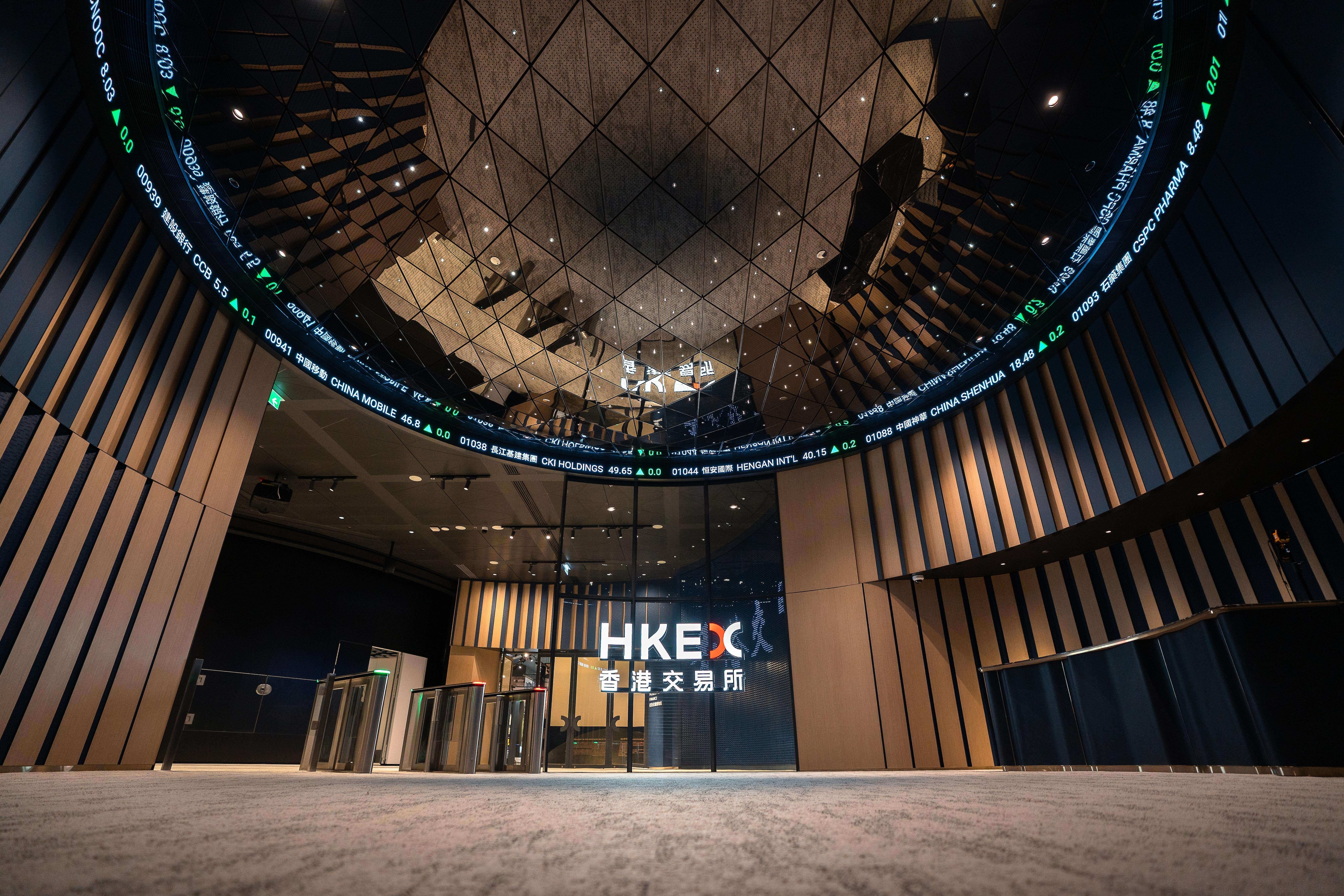
Innovation scales when capital markets provide funds, pricing benchmarks and international reach. Image: Getty Images
- Climate change, healthcare gaps and resource scarcity demand solutions that can scale globally – and fast.
- DeepSeek is part of a broader innovation wave emanating from world-leading research clusters across China.
- As the world's need for new decarbonization drivers increase, we see markets as crucial for turning potential solutions into tangible results.
As we gather for this year’s World Economic Forum Annual Meeting, the world is seeking new drivers of progress. Meanwhile, climate change, healthcare gaps and resource scarcity demand solutions that can scale globally – and fast.
Innovation is the answer. Last year’s “DeepSeek Moment” showed how breakthroughs can scale, delivering frontier-level capability at a fraction of the cost and unlocking practical benefits, from imbuing robots with greater intelligence to progressing next-generation manufacturing.
DeepSeek is part of a broader innovation wave emanating from world-leading research clusters across China delivering fast-charging, high-capacity EV batteries to advance clean mobility and fusion power for a sustainable future.
China’s innovation engines – nurtured by supportive government policies and sustained investment in research and development – are running at full speed, offering strong grounds for optimism.
In the past year, dozens of new companies in green energy and automation and other sectors have listed in Hong Kong, enabling them to scale their research and global impact. A leading Chinese battery manufacturer was among the largest IPOs in the world in 2025, raising $4.6 billion.
Looking into our pipeline, my optimism is reinforced by the steady flow of transformative ideas, which span multiple directions but together point to a wider trend shaping global progress.
This year’s Annual Meeting has selected these paradigm shifts in technology, from energy systems to biotech to entirely new mechanisms shaping how we live and work, as key focus areas, and I would like to take this opportunity to add to the conversation.
Driving decarbonization
Consider the development of cleaner fuels. One of the most pressing concerns of our day is how the world will adopt and adapt to newer, cleaner sources of energy as the world decarbonizes.
Both new and established companies in the Chinese Mainland and Hong Kong are tackling this issue by designing more effective types of biofuels, in one case by designing microbes like algae that can generate more energy, effectively creating clean fuel sources with huge potential for scale.
Engineered plants are just one part of a rapidly expanding toolkit being developed and deployed in China and worldwide – another avenue of progress being forged by companies listed in Hong Kong includes developing novel ways to turn oils, fats and green hydrogen into sustainable aviation fuel (SAF), fostering greater climate resilience in a historically top-emitting sector.
And with rising demand for SAF requiring up to $45 billion in capital expenditure by 2030, investment is mobilizing through green bonds, venture capital and IPO raises in markets worldwide.
Indeed, the new energy sector is among the most active in Hong Kong in 2025, with a total of $7.7 billion in fundraising over the year going into innovative developments, from more efficient batteries to more effective solar panels, by established companies and market newcomers alike.
And as the world's need for new decarbonization drivers will only increase in the coming years, we see our markets – and markets globally – as crucial for turning potential solutions into tangible results.
Accelerating cures
Another area of exciting potential is how AI technology can effect real change worldwide. For instance, where AI intersects with medicine, breakthroughs are shifting drug development from market-size calculations to global need-based considerations.
Today, developing new medicines is costly and time-consuming, often taking more than a decade and leaving many diseases untreated, particularly those that burden vulnerable populations.
AI-driven drug discovery can change this equation by identifying drug targets, designing molecules and even enabling researchers to simulate outcomes before experiments have even begun.
Taken together, the effect is profound: shortening development timelines from years to months, slashing costs and reducing risk in an endeavour that sees clinical failure rates of 90% on average.
Issuers listed in Hong Kong are some of the most prominent players leading this transformation with new applications to automate research and development and create innovative drugs and that is capturing global investor interest.
In 2025, biotech companies raised over $1.5 billion on Hong Kong’s markets, taking the total raised since the 2018 launch of our 18A listing chapter to more than $17 billion.
Building better
Innovation is also moving out of the lab with new generations of advanced materials, including ceramics, advanced alloys, nanofibres and more, which make construction materials stronger and EV battery parts lighter.
The potential for these materials to make our cities more resilient and to propel the net-zero transition is significant – and investors see this too.
And in recent months, we have seen significant capital raises in Hong Kong by Chinese Mainland companies leading the way in new materials designed to decarbonize factories, speed up battery charging efficiency and increase solar panel output.
The bigger picture
These technologies represent a profound shift in how innovation can tackle global challenges, and capital markets have a vital role to play in turning these innovations into impact.
When we back ideas with capital, governance and global connectivity, we can turn promising prototypes into solutions that can improve lives at scale.
I say this not as a technologist, but as someone who has spent many years in capital markets helping companies on their journey from vision to validation. The lesson is clear: innovation scales when markets provide capital, pricing benchmarks and international reach.
That is why financial centres matter. By connecting entrepreneurs with global investors, by setting transparent standards and by fostering liquidity, capital markets are essential infrastructure for innovation – as foundational as universities, labs, data centres and supply chains.
At HKEX, we have taken many steps to support innovative companies – from opening listing pathways tailored to specialist technology and biotech issuers, to enhancing our market so innovators can access capital more efficiently, to strengthening the ecosystem around disclosure, ESG and carbon markets.
These are practical moves designed to help founders spend more time building and less time navigating. We see the results every day in our pipeline with companies choosing Hong Kong to scale their research and ambitions – our markets have welcomed over 100 IPOs in 2025, with notable raises by companies in EV technology, advanced manufacturing, autonomous driving and other new economy sectors.
The next chapter of progress is being written by these visionary companies, their bold ideas and the markets that enable them. Our role at HKEX is to help turn the pages of that story faster, so that cleaner energy, transformative healthcare and better living standards move from promise to practice, promoting prosperity for all.
Don't miss any update on this topic
Create a free account and access your personalized content collection with our latest publications and analyses.
License and Republishing
World Economic Forum articles may be republished in accordance with the Creative Commons Attribution-NonCommercial-NoDerivatives 4.0 International Public License, and in accordance with our Terms of Use.
The views expressed in this article are those of the author alone and not the World Economic Forum.
Stay up to date:
Energy Transition
Related topics:


Forum Stories newsletter
Bringing you weekly curated insights and analysis on the global issues that matter.
More on Economic GrowthSee all

Olumide Durotoluwa
March 6, 2026


