We live in a golden age of medical science, but is the policy ready?
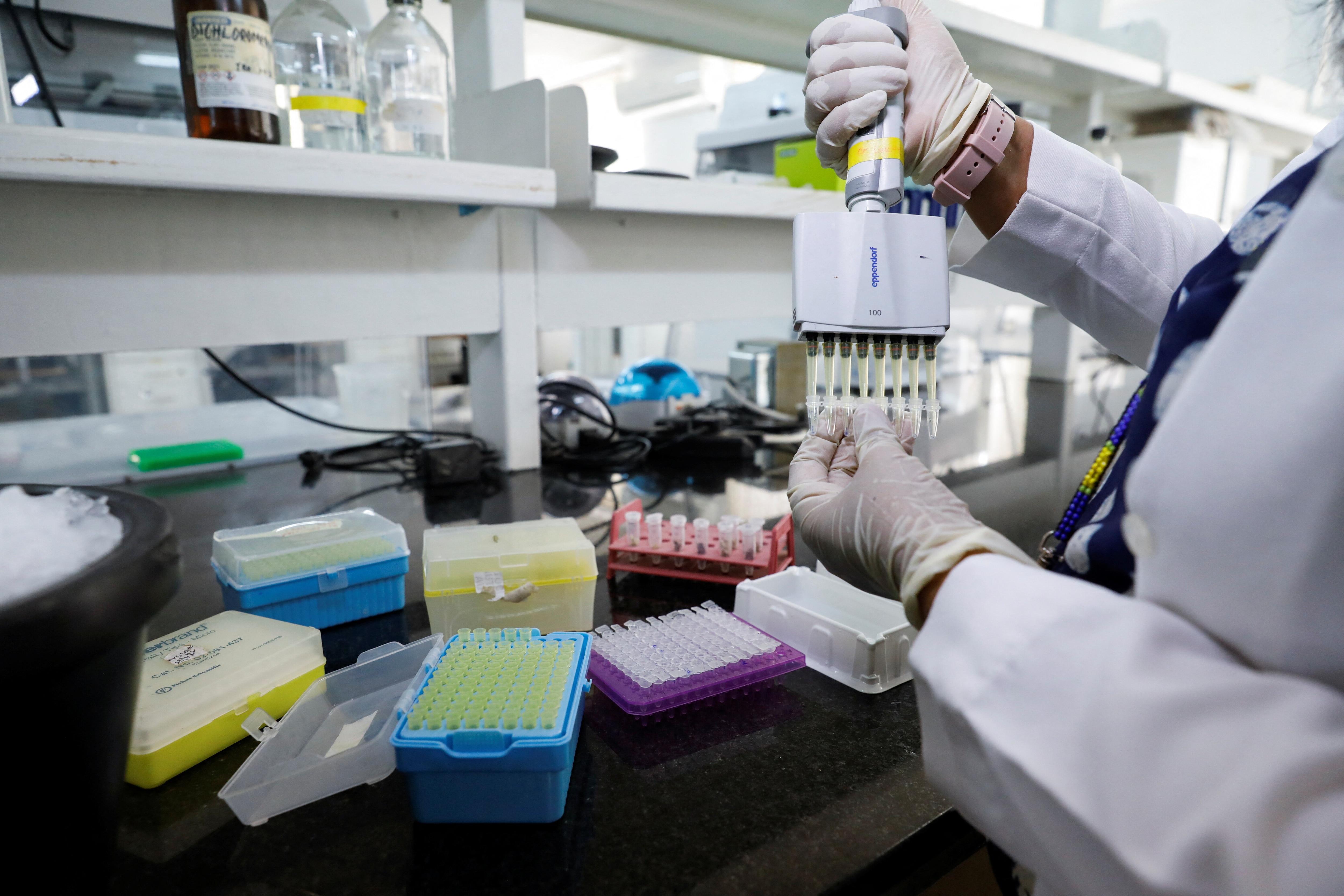
We are progressing toward a golden age of medical science where remission and even a cure for cancers is possible. Image: REUTERS/Temilade Adelaja
- Cutting-edge medicines and treatments exist, but widespread and equitable access to them does not.
- We can reverse this trend and fulfil the economic and health potentials of modern medical science if we invest in health as a strategic asset.
- Acting earlier on diseases results in fewer hospitalizations; longer, healthier, more productive lives; and less demand on and costs for healthcare systems.
It took 13 years to sequence the first human genome; today, hundreds can be read in hours.
We are progressing toward a future where remission and even a cure for cancers and rare genetic diseases are possible. Game-changing modalities are replacing traditional chemotherapies and cell therapies are proving to be life-changing treatments for patients living with cancer and autoimmune illnesses. This is a golden age of medical science.
Yet, this surge of medical opportunity collides with a sobering reality: the rise in ageing populations and chronic diseases, coupled with declining productivity growth, is straining financial, social and health systems. While cutting-edge medicines and treatments exist, widespread and equitable access to them does not.
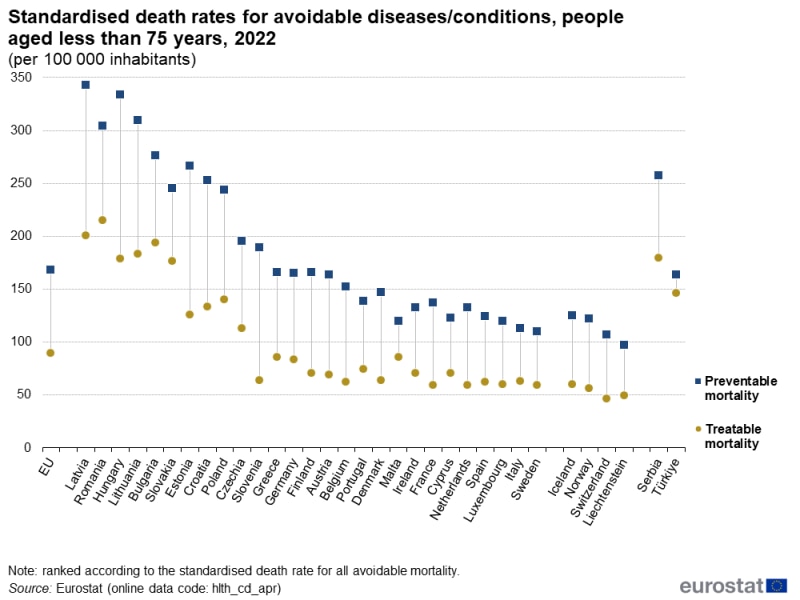
Disparities between major markets are already stark: cancer patients in Europe currently wait about two years longer for medicines than their US counterparts. In the past five years, 40% of medicines launched in the US have not launched at all in European countries. The consequences are real: in 2022 alone, more than 1.1 million EU deaths could have been prevented with stronger health and medical interventions, including access to innovative medicines.
The outlook seems bleak, but we can reverse these dangerous trends and fulfil the economic and health potentials of modern medical science if we invest in health as a strategic asset. Only a shift in mindset – from short-term costs to longer-term investment – can avert a future where patients are left waiting longer for new treatments and avoid the ripple effects on healthcare systems, national budgets and the well-being of societies and economies.
Realizing the true value of innovation for societies and economies
Consider this: an additional $3 per person each year to tackle chronic diseases could yield economic benefits of up to $1 trillion by 2030. Improving health overall could add $12 trillion to global GDP by 2040 – equivalent to the annual GDP of Germany, Japan and India combined.
When I spoke at the World Economic Forum in 2025, my message was clear: investing in health matters. It matters even more so now.
Health innovation is a critical piece that can unlock benefits for patients and economies. We know that the pharmaceutical industry is around three times as productive as the EU economy as a whole, while R&D investment creates powerful knock-on effects for science, manufacturing and professional services.
Today, however, many high-income countries are not owning their fair share of the upfront risk necessary to fuel the health innovation landscape. Instead, global health innovation has often been overly dependent on the US to disproportionately share the risks and costs. For example, the US spends roughly 0.8% of GDP per capita on new innovative medicines, compared to only around 0.1%-0.5% in high-income OECD countries.
As many countries have sought to contain healthcare costs, others have moved ahead. Clinical trial activity for advanced treatments such as cell therapies is almost three times as high in China as in Europe. This ultimately means that Chinese patients get earlier access to cutting-edge treatments, while their economies create highly skilled jobs and benefit from pharmaceuticals and health-related revenue streams.
Acting early to improve population health and reduce strains on resources
There is no doubting the benefits of acting early to prevent, detect and treat disease. The impact can be profound, given the possibility that 80% of noncommunicable disease cases could be prevented through early detection and screening. Unlocking the potential of medical innovation can help expedite this transition from “sick care” to “health care” systems.
The mantra should be simple: provide the right treatment to the right person, at the right time. When patients receive clinically recommended care, the outcomes for the individual – and for the broader patient population – can be transformative. A recent report suggests advances in oncology care have contributed to 1 million extra Quality-Adjusted Life Years (QALYs), a measure that reflects years of life in good health.
This is not just doctor’s orders; it’s good economics. Acting earlier on diseases results in fewer hospitalizations; longer, healthier, more productive lives; and less demand on and costs for healthcare systems.
Governments cannot flip the switch to act early on diseases alone. The power of public-private partnerships should not be overlooked. In Canada, one compelling example in chronic obstructive pulmonary disease (COPD) is the Best Care programme, now active across nearly 400 primary care clinics and supported in part by AstraZeneca.
This integrated, proactive approach to disease management and treatment is helping to curb the use of costly acute services at a time when exacerbations of COPD remain the second leading cause of hospital admissions in Canada. The programme is associated with sustained relative reductions in COPD-related hospitalizations and emergency department visits of between 51% and 36% respectively, within 12 months; and up to 72% and 71% at three years. In recognition of this success, Best Care has recently expanded to lung cancer screening.
Modernizing regulations to future-proof healthcare systems
In today’s world, investing in health must be a central pillar of national competitiveness and sovereignty – much like energy, technology or defence. It requires that governments create policy frameworks that encourage healthy lives and value health as a public good.
Germany has signalled an ambition to enable earlier access to life-changing treatments, attract investment and invigorate its innovation environment. The Medical Research Act marks a step forward in strengthening the clinical trials landscape by modernizing the legal framework, streamlining and expediting approval processes, and expanding access to research data.
Health as a strategic asset to capture a generational opportunity
In the last century, medical science has transformed health and longevity. Since the 1990s, around 70% of gains in life expectancy in developed countries are attributed to new medicines. Today, we understand the body better than ever before and can treat diseases once thought untreatable. The science is ready and waiting; now, policy and sustainable financing must deliver.
This is not just good medicine; it is a generational opportunity to give millions of people longer, healthier lives and strengthen society and economies.
Don't miss any update on this topic
Create a free account and access your personalized content collection with our latest publications and analyses.
License and Republishing
World Economic Forum articles may be republished in accordance with the Creative Commons Attribution-NonCommercial-NoDerivatives 4.0 International Public License, and in accordance with our Terms of Use.
The views expressed in this article are those of the author alone and not the World Economic Forum.
Stay up to date:
SDG 03: Good Health and Well-Being
Related topics:


Forum Stories newsletter
Bringing you weekly curated insights and analysis on the global issues that matter.