How ‘patient capital’ can unlock the next wave of global growth
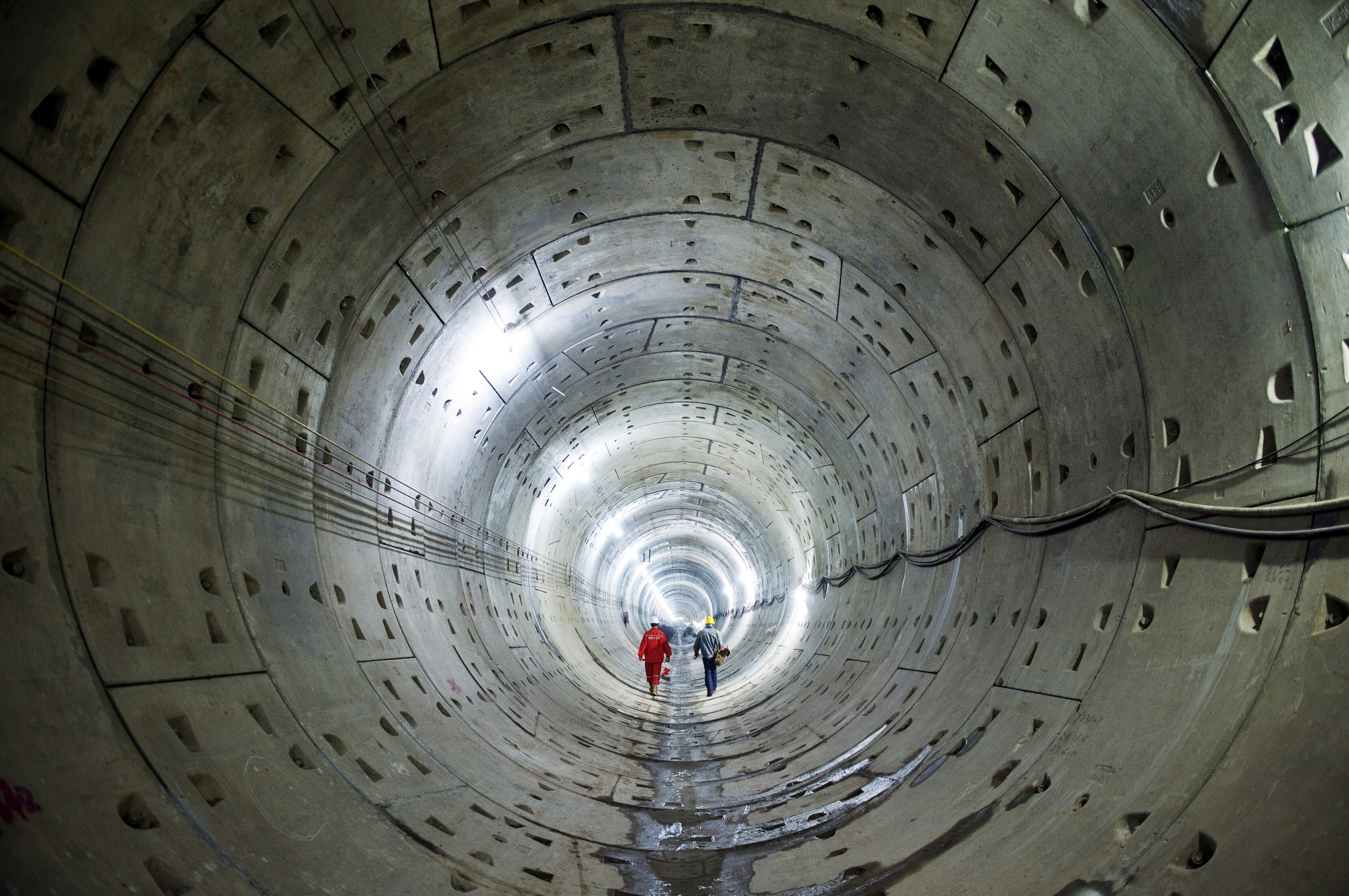
Long-term service agreements can connect this patient capital to digital and green infrastructure. Image: Reuters
- Ageing populations can be a strain on public finances while creating large pools of patient retirement capital suited to long-term investment.
- Long-term service agreements can connect this capital to digital and green infrastructure, sharing risk and generating stable returns.
- Europe’s mix of ageing societies, pay-as-you-go pensions and infrastructure gaps makes it a natural proving ground for this approach.
Longer lives are one of the great successes of the past century. They are also reshaping the foundations of growth. As societies age, fewer workers must support more retirees.
According to Allianz’s Global Pension Report, by mid-century, there will be 26 people aged 65 and older per 100 aged between 15 and 64, compared to 16 today. Expenditure on pensions and healthcare is rising, while investment in productivity-enhancing infrastructure often lags.
Indeed, much of today’s infrastructure was built decades ago and is nearing the end of its design life. According to the CFA Institute, the world is entering a new investment cycle as ageing roads, bridges, grids and water systems require renewal to support the energy transition, digitalization and climate resilience. Allianz Research projects that this translates into nearly 3.5% of global GDP per year – about $4.2 trillion annually – with the energy transition alone accounting for up to $30 trillion by 2035. Public balance sheets are already under pressure, and traditional funding models were not designed for 30- to 50-year horizons.
Ageing and under-investment are usually treated as separate challenges. In reality, the pressure on pension systems has created a potential solution: a vast pool of long-dated savings held by life insurers and pension funds. The key question is how to connect this “patient capital” with the assets that can support growth in fast-ageing economies.
A self-funding growth cycle?
Life insurers and pension funds hold trillions in long-term reserves because people are living longer and want financial security over retirements that may last three or four decades. Instead of seeing the “longevity dividend” only as a liability, it can be seen as a strategic asset: capital that is naturally long-dated, stable and well-suited to long-duration investments that can be applied to important societal needs.
The proposition is straightforward. Use this patient capital to finance the infrastructure that enables the next wave of productivity growth, especially in ageing societies. As automation, digitalization and the energy transition raise output and efficiency, the resulting cash flows can provide the stable returns needed to honour long-term commitments to retirees.
In effect, this creates a self-funding growth cycle: retirement savings finance the assets that enable a smaller workforce to generate more value. Those assets, in turn, support the retirement incomes of that same workforce as it ages.
To make this work at scale, long-term liabilities must be matched with real-economy assets that directly support productivity in an ageing context – for example, digital grids, resilient energy systems, data infrastructure and low-carbon transport. That calls for a different kind of infrastructure asset and a new approach to how regulatory regimes assess the risks and capital charges of these investments.
Deploying patient capital for next-generation infrastructure
Public-private partnerships and similar models have long aimed to bridge infrastructure needs with private capital, yet they often face challenges: construction and political risks can be high, cash flows volatile, and responsibilities between public and private actors unclear. In addition, many traditional investors seek short-term returns, which can conflict with the long-term interests of society and the durability of infrastructure. The solution is not to withdraw, but to rethink how these assets are owned and governed.
Combining patient capital with long-term service agreements offers a way to address these challenges. Whereas traditional private capital often focuses on asset ownership, patient capital aligns naturally with the long life-cycle of infrastructure and shifts the emphasis to predictable, performance-based cash flows. Public authorities or companies commit to paying for clearly defined outcomes – such as capacity, resilience or uptime – over extended periods. For public authorities, this means no large upfront capital outlay, easing fiscal pressure and creating space to reallocate resources toward public services, innovation or other growth priorities. For insurers and pension funds, it means stable revenue streams that align with their long-term liabilities.
This approach can be applied across sectors, including water management, climate resilience, mobility, digital technology and energy. Within this landscape, digital and green infrastructure is particularly powerful. Resilient, intelligent power systems for factories, data centres and transport hubs form the backbone of modern infrastructure. They enable automation and the energy transition, creating the conditions for AI-driven productivity gains across the economy.
Building trust through aligned incentives
Public scepticism about private investment in essential services is justified by past experiences. Earlier waves of privatization, from water to rail, sometimes led to under-investment, service failures and a loss of trust. Any new model must therefore be built on different foundations, with transparency and accountability embedded from the start.
One advantage of the current transition is that much of the required infrastructure is new rather than carved out of ageing systems. Assets can be equipped from day one with smart meters, sensors and monitoring systems that track performance in real time.
The core governance tool is the performance-based service-level agreement. Contracts link payments directly to verified performance indicators such as efficiency, power quality, resilience or uptime. If standards slip, revenues fall automatically. This creates a clear, measurable link between user outcomes and investor returns.
In a three-party structure – involving the operator, the project company and institutional investors – insurers and pension funds are not merely providers of capital. With long-term commitments and a formal say in how projects are run, insurers can enforce resilient and climate-friendly design, help keep standards high over many years, and keep operators, users and regulators pulling in the same direction. To build real scale, deals can be layered: investors with the longest horizons can take the anchor slice, making the risk more manageable for banks and other lenders and pulling additional capital into the system.
From demographic burden to longevity dividend
If societies treat ageing only as a fiscal burden, they are likely to face lower trend growth, higher public debt and persistent anxiety about retirement security. If, instead, they treat longevity as a dividend – backed by a deliberate strategy to deploy long-dated savings into long-dated, productivity-enhancing assets – they can design a more resilient, capital-intensive growth model.
That choice is also about intergenerational fairness. Incentivizing the capital created by longer lives to build modern infrastructure links the interests of current workers, future retirees and the next generation. It offers a route for ageing societies to maintain prosperity, keep their promises and remain competitive in a fast-changing world.
Don't miss any update on this topic
Create a free account and access your personalized content collection with our latest publications and analyses.
License and Republishing
World Economic Forum articles may be republished in accordance with the Creative Commons Attribution-NonCommercial-NoDerivatives 4.0 International Public License, and in accordance with our Terms of Use.
The views expressed in this article are those of the author alone and not the World Economic Forum.
Stay up to date:
Longevity Economy
Related topics:


Forum Stories newsletter
Bringing you weekly curated insights and analysis on the global issues that matter.
More on Economic GrowthSee all

Omair Ansari and Manahil Javaid
March 9, 2026


