How strategic intelligence powers the spirit of dialogue
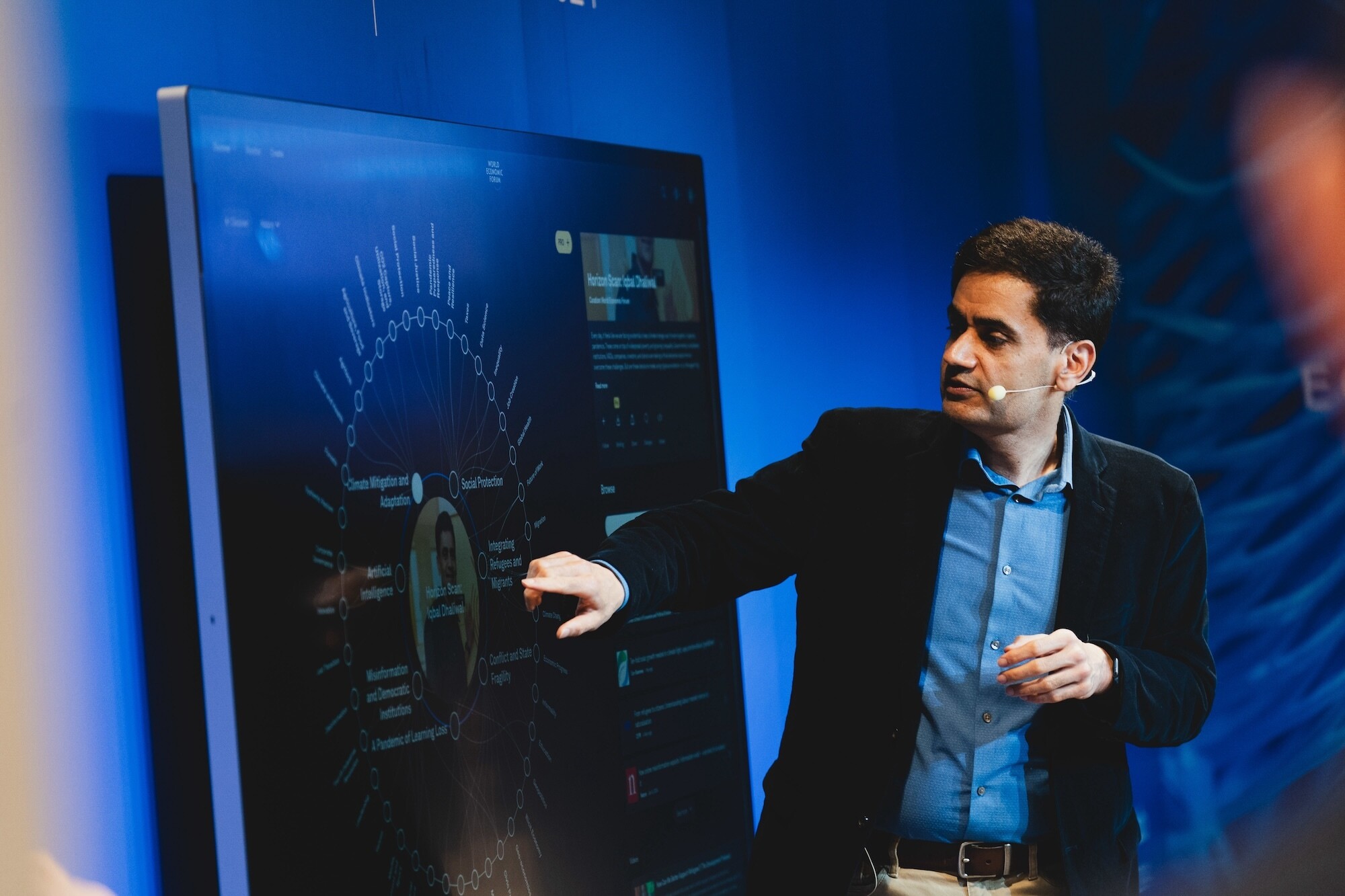
Strategic Intelligence allows those conversations to continue well beyond the conference rooms. Image: World Economic Forum/Mattias Nutt
- Geopolitical, climate and technological shifts are unfolding simultaneously at an exponential scale, challenging existing mental models.
- Under the theme A Spirit of Dialogue, the World Economic Forum Annual Meeting 2026 in Davos invites leaders to engage across divides and seek meaningful cooperation.
- The Forum’s Strategic Intelligence platform cuts through the noise and gives leaders a shared factual starting point to engage in dialogue, even when perspectives diverge.
Every morning, the world wakes up to more information and data than it can reasonably absorb. For leaders, the problem is that there is too much of it, coming too quickly, and that it is often fragmented and sometimes fabricated, outpacing their ability to interpret it. And it is not just leaders, citizens too face the same challenge: information has never been more abundant, yet genuine insight feels increasingly scarce.
Each generation has felt that its moment was uniquely complex. Yet today, the scale, speed and simultaneity of change give this era an almost “big bang” feel: geopolitical realignments, climate disruption, demographic shifts and exponential technologies are all unfolding at once, emerging in ways that stretch our existing mental models.
Against this backdrop, the need for a trusted and impartial space for dialogue has never been clearer. The World Economic Forum Annual Meeting 2026 in Davos, meeting under the theme A Spirit of Dialogue, invites leaders from business, government, civil society, science and culture to engage openly across divides: listening, questioning and problem-solving around shared global challenges.
Building on the Forum’s long-standing tradition of fostering cooperation across geographies and generations, this year’s programme focuses on five pressing questions shaping the decade ahead: how to cooperate in a more contested world, unlock new sources of growth, invest better in people, scale innovation responsibly, and sustain prosperity within planetary boundaries.
Progress begins with shared understanding
There is an urgent need for dialogue that is rooted in shared understanding and trust, spaces where evidence is shared openly, assumptions are tested constructively, and perspectives are broadened. These are the conditions for meaningful cooperation.
In this context, the Forum’s Strategic Intelligence platform provides a mechanism to address information overload and help turn it into collective understanding. By curating high-quality knowledge and making the interconnections between issues more visible, the platform helps decision-makers move beyond intuition, headline cycles, or partisan noise, and support decisions that can be explained, scrutinized and debated in good faith. In doing so, it gives governments, businesses and civil society a shared factual starting point from which trust can be established or rebuilt, even when perspectives diverge.
Making sense of an interconnected world
Strategic Intelligence is built on a recognition that no single actor or sector can grasp complex global systems alone. Each of its more than 300 expert-curated Transformation Maps, whether on the Energy Transition, Geo-economics, Blockchain, Food Security, or our intelligence on specific industries like Engineering and Construction and Electricity, not only shows the key trends around the topic, but also illustrates the mesh of inter-relationships around it.
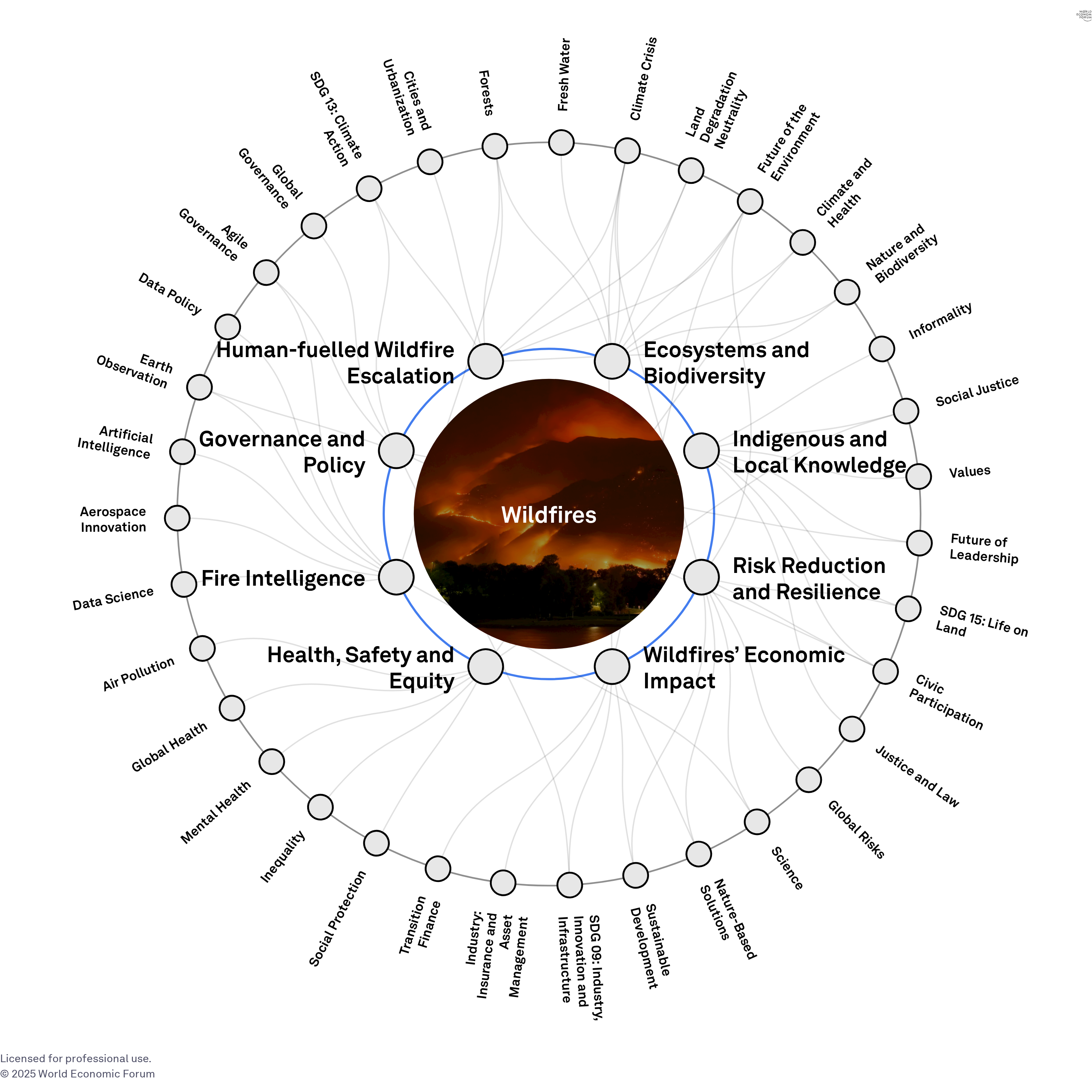
- Recent insights from the Wildfires Transformation Map, co-curated with Environmental Defense Fund, show how increased land-use pressure, urban expansion, and climate extremes interact in ways that overwhelm old fire management models. This is not just an environmental issue; it connects to energy security, healthcare costs, displacement and local economies.
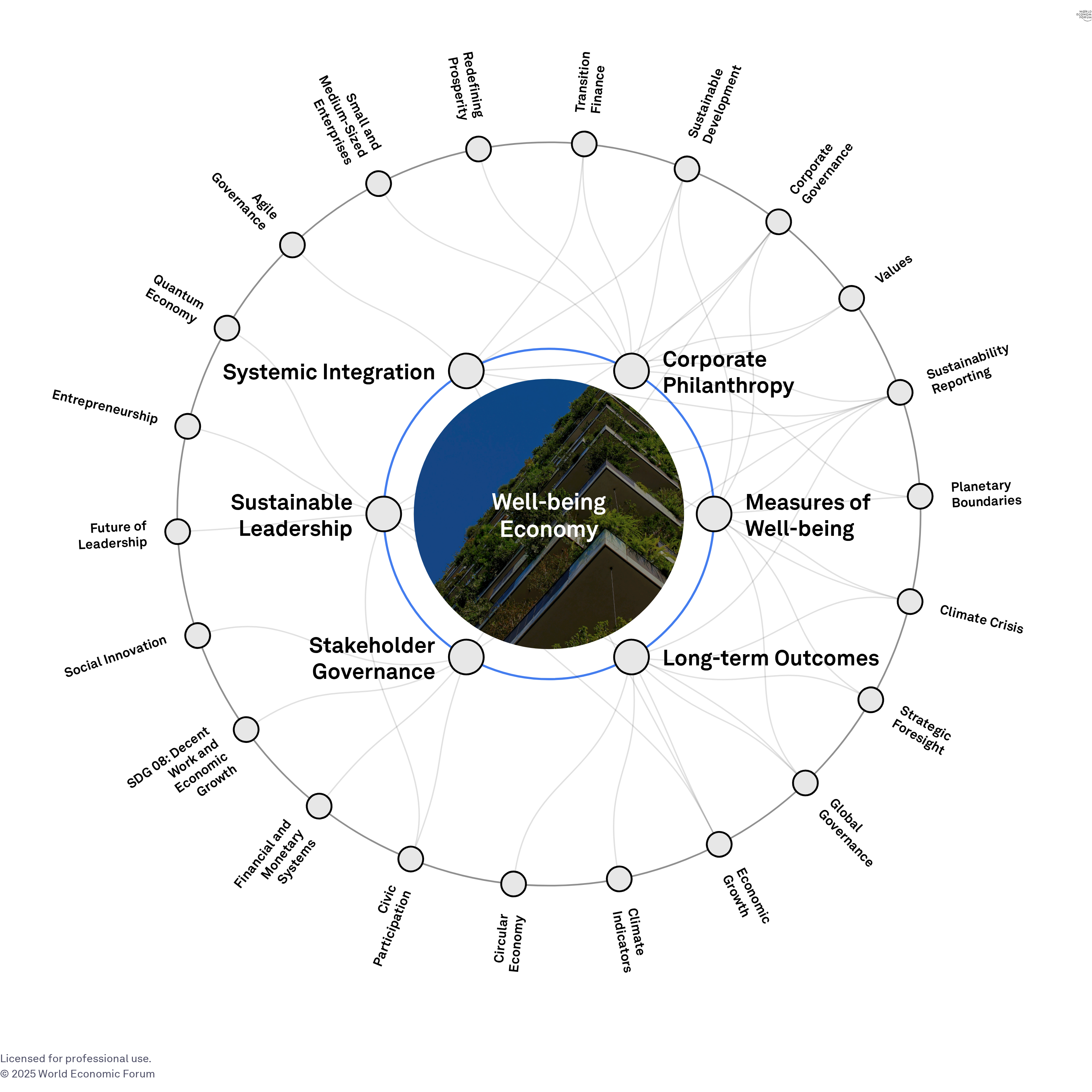
- The Well-being Economy Transformation Map, co-curated with the Singapore University of Social Sciences, invites readers to rethink the metrics of progress, arguing that GDP alone cannot navigate ecological collapse or social fragmentation.
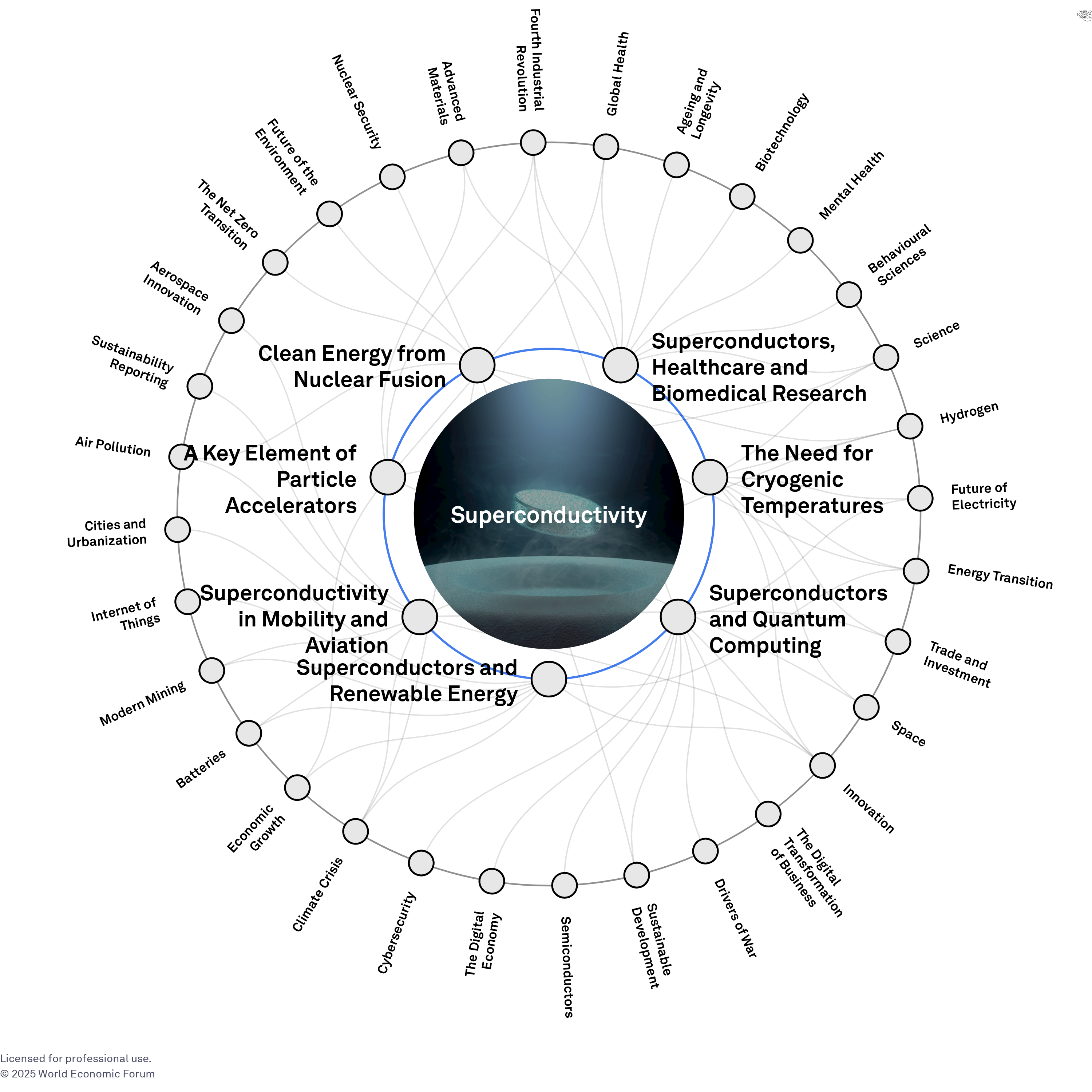
- Meanwhile, the Superconductivity Transformation Map, co-curated with the University of Geneva, highlights scientific breakthroughs that could transform mobility and healthcare if supported by responsible governance frameworks.
Strategic Intelligence illustrates how these distinct themes are interdependent, supported by trend analysis and foresight scenarios available in the AI-augmented dynamic briefings. The platform filters and elevates what matters, links it to credible sources and helps identify signals from noise.
Extending the spirit of Davos year-round
While the Annual Meeting catalyses dialogue, the issues it highlights develop all year long. Strategic Intelligence allows those conversations to continue well beyond the conference rooms. As new research, data, technologies and geopolitical shifts emerge, its Transformation Maps evolve continuously, capturing the latest insights and analysis.
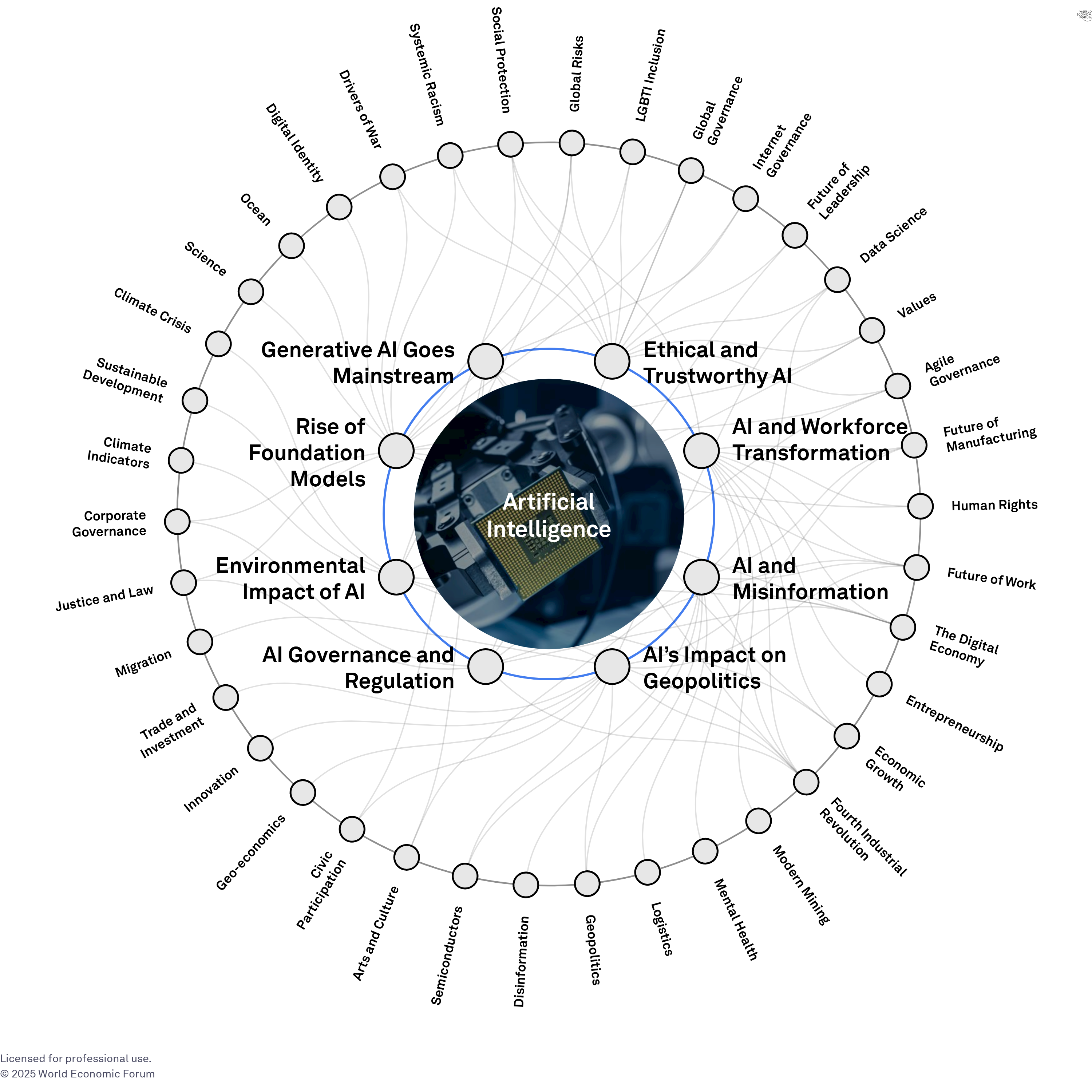
This agility makes Strategic Intelligence more than just a resource, but a living system of collective intelligence. Policy-makers can trace evolving dynamics in AI ethics or energy security. Businesses can monitor how geopolitical risks alter global value chains. Civil society and academia can track progress in public health, mobility and digital inclusion.
Through this ongoing process, Strategic Intelligence helps extend the collaboration fostered in Davos, helping its users to access the latest research, analysis and foresight, long after the sessions close. The result is a global dialogue that is continuous, adaptive and informed.
Why Strategic Intelligence matters for leaders today
Strategic Intelligence is key for effective modern leadership, building shared understanding across sectors. Systemic challenges, whether decarbonization or digital safety, require diverse actors to see a common landscape before they can cooperate. Strategic Intelligence provides that shared blueprint. In addition, it embeds foresight into strategy. Its scenario-based approach encourages leaders to prepare, an ability that defines resilience in an age of uncertainty. It also democratizes access to credible knowledge. By aggregating insights from hundreds of trusted sources, it helps counter misinformation and bridges the gap between technical research and public understanding.

The Strategic Intelligence platform uses a blend of human and machine intelligence that helps make sense of the interconnected world and enable informed, systemic and forward-looking dialogue. It serves as a platform that cuts through the noise, connects the dots and reminds us that the path to shared progress begins with shared understanding.
Don't miss any update on this topic
Create a free account and access your personalized content collection with our latest publications and analyses.
License and Republishing
World Economic Forum articles may be republished in accordance with the Creative Commons Attribution-NonCommercial-NoDerivatives 4.0 International Public License, and in accordance with our Terms of Use.
The views expressed in this article are those of the author alone and not the World Economic Forum.
Stay up to date:
Geopolitics
Related topics:


Forum Stories newsletter
Bringing you weekly curated insights and analysis on the global issues that matter.
More on Artificial IntelligenceSee all

Jeremy Jurgens
February 27, 2026