Opinion
Oxfam: 'Inequality is not inevitable' –How to build a future that benefits everyone
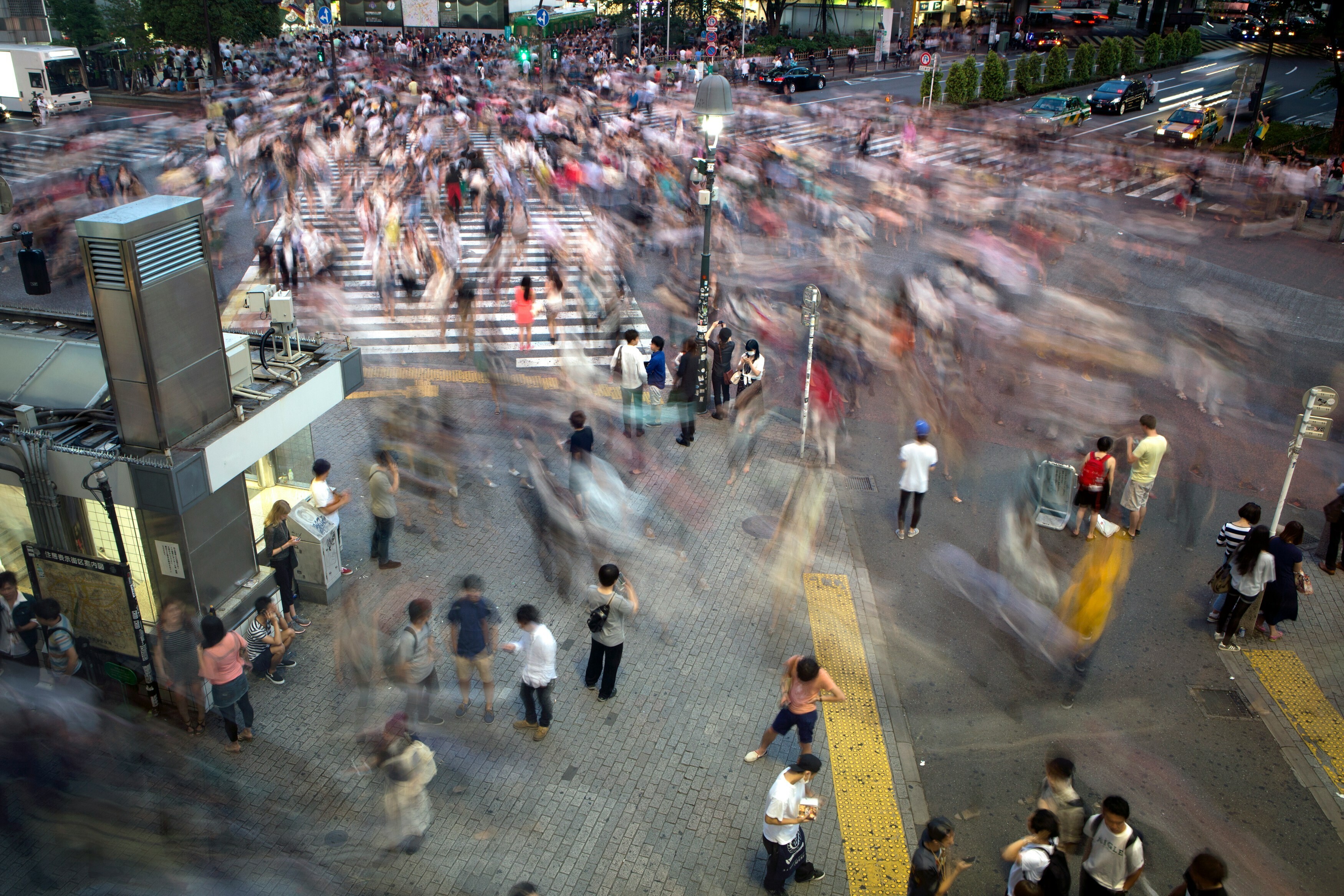
Inequality is not inevitable, and change is possible, if a true, equal, fair and democratic spirit of dialogue is present. Image: Getty Images for Unsplash
- New research by Oxfam shows that since November 2024, billionaire wealth has grown three times faster than the average rate since 2020.
- Oxfam’s executive director, Amitabh Behar, argues, “inequality is not inevitable, and change is possible, if a true, equal, fair and democratic spirit of dialogue is present — the main theme of this year’s Annual Meeting in Davos”.
- Bringing together diverse perspectives to move the world forward, Davos 2026 takes place from 19 to 23 January 2026.
Last year in this same space, I wrote, “I am an optimist.” After the past year many would say optimism is naïve. Yet I still feel it. And — perhaps surprisingly — I feel hope too, because of the courage I’ve seen. Gen-Z has filled streets across continents demanding a fairer world. Led by South Africa, the global inequality emergency was discussed at the G20 for the first time; the proposal for a new International Panel on Inequality is gaining momentum rapidly.
Even as our new research shows something staggering and deeply unsettling — that since November 2024, billionaire wealth has grown three times faster than the average rate since 2020 — hope survives because people everywhere are pushing back.
As Oxfam executive director, I am often asked to define what we do in just one sentence. My answer is simple: we speak truth to power. And so do millions of activists, journalists, unionists and citizens pushing for justice every day in every corner of the world.
Governments should defend their right to do so. Instead, governments everywhere are silencing dissent, criminalizing protest, and shrinking civic and political freedoms. If leaders refuse to listen to their people, who are they listening to? Increasingly, the answer is “the billionaires”, whose influence has exploded, boosted by the inequality crisis.
Today we publish a new report that again presents figures that should ignite an honest debate among us as to whether governments are more invested in the power of ordinary people, or that of the wealthiest individuals and groups.
Our analysis points to the latter.
For the first time, there are more than 3,000 billionaires in the world and their wealth has reached an all-time record high of $18.3 trillion — the equivalent of over 15% of global GDP. Everywhere, their fortunes have surged in the past year, from Silicon Valley to Sao Paulo, boosted by deregulation, tax cuts and super-charged stock markets.
What alarms us is not just the money but the political influence it has captured. Billionaires today are 4,000 times more likely to hold political office than ordinary people. Wealth and political power are merging towards oligarchies.
Inequality is not only economic. It is political
We tend to think of poverty in economic terms. But as shocking as it is that almost half of humanity live in poverty, there is another kind of poverty that billions of people live with: political poverty. While the wealthy are getting richer and accumulating more power to influence politics, billions of people are getting poorer and their voices have far less chance of being heard.
As the ultra-rich accumulate influence, billions more lose it. The data from 136 countries is painfully clear that where wealth is more concentrated, political power is too. This produces a policy landscape that privileges the views of the rich while sidelining those of the poor.
We may disagree on whether extreme wealth amassed in a few men — only 13% of billionaires are women — is ever “earned”. We could even ask ourselves how much is too much. But we should never disagree that it is fundamentally unjust for the ultra-rich to use their fortunes to bend democracy to their will.
Control of information means control of the narrative
Nowhere is this dysfunction more evident than in the context of the media, social networks and artificial intelligence. The ownership of the world's largest media and social media companies is concentrated in the hands of the very wealthiest. Owning a super-yacht is one thing; owning the public conversation is quite another.
This same pattern holds with the world's top AI companies, with just three commanding nearly 90% of the generative AI chatbot market. If AI’s influence is “hard to overstate” then its ownership should raise alarm if it is to be a new source of prosperity.
Inequality is not inevitable, and change is possible, if a true, equal, fair and democratic spirit of dialogue is present.
”Digital platforms, too, once coined as a liberation tool, are increasingly being used by to repress dissidence. We are also witnessing the use of social media to systematically stigmatize and scapegoat minorities.
The future is about political choices
Politics is about choices. Governments can choose whether public services thrive or wither; whether taxes fall more on ordinary families or on wealthy ones; whether to fight inequality or fuel it.
Right now, the wrong choices are winning. It does not have to be this way. Inequality is not inevitable, and change is possible, if a true, equal, fair and democratic spirit of dialogue is present — the main theme of this year’s Annual Meeting in Davos. People everywhere are demanding better. We can turn the tide by choosing courage over convenience and justice over privilege.
Don't miss any update on this topic
Create a free account and access your personalized content collection with our latest publications and analyses.
License and Republishing
World Economic Forum articles may be republished in accordance with the Creative Commons Attribution-NonCommercial-NoDerivatives 4.0 International Public License, and in accordance with our Terms of Use.
The views expressed in this article are those of the author alone and not the World Economic Forum.
Stay up to date:
Inequality


Forum Stories newsletter
Bringing you weekly curated insights and analysis on the global issues that matter.