India and Europe have a generational opportunity to forge a strategic partnership. Here's why
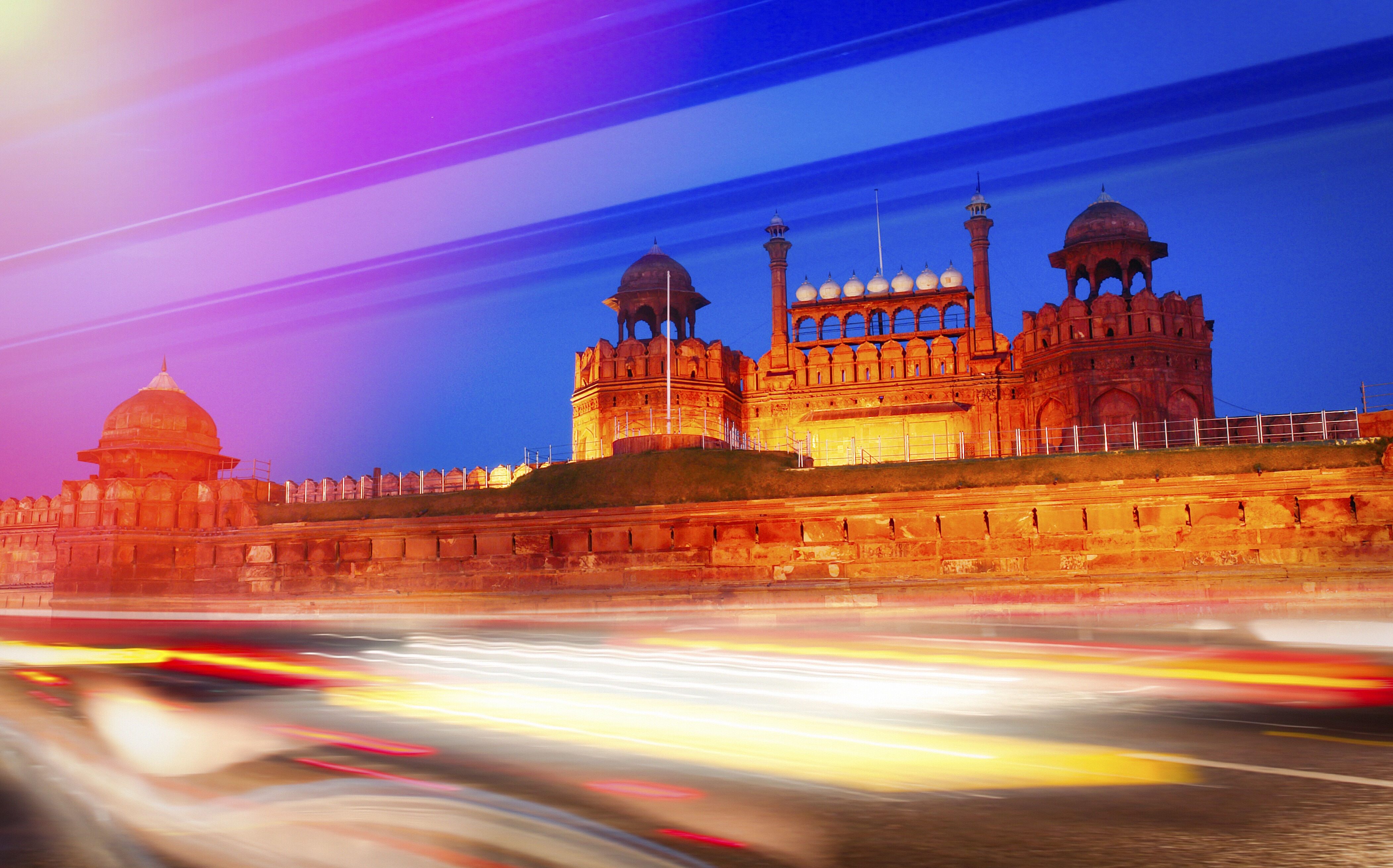
India and Europe are natural allies in a volatile world. Image: Getty Images
- In this moment of fracture, India and Europe have a generational opportunity to forge a strategic partnership.
- Government-level alignment is vital, but an India–Europe partnership will ultimately be built by businesses willing to collaborate at scale.
- Combining European innovation with Indian scale, European capital with Indian resilience, European precision with Indian adaptability, we can unlock a value multiplier.
The current global landscape is characterized by deep fragmentation, a transactional approach to international politics and rising geopolitical uncertainty. We are witnessing tectonic shifts in the global order. The question for business leaders is no longer “Where is the cheapest place to build?” but “Who is the partner I can trust to build with?”
In this moment of fracture, India and Europe have a generational opportunity to forge a strategic partnership. Both regions are anchors of a rules-based order and have witnessed the consequences of its erosion through the weaponization of trade. Most importantly, we share a common aspiration: sustainable, inclusive growth for our people.
Both regions are also at defining inflection points. Europe, a powerhouse of innovation, is confronting external dependencies that challenge its economic sovereignty. India, driven by the “Viksit Bharat @ 2047” vision, is not only transitioning toward developed-economy status, but also rightfully stepping into a larger geopolitical role.
While EU-India trade is already strong, exceeding €180 billion annually, this figure under-represents the true potential. As the old guarantors of globalization, trust and predictability fade, Europe and India have an opportunity to craft a new framework: a partnership built on resilience and designed to create lasting value.
The India growth story
Today, India is the world’s fourth-largest economy and the fastest-growing major one. As it advances toward its developed-economy goal by 2047, growth momentum is expected to remain high, likely averaging 8-10% over the coming decades. By 2030, India is poised to become the world’s third-largest economy in absolute GDP terms, and one of the most significant growth engines globally.
India’s rise is powered by three major engines:
1. Demographics
A young, expanding workforce – combined with rising household aspirations – is reshaping consumption patterns. By 2030, India is expected to add nearly 100 million new middle-income and affluent households. This surge will meaningfully expand discretionary consumption and deepen domestic demand.
2. Infrastructure: physical and digital
India is building both physical and digital infrastructure at unprecedented scale:
· Nearly 40 kilometres of national highways are being added per day.
· A new airport opens approximately every 40 days.
· The PM Gati Shakti Master Plan and the National Infrastructure Pipeline are enabling integrated, multi-modal growth.
· Digital Public Infrastructure: the “India Stack”, anchored by digital identity (Aadhaar) and Unified Payments Infrastructure (UPI), serves over 1.3 billion Indians and has become a globally celebrated model, now processing more than 10 billion real-time transactions monthly.
3. Reforms
A decisive wave of reforms, including Goods and Services Tax rationalization, corporate tax reduction (15% for new manufacturing), ease-of-doing-business measures and Production-Linked Incentives, is reshaping India’s investment climate. Additionally, the simplification of multiple labour laws into four streamlined codes aims to improve clarity, reduce compliance burdens and support efficient scale-up of industries, especially in manufacturing. These steps are aimed at boosting productivity, competitiveness and formalization.
These three engines together create the foundation for a manufacturing transformation. India is now positioned to serve both its large domestic market and global supply chains. The world’s largest engineering talent pool and the rapid expansion of Global Capability Centres reflect a shift from outsourcing to co-innovation, especially in AI, robotics, IoT, and advanced design.
Europe’s strengths
Europe brings world-leading strengths in high-value and high-complexity production. Its depth in precision engineering, biotechnology, advanced materials, green energy systems, defence technologies and cutting-edge research makes it one of the most sophisticated industrial ecosystems in the world. To achieve its ambition of becoming a $30 trillion economy, India must leapfrog decades of industrial evolution. It needs a partner that has mastered the complexity of high-value production. Europe, often described as the world’s R&D lab, is that natural partner.
Over-concentration in the world’s critical minerals markets is unprecedented, and our reliance is expected to grow exponentially in the coming years as the clean energy transition picks up pace. Currently, more than four-fifths of Europe’s large companies are within three supply chain steps of a single Chinese rare earth producer. Similarly, India relies on imports for nearly all its lithium, cobalt and nickel.
Recognizing these existential dependencies, both regions have responded with policy – Europe with its Critical Raw Materials Act, and India with its National Critical Mineral Mission. But why move on parallel paths when we can get convergence? By anchoring our supply chains in each other’s markets, leveraging existing favourable initiatives like the India-Middle East-Europe Corridor (IMEC), and creating a bridge with partnerships built on trust, we can convert this mutual vulnerability into shared security.
Ambition to Action
Government-level alignment is necessary, but the India–Europe partnership will ultimately be built by businesses willing to collaborate at scale. Three avenues stand out:
1. Advanced manufacturing partnership
Companies in India are keen to seek European partners to establish a competitive advantage and “Make in India” for the world. This partnership will enable both regions to build stronger, more secure industrial capabilities for the future. European firms can establish joint R&D and co-development centres in India not just for support functions, but to design, adapt and manufacture high-value products for global markets. India’s scale, engineering talent and cost advantage make it a competitive base for producing advanced components and systems across sectors, from clean energy hardware to precision industrial equipment.
2. Green energy collaboration
Businesses have the opportunity to solve Europe’s energy trilemma while fuelling India’s industrial growth. Europe needs secure, green energy and India has the geography and scale to produce it cheaply. Through long-term offtake agreements and capital investment, European industry can de-risk the large-scale renewable energy infrastructure projects India is building. In return, India provides a democratic, reliable source of green hydrogen, helping Europe decarbonize without de-industrializing.
3. Aligning deep tech with digital public infrastructure
Europe is a superpower in Deep Tech IP (semiconductors, AI) but struggles to scale quickly while India has mastered deployment at population scale. Leveraging India as a sandbox for European innovation, companies can test solutions on a user base of billions, compressing years of learning into months. In return, India gains access to semiconductor ecosystems and hardware expertise needed to secure its own digital sovereignty.
India and Europe are natural allies in a volatile world. By combining European innovation with Indian scale, European capital with Indian resilience, and European precision with Indian adaptability, we can unlock a value multiplier neither region can achieve alone.
This is not just a partnership of opportunity. It is a partnership of ambition. And now, a partnership calling for action
Don't miss any update on this topic
Create a free account and access your personalized content collection with our latest publications and analyses.
License and Republishing
World Economic Forum articles may be republished in accordance with the Creative Commons Attribution-NonCommercial-NoDerivatives 4.0 International Public License, and in accordance with our Terms of Use.
The views expressed in this article are those of the author alone and not the World Economic Forum.
Stay up to date:
India
Related topics:


Forum Stories newsletter
Bringing you weekly curated insights and analysis on the global issues that matter.
More on Geo-Economics and PoliticsSee all

Pooja Chhabria
February 27, 2026


