What Brunei's innovations can teach us about data-driven health systems

When it comes to NCDs, many countries and their health systems still operate with incomplete, outdated or unusable health data. Image: Unsplash
Shyam Bishen
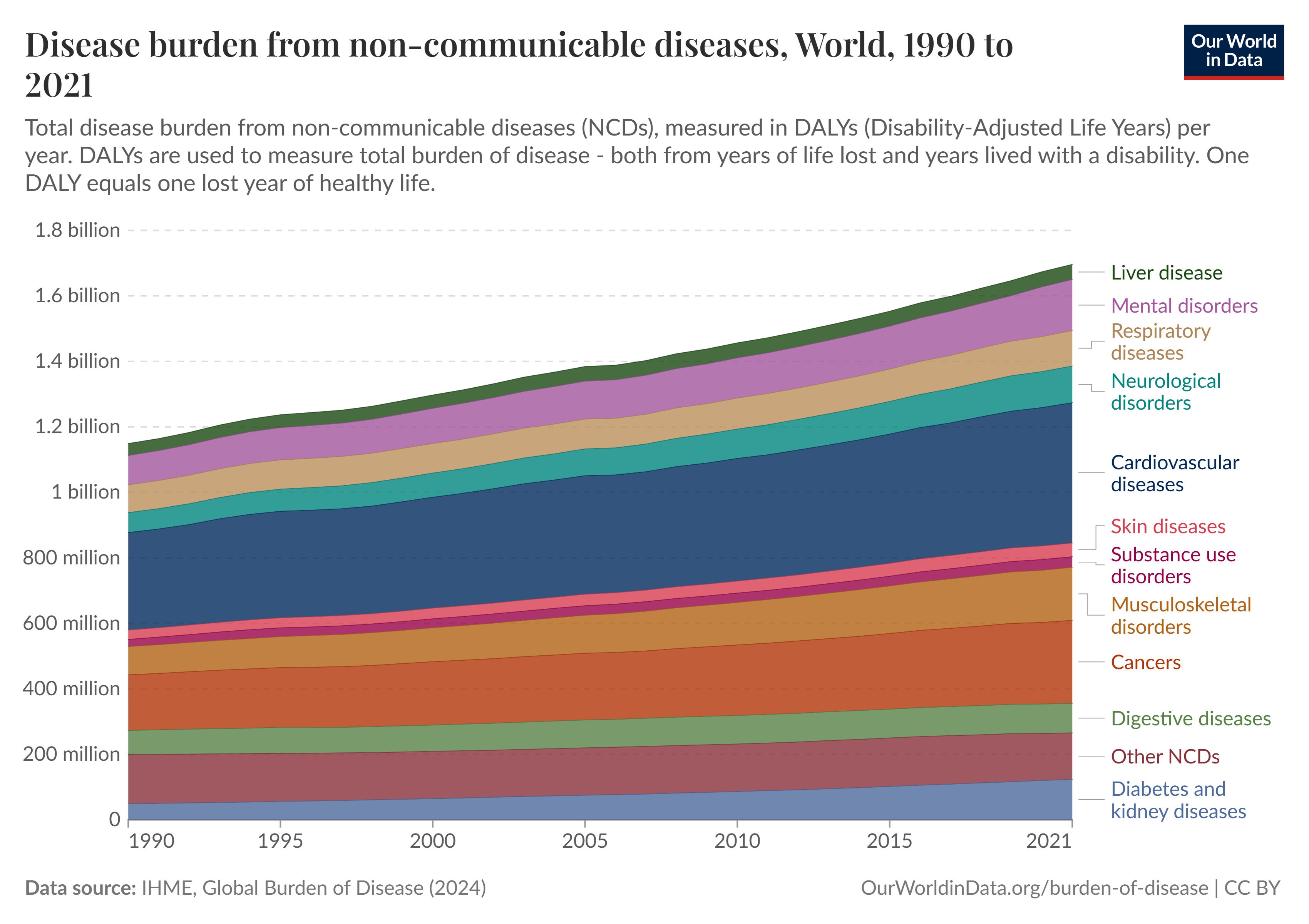
Head, Centre for Health and Healthcare; Member of the Executive Committee, World Economic Forum- Cardiovascular diseases, alongside other non-communicable diseases (NCDs), are responsible for more than 70% of global deaths.
- Yet, the data infrastructure to fight cardiometabolic disease in many countries is lagging, fragmented or outdated.
- Stronger health information systems, real-time data, and multisector partnerships can enable countries to shift from reactive care to more predictive and targeted approaches to NCDs.
Cardiovascular disease, diabetes, and other NCDs account for more than 70% of global deaths – yet many countries still operate with incomplete, outdated or unusable health data. A 2023 ASEAN study finds significant gaps in basic NCD indicators and the World Health Organization reports that surveillance systems remain weak across much of the world.
Without strong data foundations, health systems cannot answer the most fundamental questions, such as: where is risk rising, what interventions work and who is being left behind?
The result is predictable: scientific and therapeutic innovations make only a limited impact because systems lack the real-time insight required to deploy them most effectively. Some countries are beginning to respond to this challenge by investing in integrated, real-time health data systems – an approach that Brunei Darussalam is now implementing.
Why future health systems must be more data-driven
To move from reacting to disease to predicting it, health systems need robust, integrated data systems that:
- detect early patterns of risk,
- understand the main drivers of disease in the population,
- guide targeted interventions and
- continuously inform smart decision-making.
This ability to target resources to the places or sub-populations in which they will make the greatest difference is the foundation of precision population health. These capabilities are not theoretical: Brunei Darussalam, for example, is actively developing them through its national digital health platform and partnerships that translate data into actionable insights.
Applying the very principles outlined above – early risk detection, targeted interventions and continuous learning – Brunei aims to transform how cardiovascular risk is managed at the population level.
It starts with BruHealth, the country’s existing nationwide digital health platform. To further strengthen this system, Brunei is establishing a partnership among the Ministry of Health, EVYD Technology, and the Novartis Foundation. The collaboration will strengthen Brunei’s ability to use real-time data in guiding cardiovascular health interventions, building on the BruHealth platform.
How Brunei is building one version of the answer
Originally launched for COVID-19 contact tracing, as of 2022, 63% of the population uses BruHealth weekly to access lab results and imaging reports. In 2025, expanded screening for cancer and cardiovascular disease was introduced to the platform, including a smarter health index that provides AI-informed, personalized health guidance, allowing citizens to actively manage their health in real-time.
“COVID taught us that when citizens trust a platform, they use it. That trust is now the foundation for longer-term health goals,” says Abby Tan from EVYD Technology.
This evolution shows how citizen-facing digital platforms can generate real-time, actionable population health data that supports earlier intervention and more precise decision-making.
The partnership between the Ministry of Health, EVYD, and the Novartis Foundation also adapts elements of CARDIO4Cities, an approach developed by the Novartis Foundation and designed to rapidly reduce cardiovascular risk in large populations through measurable targets, integrated dashboards and technologies, and intersectoral action. CARDIO4Cities provides a practical framework for operationalizing data-driven health systems by translating insights into coordinated population-level action.
CARDIO4Cities has demonstrated success in cities such as São Paulo and Dakar, achieving a three to six-fold increase in hypertension control and reducing stroke and heart attack rates within two years. It is currently being rolled out in more than 40 cities worldwide.
By adding the CARDIO4Cities framework to its existing technology footprint, Brunei aims to create a more proactive, predictive health system capable of identifying high-risk groups earlier and guiding interventions more precisely – all with a goal to reduce the risk of cardiovascular disease and its acute complications, such as heart attacks and strokes.
How the Forum helps leaders strengthen health systems through collaboration
Why partnerships matter
No single institution can close the health data gap alone. Progress depends on intersectoral, multidisciplinary collaboration that brings together population health expertise, technology and science innovations, advanced analytics, and on-the-ground implementation. Governments often lack the technical capacity to build advanced analytics platforms, while private companies cannot implement population-level interventions without public health expertise.
Brunei’s model illustrates how combining these strengths expedites progress. Public authorities provide legitimacy, governance and access to population data; technology partners deliver infrastructure and innovation; and social impact innovation organizations, such as the Novartis Foundation, contribute evidence-based frameworks and best practices.
Closing this health data gap is possible. It requires leadership, partnerships, and a commitment to using data not only to understand problems, but to act on them. Brunei’s model shows how such partnerships can help countries strengthen data systems, act earlier and build more resilient, equitable approaches to NCDs. Partnerships also enable scalability: frameworks like CARDIO4Cities can be adapted to diverse contexts when supported by local and global actors working together.
Closing the gap requires a multi-pronged approach:
- Strengthen surveillance systems using WHO’s standardized tools like STEPS to ensure comparable, actionable data.
- Invest in infrastructure and skills capable of supporting AI-driven analytics and real-time dashboards.
- Adapt proven frameworks such as CARDIO4Cities to local cultural, social, and policy contexts.
- Engage citizens through platforms that make health management intuitive and rewarding, as proven by BruHealth.
- Ensure governance and maintain control over sensitive health data within the country to build trust and comply with privacy regulations.
Transforming health systems into predictive, equitable, and resilient institutions is possible today. It demonstrates how countries can move from recognizing the limits of fragmented data to implementing integrated systems that inform action at scale. Anchored in citizen engagement, sovereign AI infrastructure and globally validated strategies, Brunei’s model offers a blueprint for countries seeking to modernize healthcare.
This is not just about upgrading technology. It is about building trust, fostering collaboration, improving health outcomes and ensuring that every decision is informed by data. By linking digital health innovation and AI-driven initiatives, nations can move from reaction to prediction, from fragmented care to precision population health and, ultimately, from vulnerability to resilience.
Don't miss any update on this topic
Create a free account and access your personalized content collection with our latest publications and analyses.
License and Republishing
World Economic Forum articles may be republished in accordance with the Creative Commons Attribution-NonCommercial-NoDerivatives 4.0 International Public License, and in accordance with our Terms of Use.
The views expressed in this article are those of the author alone and not the World Economic Forum.
Stay up to date:
Artificial Intelligence-Facilitated Healthcare

Forum Stories newsletter
Bringing you weekly curated insights and analysis on the global issues that matter.