Why we must act now on tackling antimicrobial resistance
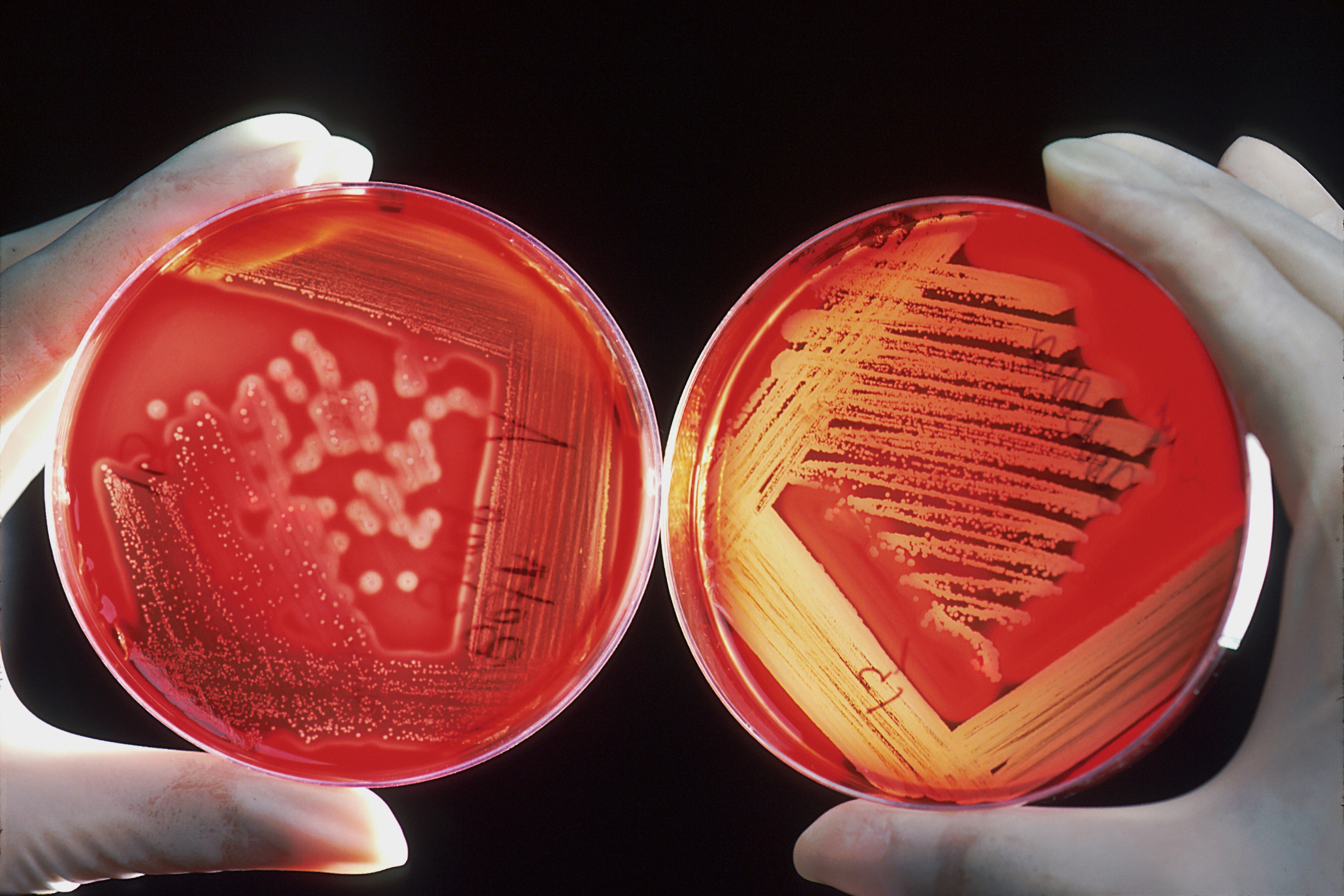
Antimicrobial resistance makes sepsis far harder to treat, significantly increasing the risk of death, particularly for vulnerable populations. Image: National Cancer Institute/Unsplash
- Antibiotics are key infrastructure for society, with the security of our health, our food systems and our economies relying on these effective antimicrobials.
- This makes tackling antimicrobial resistance urgent: recent modelling shows AMR could leave the global economy about $1.7 trillion smaller by 2050 compared with a business-as-usual scenario.
- Over 50 organizations have signed the Davos Compact on AMR and, as leaders meet for the World Economic Forum's Annual Meeting 2026, more are urged to join the effort to collaboratively tackle this global health threat.
Like carbon or clean water, antibiotics are essential infrastructure that we must protect for all and future generations. The security of our health, our food systems and our economies relies on effective antimicrobials.
But we are facing a global health emergency as the number of superbugs capable of outwitting our armoury of treatments accelerates. Without reliable antimicrobials, organ transplant, cancer chemotherapy and other medical procedures would carry unacceptable risks. Simple cuts and wounds, urinary tract infections and sexually transmitted infections would become life threatening.
Have you read?
Sepsis, a leading cause of death worldwide, illustrates this risk with devastating clarity. It occurs when the body’s extreme response to infection causes life threatening organ damage and can often be fatal. Antimicrobial resistance makes sepsis far harder to treat, significantly increasing the risk of death, particularly for vulnerable populations.
Cancer patients, for example, are up to 10 times more likely to develop sepsis than the general population, and sepsis is the leading cause of intensive care unit admissions among people with cancer. As resistant infections become more common, conditions that are already medical emergencies become even more deadly.
This is why antimicrobial resistance is not only a healthcare challenge but a macroeconomic one. It is already undermining workforce participation and productivity across sectors, and its economic impact is set to grow: recent modelling suggests AMR could leave the global economy around $1.7 trillion smaller by 2050 compared with a business-as-usual scenario.
Global action needed to tackle antimicrobial resistance
The need for coordinated global action on antimicrobial resistance has never been more pressing.
This is why the World Economic Forum’s Global Future Council on AMR authored the Davos Compact on AMR, with review by the Quadripartite Joint Secretariat on AMR, following the High-Level meeting on Antimicrobial Resistance at the United Nations General Assembly in September 2024.
The Davos Compact on AMR is a public statement from signatories that they are supportive of the goals of the compact in improving the response to antimicrobial resistance.
At the Forum’s Annual Meeting 2026 in Davos, we are pleased to announce that more than 50 global leading organizations have backed this call to action. Signatures span countries and regions across the global bringing in leaders from insurance, pharmaceutical and biotech, health systems, civil society, academia, animal health, finance and philanthropy.
Together this unified coalition is calling for concerted action across four key priorities:
- Innovation and access: Accelerating research and development for new antimicrobials, diagnostics and vaccines while ensuring equitable and responsible access, particularly in low- and middle-income countries.
- Awareness and advocacy: Driving global awareness and behaviour change through engagement with governments, industry leaders and communities.
- Sustainable agri-food systems: Reducing antimicrobial use in agriculture, promoting stewardship and investing in alternatives to safeguard human, animal and environmental health.
- Multisectoral engagement and financing: Creating market-based incentives and sustainable financial mechanisms to encourage private sector investment in AMR solutions.
This is critical because whoever you are, wherever you live and whatever you do, the growing threat of antimicrobial resistance will impact you. Geopolitical tensions, warming climates and even tourism all play a role in the spread of AMR.
We see this first hand in Ukraine where the war, and the resulting increase in casualties and patient volumes, has accelerated the spread of multidrug-resistant bugs with antimicrobial resistance rates exceeding 80% in some hospitals.
Meanwhile in Venezuela, AMR is also emerging as a significant and rising health threat, as with many other countries facing similar challenges.
Indeed, between 2025 and 2050, AMR is expected to directly cause more than 39 million deaths and be associated with a broader 169 million deaths. Under an alternative scenario in which new antibiotics are developed for certain bacteria, we estimate that 11.1 million AMR deaths would be averted by 2050.
Join us to act on antimicrobial resistance
The first coalition of signatures to the Davos Compact on AMR, which already includes the AMR Alliance Japan, bioMérieux, the Council on Ethics for the Swedish National Pension Funds and SwissRe, have already demonstrated global leadership on tackling antimicrobial resistance by signing. But it is critical that we continue to drive awareness and advocacy across all sectors.
We invite everyone in Davos – and a global audience through a live streamed broadcast – to join us at The Fragile Future of Antibiotics session of the Open Forum programme on Wednesday 21 January 2026 at 18:30 to show their support in tackling this issue.
Organizations from across the world are also asked to sign the Davos Compact on AMR as a collective commitment to mobilize resources and drive systemic change in addressing antimicrobial resistance.
How the Forum helps leaders strengthen health systems through collaboration
The compact is supported by the Forum’s ongoing work with partners under the Unified Coalition for the AMR Response (UCARE). The launch of a new workstream focused on addressing systemic health system challenges including supply failure, surveillance, stewardship, including appropriate use of diagnostics in the first quarter of 2026, underscore this commitment.
By becoming a signatory, organizations from across countries and sectors will join a global effort to drive systemic change in tackling antimicrobial resistance.
For by the time of the High-Level meeting on AMR at the United Nations General Assembly in 2029, we must be able to demonstrate progress in tackling this global threat of antimicrobial resistance or we will all suffer the consequences.
Don't miss any update on this topic
Create a free account and access your personalized content collection with our latest publications and analyses.
License and Republishing
World Economic Forum articles may be republished in accordance with the Creative Commons Attribution-NonCommercial-NoDerivatives 4.0 International Public License, and in accordance with our Terms of Use.
The views expressed in this article are those of the author alone and not the World Economic Forum.
Stay up to date:
Antimicrobial Resistance


Forum Stories newsletter
Bringing you weekly curated insights and analysis on the global issues that matter.
More on Health and Healthcare SystemsSee all

Ruma Bhargava and Megha Bhargava
March 6, 2026


