How battery storage could unlock the grid and make power more affordable
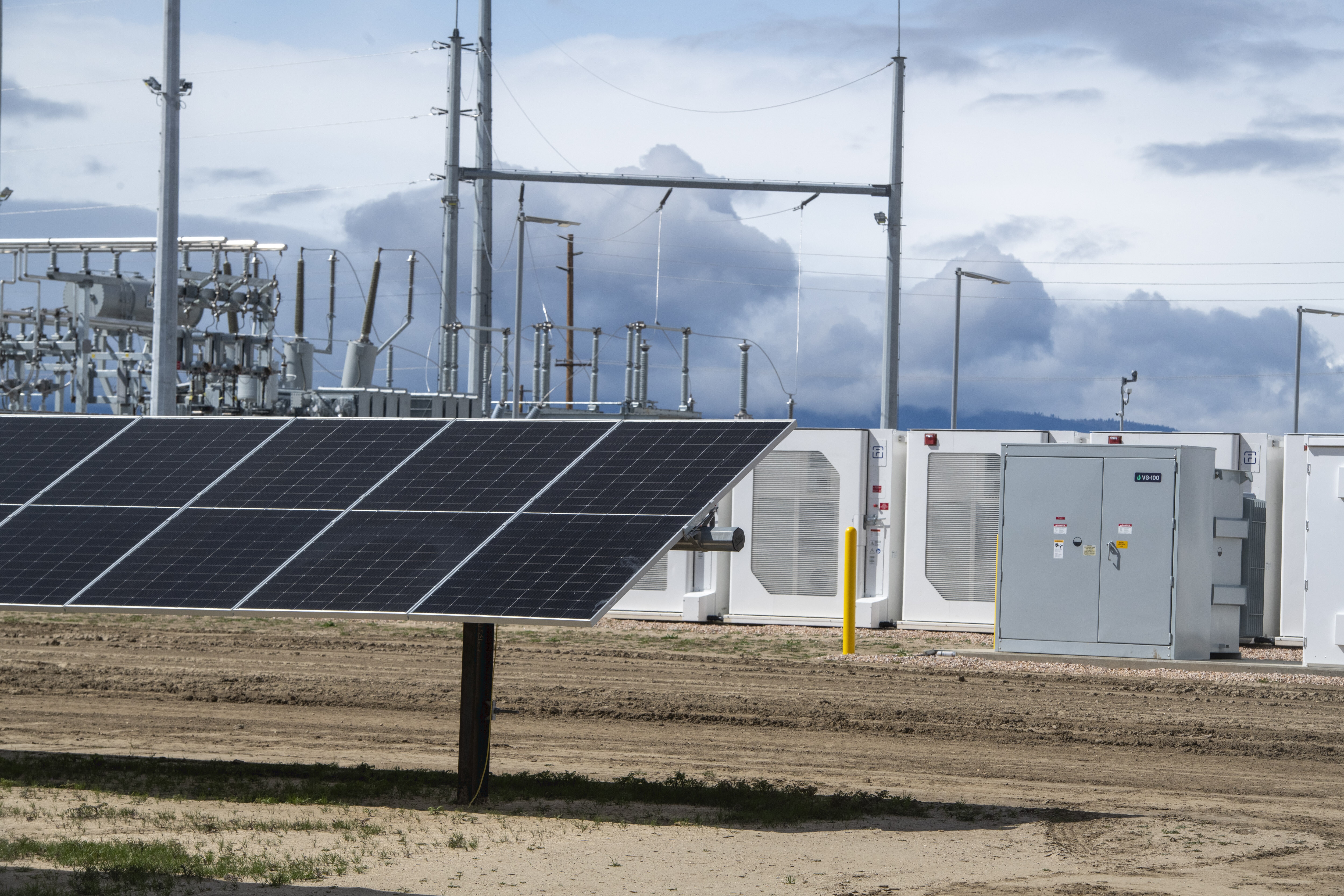
Battery storage could optimize existing grid infrastructure to meet growing demand, place downward pressure on prices and help accelerate the energy transition. Image: AES
- Energy companies need new solutions to meet rising demand without causing price spikes or slowing the energy transition.
- Battery storage could help optimize existing power grid infrastructure – the tools and capital exist, now resolve and regulation are needed.
- While this solution is highly relevant to the US, where growth and affordability concerns are top of mind, the concept is also applicable globally.
Electricity demand is rising fast, driven by electrification, AI and data centres, and expanding access to reliable power globally. Simultaneously, the power sector is facing an affordability crisis. So, how can energy companies serve this new demand and modernize the grid without driving prices higher for consumers?
The answer is hiding in plain sight: use the existing grid more fully. Around 15 years ago, AES first scaled battery storage as an alternative to power plants. Since then, the growth of battery storage has been rapid. But the electricity industry has missed the opportunity to use it to fully mitigate constraints and address chronic under-utilization of the grid – specifically the complex wire network that transports electricity.
Now, the increasing ubiquity of storage globally provides an unprecedented opportunity to use batteries to optimize existing grid infrastructure in order to meet this growing demand and place downward pressure on prices. The tools and capital are currently being deployed, now all we need are the resolve and regulatory structures to act.
Current power grid challenges
Power grids are engineered to meet peak demand with reserves. That’s the foundation of a reliable grid. But the tradeoff is that the network is under-utilized most hours of the year. A recent Stanford University study of western US grids showed that, even during peak usage periods, utilities used just 18-52% of transmission capacity, for example. Wires, substations, transformers and generators sit idle most of the time waiting for the few hours or days when demand spikes.
This approach made sense to ensure reliability in a system in which the flow of electrons is largely uncontrollable. But the fundamental nature of the power system is changing. The most recent government figures show that more than 90% of the US interconnection queue was made up of inverter-based technologies, like solar, wind and batteries, in 2024. Along with digitally native demand sources like data centres and EV charging, these technologies that are connecting to the grid today are controllable – even if the network continues to operate as if they are inflexible and random.
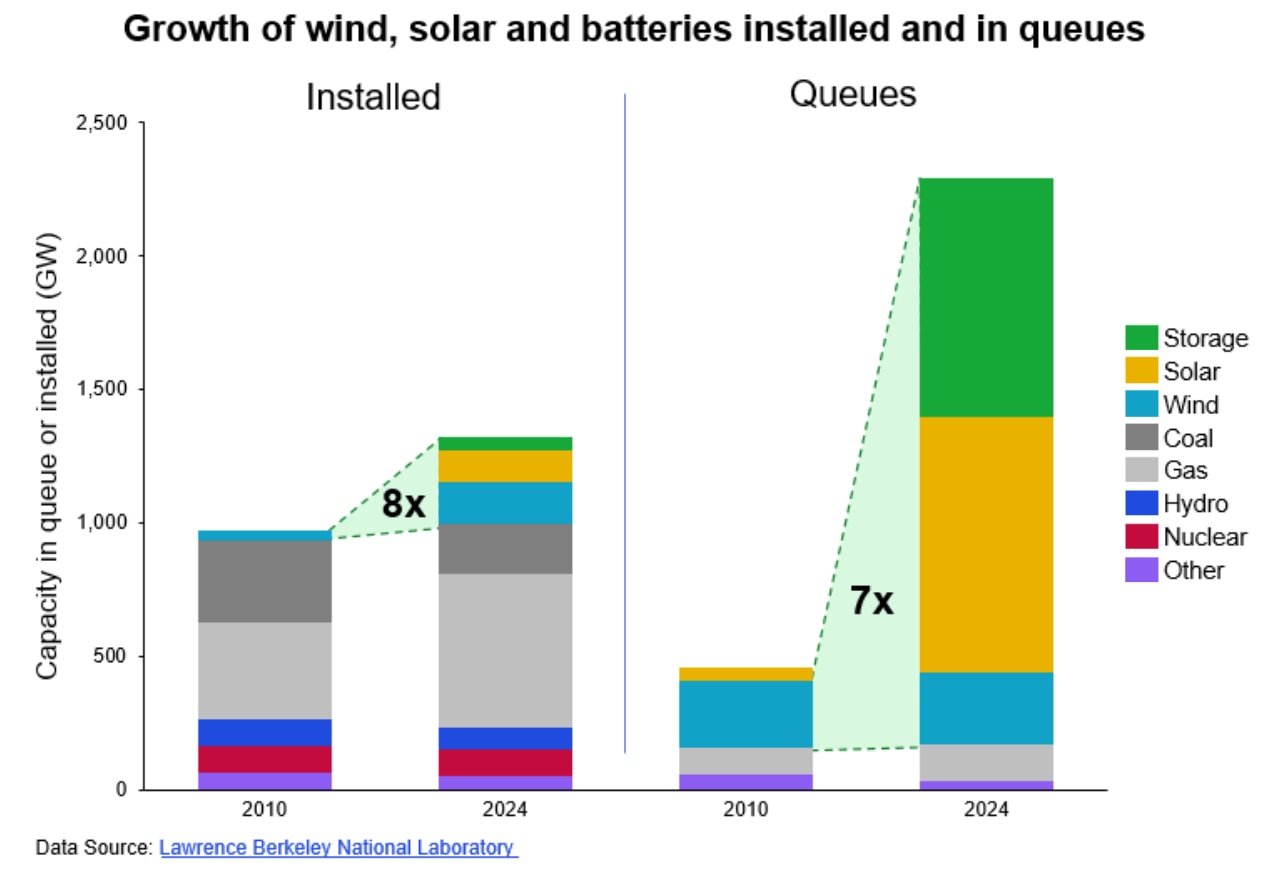
Batteries in particular present a major untapped opportunity. Grid-based “network-directed” battery storage that is deployed and operated to relieve network constraints could unlock significant latent capacity in today’s energy infrastructure. With proper policies, planning paradigms and grid protocols, a network of battery storage could put a higher volume of electricity through the existing network.
Two enablers to optimize the power grid
To make this vision real, two ingredients matter most – one is the “key” that will unlock the system and the other is the “accelerator” that will let it rapidly scale.
The key: network-directed battery storage
Energy storage is being deployed at unprecedented rates – over 15 GW of batteries were added to the grid in the US in 2025, according to EIA data. And there is no sign of this slowing down.
Storage is currently deployed primarily for energy purposes, such as managing prices and renewables integration. Those uses will remain important. But batteries can also be treated as a network asset – a flexible buffer that helps make the grid more useful. Batteries can store excess electricity when wires are under-utilized and can also act as location-specific generation when wires are stressed. This means batteries can serve as transmission as well as storage.
While it has not yet reached its full potential, there are already examples of battery storage being deployed to benefit the transmission and distribution system.
The accelerator: digital network protocols
Digitally native grid assets could help to reimagine grid planning and balancing, taking inspiration from the internet.
Devices that are connected to the internet follow shared communications protocols that allow for rapid connection without the need for custom engineering. While the grid is not the internet – physics and safety requirements demand a unique approach for the gird – the analogy is powerful.
A grid protocol could include digital rules and requirements automatically governing when controllable supply sources can inject electricity into the grid and when large loads, like data centres, can lend their flexibility to the system by adjusting their consumption. A network of storage underpinning the protocol that is constantly charging and discharging could keep the system balanced autonomously within defined operating parameters. This would limit the need for electricity consumers to alter consumption habits as much as possible.
This system would give planners confidence that new interconnections won't impact reliability.
If implemented correctly, the energy storage key and the protocol accelerator could create a plug-and-play system that would improve the time it takes to build and connect new projects to the grid by reducing the need for bespoke interconnection studies and costly upgrades. It would also put downward pressure on prices by allocating fixed costs across a greater amount of electricity delivered. And it could accelerate the energy transition through faster deployment of low carbon generation.
How to capitalize on battery storage
This doesn’t require a breakthrough technology or major new capital investments. Batteries are already being deployed. Instead, global energy leaders must:
- Create standards and protocols for inverter-based resources and flexible loads that support predictable, safe behaviour under normal and disturbed conditions
- Modernize planning assumptions related to traditional grid interconnections
- Encourage market and regulatory structures that reward storage for relieving network constraints – providing developers with clear signals to place batteries where they will help the system most
- Start small and scale by developing pilot “grid protocol” concepts at the neighbourhood level and then expanding.
While this solution is highly relevant to the US electricity system, where rapid growth and affordability concerns are top of mind, the concept is applicable globally. Nations with modern grids face similar challenges such as slow development and inefficient buildout. Under-utilized capital investments risk limiting access to life-changing electricity solutions.
The recommendations outlined here can be applied beyond the US and developed economies. And countries currently building out grids have an opportunity to leapfrog development by starting now – these nations could build a flexible, digital grid from scratch.
A vast network of battery storage
The power grid is designed for peak demand for good reason. But raising utilization rates during lower demand periods, not just pushing peaks higher, could deliver game-changing benefits, including faster connections, accelerated clean energy deployment and downward pressure on prices.
With public-private cooperation, well-designed regulatory structures and shared digital protocols, today's vast network of battery storage could be used to unlock the full potential of the power grid. We have the tools to do this now, what we need is the resolve to fully use the grid to meet rising energy demand.
Don't miss any update on this topic
Create a free account and access your personalized content collection with our latest publications and analyses.
License and Republishing
World Economic Forum articles may be republished in accordance with the Creative Commons Attribution-NonCommercial-NoDerivatives 4.0 International Public License, and in accordance with our Terms of Use.
The views expressed in this article are those of the author alone and not the World Economic Forum.
Stay up to date:
Batteries


Forum Stories newsletter
Bringing you weekly curated insights and analysis on the global issues that matter.
More on Emerging TechnologiesSee all

Jeremy Jurgens
April 2, 2026


