Beyond the factory floor: Raghuram Rajan on where India’s growth can come from
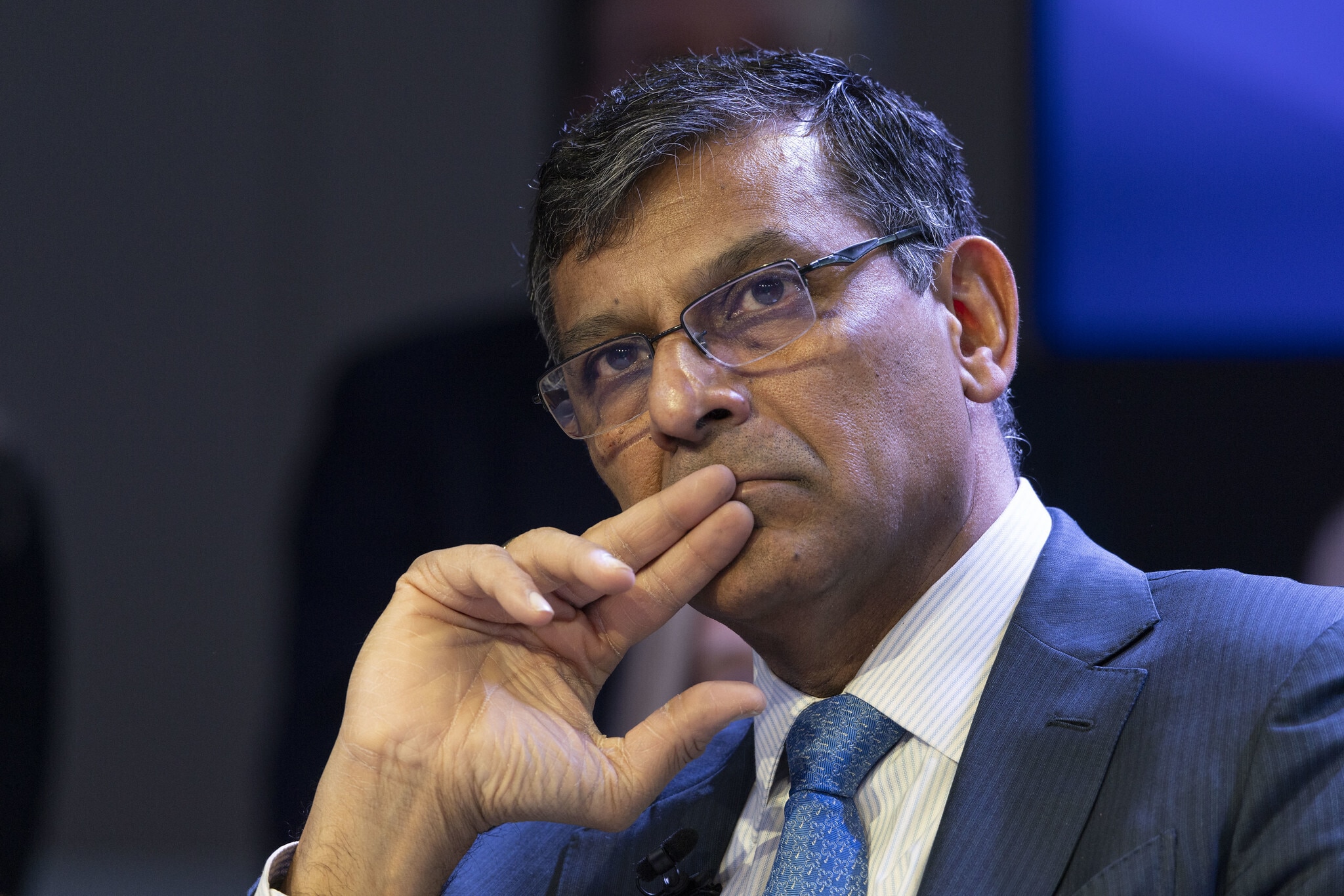
In his latest book with economist Rohit Lamba, former Reserve Bank of India Governor Raghuram Rajan set out a thought-provoking argument: the East Asian playbook of factory-led growth is closed. His call to focus on services and human capital is part of a wider conversation on India’s development path.
────────────────────────────────────
Should India try to replicate the East Asian manufacturing miracle, or design a new path of its own?
That is the question economists Raghuram Rajan and Rohit Lamba confront in their book Breaking the Mould: Reimagining India's Economic Future. They argue for investing in people, expanding opportunities in high-skilled services, and encouraging manufacturing built around innovative products rather than low-wage scale.
Months later, the debate they set out — on services, skills and India's growth trajectory — remains as relevant as ever. Here is Raghuram Rajan, the former Governor of the Reserve Bank of India and now Katherine Dusak Miller Distinguished Service Professor of Finance at the University of Chicago Booth School of Business, in conversation with the World Economic Forum.
The growth model with manufacturing
Let's begin with the manufacturing model for economic growth. How does it work and how has it played out in most major economies?
Raghuram Rajan:
Well, this is something we have seen since World War II: a bunch of East Asian economies largely decided to embark on low-skilled manufacturing. People who transitioned from agriculture went on to make garments, shoes and electronic components. Typically, this didn't require a high level of skills.
What this did was: first, because your labour was cheap relative to the labour in industrial countries, it implied that even without sophisticated machinery, you could still make profits as a manufacturer, especially if you catered to foreign demand and exported these goods. Now, having exported and made profits, you reinvested in more sophisticated machinery.
Your workers now had sophisticated sewing machines, but they also invested in themselves — improving their education, skills and more importantly, their children's skills. So over time, the virtuous circle of moving up the skill and sophistication into higher-end manufacturing happened. They transitioned from making textiles and assembling components to manufacturing the components themselves, including chips and other similar items.
This is what Japan did. It is what Taiwan and Korea did. And it is what China eventually did.
China has moved from assembly to producing the world's best electric vehicles at this point. So, that journey was something a whole bunch of countries took to get out of poverty — largely countries in East Asia, which had a tendency to save a lot and therefore had the surpluses to invest both in capital equipment and in themselves.
China has moved from assembly to producing the world's best electric vehicles at this point.
”The 'smile curve' to show value shift in manufacturing
You talk about the 'smile curve' in the book, which is an interesting concept. How has that value addition across segments evolved over the last few decades? What does it look like now?
Raghuram Rajan:
So in this cycle of countries moving towards more sophisticated manufacturing, a significant factor was the increasing use of machinery. Now, what's happened in the last few years is that even countries that are just starting out are beginning to use a lot of machinery because the kind of manufacturing requires that kind of sophisticated machinery.
So, for example, take a cell phone today. Cell phone assembly used to be workers assembling components onto a motherboard and then putting it into the larger electronic device. Today, machines are soldering components onto the motherboard because people can't do it at the micro level that machines can. So what has happened is that manufacturing has become increasingly automated.
Also, today a lot of manufacturing is done by countries that don't have highly paid workers — China, or similarly, Vietnam and Bangladesh. So earlier, when you were going head-to-head in manufacturing, you were going head-to-head with the United States, which paid workers a lot. So you had a competitive advantage if you had cheap workers.
Today, you are competing with Vietnam, which not only has cheap workers but also has a fair amount of capital equipment behind those workers. So are you competing with China, which has that? And so it's becoming harder in manufacturing because there's so much competition and they all come from countries with low-paid labour.
So, where is the value added in any manufacturing process if you put that end-to-end? Let's start with the ideation, the creation of the product and let's end with selling it to the customer. So take that supply chain from beginning to end and ask, what does it look like when I plot that against the value created in that particular segment of the process? It turns out, and this is something Richard Baldwin has written extensively about, that there's a spike in value added upfront during the creation process. Consider the iPhone and Steve Jobs working with his team of innovators to design it. That's the early part. The last part involves marketing and selling it to the customer, as well as the content within the iPhone, such as the App Store. That's the end part of the supply chain. In between is manufacturing, which has been outsourced mainly to Foxconn.
But as I said earlier, manufacturing has become really competitive. And so when you look at the bottom of the smile curve, there's very little value added because, in a sense, you're assembling the components. But at really competitive rates. So Foxconn, on a good day, is worth about $50 billion while Apple, on a good day, is worth $3 trillion. What's the difference? It occupies the parts of the supply chain which are much more value-added. And that's the question we ask the reader to imagine in this book.
If you had to choose the point in the supply chain where you'd like it to be today, it wouldn't be manufacturing first, given the intense competition. Second, you're not making as much value added as a result.
You want to pick up the end points — the design, the advertising, the marketing, the finance — essentially the services that are embedded in manufacturing.
Has the manufacturing moment passed?
In the context of India, what do you think the landscape looks like? And how can the country claim a bigger portion of that value chain?
Raghuram Rajan:
So India missed the manufacturing bus to some extent at the time that China was roaring ahead for a good reason.
India didn't have as strongly educated a workforce as China had when it liberalized, and it didn't have as friendly a business environment as China did. In China, a significant amount of decentralization has occurred, and numerous local governments have established a viable business environment for their preferred champions. And because they competed with each other, they created an ecosystem for generating growth in manufacturing. India didn't do that as well. And as a result, it was a laggard in jumping onto the manufacturing bus.
Now, the key question is whether India should follow the path of other East Asian countries in manufacturing or pursue a different approach.
And I would say, choose anything — all kinds of flowers flourish if they can let a thousand flowers bloom. But if you want to consider new parts, the service part is open.
Use the sophisticated services to export abroad. You could export, for example, telemedicine to the countries that are short of doctors. That's at the high end.
At the moderate end, think about the needs of your own population. Think about how many plumbers you need, how many carpenters you need but also how many optometrists you need. So one example we offer in the book is a firm called Lenskart. What it aims to do is provide a spectacle to every Indian who needs it but they're saying most Indians won't go out to get their eyes measured. They keep reading, bringing the book closer and closer to their eyes. So they want to send somebody out to test people's vision and then offer them 5000 different models to choose from, manufactured in an Indian factory. So that customization, coupled with the service, is what makes that product really sellable. And that is an opportunity for Indian manufacturing — services linked to manufacturing.
There are lots of [such] unmet demands for the domestic economy which can generate growth. So I would argue that in a world much more conscious about sustainability, we have to explore services and services aligned with manufacturing to generate the kinds of jobs that emerging countries now need. Many of them have an elite segment of the population which can do the high-end services.
Human capital as a growth strategy
You make it clear, even in the book, that this is not a choice between manufacturing and services. But a question of where India wants to devote its resources.
Raghuram Rajan:
Absolutely. Given that the old model no longer works, we need to find a new one. And it's not just for India. It could be for African countries, some Latin American countries and the rest of South Asia. In that kind of model, you essentially choose to elevate the quality of human capital across the board — you have the higher end while also elevating the lower end because instead of them doing unskilled jobs, can they get basic training in services like plumbing [or] auto repair.
Everybody asks, how does your plan fit with AI? The most effective way of ensuring that people have jobs [in the age of AI] is to make them have adaptable human capital. They can change the human capital with what is available technologically and in a world where we don't know what the technology will be, that is the safest thing to do.
Yes, physical capital is important — India needs to improve the quality of its infrastructure but it needs to do much more on the people.
Physical capital is important — India needs to improve the quality of its infrastructure but it needs to do much more on the people.
”Decentralization to build quality of human capital
There are stark challenges on the road to building that human capital. In the book, you observe the increase in the number of universities but highlight a paradox with the quality declining. You also draw a direct line between factors like child nutrition and economic potential. How can India invest in long-term strategies that can often yield delayed results compared to other priorities that may produce more immediate results?
Raghuram Rajan:
It is a huge issue that many of these developments will take time to pay off. Improving education will take many years, not just a few months.
And that's why we say in the book that to implement some of these policies, you actually need to decentralize government far more, because sitting at the national or state level, your constituency is the entire state.
But if you're at the local level, voters don't just need to see test scores. They can also see the teacher showing up on time at school, or they can see the school totally repainted, or the money being put into science labs, for example. They can see the visible changes in real time, which is much harder to measure at the national level.
So decentralization can be very effective in improving the investment in human capital.
License and Republishing
World Economic Forum articles may be republished in accordance with the Creative Commons Attribution-NonCommercial-NoDerivatives 4.0 International Public License, and in accordance with our Terms of Use.
The views expressed in this article are those of the author alone and not the World Economic Forum.
Related topics:

Forum Stories newsletter
Bringing you weekly curated insights and analysis on the global issues that matter.
More on Economic GrowthSee all

Sarah Sáenz Hernández
February 24, 2026


