What happens when industry demands the impossible? Superconductors step in
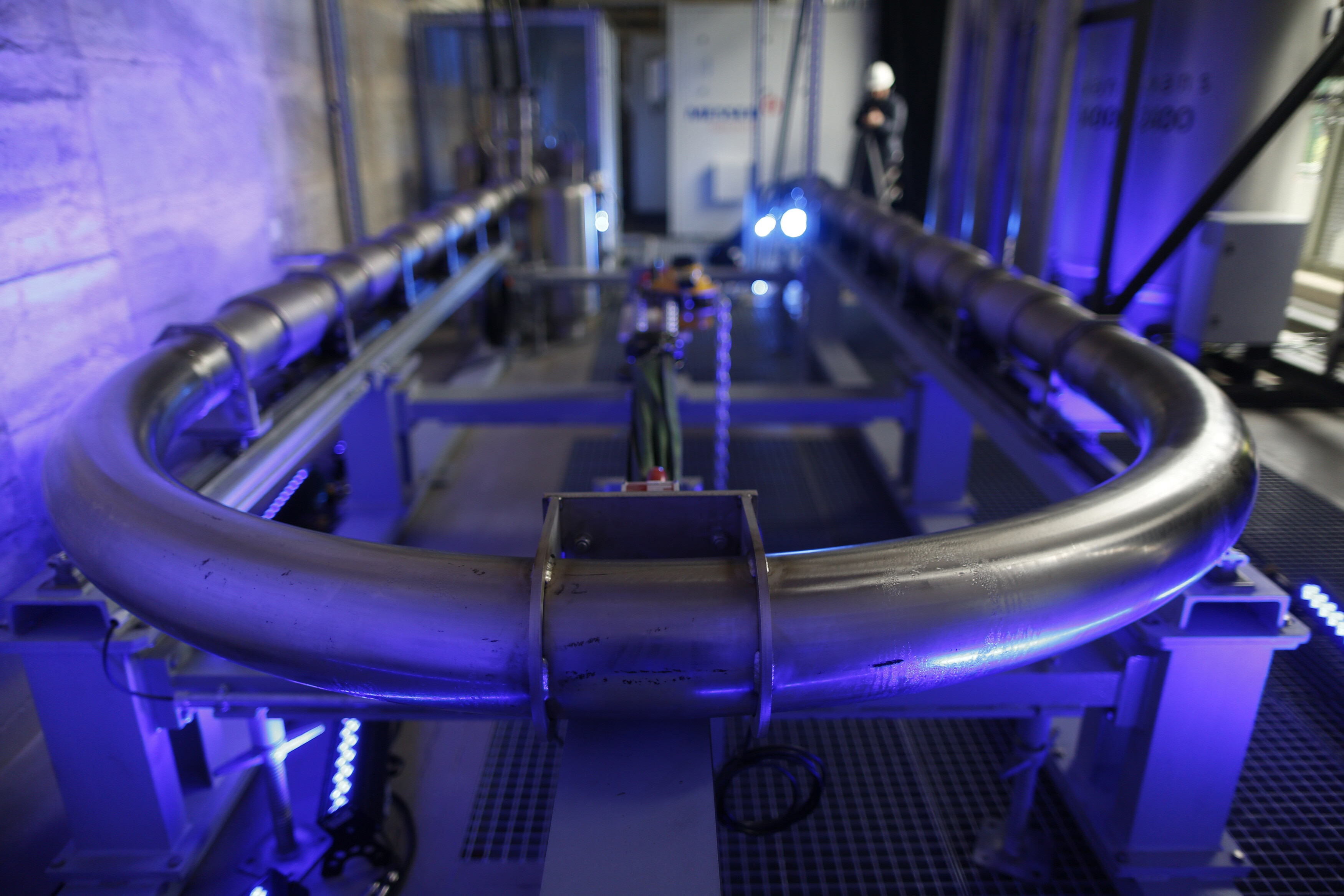
Superconductors are essential to the wholesale overhaul of systems needed to implement the energy transformation. Image: Reuters/Ina Fassbender
- Superconductors are essential to the wholesale overhaul of systems needed to implement the energy transformation.
- They reduce energy loss during transmission to virtually zero, facilitate the infrastructure needed for renewables expansion, and underpin frontier energy sources.
- Corporate leaders can drive the ecosystems needed to scale up breakthrough superconductor solutions.
Energy transformation is not simply a fuel switch – it’s a redesign of the systems that underpin economic growth and national energy security.
Electricity demand is rising sharply, driven by the electrification of end uses and the rising demand from data centres and AI. At the same time, power systems integrate a growing share of renewables, yet the infrastructure carrying that power still incurs losses.
Every inefficiency in grids, motors, cooling systems and industrial processes carries a cost, in capital, emissions and resilience. Incremental improvements are no longer enough to meet the pace of transformation required.
This is why technologies that once seemed “impractical” or confined to research labs are moving rapidly into focus. Superconductors, once associated with niche applications, are emerging as a critical enabler of more efficient, resilient and higher-performing systems. By radically reducing energy losses and unlocking huge gains in power density, efficiency and system design, they have the potential to strengthen energy security, improve system efficiency and accelerate emissions reductions across electricity networks, industry and digital infrastructure.
As recent research has shown, innovation has already cut projected emissions by 40% over the past decade, and superconductors could be a major accelerant in the decade ahead.
What are superconductors?
Superconductors are “materials with zero electrical resistance below a specific temperature”. Therefore, an electric current can flow through them indefinitely without energy or heat losses.
An expanding group of startups is focused on developing superconducting wiring, systems and materials, while corporate, IOs (international organizations) and government programmes are stepping up their support for the sector.
Why should we care and how could the corporate sector get more involved? Here are three reasons that this is essential for the decarbonization of our economies:
1. Zero resistance equates to low to no energy loss
Traditionally, copper and aluminum have been used as conductors in electrical grids. They have powered the industrial era, but their properties mean that there is a consistent 5-10% of the world’s electricity lost as heat during transmission. Superconductors can dramatically reduce this loss, which could translate into major system-level cost and carbon savings.
As emphasized by the International Energy Agency (IEA), every percentage point of avoided electricity transmission loss translates to the reduction of millions of tonnes of CO₂ annually. For large utilities and grid operators, this means fewer generation plants, lower fuel consumption, and lower long-term infrastructure and maintenance costs.
2. The ultra-dense, high-power nature of superconductors unlocks systems-level efficiency gains and the integration of renewables
Superconductors can carry up to about 100 times more power than copper cables of the same thickness, allowing for more compact, efficient cables that transmit renewable energy to the cities and communities they serve. They also enable smaller, lighter-weight motors and generators for the transportation sector.
For the renewables sector, this is a crucial step change that would help wind and solar power – which typically feature peak-prone and geographically distributed power flows – move gigawatts over long distances with minimal losses, thus smoothing out variability.
From a system-level perspective, IEA’s Electricity Grids and Secure Energy Transitions report, underlines that grids need to grow around 20% faster over the next decade to meet net-zero pathways. Superconductivity has the potential to contribute cost reductions over the medium and long term.
3. These materials are crucial to unlock frontier energy sources and technologies
Superconductors are the enabling layer for fusion, hydrogen and ultra-high density energy use of today’s AI economies:
- Without superconducting magnets, most fusion systems (running on magnetic confinement) wouldn’t be able to achieve sustainable fusion conditions. Superconductors are required to generate the high magnetic fields needed to confine plasma at extreme temperature.
- Superconducting motors and refrigeration systems are a key efficiency driver for hydrogen liquefaction and applications, which depend on efficient, very low-temperature cooling.
- AI data centres, which are critically constrained by power-density and cooling demand, can potentially reduce energy use through superconducting power distribution and cryogenic electronics – areas now under active development. This innovation area on superconductors is advanced under the Forum’s Centre of Energy and Materials. And as Microsoft has outlined in its research, these materials could transform data centre power infrastructure by increasing efficiency, reducing heat and lowering overall energy costs.
At UpLink, the early-stage innovation engine of the World Economic Forum, we are committed to bringing together the ecosystems that breakthrough solutions need to scale. By establishing coalitions of visionary corporate leaders to demonstrate private-sector demand for superconductor solutions, alongside capital providers and IO/government enablers, we can help these technologies play a massive role in striving for a net-zero future.
Who are the actors that could drive corporate demand for the push for superconductors? There are a few that can truly drive the needle, notably the technology companies who are investing heavily in data centres and would benefit from superconducting cabling: Microsoft, Google, Meta, AWS, etc.
Electric utilities and grid operators will also be focused on integrating high-temperature superconductor cables and grid modernization that can hopefully be a stimulus for the renewable energy revolution. Other sectors who are following this space closely include ports, airports, hydrogen, steel, healthcare and the growing fusion industry, each of whom will be looking for efficiency gains superconductors can provide.
Here are three startups and scaleups that are attracting attention in this space from government, corporate and investment sectors:
- Dublin-based SuperNode focuses on “next-generation superconducting cable systems capable of conveying more energy than conventional electricity cables”. They have secured €20 million in funding and are part of a plan for a European electricity super-grid.
- University of Illinois spin-out Hinetics is “creating the world’s first fully integrated cryogen-free superconducting motor” that could allow commercialization of powerful, compact motors for aerospace (and other) sectors. Their motor, called “Baby Yoda”, has garnered support and funding from NASA and the US Department of Energy.
- Snowcap Compute, a seed-funded company with aspirations to build the world’s first superconducting computing platform.
With a handful of leading academic institutions – such as MIT, University of Houston, Oxford, ETH Zurich, among others – pushing research on superconductors to new levels, it’s now up to corporate leadership, government funding, private capital and public awareness to help ensure that these materials are nurtured to help offset further reductions in projected emissions over the next 10 years. As a recent event at CERN underscored, pushing superconductors past their development tipping point and toward their full societal potential will require coordinated action and accelerated collaboration across all stakeholders.
How can corporate leaders step up?
Corporate leaders have a decisive role to play in moving superconductors from promise to deployment. This starts with expressing clear demand, by joining pre-competitive consortia that define future pathways for superconducting systems. It means co-funding pilots and demonstrators in space-constrained or high-value settings such as inner-city grids and data-centre campuses, where efficiency gains matter most. It also requires a willingness to share risk, through small but strategic venture or corporate investments in startups developing superconducting technologies.
Finally, progress depends on aligning ecosystems, connecting innovation funds, capital providers, utilities, startups and industrial adopters to build resilient supply chains as the technology matures. The question is no longer whether superconductors work, but whether industry is ready to lead and turn technical readiness into coordinated action.
Don't miss any update on this topic
Create a free account and access your personalized content collection with our latest publications and analyses.
License and Republishing
World Economic Forum articles may be republished in accordance with the Creative Commons Attribution-NonCommercial-NoDerivatives 4.0 International Public License, and in accordance with our Terms of Use.
The views expressed in this article are those of the author alone and not the World Economic Forum.
Stay up to date:
Superconductivity


Forum Stories newsletter
Bringing you weekly curated insights and analysis on the global issues that matter.
More on Technological InnovationSee all

Tom Crowfoot
March 18, 2026


