How disaster risk financing can anchor Africa's development and strengthen its resilience
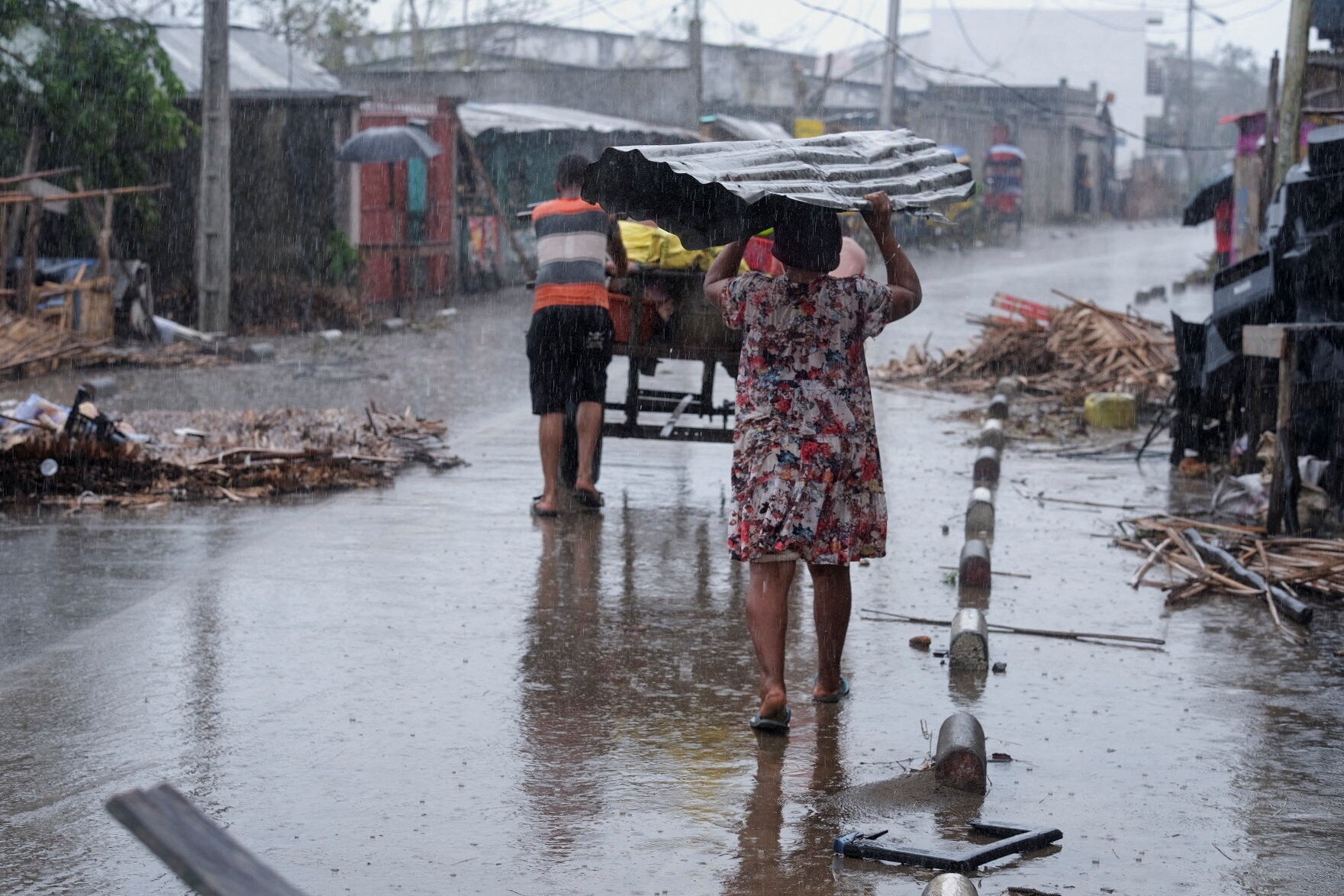
Africa Risk Capacity has distributed $25 million sovereign insurance payouts to Madagascar to support cyclone and drought response. Image: Reuters
- Africa's pursuit of sustainable development to improve the lives of its people is under constant threat from the impact of climate change.
- The frequency and severity of climate-induced disasters are eroding hard-won gains and diverting public funds to emergency response.
- Disaster risk financing as part of a strategic approach to risk management is key to securing a sustainable future for Africa.
Africa stands at a critical crossroads. The continent is fiercely pursuing sustainable development to transform its economies and improve the lives of its people. Yet, this progress is under constant risk from a relentless threat – climate change.
The increasing frequency and severity of climate-induced disasters – from devastating droughts to catastrophic floods and public health emergencies – exacerbate Africa’s vulnerability. These events erode hard-won development gains and divert public funds to emergency response.
Governments bear the responsibility of leading efforts to protect their populations. The reality of climate change demands robust and scaled complementary approaches that build resilience.
Taking a strategic approach to risk management
To close the massive financing gaps that follow a disaster, African governments must adopt a strategic, risk-layering approach to risk management. At the heart of this strategy must be disaster risk financing (DRF), a powerful and proven strategy to protect economies and secure a sustainable future.
DRF enables governments to proactively manage the financial risk associated with climate disasters by leveraging financial tools like insurance, reducing dependency on unpredictable aid or emergency funding.
The evidence of climate vulnerability is all around us – regular climate shocks are now a lived reality for Africa, a continent that is disproportionately affected by climate change.
In the Southwest Indian Ocean region, a series of destructive tropical cyclones recently devastated countries like Madagascar, Mozambique and Malawi. Meanwhile, exceptionally heavy rains across southern Africa triggered widespread flooding in the region, impacting parts of Mozambique, South Africa, Zimbabwe and Zambia.
At the same time, the Horn of Africa continues to struggle with the aftermath of one of the longest severe droughts on record which began in 2020, and has led to extreme famine in parts of Ethiopia, Somalia, South Sudan and Kenya.
The impacts on lives, livelihoods, critical infrastructure and food security are profound – and growing. Each disaster is a painful reminder of the magnitude of this crisis. We must therefore make smart choices to fund disaster recovery without compromising development growth.
Funding disaster recovery without compromising growth
For over a decade, the African Risk Capacity (ARC), a specialized agency of the African Union, has been at the forefront of DRF. ARC’s sovereign parametric insurance model, which triggers rapid payouts based on predefined weather or disease indicators, has provided over $1 billion in coverage to member states.
The organization has disbursed more than $350 million in insurance claims, enabling governments to act early and provide critical support to vulnerable communities before a crisis escalates.
To illustrate the impact of disaster risk financing, since 2019 ARC has disbursed close to $25 million to the Republic of Madagascar in sovereign insurance payouts to fund responses to tropical cyclones and droughts. This underscores the country’s proactive investment in building resilience against climate shocks.
This effort, which has been supported by development partners, has been instrumental in providing early relief and in anchoring other in-country social protection programmes because of its early response triggers. These insurance payouts prevent households from resorting to negative coping mechanisms during a crisis.
ARC’s value extends far beyond an insurance payout. To qualify for coverage, governments must undergo the ARC capacity building programme, developing contingency plans, conducting detailed risk assessments and selecting their risk parameters.
This process institutionalizes resilience, creating skills and systems that serve nations even beyond a government’s relationship with ARC.
Importantly, ARC’s commitment to gender mainstreaming, through gender assessment and country-customised gender action plans, ensures that DRF strategies directly address the heightened vulnerability of women and girls.
By integrating a gender lens, this approach enables communities an opportunity to reexamine and transform traditional gender relations towards advancing equality in socioeconomic development, thereby making country resilience efforts more inclusive and effective.
Scaling up disaster risk financing mechanisms for Africa
Given the increase in intensity and frequency of climate disasters, and their escalating costs, the need to scale up DRF mechanisms is undeniable.
During a recent high-level dialogue on disaster risk financing in February 2026, convened by ARC, in collaboration with International Fund for Agricultural Development (IFAD) and the World Food Programme (WFP), participants unanimously called for the expansion of parametric insurance across the continent.
The dialogue focused on developing concrete strategies to protect lives and livelihoods, combat food insecurity, and promote a layered approach to risk management – all important to strengthening Africa’s adaptive capabilities. It highlighted how pre-arranged finance can transform emergency response and improve preparedness.
Given the competing priorities straining national budgets, innovative financing structures such as premium finance and the ARC Replica Programme, which enables humanitarian partners to take insurance on behalf of governments, are essential to support the needed growth.
Africa faces many competing needs, and its development journey is uniquely challenging, yet filled with opportunity. In its pursuit of development, the continent can lead the green economy transformation, prioritizing actions such as building climate-smart infrastructure, resilient agricultural systems, and harnessing its vast renewable energy potential (solar, wind, hydro).
Enabling Africa to invest in its future with confidence
Disaster risk financing should not distract from this agenda, but rather, it should be complementary, providing an essential buffer that enables Africa to invest in its future with confidence.
DRF financial mechanisms such as insurance provide predictable finance to support disaster response, facilitating recovery and rebuilding without tapping into resources earmarked for development.
By strategically layering risks and embracing new innovative instruments in DRF, African nations can protect themselves while prioritising development. Disaster risk financing is more than a financial strategy – it is an important layer of a government’s resilience planning, which contributes to the continent’s development agendas: Agenda 2063 and United Nations Sustainable Development Goals.
The way forward is clear: Africa must pursue economic growth, but it must also protect itself.
Don't miss any update on this topic
Create a free account and access your personalized content collection with our latest publications and analyses.
License and Republishing
World Economic Forum articles may be republished in accordance with the Creative Commons Attribution-NonCommercial-NoDerivatives 4.0 International Public License, and in accordance with our Terms of Use.
The views expressed in this article are those of the author alone and not the World Economic Forum.
Stay up to date:
Sustainable Development


Forum Stories newsletter
Bringing you weekly curated insights and analysis on the global issues that matter.
More on Climate Action and Waste Reduction See all

Annika Green and Gail Whiteman
March 30, 2026


