Why AI and data centre growth risks stalling without a social licence to operate
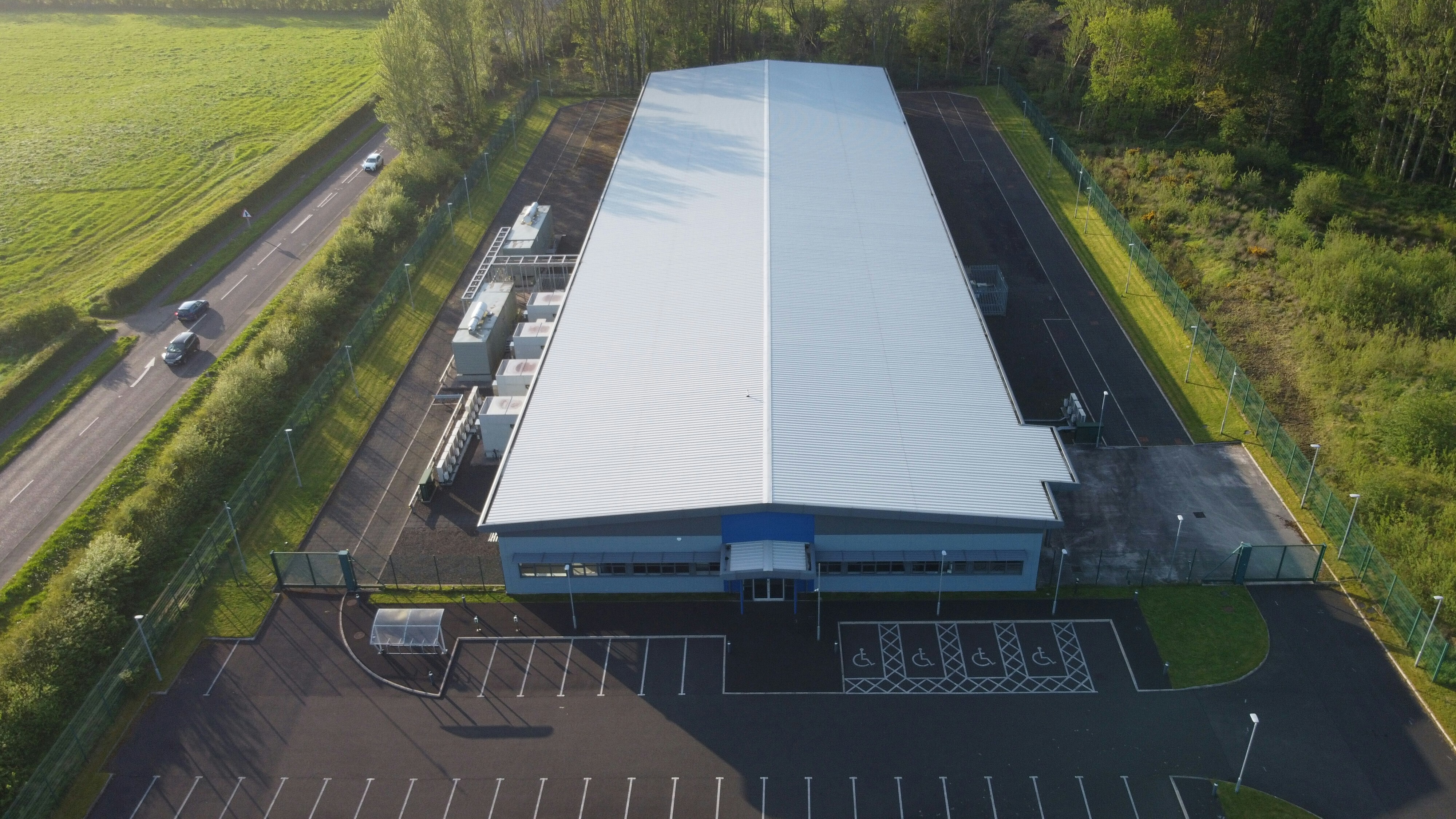
The backlash against data centres has begun. Image: Unsplash/Geoffrey Moffett
Karolina Oleszczuk
Specialist, AI Responsible Industry Adoption, Centre for AI Excellence, World Economic ForumGinelle Greene-Dewasmes
Initiatives Lead, Artificial Intelligence and Energy, Centre for AI Excellence, World Economic Forum- Amid growing concern about the social and environmental impact of AI, responsible design of the technology is emerging as a competitive advantage.
- AI’s “social licence to operate” is likely to shape how its infrastructure is built and deployed.
- Public trust in AI will increase if organizations demonstrate enhanced local infrastructure, meaningful job pathways and other community benefits.
Data centres are swiftly becoming a key part of modern society’s critical infrastructure. While the benefits are significant - from scientific discovery to energy optimization - the rapid expansion of AI data-centre infrastructure also presents not only environmental but social challenges.
Last year saw some local backlash against data centres, mainly in the US and the UK. In the US, opposing sentiments rose by 125%, with an estimated $98 billion in projects blocked or delayed; more than the total for all previous quarters since 2023.
Yet many companies and countries are working to design and implement sustainable solutions for AI. These aren’t solely concerned with how fast the technology can be scaled, but also how local communities will be affected, shedding light on the tangible benefits. Building this public trust, or “social licence to operate”, is becoming essential to avoid friction around AI’s long-term growth.
Understanding the importance of a social licence to operate is becoming critical as AI infrastructure, especially data centres, outpaces governance. Growing opposition across regulators, politicians and communities is already driving permit blocks, shaping political and investment decisions, and constraining scale. Hence, securing societal buy-in has moved from being a peripheral concern to a critical one.
Researchers from a study run by Americans for a Clean Energy Grid have emphasized that: “Large energy‑related infrastructure succeeds only when communities are engaged early, transparently, and continuously.” They developed a framework that confirms projects go faster, omit disputes, and ensure stable growth and continuity when local communities feel respect, ownership and consideration. AI’s next scaling phase will depend as much on public legitimacy as on energy, compute and capital. Social licence is no longer peripheral, but a prerequisite.
What is the social licence to operate?
A social licence can be understood as the informal public approval that allows and helps industries to operate with legitimacy and long-term support. Unlike regulatory approval, it is not granted by the statute. It is earned through transparency, accountability, accessibility and demonstrable value creation.
Given the pace of AI growth, a social licence should not be viewed as just a communications challenge, but as an infrastructure prerequisite. One reason why AI may be facing a wider trust gap compared to other industries is that technology development is moving faster than public understanding. Recent forecasts indicate that global power demand from data centres could increase by up to 165% by 2030 compared with 2023 levels.
In parallel to this speed, there is a growing concern among communities about data centre development, electricity consumption and prices, use of water for cooling, and the impact on regional grids. If communities perceive data centres only as extractive of energy and water and exporting value elsewhere, opposition will likely intensify. In this environment, public legitimacy becomes a facilitator for scaling and a lever for competitive innovation.
Scaling responsibly benefits local communities and businesses alike. This in turn strengthens the social licence, which facilitates expansion and growth, and ultimately helps innovation thrive. Developing legitimacy and credibility has therefore become a competitive business advantage that helps to safeguard and support stable, long-term growth. According to Satya Nadella, CEO of Microsoft: “The industry needs to earn the social permission to consume energy … public acceptance hinges on real, broad economic benefits.”
For instance, as highlighted in the World Economic Forum’s Net-Positive AI Energy Framework, organizations that embed efficiency, transparency and system-level benefits into their AI strategies are better placed to enhance resilience, manage costs and scale sustainably.
The age of responsible design
The solution is not reactive mitigation, but rather responsible design.
Responsible design means embedding environmental stewardship, grid alignment and community benefits into the core architecture of AI infrastructure from the outset. It shifts net-positivity from a compliance afterthought to a systems strategy. Rather than asking how to offset impacts after a facility is built, sustainability by design anticipates those questions.
Countries like Finland, China, Switzerland and Sweden, for example, are putting in place mechanisms to increase access to AI or to leverage wider system benefits from AI infrastructure, such as heat capture and reuse from data centres, to warm households more sustainably. The private sector is also moving in this direction; for instance, Microsoft’s Datacentre Community Pledge and the 2026 Ratepayer Protection Pledge signed by several large tech players.
Achieving responsible scaling requires a shift from mitigating harm after the fact to proactively strengthening the systems on which AI depends. A net-positive AI approach can help build social trust by expanding clean energy, aligning compute demand with grid capacity and using AI to improve efficiency across sectors. Infrastructure that enhances grid resilience and protects ratepayers can, in turn, help secure the social licence needed for continued expansion. The leaders in this space will be those who align infrastructure growth with local priorities and deliver tangible public value by designing system benefits, protecting affordability and engaging communities early.
How the Forum helps leaders make sense of AI and collaborate on responsible innovation
AI’s economic promise is enormous, but its physical infrastructure footprint is real. Scaling responsibly requires acknowledging a simple principle that communities are not passive hosts, but also stakeholders with leverage. If local communities see transparency, stable electricity prices, responsible water management, meaningful job pathways and enhanced local infrastructure, public legitimacy for AI will strengthen. If they witness solely rising costs, water anxiety and limited economic inclusion, resistance and instability might follow.
Regions that align AI scale with community priorities, energy realities and visible co-benefits will move fastest. The next phase of AI infrastructure expansion will not depend solely on chip efficiency, energy systems or capital expenditure. It will also rest on the presence of public trust.
Don't miss any update on this topic
Create a free account and access your personalized content collection with our latest publications and analyses.
License and Republishing
World Economic Forum articles may be republished in accordance with the Creative Commons Attribution-NonCommercial-NoDerivatives 4.0 International Public License, and in accordance with our Terms of Use.
The views expressed in this article are those of the author alone and not the World Economic Forum.
Stay up to date:
Cybersecurity
Related topics:


Forum Stories newsletter
Bringing you weekly curated insights and analysis on the global issues that matter.
More on Artificial IntelligenceSee all

Tal Goldstein and Giulia Moschetta
March 31, 2026


