Capitalizing on India's demographic dividend starts in the classroom

India's population is one of the country's greatest strengths – and better guidance for students from a young age can help the country harness it. Image: REUTERS/Priyanshu Singh
- Many countries in history have benefited from demographic dividends that have supercharged growth.
- For India to benefit from the same surge, students from all baxckgrounds – not just the privileged – need access to guidance that goes beyond simple education.
- The World Economic Forum's Global Shapers community is supporting a project to do just that in the Indian state of Rajasthan.
In many classrooms across India, talent is abundant, but guidance is not. Students from affluent backgrounds often grow up surrounded by information, exposure and informal mentorship. They hear about career pathways at home and get early mentorships from professionals within reach. For millions of students from marginalized sections of society, that exposure arrives either late or not at all.
This imbalance matters: India’s dynamic and ambitious population is one of the country’s greatest strengths, but unequal opportunity risks concentrating opportunity. Other countries, like China, have already benefitted from their demographic dividends. For years, China’s demographics skewed toward a large working-age population, which helped deliver growth and increases to the standard of living.
India’s demographic dividend, too, can be a source of opportunity and long term strength. Young Indians must, however, have the ability to achieve success and build on opportunities. They need confidence. They need to be adaptable, to understand their abilities and potential.
India's demographic dividend
India will have over a billion working age people by 2030, with nearly 70 percent of the country's people in work. This is a crucial moment of opportunity for the country.
Ensuring that India capitalizes on its demographic dividend is a crucial part of the country’s growth story. Project Lakshya, meaning “goal” in Hindi, emerged from an awareness of this need. At its core, Lakshya seeks to help students understand the world around them and recognize the skills they must cultivate.
What began as an independently led effort later evolved into a structured initiative under the World Economic Forum’s Global Shapers Jodhpur Hub, in the Indian state of Rajasthan, expanding its reach across Jodhpur. Today, Lakshya works directly with secondary school students to build confidence, life skills and real-world awareness through structured, school-based mentoring.
What Lakshya has learned about preparing young students for their future careers has potential far beyond Jodhpur and even outside of India – and it is particularly crucial as the world of work changes before our eyes.
Building confidence alongside competence
Many under-served classrooms have systems that favour assessment over exploration. The preparation of students for exams rather than for decision-making leads to an uncertain future for some students when they make their career choices.
When students start to participate in conversations, to inquire and to express their dreams, changes occur. The goal is not to replace formal education, but to support it with the missing piece that will help reduce inequalities through providing access to appropriate educational opportunities for all students.
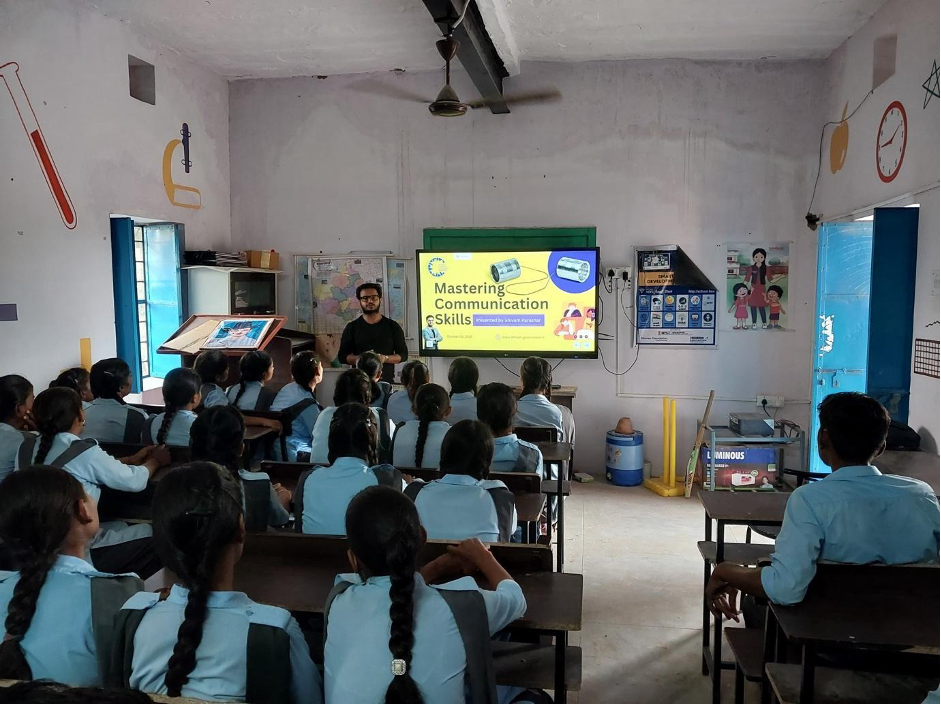
Mentoring students within their schools
Lakshya delivers structured mentoring to students directly within schools. The model is kept simple: zero cost to institutions, minimal administrative burden and flexible design tailored to each school’s context.
Each school receives multiple focused sessions covering:
- Career exploration and pathway awareness.
- Digital literacy and responsible tool usage.
- Life skills such as communication, teamwork, and problem-solving.
- Goal-setting frameworks that translate aspiration into action.
Sessions led by volunteer mentors from diverse academic and professional backgrounds are interactive rather than lecture-driven. The main objective is to engage students in discussions, exercises and practical demonstrations.
Lakshya tracks shifts in confidence through pre- and post-session reflections. A majority of students reported improved confidence after attending the sessions. Many described increased willingness to speak publicly, clearer articulation of goals, and broader awareness of career pathways.
One of the key interventions to date has been providing students with access to commercial-quality digital software and equipment through school computer labs. Through this access, many students are introduced for the first time to hands-on, commercially relevant digital applications, such as for design or video production. Once the learning experience begins, students start envisioning participation in a much broader digital economy.
This model has been developed to be both process-oriented and scalable. This model has been replicated across multiple schools and districts. Lakshya now works with eight schools in Jodhpur and has held mentorship sessions with over one thousand students.
Global Shapers delivering impact
Through its Global Shapers Community, the World Economic Forum supports youth-led hubs across many developing nations, providing an environment for youth to try new things, to gain exposure and credibility for their grassroots efforts.
For small cities like Jodhpur, this ecosystem holds enormous value for youth led initiatives. It aligns volunteer energy with community needs. This also ensures that local solutions are not isolated from global conversations and ensures youth engagement.
Don't miss any update on this topic
Create a free account and access your personalized content collection with our latest publications and analyses.
License and Republishing
World Economic Forum articles may be republished in accordance with the Creative Commons Attribution-NonCommercial-NoDerivatives 4.0 International Public License, and in accordance with our Terms of Use.
The views expressed in this article are those of the author alone and not the World Economic Forum.
Stay up to date:
Job Creation


Forum Stories newsletter
Bringing you weekly curated insights and analysis on the global issues that matter.
More on Education and SkillsSee all

Neeti Mehta Shukla
February 27, 2026


