Why cybersecurity is now a strategic imperative for business growth, trust and resilience

Cyber incidents now quickly become a leadership problem. Image: Unsplash
Christophe Blassiau
Senior Vice-President and Group Chief Information Security Officer, Schneider-Electric- Cybersecurity has evolved from a technical compliance hurdle into a strategic imperative for global business leaders.
- The modern CISO must act as a business strategist and relationship leader to ensure enterprise resilience.
- Boards can directly contribute to a successful organization-wide cybersecurity strategy.
Cyber incidents now quickly become a leadership problem. Cyber incidents have impacts on operations, the balance sheet and the trust that keeps customers and partners leaning in.
Yet too many organizations still treat cybersecurity as a technical function or a compliance hurdle. That misalignment is becoming harder to defend as geopolitics, regulation, supply-chain interdependence, cybercrime and emerging technologies increase the complexity of the cyber landscape.
Cybersecurity is now therefore a core business imperative. The chief information security officer (CISO) sits at the centre of that complexity and its role is increasingly strategic.
Risks have outgrown the perimeter
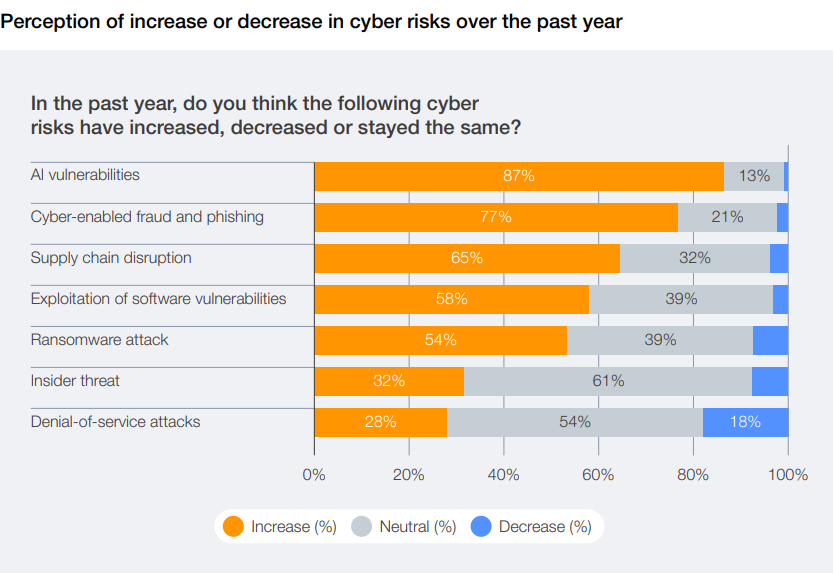
State-sponsored operations are escalating. At the same time, cybercrime is industrializing – from ransomware and supply-chain attacks to cyber-enabled fraud fuelled by phishing and social engineering. Geopolitics remains the top factor influencing overall cyber risk mitigation strategies.
According to the World Economic Forum's Global Cybersecurity Outlook 2026 survey, 87% of respondents identified AI-related vulnerabilities as the fastest-growing cyber risk over the course of 2025. Quantum computing, continued digitalization and rapid product development widen the attack surface, while the speed of change introduces security gaps faster than teams can reliably close them.
These pressures are accompanied by regulation that are fragmented across regions, adding complexity and sometimes conflicting requirements.
The CISO is no longer 'just security'
There is no single CISO blueprint. Mandates vary by industry, size, maturity and risk model. CISOs sit in different areas of the organizational structure, with a variety of reporting lines.
But beneath that diversity, a common transformation is underway. The CISO is increasingly expected to act as a business strategist, operational risk leader and trusted adviser to executive leadership and boards. That shift is driven by visibility: operational disruption, reputational damage and the erosion of customer trust are now central consequences of cyber incidents.
In many jurisdictions, regulatory frameworks now mandate CISO appointments and clarify accountability structures, reinforcing the idea that cyber risk is governance risk. Influence matters as much as authority as CISOs are accountable for cyber risk, but often don’t control every IT or operational technology system where that risk materializes.
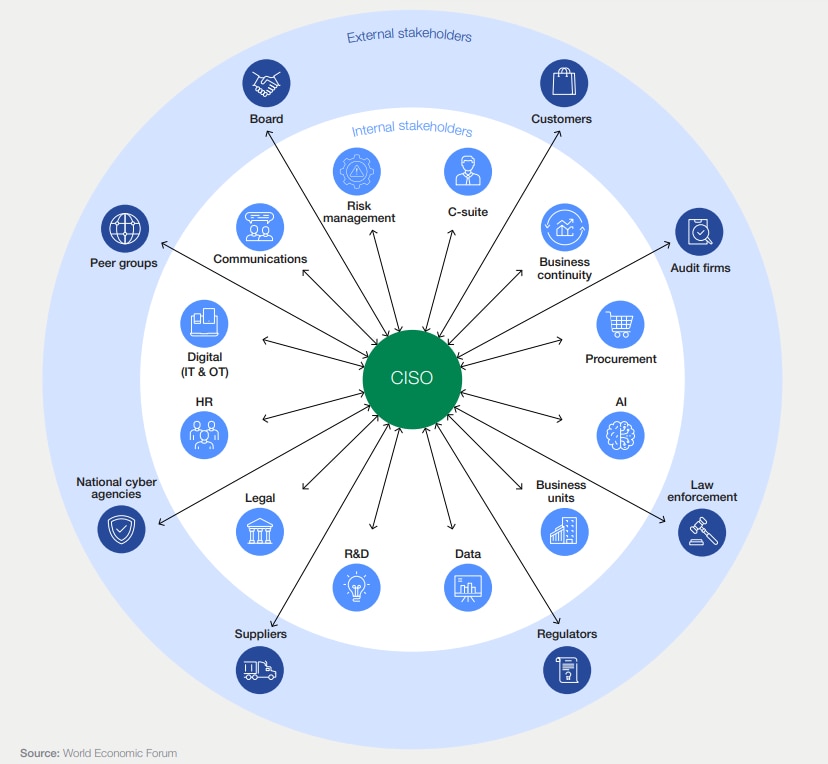
To help navigate their expanding remit, CISOs need to establish a strategic collaboration network as they sit at the centre of a dense web of internal stakeholders (C-suite, risk, legal, procurement, communications, business continuity, IT/OT, data, AI and business units) and external stakeholders (boards, customers, suppliers, regulators, national cyber agencies, law enforcement, audit firms and peer groups). The practical takeaway: cyber leadership is relationship leadership.
Multiple hats, one outcome: business resilience
If cybersecurity is a business issue, then cyber leadership needs a broader toolkit. “Building blocks” of cyber leadership can be seen as roles that CISOs must step into depending on context.
First, the CISO as a business partner. This is about balancing risk and opportunity, enabling the safe adoption of new technologies and business models, and tying security effort to business priorities.
Second, the CISO as a resilience guardian. In a crisis, the CISO must make decisions under pressure, guide response efforts and maintain confidence. This role connects cybersecurity to enterprise resilience, business continuity and reputational stability.
Third, the CISO as a community leader and storyteller. Cyber resilience increasingly depends on ecosystems: suppliers, customers, peers and regulators. Trust is built through clarity – translating technical posture into business impact, and communicating transparently enough that stakeholders know what to expect when the worst happens.
CISOs must also act as people leaders and cultural drivers. With the global cybersecurity skills gap widening and stress levels rising across the profession, retention and wellbeing are risk issues. Culture matters too: the highest maturity is reached when non-technical employees understand why controls exist and don’t experience them as arbitrary friction.
Finally, the CISO as a negotiator. In complex organizations, security outcomes are often negotiated outcomes – aligning priorities, shaping decisions and securing resources without defaulting to “no”. The essence lies in fostering innovation, while insisting on the fundamentals of cyber hygiene and incident readiness.
What boards can do now
Board engagement is not optional. They carry ultimate responsibility for managing cyber risk, even when operational duties are delegated. That means the question is not simply whether the CISO is competent, but whether the system around the CISO is designed for impact.
The recommendations for boards are practical and measurable. Start with a clear and independent CISO mandate – one that enables an accurate view of cyber posture without fear of consequences. Listen regularly and actively, including by allocating time on board agendas for cybersecurity. Create the conditions for CISOs to build relationships across the organization and beyond, because collaboration is the core operating model for cyber resilience.
Incentives and investment are also core to a successful organization-wide cybersecurity strategy. Are executives rewarded for delivering on security outcomes, not just speed and growth? Is there a ring-fenced security and compliance budget that matches the organization’s risk exposure – including modern tooling and talent development? All those factors help elevate cybersecurity from a technical concern to a boardroom priority.
A first step
A World Economic Forum white paper, Elevating Cybersecurity: Ensuring Strategic and Sustainable Impact for CISOs, is grounded in the real-world experience of the Forum’s global CISO community. The paper offers a practical map of the forces reshaping cyber leadership and a clear set of recommendations for CISOs and boards seeking to move from reactive defence to durable resilience.
In a world where digital trust is inseparable from business performance, elevating cybersecurity across the organization is no longer a governance choice. It’s a competitiveness decision.
Don't miss any update on this topic
Create a free account and access your personalized content collection with our latest publications and analyses.
License and Republishing
World Economic Forum articles may be republished in accordance with the Creative Commons Attribution-NonCommercial-NoDerivatives 4.0 International Public License, and in accordance with our Terms of Use.
The views expressed in this article are those of the author alone and not the World Economic Forum.
Stay up to date:
Cybersecurity


Forum Stories newsletter
Bringing you weekly curated insights and analysis on the global issues that matter.