How digital technology and shea trees are helping female farmers in Ghana
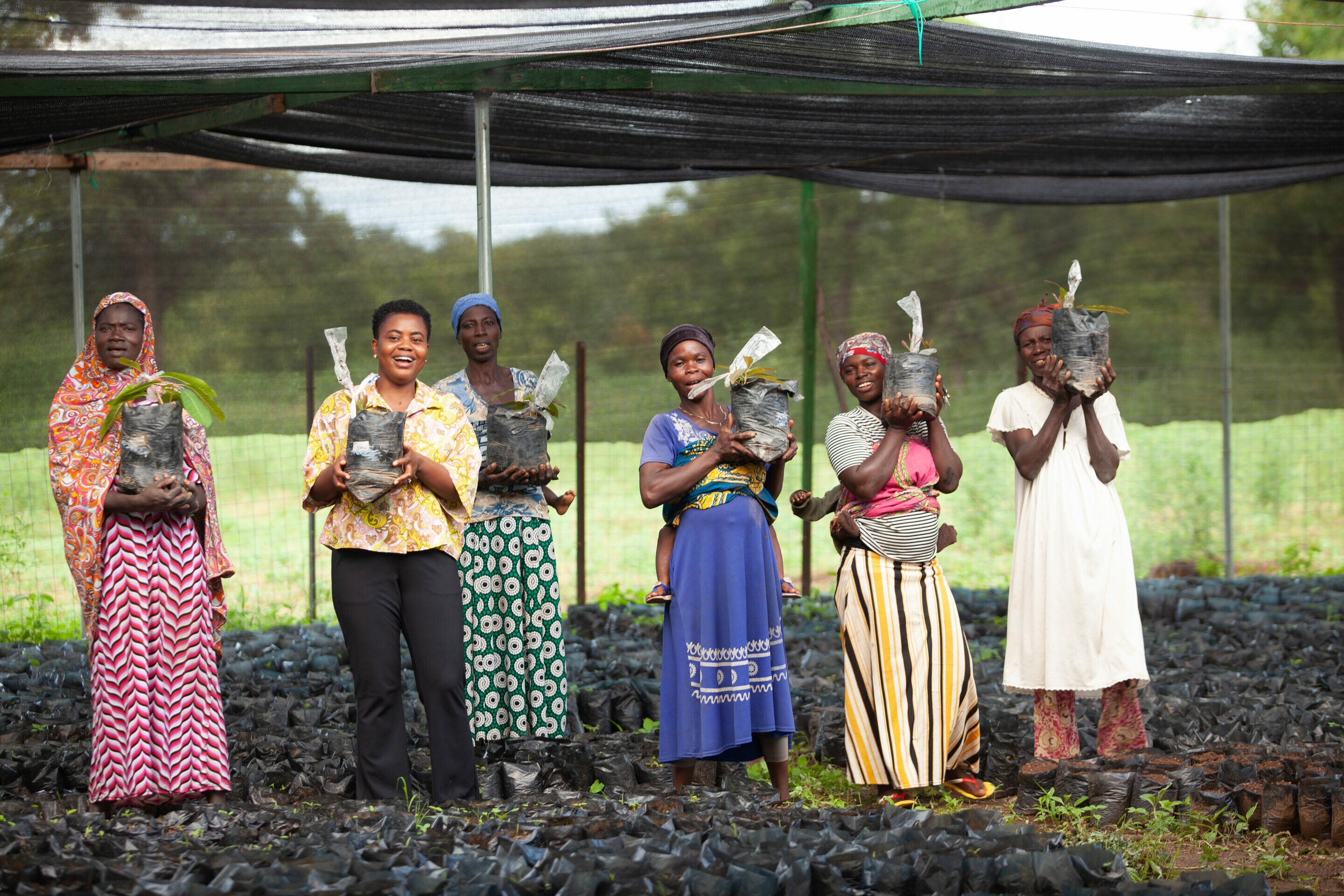
Sommalife co-founder, Mawuse Christina Gyisun (second from the left), and local farmers get ready to plant shea tree seedlings in Ghana. Image: Sommalife
- Women smallholders in Ghana are making a better living thanks to a new social enterprise.
- Sommalife co-founder, Mawuse Christina Gyisun, talks to the World Economic Forum about how digital technology is connecting local farmers with international buyers.
- Agritech like this requires a multistakeholder effort if it is to scale effectively, says a recent Forum report, Shaping the Deep-Tech Revolution in Agriculture.
When Mawuse Christina Gyisun was nine years old, selling water in a local Ghanaian market after school to help her family, the germ of an idea came to her.
The women selling produce there told her they weren’t making any profit and that, because Gyisun was going to school, she should “come and save them”. It was then that Gyisun “decided to take my studies seriously” and started on a trajectory that would lead to her co-founding the social enterprise Sommalife, which uses digital technology to enable financial fairness and security for female farmers in Ghana.
Saving for a rainy day
Talking to the World Economic Forum, Gyisun explained how, “usually, in the northern parts of Ghana, we have only one rainy season. This season is when the farmers do their main crops – maize, soya beans – and it runs for five months in a year. So, the rest of the months are for trading. And if you don't have anything to trade, then you are sitting there waiting for the next rainy day. And if you don't have anything saved already, you are going to be in trouble”.
Saving money is tricky, however, partly because there is a lack of financial literacy among smallholder farmers and partly because women “can’t own land, according to the traditions”, Gyisun says. “Usually, the girls help their family members or their husbands on their farms. And then once the crops are harvested, they go to sell and bring the money back to the man.”
But there is one crop the female farmers do have control over: shea. “They go to the wild and pick it,” explains Gyisun. “It’s a no-man’s land, like a community land, and we are very much interested in the shea because, once you are able to create a value in the shea value chain, then you are able to get the woman money that is just hers to decide on how she is going to use it and manage it for herself and the family.”
Shea in demand
Shea is an increasingly in-demand commodity, used in cosmetics, medicines and confectionery, and 90% of women in northern Ghana rely on it for their income. Shea trees are also heavily harvested for charcoal, putting the species at long-term risk. It’s another reason Gyisun’s social enterprise, Sommalife (which recently changed its name to Vitara), stepped in to restore balance.
The organization recognized that the women were cutting down the shea trees to “help their basic needs”. Educating them environmentally, financially, and connecting them directly to international buyers, would “create a win-win scenario” for all parties, including the shea trees.
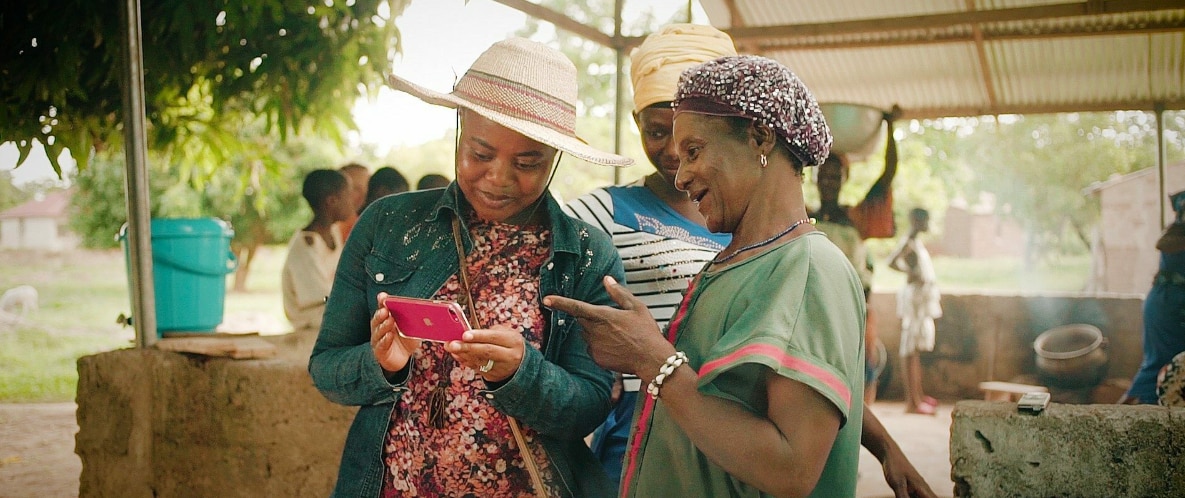
“The international markets now are looking for traceability and fair trade commodities. So, the main market players have this need, and the producers, on the other hand, are undigitized; they are fragmented,” says Gyisun. “So, we decided to digitize the operations of the women. We have data on every commodity that we are buying – from how much they are earning or their revenue from that, how many trees they are preserving and every detail of where their commodity is coming from. And then we connect them to these food and cosmetic manufacturers.”
Agritech in action
Technology like this is increasingly being deployed in the agricultural sector. A recent Forum report, Shaping the Deep-Tech Revolution in Agriculture, identifies the current pros and cons of agritech and what needs to happen to scale it successfully. As the graphic below shows, the use of GenAI in agriculture can be problematic for smallholders, because access to quality data isn’t always guaranteed. To bridge gaps like these, “multistakeholder effort is imperative”, says the report, which urges policymakers, academia, investors, as well as big tech firms and start-ups, to help build agri deep-tech ecosystems.
Gyisun’s enterprise, a Schwab Foundation Awardee 2025, has been able to support 40,000 women connect to international markets via its TreeSyt platform, which uses QR codes to track every bag of shea nuts.
At the same time, female farmers are trained in financial literacy, helping them to both manage their money and find other sources of income.
“Eight out of ten women that we work with say they’ve seen improvement in their livelihood,” says Gyisun. “It makes us happy that we are on the right path, that we are doing something useful.”
Quotes have been lightly edited for clarity.
License and Republishing
World Economic Forum articles may be republished in accordance with the Creative Commons Attribution-NonCommercial-NoDerivatives 4.0 International Public License, and in accordance with our Terms of Use.
The views expressed in this article are those of the author alone and not the World Economic Forum.

Forum Stories newsletter
Bringing you weekly curated insights and analysis on the global issues that matter.
More on Supply Chains and TransportationSee all

Deborah Dull, Phil Brown and Judith Ketelslegers
March 3, 2026


