Globalization isn’t over. It’s being rebuilt around resilience, regions and intelligence
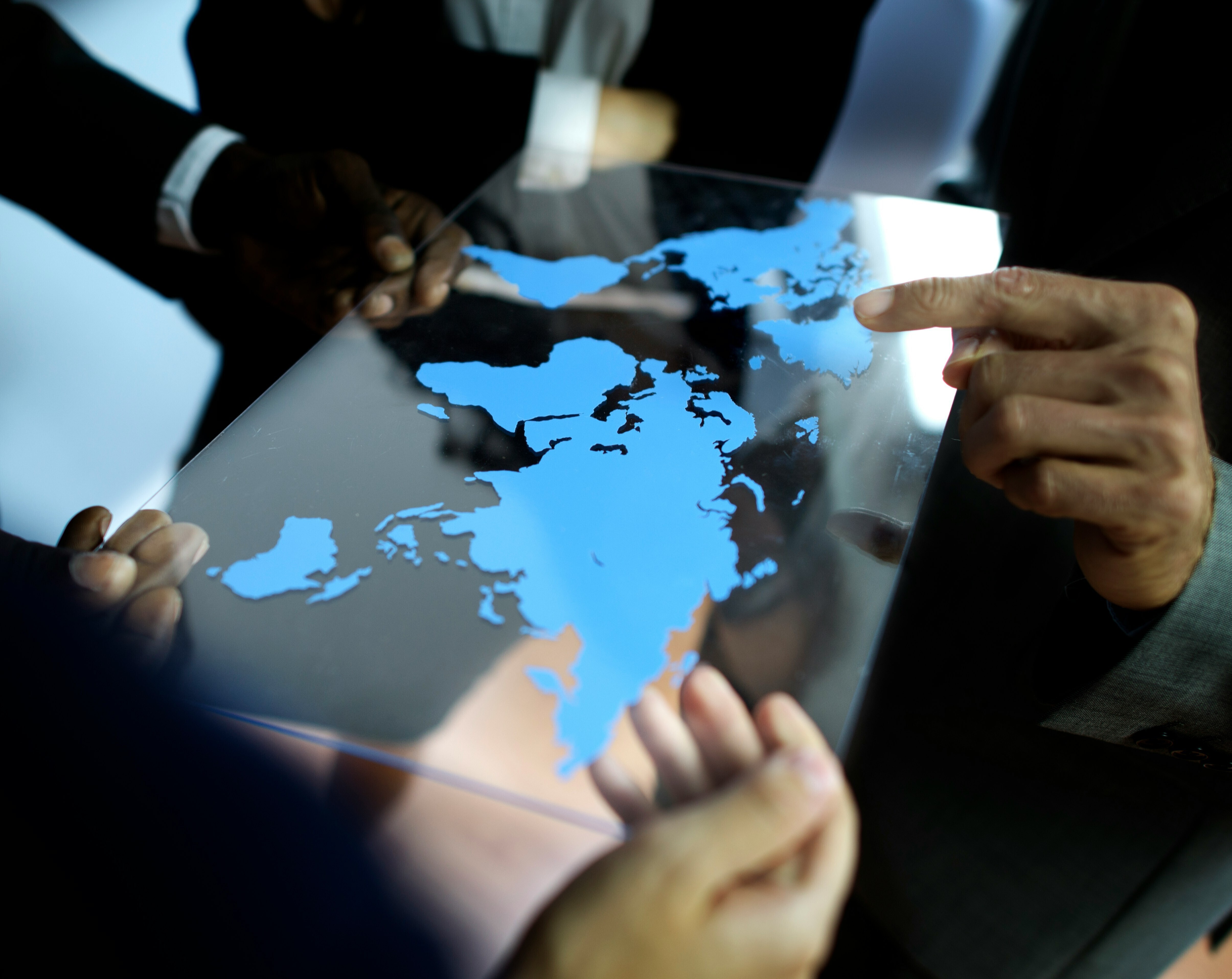
Regionalization is strengthening global cooperation for globalization Image: Unsplash/Curated Lifestyle
- Distance, speed and cost were once the defining factors of globalization but uncertainty and technological change have reshaped economies and growth, spurring a redesign, underpinned by regionalization.
- Interoperability is critical to the future of globalization, including trusted systems, digital coordination and the resulting efficiencies that reduce friction across borders.
- Putting together the new foundations of globalization will require leaders who can foster trust and build confidence across differences.
For a long time, globalization was judged by distance, speed and cost. How far goods could travel, how quickly capital could move and how cheaply products could be made and delivered.
For decades, these were the measures that defined success, helping create extraordinary prosperity, connect markets across continents and make the world more economically interdependent than ever before. Yet they also shaped a model built on one central assumption: that efficiency would always be supreme. That assumption no longer holds.
Today, the market is marked by geopolitical fragmentation, climate shocks, disrupted logistics and rapid technological change – structural forces reshaping how economies function and businesses think about growth.
A recent World Economic Forum report has described global value chains as entering an era of “structural volatility” and nearly three in four business leaders now see resilience investments as a driver of growth.
Yet, rather than portending the end of globalization, these pressures signal its redesign more than its end. Figures from UN Trade and Development (UNCTAD) demonstrate as much, reporting that world trade reached a record $33 trillion in 2024, rising 3.7% over the previous year.
However, while the old model of globalization was built to maximize efficiency, the emerging one must be built to maximize resilience and this requires a change in worldview.
In the earlier era, sprawling cross-border systems were designed to lower cost, extend reach and reduce friction. They worked well in a relatively stable environment, which can no longer be assumed. In 2025 alone, tariff escalations reshuffled more than $400 billion in global trade flows, while disruptions across major shipping routes pushed container shipping costs up 40% year on year.
Recent tensions in the Middle East and the resulting strain on energy markets and shipping routes are a real-time reminder that overdependence on any single geography, corridor or assumption now carries serious economic risk.
This is where regions become more important. Regionalization is sometimes framed as a retreat from global cooperation. On the contrary, I believe that regions can be the architecture that makes cooperation more durable.
How regions can harness the right conditions for globalization
A healthy regional ecosystem can shorten response times, distribute risk, strengthen trust and make cooperation more practical.
UNCTAD has observed that firms are no longer relying only on narrow nearshoring or friendshoring strategies but are diversifying trade across multiple regions to reduce exposure and build flexibility. That is an important signal. The future will, therefore, be connected differently, with regions acting as bridges rather than defensive blocs.
Regions create the conditions under which trade, talent, capital and innovation can continue to move with greater confidence. They also provide a practical basis for collaboration on issues that no single country can solve alone: digital governance, supply chain resilience, food security, skills mobility and the green transition.
This shift is visible in the wider trade system. As of March 2026, the World Trade Organization listed 381 notified regional trade agreements in force. Asia offers a particularly important lens on this transition to regionalism.
The Regional Comprehensive Economic Partnership now spans 15 countries, representing about 30% of global gross domestic product (GDP) and roughly one-third of the world’s population, underscoring the power of regional integration in the global economy.
The Association of Southeast Asian Nations (ASEAN, with its proposed Digital Economy Framework Agreement, is a significant case study of how the harmonization of rules around cross-border data flows, paperless trade, e-commerce, cybersecurity and digital payments, strengthens cooperation.
The ambition is not simply to create a regional market but to build interoperable systems of trust for the digital age. The secretary-general of ASEAN has noted that its digital economy could reach $2 trillion by 2030.
However, regions alone will not shape the future of globalization. Artificial intelligence and digital infrastructure are beginning to transform supply chains from static, linear systems into adaptive networks. They can improve visibility, anticipate disruption, optimize routing and reduce waste, making logistics a strategic source of stability, speed and adaptability.
Analysis from the Organisation for Economic Co-operation and Development (OECD) suggests that a 10% improvement in border automation, document streamlining and cooperation among border agencies could raise global goods exports by as much as 18%.
Why trust is a critical factor for the future of globalization
The same principle applies to cross-border payments. Project Nexus, led by the financial and monetary systems forum BIS, is designed to connect domestic instant payment systems through a common model, enabling international payments in most cases within 60 seconds. This may seem technical but it speaks to something larger.
Globalization will increasingly be shaped by the quality of its connective infrastructure. The more intelligent and interoperable that infrastructure becomes, the more resilient globalization itself becomes.
This also explains why pure reshoring is not the answer.
OECD modelling suggests that large-scale relocalization could reduce global trade by more than 18% and lower global real GDP by more than 5%, without reliably delivering better resilience. Diversification, adaptability and cooperation, designed for a more uncertain age, can fix that.
Technology, policy matters and regional design all matter but what will ultimately determine whether this new phase of globalization succeeds is something less tangible and more human: trust.
In an uncertain world, trust is part of the economic system. Dialogue is a practical tool for solving problems. Leadership is less about issuing orders and more about bringing people together, aligning interests and building confidence across differences.
The leaders who will shape the next phase of globalization won’t just be the fastest movers but those who can manage shocks and keep progress going. They’ll recognize that regions can still drive openness and that intelligence and innovation only work when there is enough trust to put them into practice.
For too long, we assumed that speed, scale and efficiency alone were markers of strength and progress. The world is reminding us that endurance, trust and people matter too. The next phase of globalization will not be built only by markets or machines but by leaders and institutions willing to create systems that are resilient, cooperative and humane.
Don't miss any update on this topic
Create a free account and access your personalized content collection with our latest publications and analyses.
License and Republishing
World Economic Forum articles may be republished in accordance with the Creative Commons Attribution-NonCommercial-NoDerivatives 4.0 International Public License, and in accordance with our Terms of Use.
The views expressed in this article are those of the author alone and not the World Economic Forum.
Stay up to date:
The Digital Economy
Related topics:


Forum Stories newsletter
Bringing you weekly curated insights and analysis on the global issues that matter.
More on Global CooperationSee all

Shoko Noda
March 9, 2026


