If digital platforms already shape our behaviour, why not use them to protect nature?

Digital platforms can help shift society towards nature‑positive outcomes. Image: Getty Images/iStockphoto
- Digital platforms already shape billions of everyday choices and can be redesigned to support nature‑positive behaviour.
- Companies are in a position to turn digital influence into part of global moves to protect nature by shifting behaviour.
- As AI becomes a primary decision interface for users, the technology can help shift society towards nature‑positive outcomes.
Digital platforms may appear as neutral tools that simply deliver a service, but they quietly shape how choices are framed and made.
Most people just see a search bar, a feed or a checkout page. Yet the design of these systems guides everything from how people learn, travel, shop and work – and how companies manage supply chains, capital and their operational impacts on nature.
Small decisions about what a platform highlights, simplifies or hides can shift behaviour at global scale and, in turn, influence key drivers of nature loss, including land and energy use, water and minerals consumption and greenhouse gas emissions.
How digital platforms influence consumer behaviour
E-commerce is a clear example. Nearly 3 billion people shop online, with global sales expected to reach £6.8-7.4 trillion by 2026. What people see and how choices are presented matters.
The average consumer makes six impulse monthly purchases online, and in fashion roughly 25% of orders are returned, often because people buy multiple sizes or colours and send most back.
Features like one‑click checkouts, personalised recommendations, default fast‑shipping, “buy more to save” prompts and free returns can encourage extra items, last-minute orders and frequent returns.
In the top 100 cities, the effects are visible: delivery vehicles are projected to increase by 36% by 2030, with delivery emissions up 32%.
These design choices do not just change what ends up on a digital basket; they reshape what is produced, shipped and stored. When platforms reward constant newness, high return rates and fast delivery, brands ramp up resource-intensive production, inventory and warehousing.
Producing a single cotton T‑shirt can require around 2,700 litres of water, and textile production already accounts for an estimated 20% of global industrial wastewater. Similar dynamics across mobility, housing, finance and media gradually reshape consumption, resource use and social norms about sustainability – and ultimately, society’s relationship with nature.
Redesigning digital environments can shift consumer behaviour
Recognizing this influence, tech companies can redesign digital environments to shift behaviour and markets towards nature-positive outcomes. Platform and algorithm design are both a risk and an opportunity. Left unchecked, defaults and ranking systems can lock in harmful behaviours.
But with intentional design – for example, by ranking lower-impact products higher in search results – platforms can steer billions of decisions towards more sustainable choices. Integrating nature-positive design into core products helps companies stay ahead of regulation, reduce risk and differentiate with users and investors.
Interviews with experts and analysis of leading platforms point to three main levers that companies can pull to turn digital influence into part of the solution.
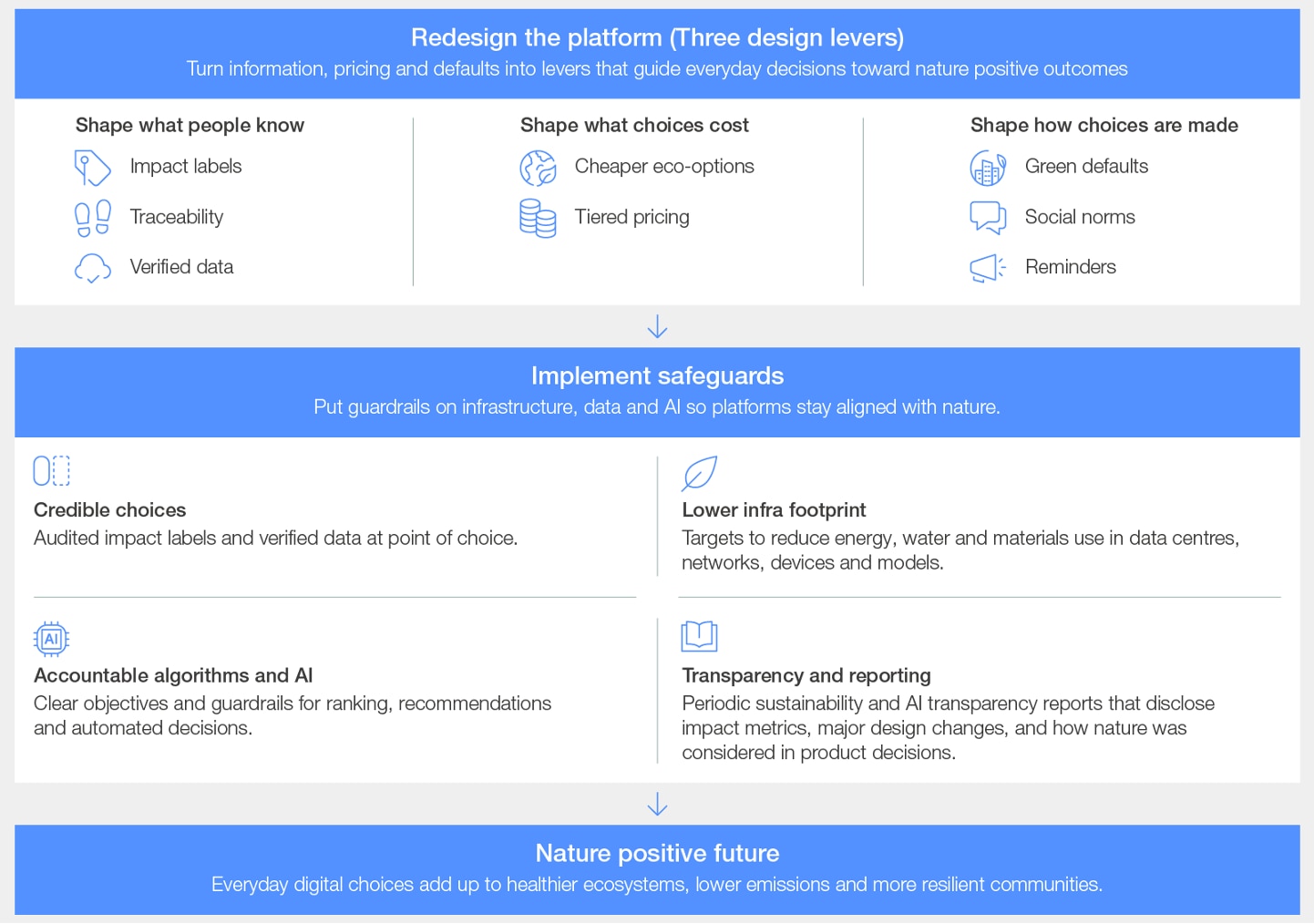
1. Create transparency: make environmental impacts visible at the point of choice
Transparency, traceability and clear impact data help people make better choices. When platforms show footprints through tags, origin maps or lifecycle metrics at the moment of choice, vague sustainability claims become concrete. For this to work, the data should be high quality and third‑party verified.
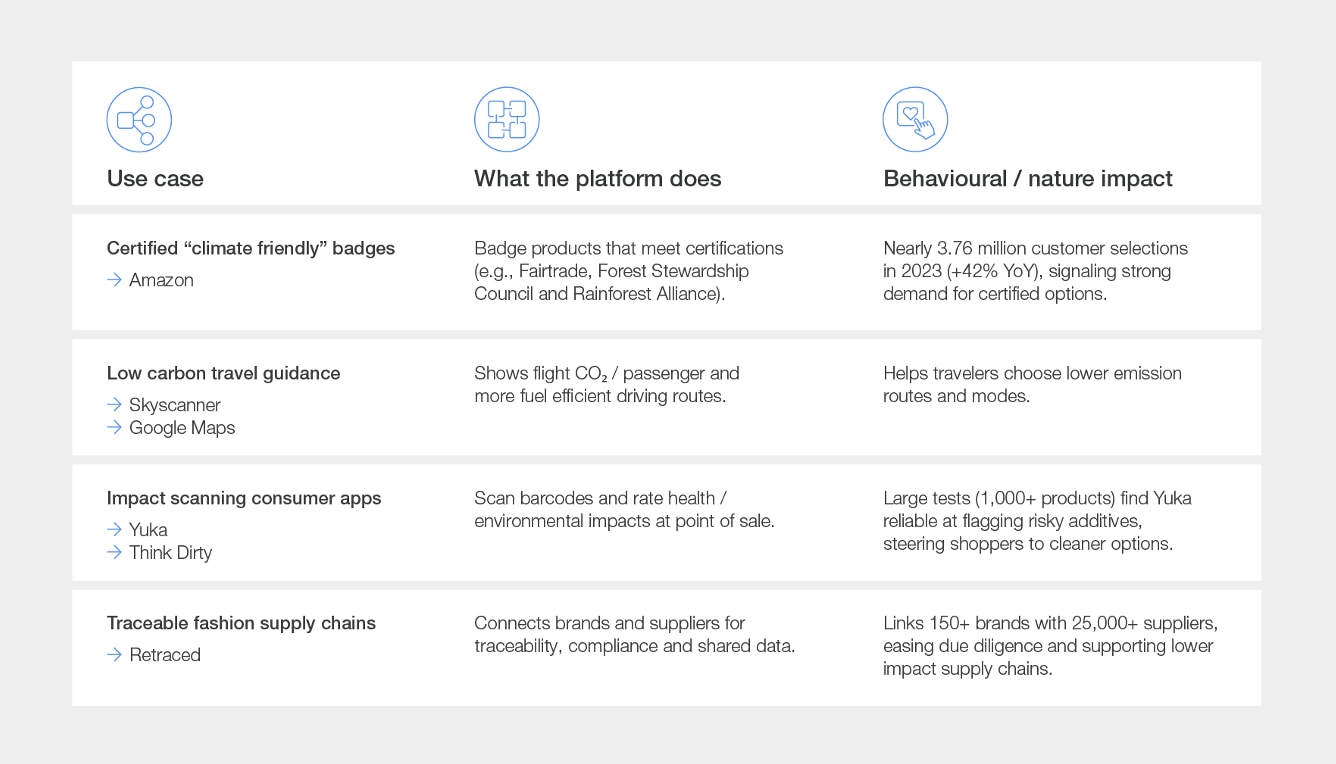
Platforms that deliver verified, comparable metrics make trade-offs clear, build trust and incentivise sustainable supply chains—strengthening business value and positioning with customer, partners and regulators.
2. Influence pricing dynamics: re-align incentives towards low-impact options
Pricing can reward lower impact behaviour. How platforms set subscription tiers, pay per use fees, surge pricing and discounts shapes when and how people consume. Well-designed pricing can steer people towards shared or more resource efficient options, reducing pressure on energy, logistics and natural systems.
By shifting demand away from costly peaks, behavioural pricing helps users choose cheaper, lower-impact options while companies cut costs and run operations more smoothly.
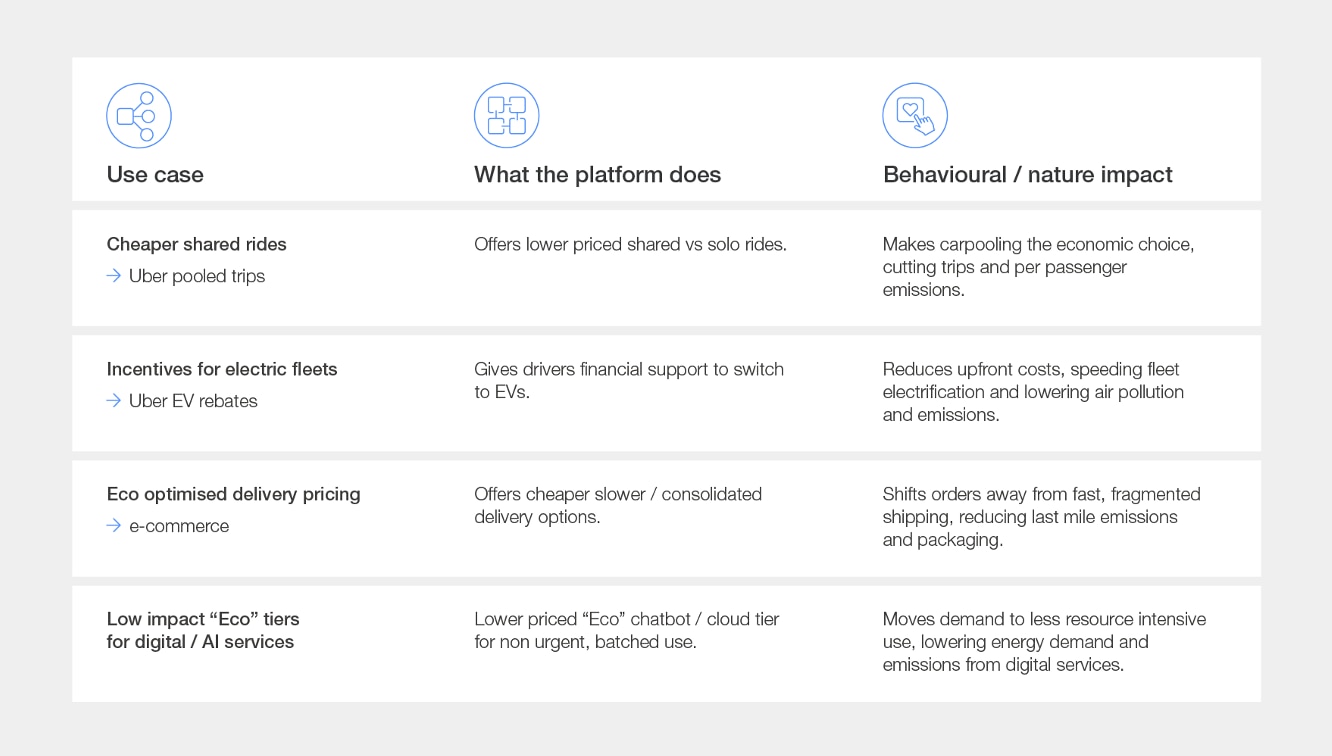
Behavioural pricing can nudge people towards greener choices, while signalling the need for cleaner business models.
3. Embed behavioural design: make the sustainable option an easy default
Digital behavioural design changes how options are presented, making lower-impact choices more likely. Because platforms shape many routine decisions, small layouts or prompt changes can shift consumption and procurement at scale.
Behavioural design works through three main mechanisms:
- Decision structure: Change defaults and layouts to favour low impact options. For example, Alibaba’s Ele.me food platform made no cutlery the default, meaning utensil-free orders rose by 648%.
- Decision assistance: Provide reminders and automation that help people follow through on their goals. As an example, Opower used smart thermostats and prompts to help its customers to save more than 32 terawatt-hours of electricity.
- Social decision appeal: Use social norms and peer comparisons to motivate behavioural change. Social cycling and running app Strava data shows that new bike lanes tracked on its app often see double digit increases in cycling, as users shift from cars.
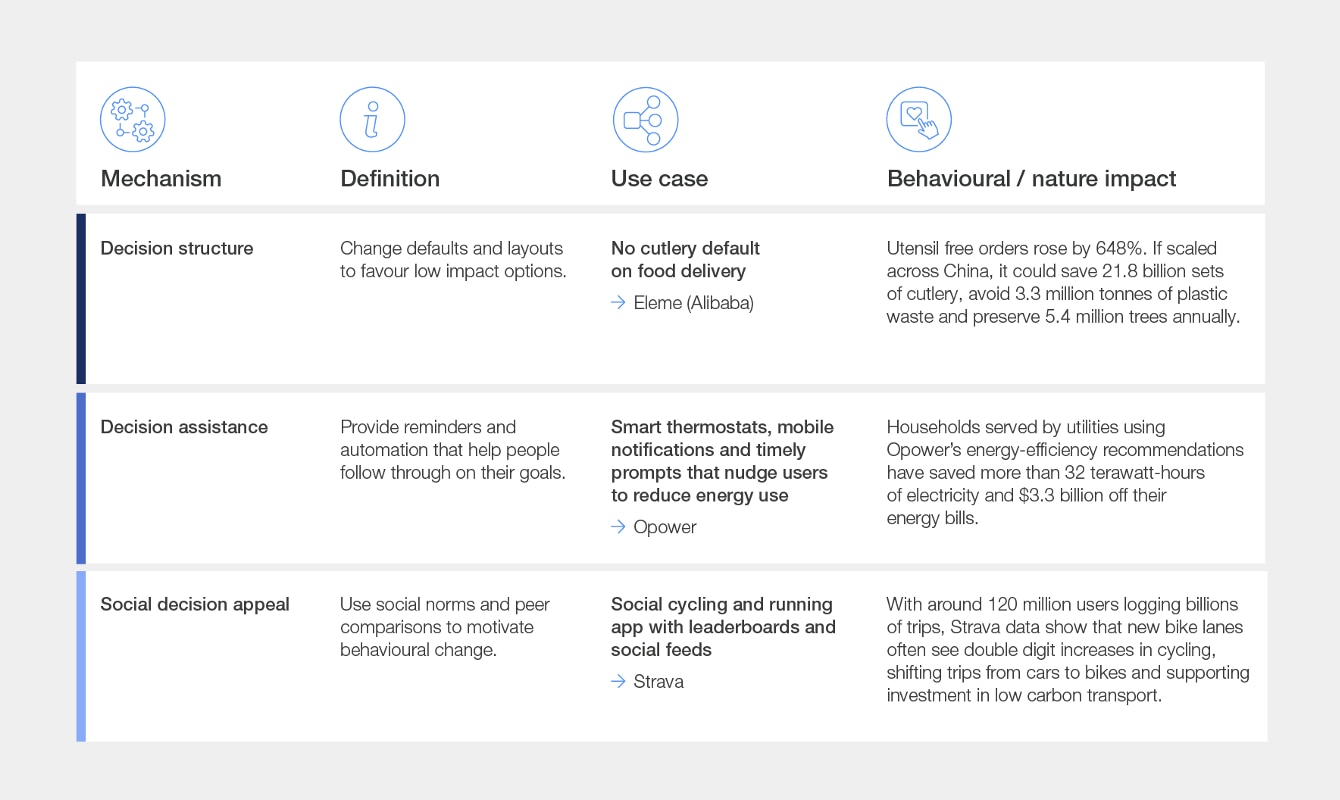
The above examples highlight how simple design choices can steer millions of decisions towards nature-positive outcomes without limiting consumer freedom.
AI as an amplifier of sustainable choices
Emerging technologies, especially generative AI, are changing how people use digital services. Instead of visiting multiple sites, people increasingly ask assistants to “plan my trip”, “furnish my home” or “source materials for this project.” ChatGPT alone has 700 million weekly active users sending 2.5+ billion prompts a day, making AI a primary interface for information and advice.
The same design questions that apply to platforms now apply to AI. How queries are framed and which options appear first can either entrench high carbon, disposable patterns or influence people towards lower-emissions choices – for example, starting trip plans with train routes and clearly comparing time and cost.
If used mainly to cut costs or boost short-term engagement, AI can lock in wasteful behaviour by favouring the cheapest or fastest options regardless of environmental impact. This compounds AI’s own footprint.
According to our latest report, Nature Positive: Role of the Technology Sector, data centres that power AI draw over 60 GW of electricity, with demand projected to grow by around 20% per year through 2030, while semiconductor fabrication for AI hardware consumes over 1 trillion litres of freshwater annually.
Without careful design, generative AI risks driving more resource-intensive lifestyles, raising a critical question: when digital systems make choices for us, do they embed the principles and standards needed to incentivise nature-positive outcomes?
Practical considerations, risks and environmental footprint
To apply the three levers in ways that also create business value, platforms can:
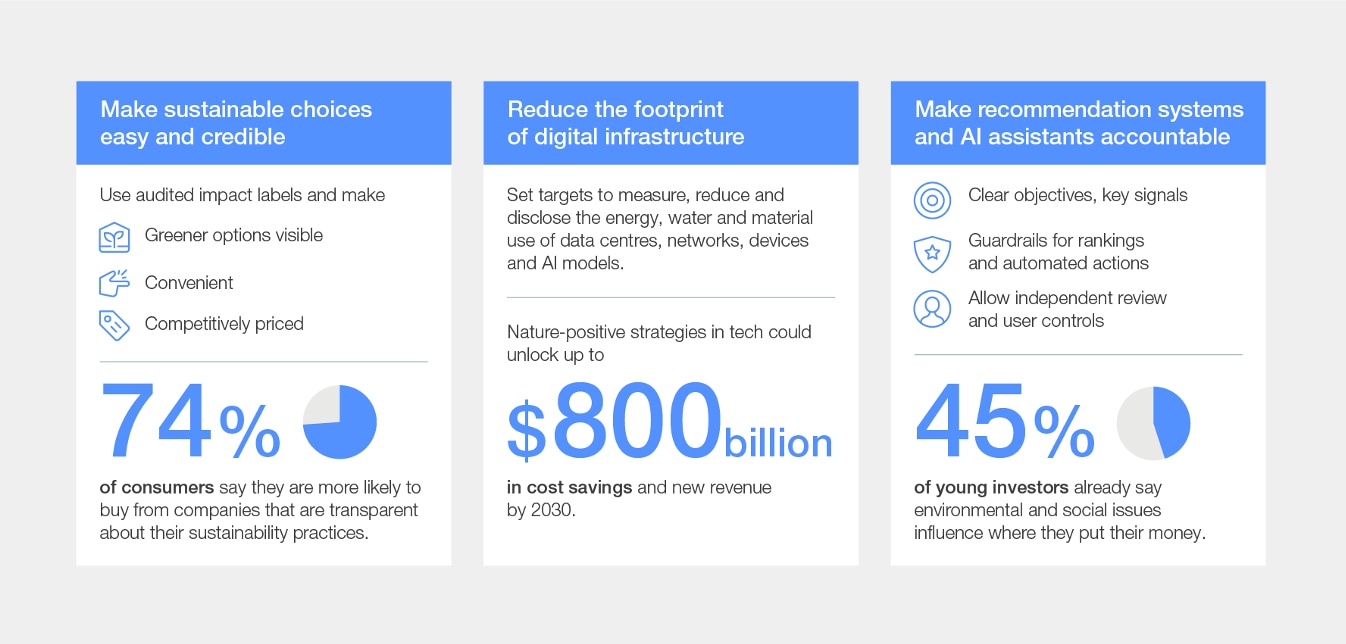
- Make sustainable choices easy and credible: Use audited impact labels and make greener options visible and competitively priced. 74% of consumers say they are more likely to buy from companies that are transparent about their sustainability practices
- Reduce the footprint of digital infrastructure: Set targets to measure, reduce and disclose the energy, water and material use of data centres, networks, devices and AI models. Nature-positive tech strategies could unlock up to $800 billion in cost savings and new revenue by 2030.
- Make recommendation systems and AI assistants accountable: Clarify objectives, key signals and guardrails for rankings and automated actions, and allow independent review and user controls. 45% of young investors say sustainability issues influence where they put their money.
The digital systems being built today will lock in consumption patterns for decades. Platform and AI designers hold a unique lever to shape billions of daily decisions and can either help reverse nature loss or accelerate it.
The window to embed nature-positive design before AI and platform architectures harden is narrow. By rethinking how they rank, recommend and set defaults, companies that act now will shift society towards better outcomes while building the trusted, resilient products future users and regulators will demand.
Don't miss any update on this topic
Create a free account and access your personalized content collection with our latest publications and analyses.
License and Republishing
World Economic Forum articles may be republished in accordance with the Creative Commons Attribution-NonCommercial-NoDerivatives 4.0 International Public License, and in accordance with our Terms of Use.
The views expressed in this article are those of the author alone and not the World Economic Forum.
Stay up to date:
The Digital Economy


Forum Stories newsletter
Bringing you weekly curated insights and analysis on the global issues that matter.