International Women's Day: What NASA’s latest astronaut picks tell us about gender equality
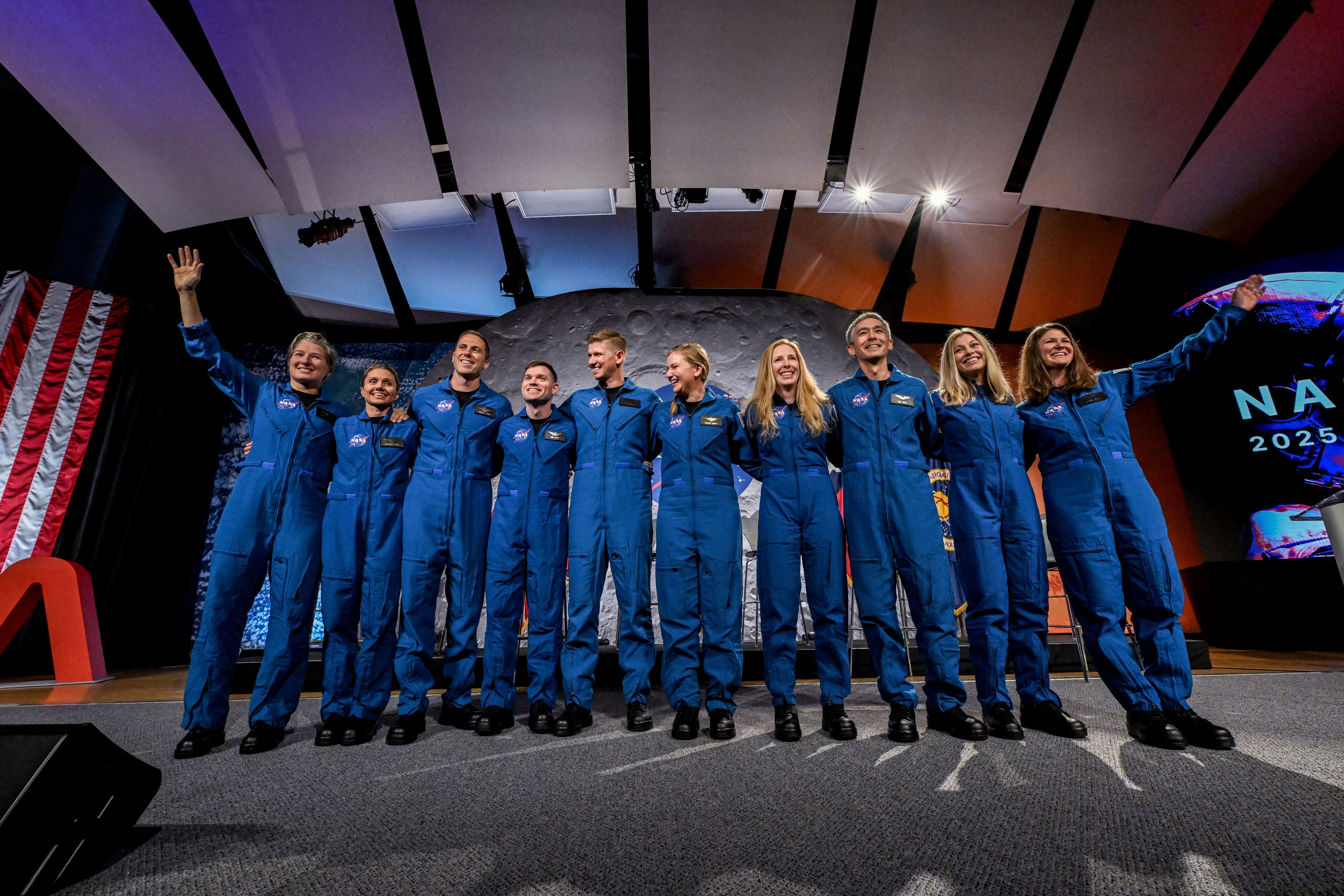
NASA’s latest Astronaut Candidate Class is 60% female, a step forward for equality in the space sector. Image: NASA - James Blair
- For the first time, NASA’s latest Astronaut Candidate Class includes more women than men.
- It follows a positive trend for gender equality in space travel, and is something to celebrate as International Women's Day is marked on 8 March.
- The World Economic Forum’s latest Gender Gap Report also found areas of progress, but substantial gaps remain.
While it might be nearly 60 years since Neil Armstrong took one giant leap for mankind, back on Earth, progress towards closing the gender gap often feels more like a slow shuffle.
That said, 60% of NASA’s latest Astronaut Candidate Class are female, with six women and four men comprising "the next generation of American explorers".
It's progress like this that will be celebrated as part of International Women's Day, which, on 8 March, will be marking its 115th year of campaigning for "a world that's diverse, equitable, and inclusive".
At a time when NASA is pursuing further Moon landings, such a milestone is a reminder of the progress made since Armstrong first walked on the lunar surface. It would be another 9 years, in 1978, before the agency even selected its first female candidates. The current astronaut candidates were selected from more than 8,000 applicants and will now undergo two years of training before becoming eligible for their first assignments.
"The 10 men and women sitting here today embody the truth that in America, regardless of where you start, there is no limit to what a determined dreamer can achieve – even going to space,” said Acting NASA Administrator Sean Duffy as the candidate class was announced in September 2025. “Together, we’ll unlock the Golden Age of exploration.”
Mind the space gap
Despite this step forward for the gender gap in space, it’s worth noting that a relatively small percentage of humans that have made it to space have been women and, today, 15 of 38 active NASA astronauts are female.
But progress is also being made elsewhere. NASA’s Artemis programme will see humankind return to the Moon for the first time in decades. The next stage in the mission, Artemis II, will see a crewed flight orbit around the Moon and includes female astronaut Christina Koch.
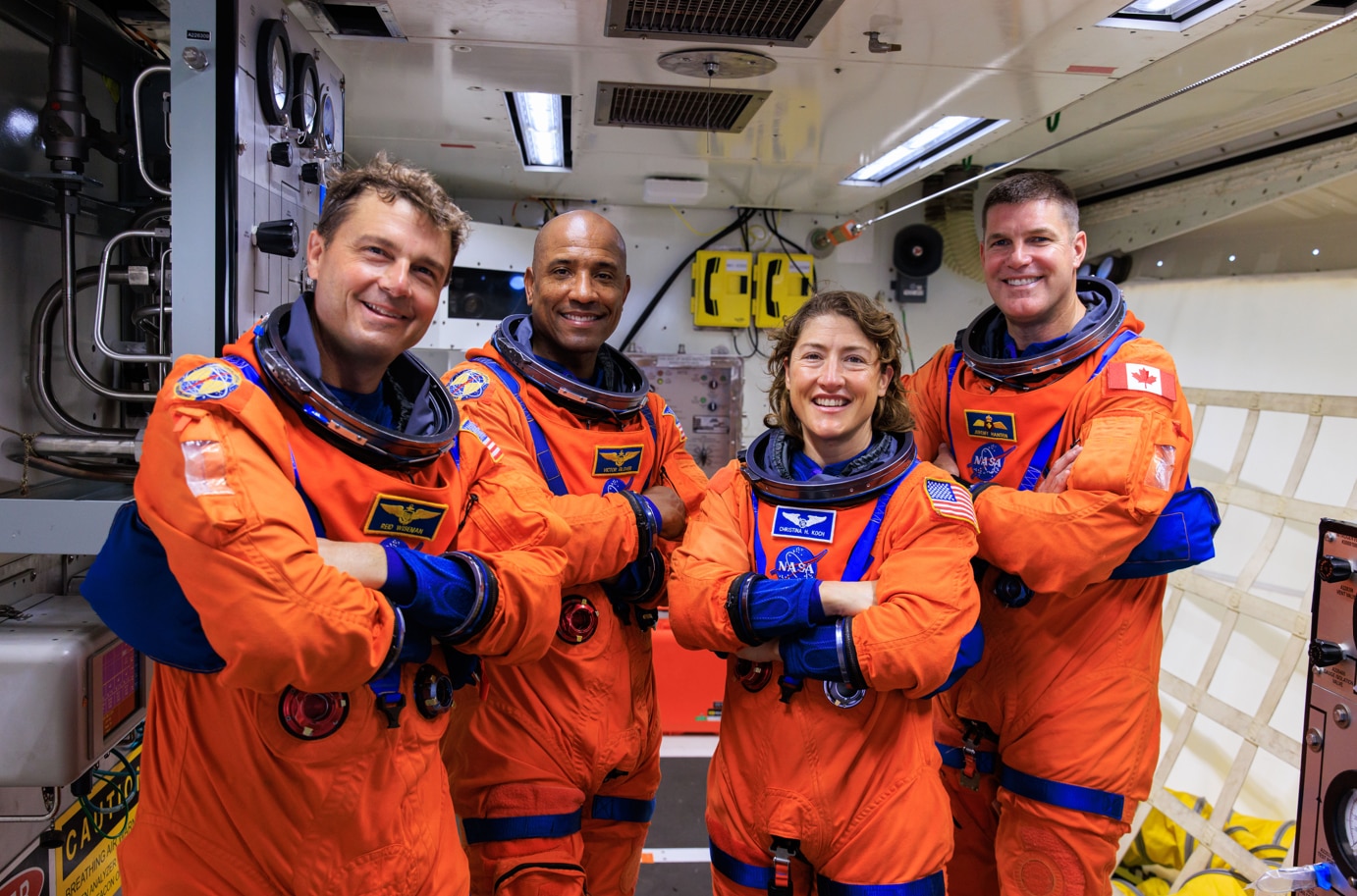
The Artemis programme’s spacesuits are also a sign of progress being made towards improved opportunities for gender equality in space. NASA says “the suit features increased sizing options and adjustability to fit a wider range of crew members”. In 2019, the first all-female spacewalk from the International Space Station (ISS) was cancelled as only one spacewalk-ready medium-sized suit was available.
In February this year, European Space Agency (ESA) astronaut Sophie Adenot joined the crew aboard the ISS. She’s one of three women in the ESA’s list of 11 active astronauts and their latest pool of reserve astronauts, announced in 2022, included six women of a twelve-strong cohort.
In recent years, there has also been increased acknowledgement of the role women played in the space race and, particularly, the US’s success in putting the first human on the Moon. Among numerous women who performed vital work, Katherine Johnson and Margaret Hamilton are perhaps the most well-known today.
Building a better pipeline
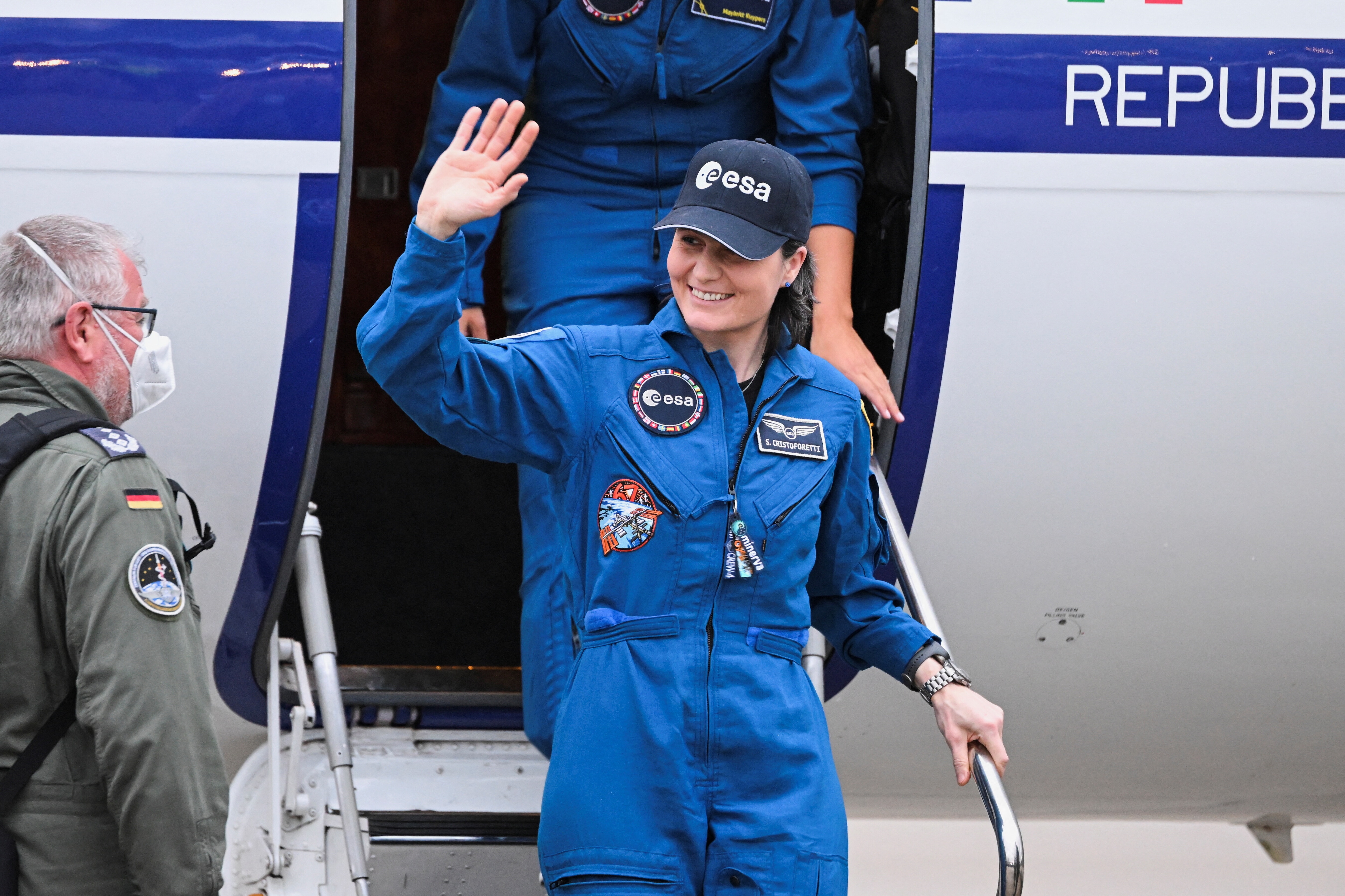
ESA astronaut Samantha Cristoforetti was the agency’s first female astronaut to complete a long-duration mission in space and the first European female to command the International Space Station.
She spoke to the World Economic Forum’s Meet the Leader podcast at Davos this year. In a wide-ranging interview, she drew attention to the improved female representation in the careers from which astronauts are recruited over the past decade or so.
“I became an astronaut 15 years ago and, back then, in that era, female astronauts were definitely still a minority,” Cristoforetti said. “But boy, it has changed in the last 15 years. I mean, the last selections, both with NASA and with ESA, are pretty much a 50-50 split.
“And it's not because we've put quotas [on] or anything like that, it's just because a lot has changed in the pipeline, in those careers from which we recruit astronauts, which are the STEM careers. We're looking for engineers, we're looking for scientists, we are looking for medical doctors, mathematicians, or people who come from an aviation background - pilots especially, test pilots with a lot of flying experience.”
In a separate Meet the Leader interview, Mishaal Ashemimry, Head of the Centre for Space Futures, agreed that the pipeline is improving. “I've noticed that there's an increasing amount of women, as well as men, entering into the aerospace engineering field and studying that in school,” she said. “And so these are great signs that we're moving in the right direction.”
However, she cautioned of a retention issue for women in the aerospace industry in general, whether as a result of balancing the demands of the job with raising a family, or the thick skin needed to deal with typically being one of few women in the room.
The bigger picture
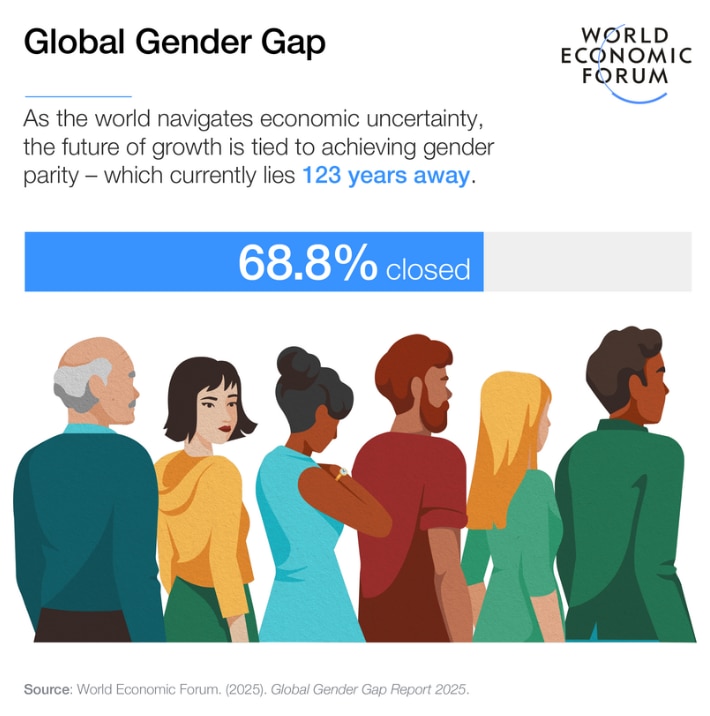
The latest World Economic Forum Global Gender Gap report found that the gap worldwide is 68.8% closed. When considered through the lens of the 100 economies that have featured in the report since 2006, that means we’re 123 years away from full parity.
Mirroring Cristoforetti’s perspective that the pipeline of potential astronauts is widening, the report shows that the Educational Attainment gap is 95.1% closed - the second highest of the four sub-indexes. Equally, Economic Participation and Opportunity has seen the greatest progress towards parity.
However, it started from a lower base, and is currently just 61% closed. Female representation among astronauts is perhaps a timely example of this trend: things are getting better, the foundations are getting stronger, but things started from a very uneven base.
What next?
Trends in terms of female astronaut numbers at both the ESA and NASA look positive. And while the pipeline of women in STEM has widened, UNESCO data suggests progress has stalled. Women still only make up 35% of STEM graduates - and this figure hasn’t changed in a decade.
A 2025 UN report explored gender equality in the space sector generally. It found that small and medium-sized enterprises that had achieved gender parity or better had a series of policies in common. Two policies in particular were highlighted by the authors:
- An internal organization-facing policy relating to gender equality or women’s leadership.
- A gender mainstreaming policy: UN Women defines gender mainstreaming as “a set of specific, strategic approaches as well as technical and institutional processes adopted to achieve that goal [of gender equality].”
Whether a female astronaut joins the crew of Artemis III, scheduled to land on the lunar surface no later than 2028, remains to be seen, but steps, if not leaps, are being taken in the right direction to make that happen.
License and Republishing
World Economic Forum articles may be republished in accordance with the Creative Commons Attribution-NonCommercial-NoDerivatives 4.0 International Public License, and in accordance with our Terms of Use.
The views expressed in this article are those of the author alone and not the World Economic Forum.

Forum Stories newsletter
Bringing you weekly curated insights and analysis on the global issues that matter.
More on Equity, Diversity and InclusionSee all

Martin Jacob
February 17, 2026


