How Japan is tackling the growing challenge of seasonal allergies
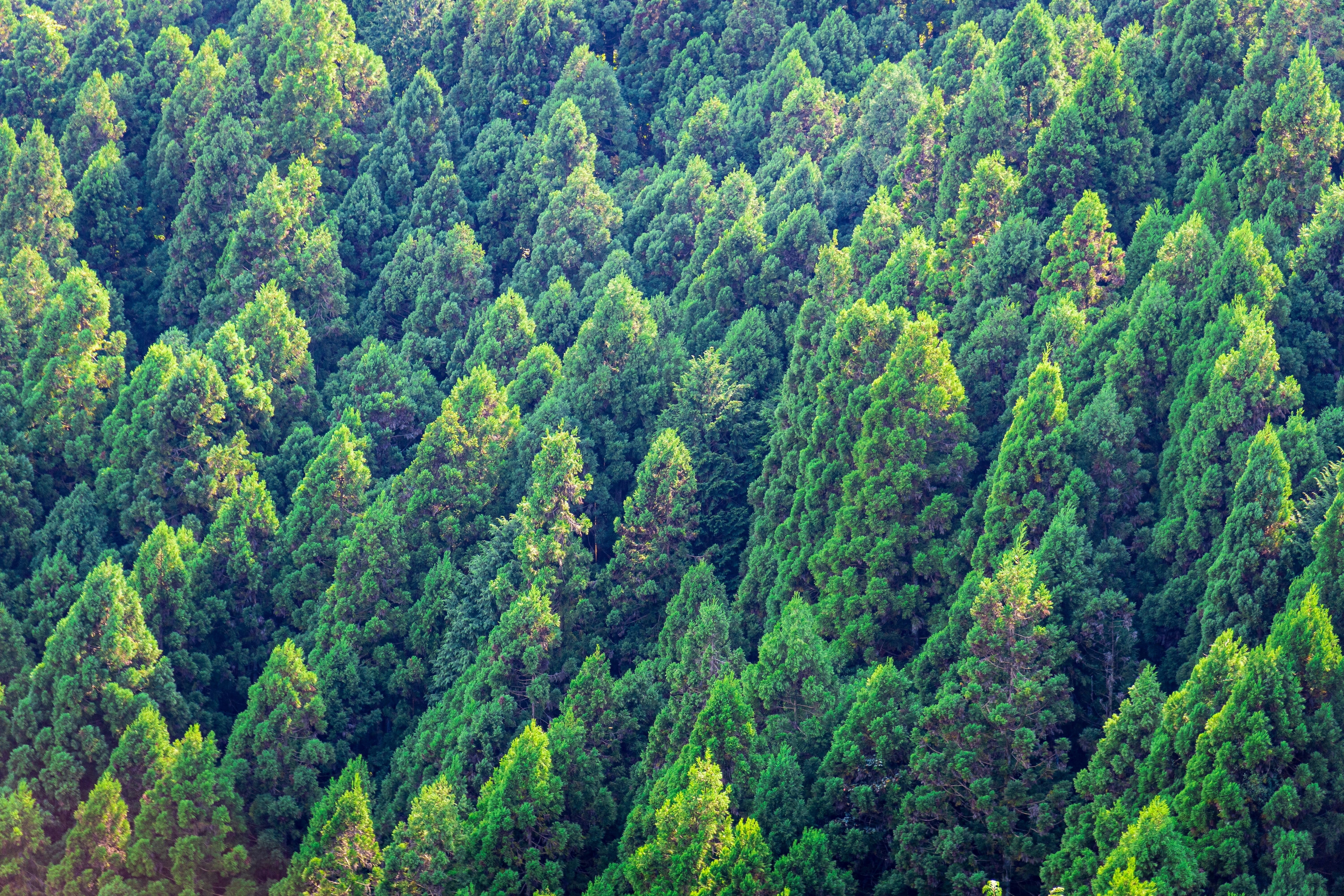
Postwar reforestation policies have created a structural pollen crisis in Japan. Image: Unsplash/Se. Tsuchiya
- Japan recognizes hay fever as a systemic economic challenge causing $1.5 billion in daily productivity losses.
- Postwar reforestation policies have created a structural pollen crisis now threatening student performance and long-term national competitiveness.
- The government aims to halve pollen levels within 30 years through data-driven precision forestry and digital technology.
In Japan, seasonal allergies are no longer viewed as a minor health nuisance. With more than half the population affected by pollen, primarily from Japanese cedar, hay fever is increasingly recognized as a challenge that has implications for public health, workforce productivity and national economic resilience.
During peak pollen season, productivity losses are estimated to reach approximately JPY 232 billion ($1.5 billion) per day. Symptoms, including reduced concentration and sleep disruption, not only affect workplace efficiency but also have ripple effects across education and daily life. Seasonal allergies are therefore no longer simply a matter of individual health; they represent an economic challenge that can influence the performance of society.
The impact on younger generations is particularly concerning. The proportion of children aged 16 and under suspected of having hay fever rose from 32.7% in December 2014 to 47.4% in 2024, an increase of nearly 15 percentage points in a decade. The peak pollen dispersal coincides with the entrance examination period for high schools and universities, causing many students to face health challenges and reduced concentration during a critical stage in their academic lives. When such effects influence learning opportunities and examination performance, they also have implications for a country’s long-term competitiveness.
The current pollen-induced challenge in Japan is closely linked to the structure of its forests. After the Second World War, the country launched large-scale reforestation efforts to restore degraded landscapes and meet rapidly growing housing demand. Fast-growing Japanese cedar, well suited for construction timber, was planted extensively across the country. As a result, approximately 4.41 million hectares, or roughly one-tenth of Japan’s land area, are now covered by planted cedar forests.
However, long-term declines in timber prices and a shrinking forestry workforce have led to an increase in forests that are no longer adequately managed, even after the trees have reached optimal harvesting age. Cedar trees older than 30 years release large amounts of pollen, resulting in a structural increase in pollen emissions over time. Forest resources developed as part of Japan’s postwar growth strategy have, more than half a century later, contributed to a new societal challenge.
A goal to halve pollen levels within 30 years
In response to this structural issue, the Japanese government has positioned pollen countermeasures as a major policy priority. Its comprehensive strategy rests on three pillars: preventing symptoms and improving treatment, addressing pollen at its source, and mitigating airborne dispersion. The goal is to reduce overall pollen levels by half within 30 years. As part of this effort, the government plans to reduce cedar plantations by 20% compared with 2023 levels by fiscal year 2033, gradually transforming the structure of Japan’s forests.
At the source level, policies focus on accelerating the harvesting and replanting of cedar plantations and replacing them with low-pollen varieties. Efforts are also underway to expand demand for domestic cedar timber, improve forestry productivity and secure a new generation of forestry workers. These initiatives extend beyond allergy prevention; they also support the sustainable use of forest resources and the revitalization of rural economies. At the local level, municipalities are working to clarify forest ownership and strengthen systems for supplying seedlings, enabling implementation at the regional scale.
Supporting pollen mitigation through technology
Digital technology plays a key role in the strategy. To support mitigation efforts, companies are provided with detailed pollen dispersal data to improve forecasting accuracy. High-precision forecasts help prioritize interventions at pollen sources while also enabling individuals to begin treatment at appropriate times. Such data infrastructure also supports market coordination for related products, including pharmaceuticals, face masks and air purifiers.
Private-sector innovation is also advancing new solutions. For example, woodinfo has developed a pollen source analysis service that visualizes and analyzes cedar male flower production and pollen dispersion using satellite imagery, drones and ground-based observations. Empirical analysis by the company suggests that selectively harvesting high-pollen-density forest areas could reduce annual pollen dispersal by 20-30% while lowering forestry operation costs by 15%. These findings demonstrate the potential of data-driven precision forestry to advance both environmental performance and economic efficiency.
Reframing seasonal allergies not as a temporary inconvenience but as a structural risk to both society and the economy offer a critical lens for building more productive, sustainable and resilient societies.
”In parallel, mobile applications providing real-time pollen information, together with expanded telemedicine services, are improving individuals’ ability to manage exposure and access treatment without leaving home. Broader digital integration across forest management, environmental monitoring and healthcare delivery is further strengthening the effectiveness of policy implementation.
Allergy mitigation as an investment in societal resilience
Against the backdrop of accelerating climate change, longer pollen seasons and rising allergy prevalence are emerging as global challenges. Japan’s approach offers an example of how public health policy, forest management, digital innovation and economic resilience can be aligned with a comprehensive response.
Reframing seasonal allergies not as a temporary inconvenience but as a structural risk to both society and the economy offer a critical lens for building more productive, sustainable and resilient societies. Japan’s strategy demonstrates how integrated governance can address complex challenges spanning environment, health and economic performance.
Don't miss any update on this topic
Create a free account and access your personalized content collection with our latest publications and analyses.
License and Republishing
World Economic Forum articles may be republished in accordance with the Creative Commons Attribution-NonCommercial-NoDerivatives 4.0 International Public License, and in accordance with our Terms of Use.
The views expressed in this article are those of the author alone and not the World Economic Forum.
Stay up to date:
Climate Indicators


Forum Stories newsletter
Bringing you weekly curated insights and analysis on the global issues that matter.