Why social innovation is key to effective climate adaptation in Africa
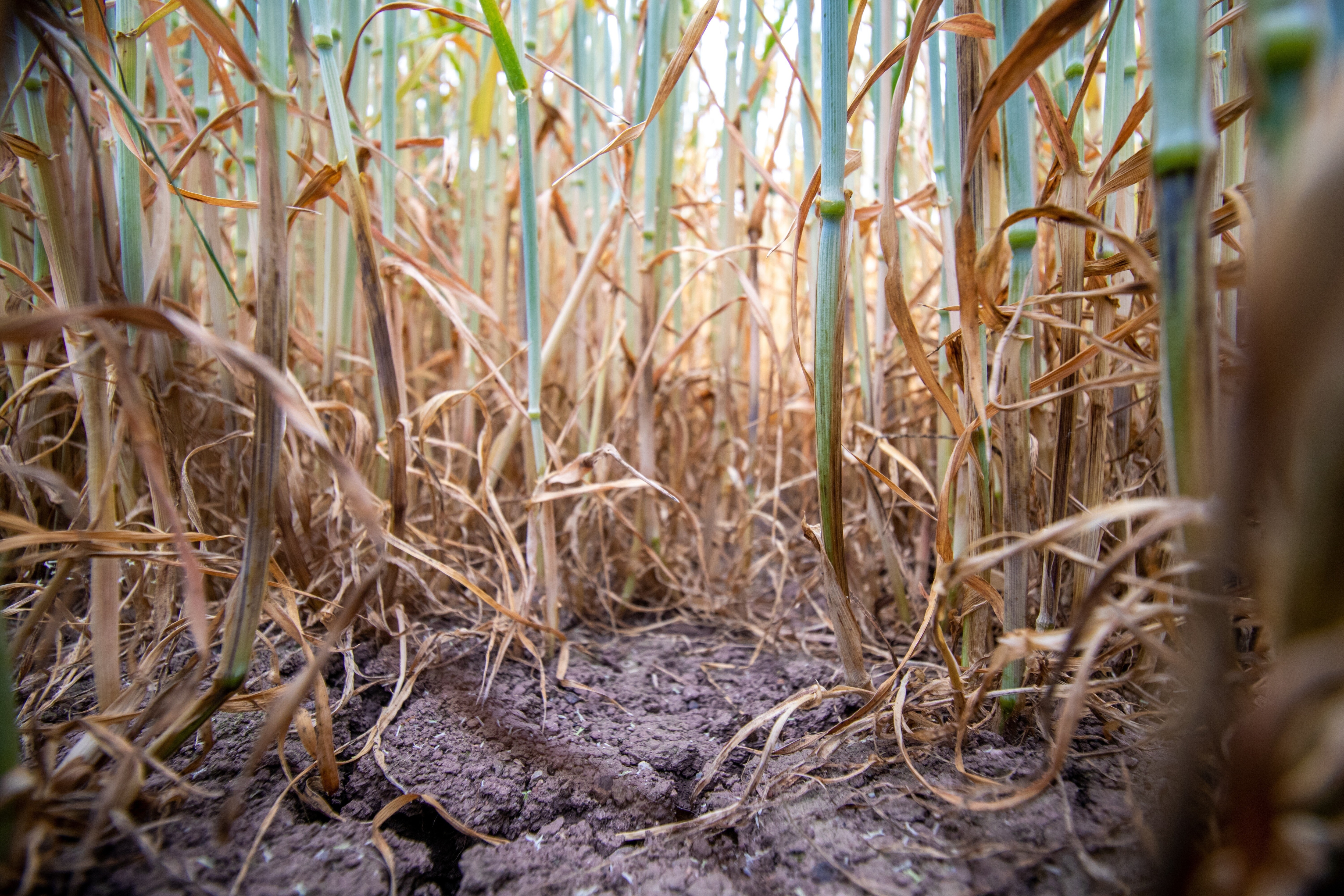
Most of Africa’s 33 million smallholder farms are rain-fed, social innovation could help improve water security Image: Pixabay
- The 2025 Adaptation Gap Report: Running on Empty warned that developing countries will need US$310–365 billion annually by 2035 for adaptation.
- Yet international public adaptation finance fell from US$28 billion in 2022 to US$26 billion in 2023.
- African countries must urgently explore alternatives, with social innovation increasingly emerging as a promising pathway to advance climate action outcomes.
Southern Africa faces two different, yet equally severe, climate extremes. Since late December 2025, unusually heavy rainfall has caused widespread flooding across Mozambique, Zimbabwe, South Africa and Eswatini. These floods are linked to the La Niña weather pattern, with heavy rainfall in the region now about 40% higher than in pre-industrial times.
Roads, hospitals, public services, businesses and farming areas have been destroyed, worsening food insecurity and impacting hundreds of thousands across the region.
At the same time, parts of South Africa are facing the opposite crisis. Severe drought conditions are unfolding in the Eastern and South-Western Cape. Towns along the southern coastline are nearing a 'Day Zero' scenario — the point at which taps could run dry. The consequences of this would be enormous, affecting households, businesses and key economic sectors.
Globally, extreme weather is also rising on the list of major risks. For the past two decades, the World Economic Forum’s Global Risks Perception Survey has tracked the most significant threats facing the world. In the latest report, extreme weather events rank third overall, accounting for 8% of perceived global risk, behind geoeconomic confrontation (18%) and state-based armed conflict (14%).
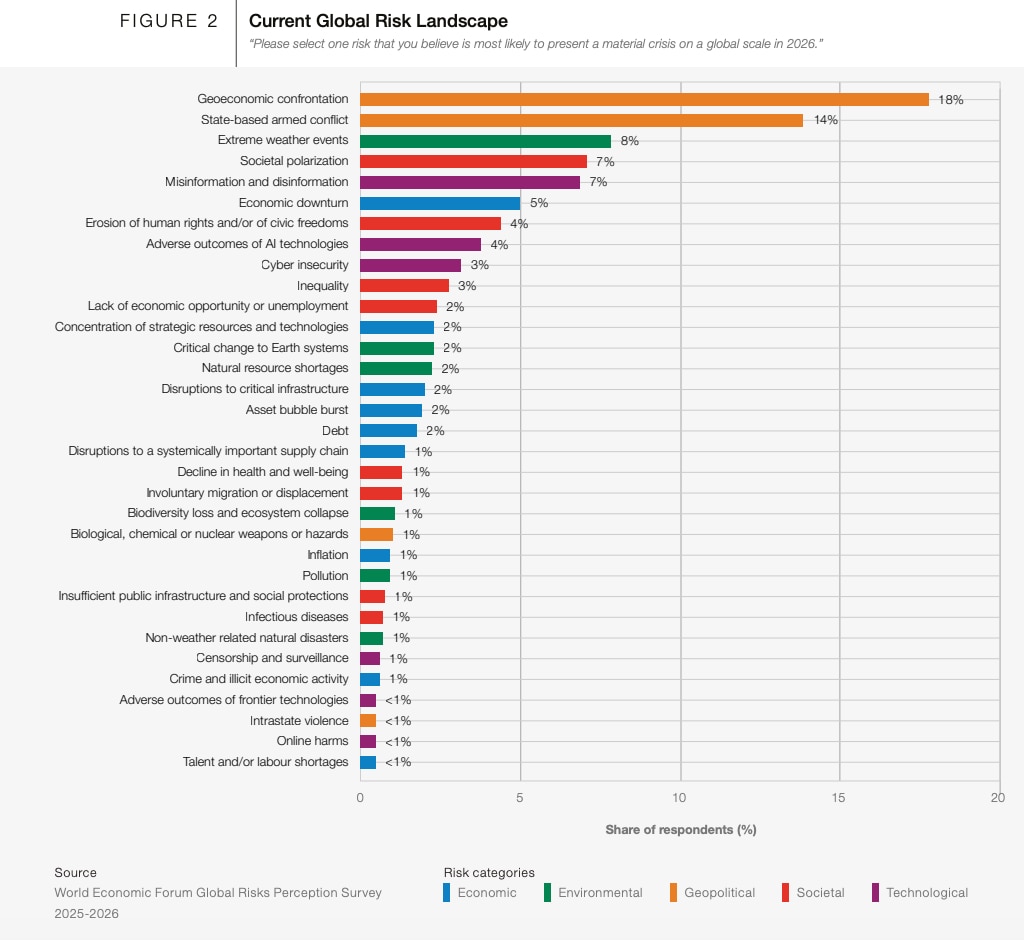
When risks are ranked by severity, extreme weather places fourth over the next two years and climbs to first place over the next decade. Other long-term risks at the top of the list include biodiversity loss, ecosystem collapse and critical changes to Earth systems — each closely linked to environmental degradation. These growing environmental risks are emerging at a worrying time, as global cooperation is weakening and funding for climate action is declining. Together, these trends highlight the urgent need for stronger, more coordinated responses to climate and environmental challenges.
This moment calls for greater ambition, not retreat. Weeks before COP30, the 2025 Adaptation Gap Report: Running on Empty warned that developing countries will need US$310–365 billion annually by 2035 for adaptation, yet international public adaptation finance fell from US$28 billion in 2022 to US$26 billion in 2023. Against this backdrop, African countries must urgently explore alternatives, with social innovation increasingly emerging as a promising pathway to advance climate action outcomes.
What is social innovation and why do we need it in Africa?
Social innovation refers to new processes or products designed to deliver more effective and just solutions to complex social challenges for collective benefit. Closely linked to this, the Schwab Foundation’s Aligned for Impact initiative defined social enterprises as organizations driven primarily by social and/or environmental goals, generating part of their income through trading and reinvesting profits to advance their mission.
Applying a social innovation lens to challenges, such as climate adaptation, opens new ways of thinking and reveals possibilities that might otherwise be overlooked. In Sierra Leone’s Sanda Magbolontor chiefdom, for example, Wanwod Development Organization is responding to climate change and environmental degradation through a community-led agricultural innovation. Guided by the mantra 'cut one, plant two,' Wanwod established a 20-acre demonstration farm cultivating polyclonal cashew varieties designed to withstand climate stress. This initiative is paired with a Farmers’ Business School, which trains local farmers, particularly women, in climate-resilient farming and enterprise skills to support adaptation and livelihoods.
In Zambia, the Community Markets for Conservation (COMACO Ltd) offers a compelling example of how environmental sustainability and economic development can go hand in hand. As a social enterprise, COMACO operates at the intersection of wildlife conservation and smallholder farmer livelihoods, addressing some of the most pressing challenges facing rural communities and ecosystems. Its nature-based climate action involves reduction of deforestation and the promotion of conservation-friendly farming, helping to preserve ecosystems while mitigating climate change. At the same time, improved soil health and diversified farming systems enhance resilience to climate shocks, making communities better equipped to adapt to changing conditions.
In Kenya, Sidai Africa is demonstrating how last-mile service delivery can play a critical role in building climate resilience among smallholder farmers. By combining access to quality inputs with advisory services, Sidai supports farmers to improve productivity while managing increasing climate risks. As smallholder farmers face growing climate pressures, including drought and increased disease prevalence in crops and livestock, access to inputs, diagnostics and extension services impacts their ability to adapt.
Sidai Africa addresses these gaps through a network of franchised outlets and hubs that bring essential services closer to farmers. Its model focuses on delivering high-quality livestock and crop inputs, alongside diagnostics and practical training. Through these last-mile channels, farmers can access veterinary services, animal health products and agronomic inputs, supported by trained advisors who guide best practices. This integrated approach ensures that farmers are equipped with the right products and the knowledge to use them effectively.
As climate change increasingly threatens social-ecological systems, social entrepreneurs are well placed to develop products and services that help communities adapt. By operating in sectors and regions often overlooked by conventional markets, social enterprises can fill critical service gaps and reach populations at the bottom of the economic ladder. At the same time, growing calls for locally led adaptation highlight how social innovation can empower communities — especially vulnerable groups — to develop home-grown solutions that strengthen their capacity to anticipate, prepare for and respond to climate impacts.
In Grass to Boardrooms: Social Innovation Partnerships for Climate Adaptation (2023), the Schwab Foundation for Social Entrepreneurship and the World Economic Forum highlight why private sector investment in climate adaptation remains limited. One of the central barriers is the perceived difficulty of making a strong business case. Many investors continue to view adaptation projects as high-risk, largely because they are relatively new and lack long track records.
Yet, the evidence tells a different story. While upfront costs can be significant, the long-term returns are substantial. An evaluation by the World Resources Institute shows that every dollar invested in climate adaptation can generate up to $10.50 in benefits, delivering economic, social and environmental value. These findings make a compelling case for scaling adaptation finance. Persistent obstacles remain, however, including policy and regulatory constraints, limited data, challenges accessing new markets and revenue streams and concerns around supply-chain resilience.
Five ways to unlock social innovation for climate adaptation in Africa
While contexts vary widely across Africa and demand different pathways, The State of Social Enterprise: Unlocking Inclusive Growth, Jobs and Development in Africa report identifies a set of cross-cutting priorities that are critical for accelerating social innovation in climate adaptation. These are:
1. Build enabling ecosystems
This means strengthening the policies, legal recognition and physical and digital infrastructure that social enterprises depend on. Clear institutional anchoring provides stability, reduces fragmentation and enables long-term impact.
2. Prioritize unlocking capital at scale
Blend finance, strategic social procurement and impact-linked investments to help close persistent funding gaps — particularly for locally-led adaptation initiatives that promote equity.
3. Strengthen social innovation by starting with people
Invest in entrepreneurship development, staff training and digital inclusion to help social enterprises build the skills and capabilities needed to operate effectively, adapt to change and scale their impact. Africa can capitalize on the youth dividend and focus on entrepreneurship development in low-income communities, including rural areas.
4. Don't address climate adaptation alone
Promote public–private partnerships, collective action, cross-sector collaborations and regional cooperation to enable social innovations to reach more communities, mobilize diverse resources and achieve impact at scale.
5. Robust data is essential for effective policy and investment
Support harmonized mapping, monitoring systems and public dashboards to improve decision-making and accountability. In the climate context, this includes access to timely, location-specific climate information and services. For example, accurate and context-specific data on wildfire risks in South Africa’s Garden Route coastal area is critical for farmers and insurance providers when making informed investment and risk-management decisions.
As the world moves into a new era of weakened multilateralism, escalating climate impacts and deepening socio-economic risks, Africa cannot afford to wait for global certainty. With poverty and inequality still defining everyday realities, the most urgent climate solutions must be social innovations built from the ground up. This means backing communities, innovators and institutions to drive practical change where it matters most: food systems, water security and climate-resilient infrastructure. The path forward is clear: Africa’s resilience will be shaped not by promises made in distant rooms, but by locally-led initiatives, scaled boldly and delivered now.
Don't miss any update on this topic
Create a free account and access your personalized content collection with our latest publications and analyses.
License and Republishing
World Economic Forum articles may be republished in accordance with the Creative Commons Attribution-NonCommercial-NoDerivatives 4.0 International Public License, and in accordance with our Terms of Use.
The views expressed in this article are those of the author alone and not the World Economic Forum.
Stay up to date:
Africa
Related topics:


Forum Stories newsletter
Bringing you weekly curated insights and analysis on the global issues that matter.
More on Social InnovationSee all

Sreevas Sahasranamam and Jyotsna Sitling
March 25, 2026


