The innovative model changing how disadvantaged communities access healthcare
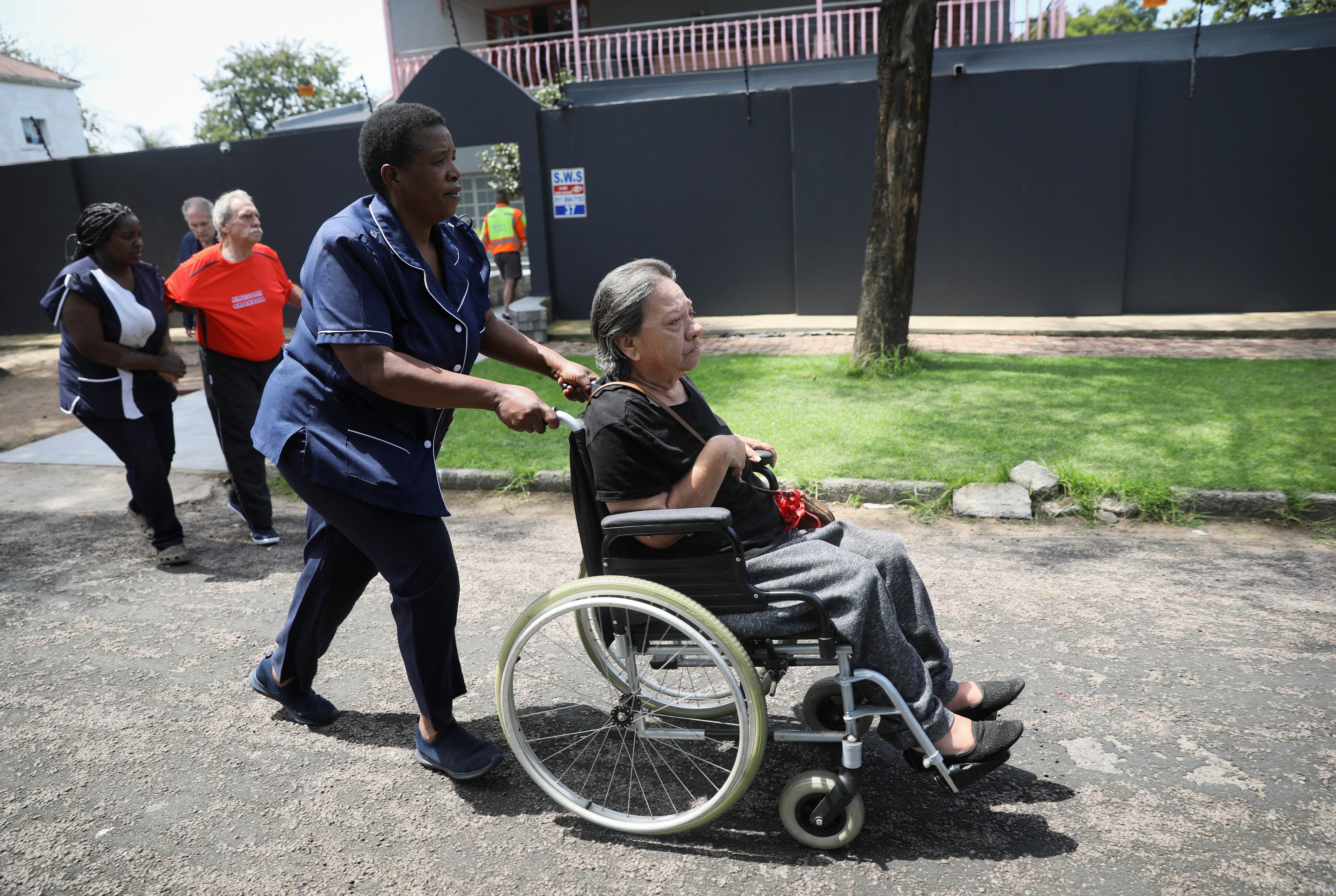
Developing countries globally face systematically worse health outcomes, particularly in times of crisis. Social franchises may be able to help. Image: REUTERS/Sumaya Hisham
- Developing countries globally face systematically worse health outcomes.
- In times of crisis, such as the COVID-19 pandemic, these differences have catastrophic consequences.
- But in places like South Africa, the social franchise model is helping vulnerable communities expand their own access to healthcare.
The global devastation of COVID-19 revealed the urgent need to extend primary healthcare to billions of people who still lack access to essential services.
Estimates of excess mortality from COVID-19 show that, after adjusting for demographic differences, developing countries with inadequate healthcare infrastructure suffered disproportionately.
The delayed arrival of testing kits and vaccines, coupled with the scarcity of intensive care units, resulted in millions of deaths and plunged many into deeper poverty.
The challenge now is improving the resilience of impoverished regions to better cope with future pandemics.
Africa's healthcare challenges
It’s a huge task. Sub-Saharan Africa has only 3% of the world’s health workers and spends less than 1% of the world’s total health expenditures, despite shouldering 25% of the worldwide disease burden.
In countries such as South Africa, multiple health crises – from tuberculosis to HIV/AIDS and COVID-19 – have overwhelmed the public healthcare system, leading to extreme overcrowding and long wait times.
The significant gap cries out for help from private and non-governmental organizations, but in recent years, healthcare service providers have also started to adopt innovative organizational forms that blend entrepreneurial energy and community wellbeing to address these problems directly.
Among these, social franchising offers the dual benefits of empowering healthcare professionals from disadvantaged backgrounds and extending healthcare to remote areas often overlooked by existing providers.
What is a social franchise?
Social franchising adapts the principles of commercial franchising to scale social impact. In this model, a franchisor with a successful and proven social business concept collaborates with individuals from disadvantaged backgrounds, equipping them to operate their own franchise clinics.
For example, Krishi Utsho, a social franchise in rural Bangladesh, operates hundreds of franchise shops that enable disadvantaged entrepreneurs to run micro-businesses, distributing key agricultural inputs to rural communities with limited market access.
In the case of healthcare, a social franchisor would similarly support its franchisees to open and operate a network of health facilities that extend primary healthcare to underserved communities.
Building social franchises in healthcare
Despite its considerable potential to expand access to social services, however, social franchising has been less common in healthcare, possibly because coordinating franchise networks in highly regulated sectors involves substantial costs and risks.
Prior research indicates that social franchises struggle to grow because of their sometimes conflicting objectives.
Balancing the financial viability of franchisee clinics, for example, with the mission of maximizing access to healthcare for underserved communities can lead to conflicts among network members.
For a recently published study, we sought to understand how healthcare social franchises overcome coordination challenges and achieve scale.
Unjani: South Africa's healthcare social franchise
We conducted an in-depth investigation of Unjani, a South African social franchise that has established a network of more than 135 primary healthcare clinics.
Unjani’s franchisee clinics are operated by Black female nurses who provide affordable primary healthcare to low-income rural communities. As a non-profit private entity with a social objective, Unjani offers an alternative to South Africa’s overburdened public health system. Unjani’s clinics serve more than 80,000 patients monthly, almost all of them outside cities.
The analysis revealed that individual franchisees were adversely affected by the franchisor’s attempts to integrate social impact throughout the network.
Burdensome procedures designed to ensure affordability and service quality restricted franchisee nurses' autonomy, reducing motivation and encouraging opportunistic behavior. This ultimately undermined the social franchisor’s core goal of empowering healthcare professionals from disadvantaged backgrounds.
But that doesn’t mean that the model doesn’t work. Unjani overcame these agency problems by nurturing a culture of network stewardship by creating a supportive social environment in the franchise. It provided consistent mentorship to help nurses navigate their dual roles as entrepreneurs and social service providers. Moreover, Unjani facilitated informal “spaces of care” – both virtual and physical – where nurses could exchange ideas, fostering reciprocity and strengthening resilience across the network.
By fostering a sense of shared responsibility among franchisee nurses, network stewardship minimized the need for cumbersome formal coordination. It also encouraged members to find fulfilment in the success of the entire network, rather than solely in their individual clinics.
The benefits of network stewardship became particularly evident during the COVID-19 pandemic, when Unjani was able to scale its operations substantially in the face of severe health and economic pressures.
Nurturing network stewardship not only built resilience among individual nurses, but also gave the franchisor a framework for balancing its goals of growth and economic efficiency with its commitment to helping nurses from disadvantaged backgrounds to become successful entrepreneurs and social service providers.
The case for social franchises
These findings suggest that social franchises can mitigate agency problems during their growth stage by fostering shared identities that fulfil the higher-order needs of network members.
These strategies appear particularly promising in many African contexts characterized by strong communal and other-regarding norms. However, network stewardship may serve only as a provisional scaling strategy, as relational coordination can become increasingly difficult once the franchise network grows beyond a certain size.
Unjani’s experience demonstrates how innovative models like social franchising can extend healthcare access in developing regions, strengthening the capacity of disadvantaged communities to respond to future pandemics.
Don't miss any update on this topic
Create a free account and access your personalized content collection with our latest publications and analyses.
License and Republishing
World Economic Forum articles may be republished in accordance with the Creative Commons Attribution-NonCommercial-NoDerivatives 4.0 International Public License, and in accordance with our Terms of Use.
The views expressed in this article are those of the author alone and not the World Economic Forum.
Related topics:

Forum Stories newsletter
Bringing you weekly curated insights and analysis on the global issues that matter.


