Why traceability matters for materials supply chain resilience

Digital product passports (DPPs) can boost transparency and traceability across global materials supply chains. Image: Getty Images/iStockphoto/Kittikorn
- The recent effective closure of the Strait of Hormuz illustrates how dependent modern economies are on complex, often poorly understood materials flows.
- Transparency remains limited when it comes to where many materials originate, how they move through global supply chains and what issues can affect them along the way.
- Strengthening materials systems will depend on combining system-level transparency on global materials flows with digital product passports that enable traceability.
Global supply chains for materials such as lithium, copper, neon and rare earth elements, run through a small number of fragile chokepoints. When disruption strikes, the effects ripple quickly through industries and economies.
Recent tensions in the Strait of Hormuz illustrate the point. While often known for oil shipments, the waterway is also a key route for a wide range of important industrial materials moving between Asia, the Middle East and Europe.
When shipping slows or stops in the Strait, manufacturing inputs can be delayed within days, revealing how dependent modern economies are on complex and often poorly understood materials flows. More than a quarter of the world’s helium supply transits the Strait, for example. This input is critical to semiconductors, MRI machines, aerospace and fibre optics, and its price has already doubled since the war began.
This vulnerability is intensifying as two forces converge. First, a more multipolar and fragmented geopolitical landscape is increasing the risk of disruption across materials supply chains and making cooperation more challenging.
Second, a new wave of technological transformation is driving a sharp rise in demand for certain critical materials. Electric vehicles, wind turbines, semiconductors and digital infrastructure all depend on dozens of metals and minerals that must move through long, complex and fragmented supply chains before reaching manufacturers and end markets.
Boosting supply chain transparency
Despite their strategic importance, there is still limited visibility over where many materials necessary for these technological transformations originate, how they move through supply chains and what potential issues could affect them along the way.
This lack of transparency makes it harder for businesses and governments to not only anticipate disruptions but also to ensure materials are produced responsibly and sustainably. For instance, without reliable traceability, it becomes difficult to verify environmental standards, monitor labour conditions, measure carbon, land and water footprints or track progress toward circular economy goals.
There is still limited visibility over where many materials originate, how they move through supply chains and what potential issues could affect them along the way.
”A newly published World Economic Forum white paper, The Future of Materials Systems: Cooperation Opportunities in a Multipolar World, examines the changing dynamics of international materials collaboration in a multipolar world. It highlights that tracing materials is no longer just a compliance exercise, it’s becoming essential infrastructure for resilient, productive and sustainable supply chains.
Two priority areas were identified in the paper where collective action can make the greatest difference: strengthening data transparency on global materials flows and ensuring interoperability between emerging digital product passport systems.
Mapping global materials flows
A shared overview of global materials flows is critical for identifying supply risks, understanding environmental impacts and coordinating responses across value chains.
Many initiatives already track materials. Databases developed by the UN International Resource Panel, UN Comtrade, the Organisation for Economic Co-operation and Development and the International Energy Agency, alongside private-sector and academic initiatives, all provide valuable insights.
However, accessing data that is consistent and comparable across regions, sectors and materials remains difficult and often costly.
Definitions and methodologies to track materials and influences are frequently misaligned. Some datasets are not regularly updated or are hidden behind paywalls. Others use different classifications, making it difficult to combine or compare information. As a result, decision-makers often lack a clear and trusted picture of how materials move through the global economy.
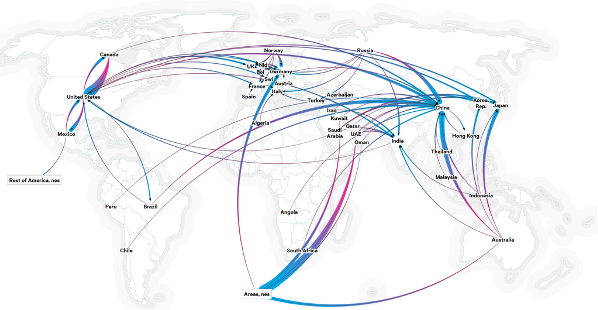
To address this fragmentation, organizations including Systemiq and the International Chamber of Commerce are exploring the creation of an international materials data hub. Conceived as a public transparency and intelligence platform, the hub will aim to support decision-makers in finding and using the information they need for strategic planning, informed policy-making and impact-driven investment decisions.
It could achieve this in three ways. One, by improving visibility, discoverability and comparability of existing data sources, tools and analytics providers. Two, by prioritising and facilitating global and regional efforts to close critical data gaps where this is needed most. And three, by facilitating interoperability and alignment across reporting standards and data platforms globally.
A key challenge will be ensuring the hub complements existing databases while maintaining neutrality, trust and broad international participation.
Creating cross-border digital product passports
While mapping global flows is essential for spotting and mitigating supply chain risks, transparency and traceability are also necessary at the product level. Digital product passports (DPPs) are emerging as a promising solution in this area.
A DPP is a digital record that follows a product throughout its lifecycle and contains information such as its material composition, origin, repair history and recyclability. By storing verified information in a portable format, DPPs can improve sourcing decisions, support repair and reuse activities, and facilitate market governance.
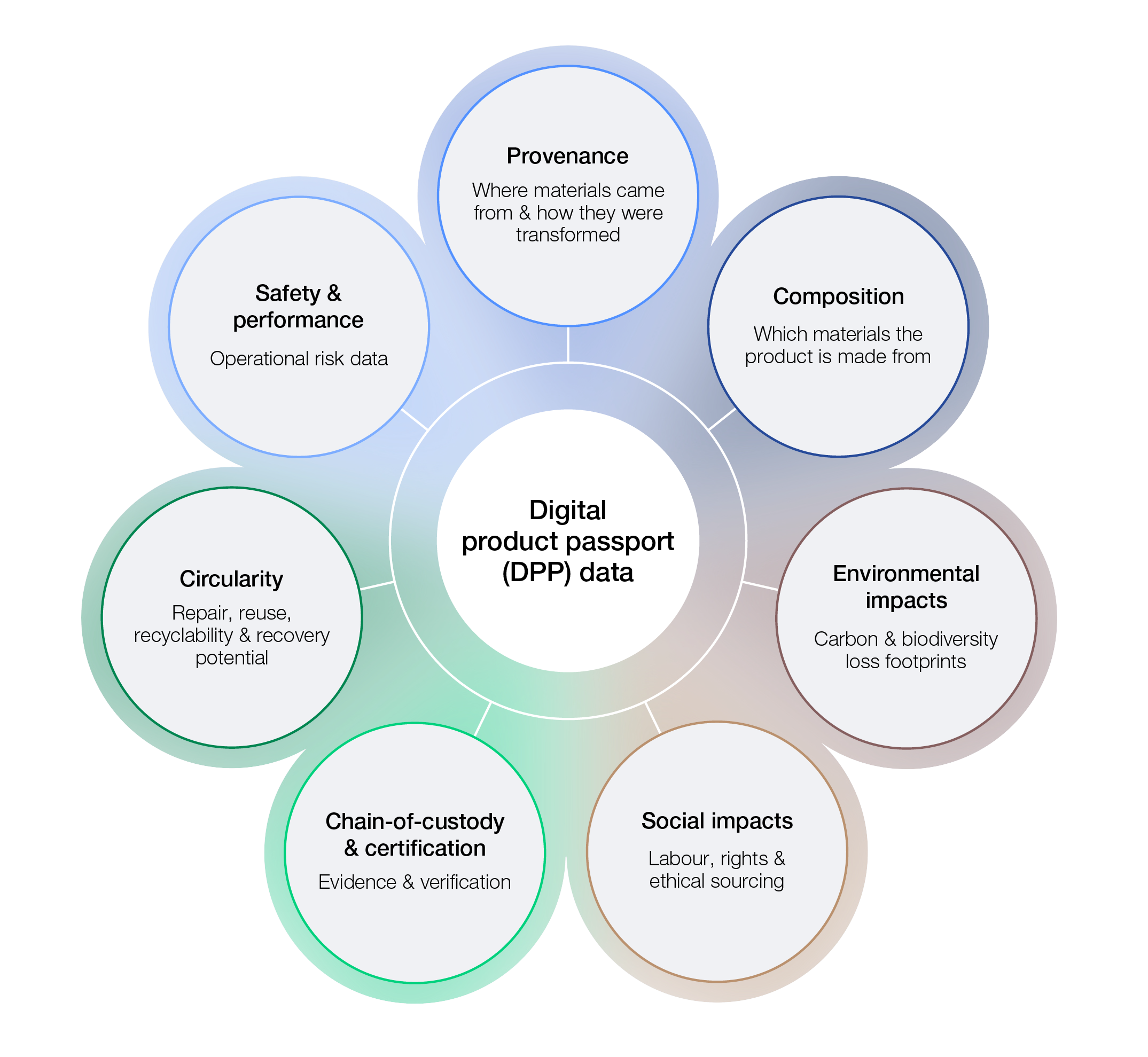
The EU is already rolling out a DPP scheme under its Ecodesign for Sustainable Products Regulation. China, India and others are exploring similar schemes. The challenge, therefore, is less a lack of ambition than a lack of interoperability between schemes.
If DPP systems are developed independently across regions and sectors without a shared framework, compliance costs may rise, reporting may be duplicated and cross-border transparency may suffer. These challenges are particularly acute for suppliers in lower-income regions with limited digital infrastructure.
To address this risk, a common reference framework is emerging via the UN Transparency Protocol (UNTP). The recently developed UNTP provides a foundation for structuring, sharing and verifying data. A key strength of the protocol is its modular design, which establishes a common baseline to support minimum levels of interoperability between DPP schemes. At the same time, it allows for extensions (or “bolt-ons”) to be developed that encourage diversity in data models across different DPP schemes.
If DPP systems are developed independently across regions and sectors, compliance costs may rise, reporting may be duplicated and cross-border transparency may suffer.
”Greater international cooperation will be needed to finance and test these DPP-related extensions, particularly in critical parts of value chains such as metals processing. Ensuring systems remain affordable and practical for small and medium-sized enterprises will be essential.
Building resilient materials systems
With rising supply chain risks and geo-economic fragmentation, transparency and traceability are becoming foundational to resilient and sustainable materials systems. Unlike energy, where governance and data systems are relatively mature, materials still lack an equivalent architecture.
Without a shared understanding of where materials originate, how they move and what impacts they carry, supply chains remain fragile and sustainability commitments are hard to verify. Fragmented data and incompatible systems limit the ability of governments and businesses to anticipate disruptions, manage risks and coordinate across borders.
Building a coherent traceability architecture, combining system-level visibility of materials flows with robust product-level traceability, can close these gaps and strengthen the information base of global materials systems.
Momentum is now building behind solutions such as a global materials data hub and enhanced product-level traceability approaches. This signals a shift toward more coordinated, transparent and resilient materials governance.
Don't miss any update on this topic
Create a free account and access your personalized content collection with our latest publications and analyses.
License and Republishing
World Economic Forum articles may be republished in accordance with the Creative Commons Attribution-NonCommercial-NoDerivatives 4.0 International Public License, and in accordance with our Terms of Use.
The views expressed in this article are those of the author alone and not the World Economic Forum.
Stay up to date:
Materials for Energy
Related topics:


Forum Stories newsletter
Bringing you weekly curated insights and analysis on the global issues that matter.
More on Global CooperationSee all

Ralitza Naydenova and Jack Barrie
March 31, 2026