Entry-level hiring is tougher than ever. How universities are adapting
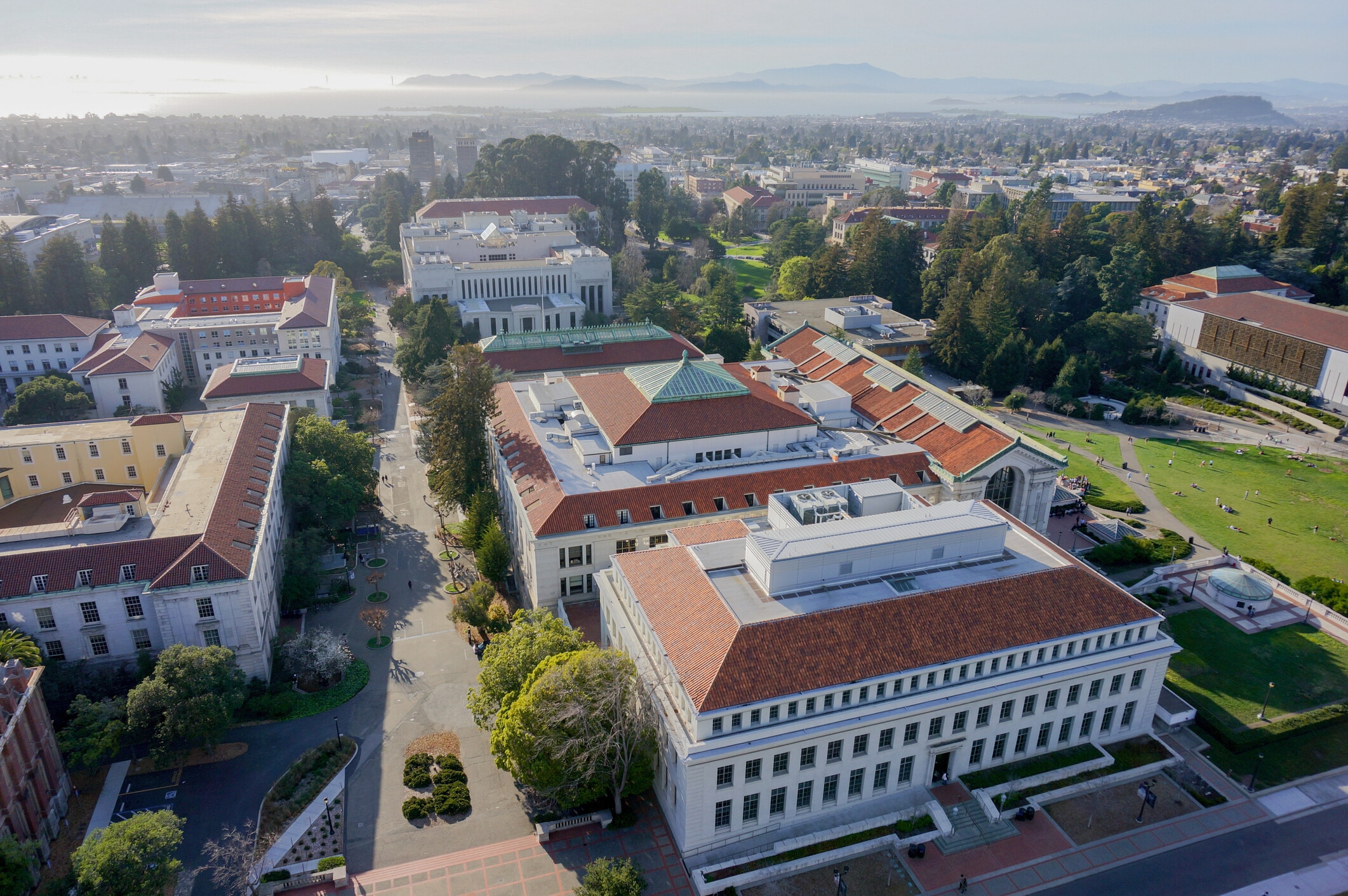
Employers increasingly prioritize work experience over a university degree, and universities are adapating to this new reality. Image: Getty Images/iStockphoto
- 81% of employers expect to prioritize experience in assessing skills for hiring, prompting universities to deepen work-integrated learning within degree pathways.
- Higher education institutions are building on existing strengths, from work-based learning to AI-enabled assessment, and more, that connect learning with real work.
- The next step is strengthening the signals between learning and hiring, and advancing coordinated action among universities, employers and policymakers.
Universities have long prepared people for work through degrees, work-based learning, lifelong education and industry partnerships. These efforts are not new; what has changed is the context in which they now operate.
The transition from education to employment, particularly at the early-career level, is under strain. Entry-level roles once provided a structured learning ramp into work. As AI automates or reshapes many routine tasks, early-career workers are expected to contribute analysis, adaptability and collaboration much earlier, even as many entry-level postings now routinely require one to three years of prior experience.
Employer behaviour reflects this shift. Hiring increasingly prioritizes demonstrated experience and applied capability over credentials alone. According to the World Economic Forum’s Future of Jobs Report 2025, 81% of employers expect to prioritize evaluation of work experience when assessing skills in hiring, compared with 43% who expect to rely on completion of a university degree. Apprenticeships (17%) and short courses or online certificates (14%) rank even lower as standalone hiring signals.
Credentials still matter, but applied experience now plays a more decisive role in how readiness is assessed. Here’s how universities are adapting to that new reality.
How universities are prioritizing learning to earn, in practice
Over time, universities have developed a range of approaches to connect learning and work. While often developed independently, they all point toward the same underlying need: systems that prepare learners through sustained engagement with work and make those experiences legible to employers.
These approaches, some of which are detailed below, are now evolving across higher education, industry and policy.
Work-based learning and industry collaboration
Industry-integrated pathways that embed paid, assessed work into degree progressions remain among the strongest ways to prepare learners for early-career roles. Cooperative education models, such as the University of Washington’s formal integration of paid work terms into degree pathways, and institution-wide employability ecosystems, such as Tecnológico de Monterrey’s Liderly, show how curriculum, coaching and employer partnerships can be aligned end to end. These systems work because they structure learning, assessment and transition together. The challenge is to scale such system-level integration across more programmes, disciplines and regions, while reducing access barriers.
AI-enabled learning and assessment
When embedded within coherent pathways, AI-enabled tools can support more iterative, applied and feedback-rich learning experiences relevant to the workplace.
Preparation systems also matter well before learners reach work-based experiences. At Carnegie Mellon University, work on redesigning foundational “gateway” courses demonstrates how AI-enabled courseware and learning science can strengthen preparation early in the student journey. Through the Learnvia initiative, improving completion and persistence in high-enrolment mathematics courses addresses a critical bottleneck in learning-to-earning systems: ensuring more learners are able to progress into fields associated with stronger economic returns.
At MIT, AI-supported digital learning is used in modular programmes such as MicroMasters, adapted for employer contexts to allow learners to work through real operational problems, receive structured feedback and progress through increasingly complex tasks at scale. At Stanford, AI tools are integrated into online and hybrid learning environments with applied labs, simulations and project-based components aligned with industry practice. They use automated feedback and adaptive content to support skill development through repeated application rather than one-off evaluation.
Alternative credentials and stackable pathways
Shorter, skills-focused credentials are often introduced to increase flexibility and access, particularly for working learners. Where these credentials articulate into larger qualifications and are paired with applied learning, they can support progression across career stages. Examples include Nanyang Technological University’s modular FlexiMasters pathways and professional, project-oriented certificate programmes offered through institutions such as Harvard Extension School. These models illustrate how credentials can function as part of a broader preparation system, rather than as isolated signals.
Taken together, these approaches underscore a critical distinction. In some contexts, strong preparation systems already exist, but the signals connecting learning to hiring are weak or fragmented. In others, the primary challenge is building the preparation system itself, with opportunities for application and effective signalling embedded from the start. What differentiates isolated successes from scalable pathways is often the presence of coordinating functions that translate between education and employers.
Research from the Strada Center for Education highlights the role of such intermediary functions in aligning curriculum design, work-based experiences and employer expectations, and in helping learners navigate transitions across stages. These functions make existing systems more legible, sequenced and navigable where responsibilities are otherwise diffuse across education institutions and employers.
Different systems, different pathways
Entry-level pathways do not look the same everywhere.
Japan provides a useful counterexample. For decades, the transition from university to work has been structured around coordinated new-graduate hiring, with companies recruiting cohorts on a shared timetable and investing heavily in post-hire training. Internships have traditionally been framed as career exploration rather than hiring pipelines, though this boundary is evolving.
This reflects a different social contract between universities, employers and young people, one that is itself under pressure from demographic change and the transformation of work.
Germany, Austria and Switzerland offer another approach, embedding paid work and formal learning together through long-standing dual education systems. In these contexts, proof of capability is generated during education itself, reducing the burden on individuals to demonstrate readiness independently at the point of hire.
Together, these examples underscore that there is no single universal pathway from learning to earning.
Building from existing strengths
Across contexts, one insight is consistent: learning to earning works best when it is deliberate, paid and connected to real work.
Many universities already have elements of this in place, from large-scale pathways for working learners, to project-based curricula, to deep industry integration shaping applied learning and early-career transitions.
What is often missing is alignment and scale: shared expectations about what counts as readiness, shared signals that translate learning into hiring decisions, and shared accountability for outcomes beyond enrolment and completion.
A shared starting point
The unresolved question is not whether learning matters, but how learning and earning connect at the point where careers begin.
Taking today as a starting point means recognizing the depth of work universities and employers have already done. The opportunity now is to reinforce and scale existing bridges, build new ones where needed and ensure that learning and earning are connected in ways that lead to good jobs, opportunity and mobility in a rapidly changing world.
Don't miss any update on this topic
Create a free account and access your personalized content collection with our latest publications and analyses.
License and Republishing
World Economic Forum articles may be republished in accordance with the Creative Commons Attribution-NonCommercial-NoDerivatives 4.0 International Public License, and in accordance with our Terms of Use.
The views expressed in this article are those of the author alone and not the World Economic Forum.
Stay up to date:
Education and Skills


Forum Stories newsletter
Bringing you weekly curated insights and analysis on the global issues that matter.
More on Education and SkillsSee all

Clementina Colombo and Rafaela Valencia-Dongo Q.
April 1, 2026


