Reducing food waste is a $540 billion opportunity hiding in plain sight
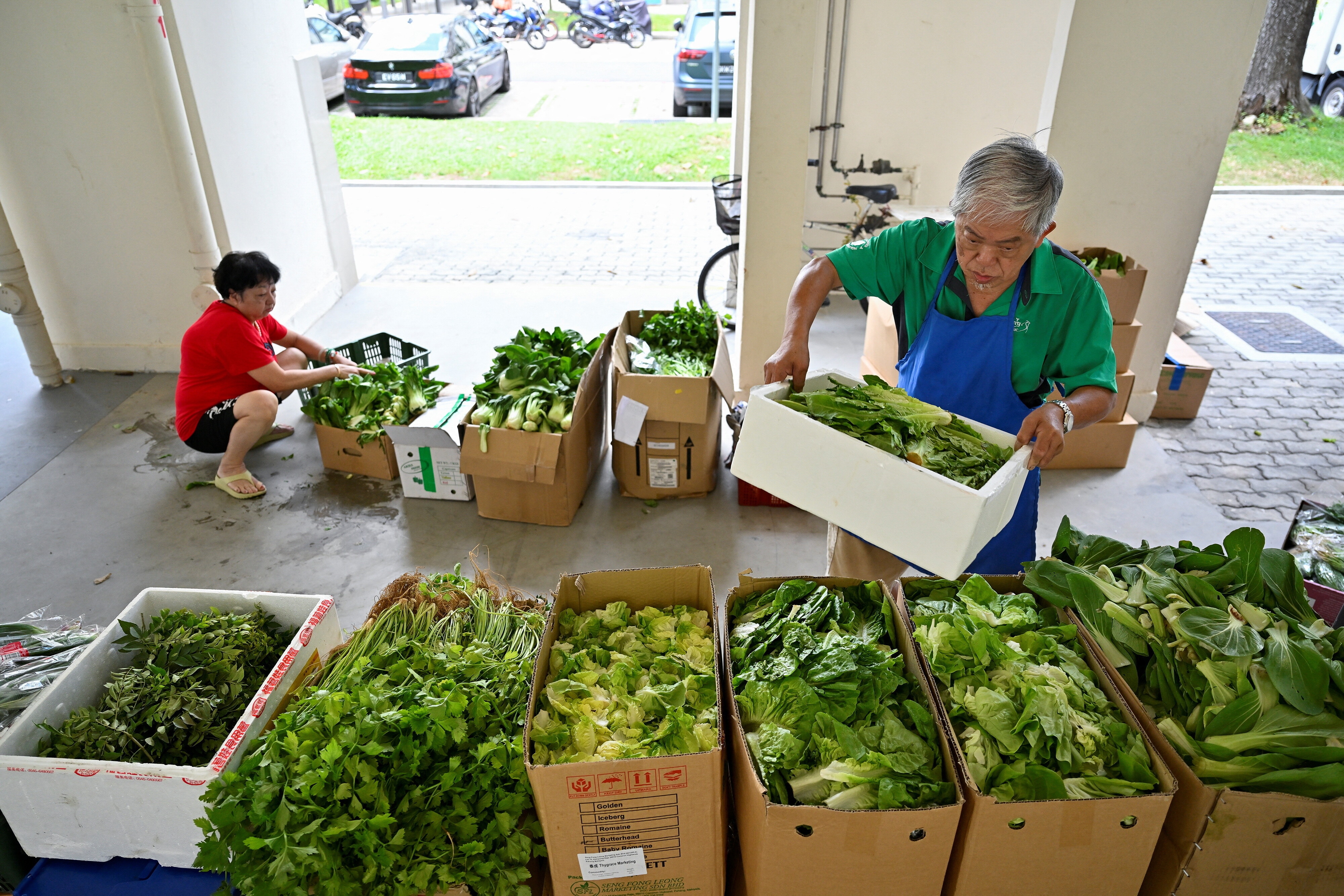
Reducing food waste can make waste into an opportunity. Image: REUTERS/Caroline Chia
- Global food waste costs are expected to amount to $540 billion in 2026 alone.
- This cost is paid throughout the supply chain, but retailers are among the greatest losers.
- New technology and cooperation can help reduce this, turning vast food waste into a business opportunity.
Food waste is not inevitable. It is the outcome of systems the industry has designed.
Reducing food waste has been treated as a sustainability goal and a charitable-giving opportunity for more than a decade. That framing has helped build awareness, but it has not delivered results at scale, nor does it address the root cause of inefficiencies across the food value chain.
Food waste is one of the largest sources of avoidable cost in the global food system, embedded in daily operations and routinely written off as “the cost of doing business”. With inflationary pressure, supply chain disruption and geopolitical uncertainty driving sustained volatility, businesses can no longer afford this kind of silent margin leakage. Put simply, the approach must change.
Food waste is a double loss businesses can’t absorb
New research from Avery Dennison, which polled 3,500 retail leaders in partnership with the Center of Economic and Business Research, found that food waste costs across the supply chain are equivalent to 33% of revenue. Globally, this will amount to $540 billion in 2026 alone. The numbers are staggering. But they also point to recoverable margin hiding in plain sight.
Food waste represents a double loss. Retailers are absorbing higher input, labour and logistics costs, yet still discarding sellable inventory. They pay more to put food on shelves, then lose its full value when it goes unsold. More than half (54%) of business leaders say the costs associated with food waste have increased over the past three years, and our economic modeling suggests the global value of food waste could reach $3.4 trillion by 2030 if current trends continue.
The gaps are particularly visible in high-value perishables. In 2026 alone, meat waste is forecast to account for $94 billion of lost value, with fresh produce accounting for $88 billion and baked goods $67 billion. The scale of the opportunity clearly points to inefficiencies in the model, with value leaking out at multiple points across the system. That leakage erodes margins, weakens resilience and adds strain to already pressured food systems. But the good news is, this loss can be reversed.
Shifting from aspiration to accountability on food waste
Across markets, regulation is already tightening. Stricter reporting requirements and economic incentives are accelerating pressure to measure and disclose food waste. So, it’s not surprising that 73% of retail leaders cite legislation and regulatory compliance as a key driver of food waste reduction.
In the EU, that direction is now formalized. Binding 2030 food waste reduction targets have been introduced, requiring a 10% reduction in processing and manufacturing waste and a 30% per-capita reduction across retail and consumption.
Greater transparency is coming, but compliance reporting alone won’t fix the problem. Reporting tells you what you lost. It doesn’t stop you losing it again. To fundamentally reduce food waste, it must be treated as a supply chain design problem. This goes beyond reporting; it is a systems challenge. Waste occurs at the points where forecasting, production, labeling, logistics and store operations disconnect. Solving it requires collaboration and eliminating the structural causes of loss.
For organizations in the business, this changes the equation. Those that build the capability to collaborate, measure consistently and prevent waste upstream will be better positioned as both regulatory expectations and system pressures intensify.
Collaboration is the mechanism for change
No single organization can solve food waste. Capturing it as an opportunity to reclaim value depends on alignment across the chain. The challenge currently is that 68% of leaders say collaboration across the food system is falling short. Supply chains are physically connected but operationally disconnected. Of the 3,500 retail leaders polled, 26% say they have limited influence over the parts of the supply chain where waste is most acute. That shortfall shows up in inconsistent data and definitions, misaligned incentives or limited coordination across forecasting, markdowns, redistribution and reporting. As a result, waste is pushed downstream.
To reduce food waste at scale, there has to be shared alignment on standards for measurement. This includes common approaches to data and labeling, incentives that reward prevention and interconnectivity between supply chain nodes so that information flows as seamlessly as product. What’s encouraging is that collaborative models exist, but they are not yet operating at the scale or speed. Initiatives such as ReFED’s Roadmap to 2030 demonstrate what coordinated action can look like – convening retailers, manufacturers, logistics providers, policymakers and NGOs around practical solutions. These kinds of platforms matter because they turn fragmented effort into collective momentum.
This is where technology shifts from helpful to essential in making collaboration possible. When products carry a consistent digital identity, partners can align around the same information, reducing the gaps where waste often hides and enabling earlier, coordinated intervention. Identification and intelligent labeling solutions create shared visibility across manufacturing, distribution and store operations, turning fragmented data into coordinated action.
Retailers play a critical role here as the natural conveners. They are placed at the junction between supply and demand, so they are often best positioned to align partners around shared expectations and outcomes. However, lasting progress depends on participation across the entire chain.
Why is food waste a solvable problem?
The food sector does not lack solutions - the technology exists to drive out food waste. Nor does it lack the will, with many companies along the value chain doing good work to reduce the waste that they can see. But solutions cannot work in isolation; the system depends on alignment, systemic collaboration and accountability. Food waste reduction will only be successful when it becomes part of how the system runs, embedded into the entire process rather than being treated as a sustainability program running alongside the business.
Food waste is a material source of avoidable cost, lost sales and operational friction that sit inside the P&L, regardless of whether it’s measured. When that's recognized, waste stops being a “cost of doing business” and becomes a signal that highlights where systems can be improved, value recovered and resilience strengthened.
The $540 billion opportunity isn’t about producing more. It’s about protecting what we already produce. The food system needs more visibility, not more volume. By treating food waste as a financial issue, it becomes a lever for margin recovery and resilience.
Don't miss any update on this topic
Create a free account and access your personalized content collection with our latest publications and analyses.
License and Republishing
World Economic Forum articles may be republished in accordance with the Creative Commons Attribution-NonCommercial-NoDerivatives 4.0 International Public License, and in accordance with our Terms of Use.
The views expressed in this article are those of the author alone and not the World Economic Forum.
Stay up to date:
Agriculture, Food and Beverage
Related topics:


Forum Stories newsletter
Bringing you weekly curated insights and analysis on the global issues that matter.
More on Food, Water and Clean AirSee all

Natalie Pierce and Christa Odinga-Svanteson
June 30, 2026


