China’s services trade deficit is set to narrow in the coming years, driven by growing services exports and peaking imports.
A narrower services deficit will make China’s current account surplus more persistent; resolving these persistent global trade imbalances ultimately requires stronger domestic demand and meaningful RMB appreciation.
How promising ideas become scalable impact is a key focus at the World Economic Forum’s Annual Meeting of the New Champions, also known as Summer Davos, in China from 23–25 June.
Debates over global imbalances have focused overwhelmingly on trade in goods. This emphasis is understandable in China’s case, given its position as the world’s largest manufacturing surplus economy. Yet this focus risks missing a quieter but increasingly consequential shift unfolding in services trade.
For decades, China’s large goods surplus has been partially offset by a significant services deficit, both the largest globally. Absent this services gap, estimated at 1.2% of GDP, China’s current account surplus could have approached 5% of GDP last year. This long-standing deficit, once a natural counterweight, is now set to narrow.
The implications are profound for both China’s macroeconomic rebalancing and the global trade landscape.

Goods trade still dwarfs services. Goods exports and imports are roughly ten and four times their services counterparts.
Yet the services trade is growing faster. Between 2021 and 2025, services exports rose by 83% and imports by 65%, far outpacing goods trade growth of 48% and 32%, respectively. As services exports continue to outperform imports, the narrowing deficit will make China’s external surplus more persistent, absent policy or exchange rate adjustment.

Why China’s outbound travel deficit is nearing a peak
Travel has long been the largest component of China’s services deficit. At $254 billion last year, it exceeded all other categories by a wide margin. Several forces now point to moderation. Overseas tuition payments are likely to peak as job prospects for graduates weaken both abroad and domestically. At the same time, diaspora spending is sensitive to exchange rate expectations. A less bearish RMB outlook should curb such outflows. Meanwhile, outbound tourism will continue to recover, but likely at a slower pace, constrained by weaker income growth and wealth accumulation.
At the same time, inbound tourism is rebounding strongly. China has expanded visa-free access to 75 countries, including most advanced economies except the US. Inbound visits have already surpassed pre-pandemic levels, reaching 155 million last year. Taken together, these trends suggest that while the travel deficit remains large, it is likely to peak.
How domestic logistics are shrinking China’s transport deficit
A similar, though less pronounced, shift is underway in transportation services. Historically, China’s vast merchandise trade did not translate into comparable transport revenues, as foreign carriers dominated global logistics.
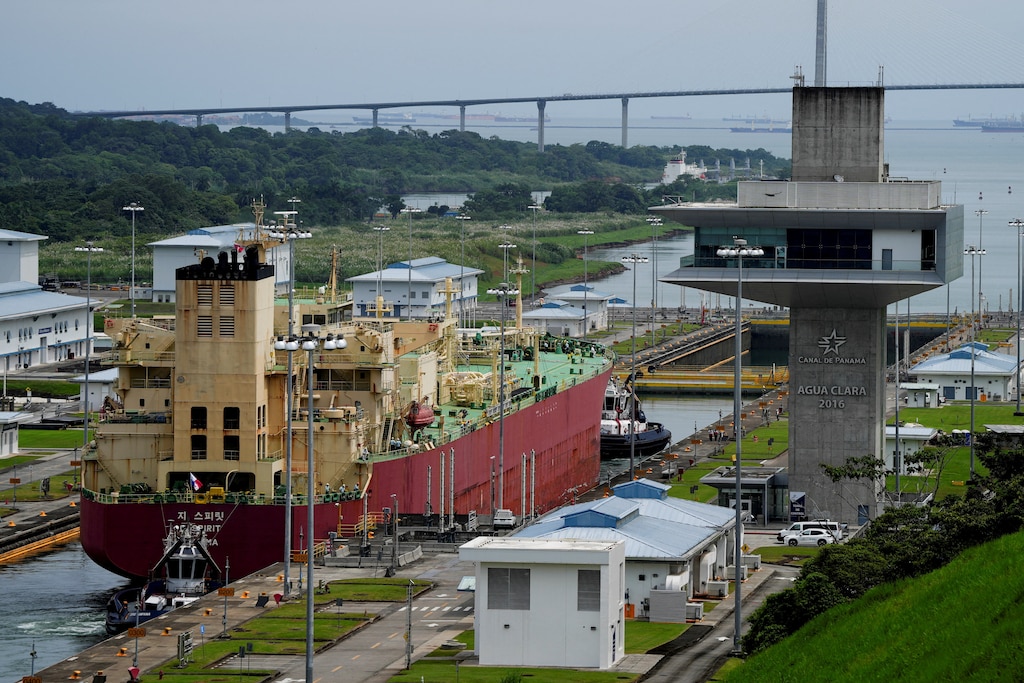
This began to change during the pandemic, when supply disruptions boosted demand for Chinese carriers. Since then, China’s position across the maritime supply chain has strengthened: it produces roughly 90% of global containers and over half of ships, and owns more than 14% of global fleet capacity. As a result, transport exports have risen sharply, while imports have remained broadly stable. The deficit — estimated at $40 billion last year — is narrowing and likely to decline further. The expansion of cross-border e-commerce and the growing role of Chinese logistics providers reinforce this trend. What was once imported is increasingly supplied domestically.
Can China monetize innovation despite foreign IP constraints?
Intellectual property presents a more complex picture. China continues to run a sizable deficit, reflecting dependence on foreign technology.
However, this deficit is being reshaped by two opposing forces. On the one hand, export controls and investment screening by advanced economies are limiting access to cutting-edge technologies in sectors such as semiconductors and biotechnology. On the other hand, China is increasingly monetizing its own innovation. Patent licensing — especially in telecom, mobility and pharmaceuticals — has expanded rapidly, with outbound pharmaceutical licensing deals alone reaching $134 billion last year.
Driving the ICT surplus: The rise of Chinese digital services
Digital services are emerging as a key source of strength. China’s ICT services surplus has widened steadily, reaching $32 billion last year. This reflects both domestic policy and external demand. Data localization and regulatory barriers have constrained imports, while exports have been driven by cloud computing, data processing, digital content and services tied to cross-border e-commerce.
Yet important constraints remain. China’s digital services exports are still only about 40% of India’s. Moreover, geopolitical tensions — particularly concerns over data security — pose growing challenges. China’s efforts to join the Digital Economy Partnership Agreement highlight both its ambitions and the regulatory hurdles it faces.
How outbound corporate investment expands China’s business services
Business services, including R&D, consulting, legal, design and engineering, are also growing rapidly. This reflects China’s expanding global corporate footprint. As Chinese firms invest, operate and license technology abroad, they generate both demand for and supply of such services. In some cases, technology exports are themselves recorded as services, particularly when structured as R&D contracts rather than outright sales. This further boosts the measured expansion of services exports.
Why tariffs fail to fix global imbalances: The case for RMB appreciation
Taken together, these developments point to a clear trend: China is capturing a growing share of the services embedded in global trade — across logistics, digital platforms and technology licensing — while reducing reliance on external providers. The result is a narrowing services deficit and a more entrenched current account surplus.
This shift has important policy implications. Much of the debate in the United States and Europe has focused on tariffs and trade restrictions. Yet tariffs primarily reduce bilateral goods exports from other countries. They do little to affect others’ imports, services trades, or the overall external imbalance.
Sustainable adjustment must therefore come from other channels. A durable rebalancing of China’s external position will require stronger domestic demand and, critically, a stronger currency. RMB appreciation would curb exports while boosting imports, affecting both goods and services trade.
Global imbalances are not static; they evolve with economic structure. In China’s case, the shift from goods to services is altering the mechanics of external adjustment. Focusing solely on manufacturing risks overlooking a deep transformation underway.
As services become an increasingly important driver of China’s external position, the challenge of sustaining a balanced global economy will intensify. Understanding this shift is essential for policy-makers — and for anyone seeking to grasp the next phase of global trade dynamics.
Data note: Statistics cited in this piece are sourced from Haver Analytics or derived from internal IIF research and calculations.