Cautious relief for markets follow US-China summit, and other finance news to know
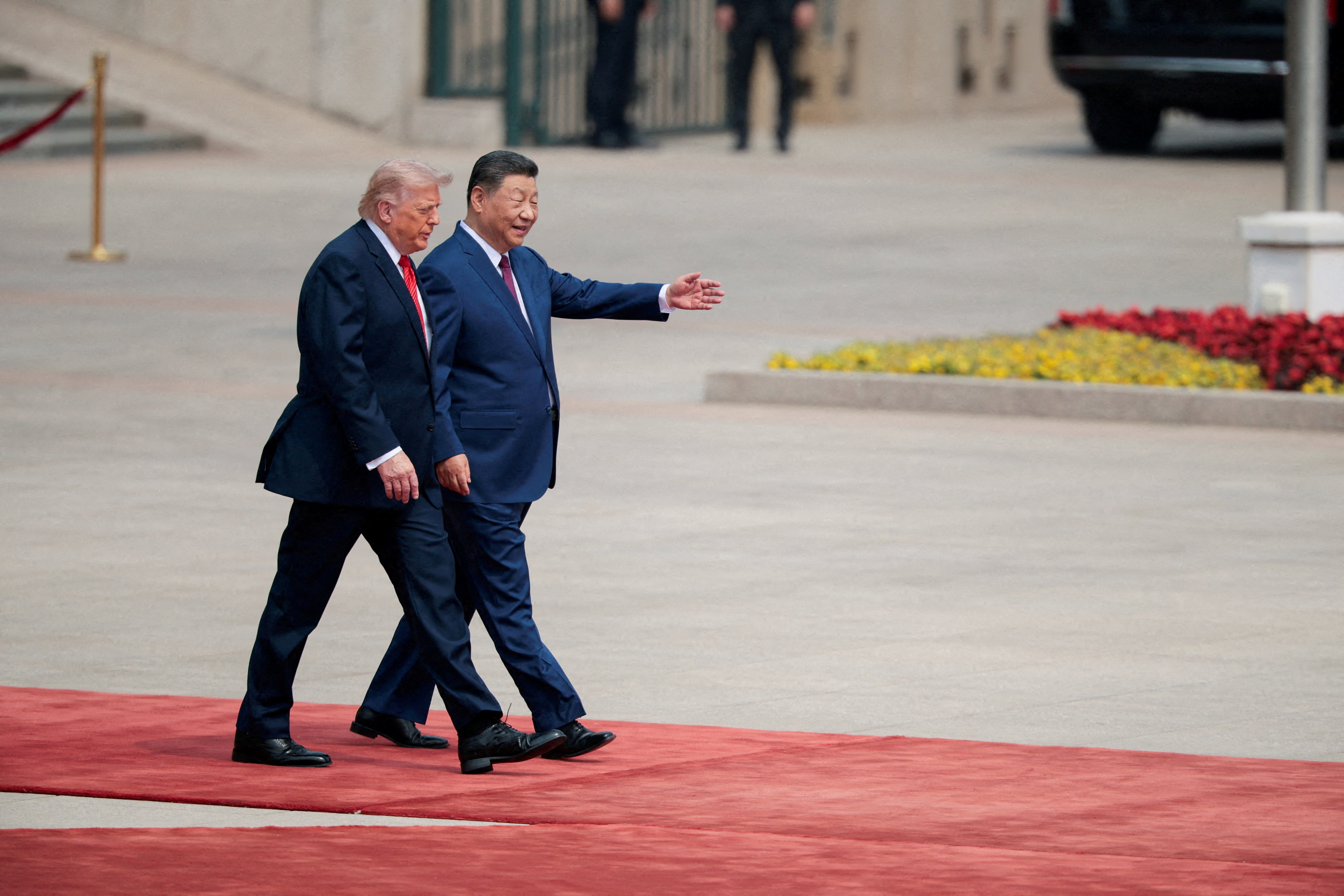
Trump-Xi talks support cautious risk sentiment amid geopolitical uncertainty. Image: REUTERS/Evan Vucci
- Catch up on the key stories and developments shaping the financial world.
- Top stories: Xi-Trump talks point to tentative stabilization; Regulators turn up the heat on private credit; AI‑powered cyber threats test financial resilience.
- For more on the World Economic Forum's work in finance, visit the Centre for Financial and Monetary Systems.
1. US-China summit lays fragile foundation for bilateral stability
The US-China summit in Beijing between US President Donald Trump and Chinese President Xi Jinping last week delivered cautious relief for markets rather than a structural policy reset.
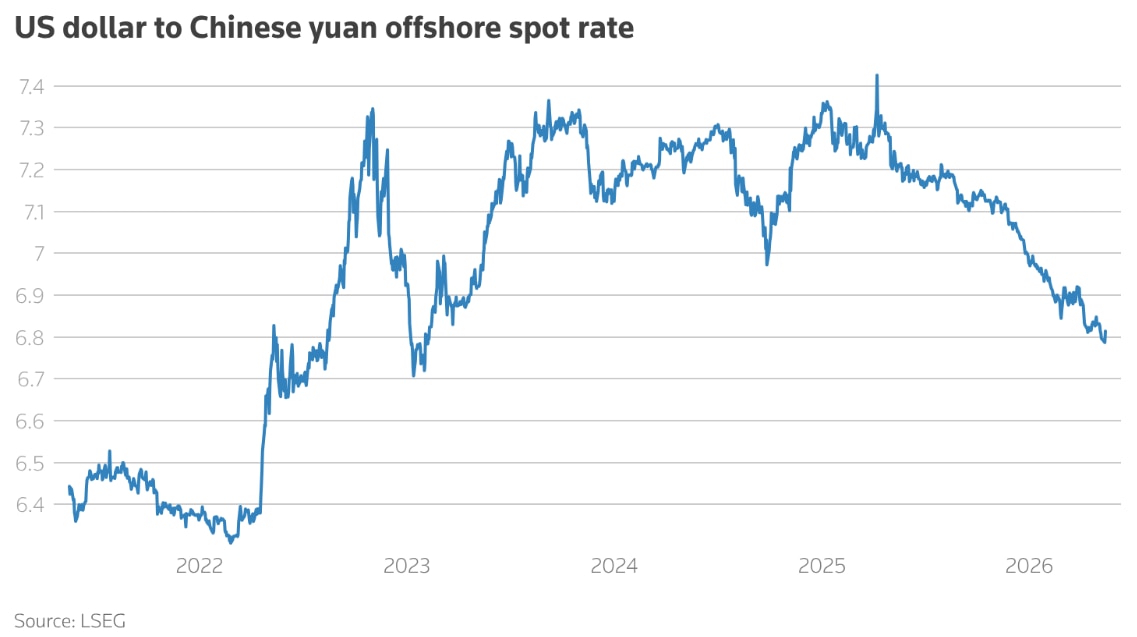
Key outcomes, widely reported after the meeting, were later confirmed in a White House fact sheet. These included a limited easing in selected technology exports, expectations of further Chinese purchases of US goods and an agreement to maintain the existing trade truce while negotiations continue later this year.
US authorities have approved export licences for Nvidia H200 chips to selected Chinese firms, although shipments remain subject to regulatory conditions and have yet to scale. Consequently, broader export controls on advanced chips and related equipment remain firmly in place, and underlying licensing restrictions and supply chain uncertainties continue to complicate long-term capital planning across the tech sector.
On trade and institutional investment more widely, the release also stated that Xi and Trump – who was accompanied on the trip by a "high-profile delegation" of American CEOs – chartered two new institutions: the U.S.-China Board of Trade to manage non-sensitive commerce, and the U.S.-China Board of Investment.
Under the frameworks finalized during the visit, the White House confirmed China committed to purchasing at least $17 billion per year of US agricultural products through 2028 and approved an initial purchase of 200 American-made Boeing aircraft. But Boeing shares slid after the news, as the aircraft order fell short of Wall Street’s expectations for a larger "mega order", analysts suggest.
An International Monetary Fund (IMF) spokesperson welcomed the “constructive dialogue” between the world’s two largest economies, stating that reduced trade tensions and lower policy uncertainty would support both countries and the broader global economy, according to Reuters.
However, with the Beijing summit failing to produce a diplomatic breakthrough to cool the Middle East war, the IMF warned that persistent conflict keeping oil above $100 per barrel threatens to push global growth down to a 2.5% adverse scenario this year, well below its current 3.1% baseline projection.
2. Private credit boom draws sharper regulatory scrutiny
Global regulators are sharpening their warnings about risks building in non‑bank finance, with a new report from the Financial Stability Board (FSB) highlighting vulnerabilities in the fast‑growing private credit sector.
The FSB says private credit brings benefits for borrowers but also “complex interlinkages” with banks, high leverage and valuation opacity, and warns that data gaps make it difficult to assess how shocks could spread through credit markets.
Available data collected from member authorities capture around $220 billion of drawn and undrawn bank credit lines to private credit funds, but commercial estimates suggest the figure could be more than twice as large, underscoring the uncertainty around exposures.
The report also notes signs of rising borrower stress, with increased use of payment‑in‑kind structures and some pickup in defaults, and points to sector concentrations in areas such as technology, healthcare and services.
In parallel, the UK Financial Conduct Authority (FCA) is pushing major private credit groups to share significantly more data. The regulator has been in talks with top operators to overhaul disclosure requirements, aiming to make it compulsory for fund managers to provide granular information on individual loans.
While the sector is expected to resist bank-style reporting, the Financial Times reports, the FCA seeks better visibility over how credit risks are migrating beyond traditional banks, especially after recent corporate setbacks.
How the Forum helps leaders understand change in global financial systems
3. More finance news to know
The UK is also set to tighten rules for money market funds by the end of 2026 to improve resilience during market stress. The reforms, prompted by liquidity strains seen in the 2020 COVID-era “dash for cash”, says Reuters, will require funds to hold more liquid assets and better manage investor redemptions. The government also plans to extend temporary permissions for EU funds to market to UK investors.
G7 finance ministers and central bankers will meet in Paris this week amid warnings that prolonged disruption in the Strait of Hormuz could carry significant global economic consequences, with officials highlighting rising inflation risks and tighter energy supplies. Borrowing costs have climbed across major economies as investors reassess the outlook, while elevated oil prices and falling inventories continue to add pressure to already fragile growth conditions. Ukraine and Syria are both expected to feature in parts of the talks, underscoring the G7’s focus on conflict-affected economies and broader geopolitical stability.
In fact, global bond markets have extended their selloff as inflation concerns intensify, with US Treasury yields hitting one-year highs and Japanese and European government bonds also coming under pressure amid expectations of further rate hikes across major economies.
The IMF has warned that fast-moving, AI-driven cyber risks could destabilize the financial system if not carefully managed, highlighting that AI is accelerating both attacks and the exploitation of vulnerabilities across highly interconnected financial infrastructure, and calling for stronger resilience, supervision and international coordination to manage rising systemic risks.
China’s property sector remained under pressure in the January-April period, with investment falling 13.7% from a year earlier after an 11.2% decline in the first quarter, official data showed. Property sales by floor area and new construction starts both continued to contract over the period, while developer fundraising also weakened further, underscoring ongoing softness across key indicators in the sector.
4. Read more on Forum Stories
Venture capital is undergoing a period of structural adjustment, shaped by slower capital recycling, uneven scale-up performance, and the rapid integration of artificial intelligence into investment and business models. Developed in collaboration with the Stanford Graduate School of Business Venture Capital Initiative, The Future of Venture Capital: Unlocking Liquidity and Growth examines these shifts in detail, drawing on original analysis and industry perspectives to assess a $3.5 trillion asset class and outline strategic priorities aimed at improving liquidity, strengthening capital formation, and sustaining long-term innovation growth.
What’s the cost of building resilience for all – and what happens when societies fail to share it evenly? Two experts argue that fragmented approaches to disaster risk, climate adaptation and financial inclusion are leaving economies exposed to cascading shocks, with losses in one area amplifying vulnerability across others. They highlight examples where integrated resilience frameworks – combining risk mapping, inclusive finance and social protection – can help reduce long-term fiscal and social costs, while supporting more stable and inclusive growth.
License and Republishing
World Economic Forum articles may be republished in accordance with the Creative Commons Attribution-NonCommercial-NoDerivatives 4.0 International Public License, and in accordance with our Terms of Use.
The views expressed in this article are those of the author alone and not the World Economic Forum.

Forum Stories newsletter
Bringing you weekly curated insights and analysis on the global issues that matter.
More on Financial and Monetary SystemsSee all

Mehrad Yaghmai and Judith Ketelslegers
September 21, 2026


