Opinion
How war, polarization and religion are reshaping global markets
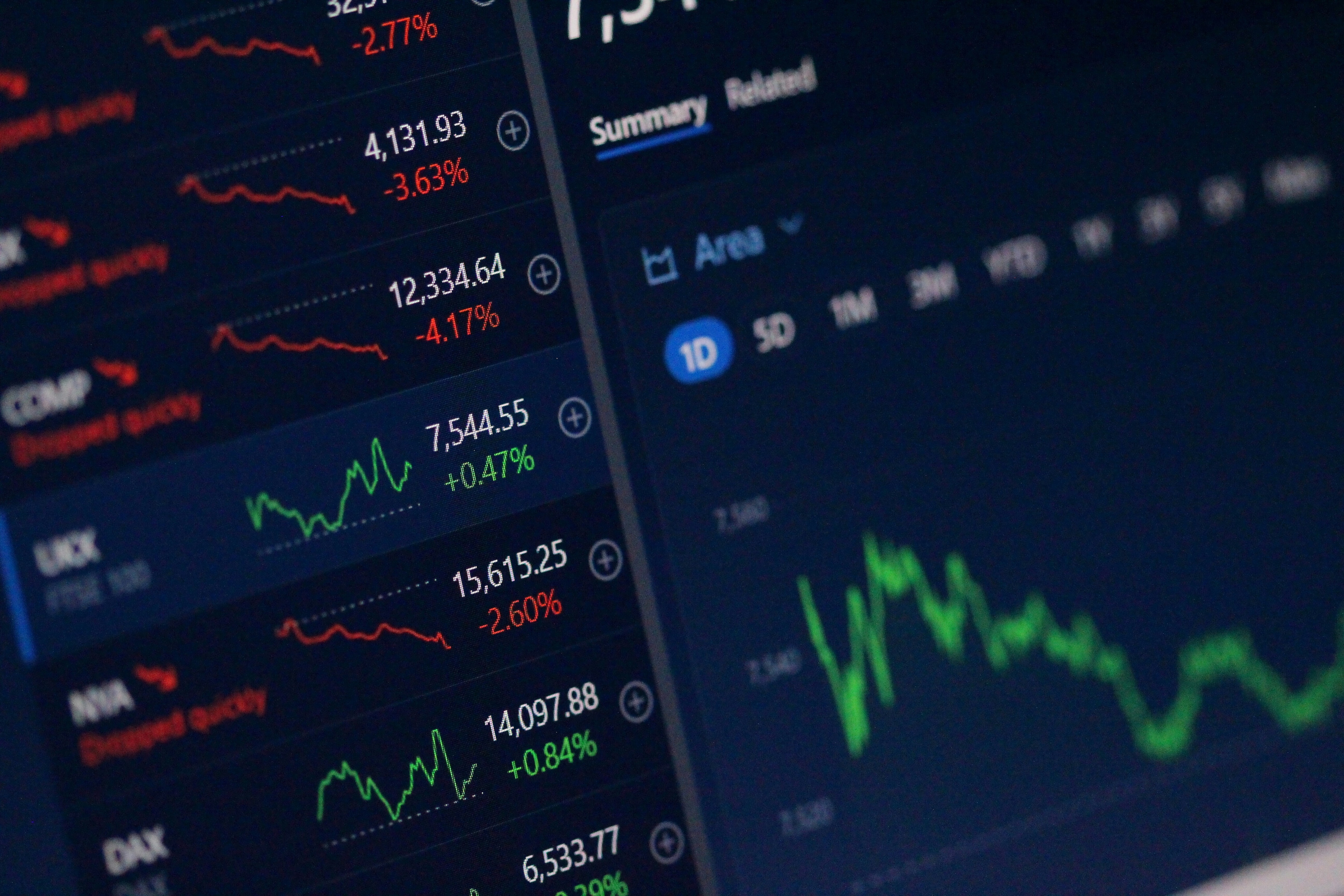
Values and trust are the invisible architecture of our global economic ecosystems. Image: Anne Nygård/Unsplash
- Global markets face deep fragmentation driven by competing values and complex religious identity issues.
- Economic shocks in one region rapidly cascade through interconnected systems to impact global food security.
- Rebuilding trust requires integrating ethical considerations and diverse cultural perspectives into modern economic policy.
In today’s fractured global landscape, markets are no longer shaped by economics and geopolitics alone. They are increasingly influenced by deepening polarization, competing value systems and the role of identity — including religion — in public life. These dynamics unfold across interconnected economic ecosystems, from local communities to global institutions.
Thinking in terms of economic ecosystems shows how disruptions in one part of the economy can quickly cascade across levels — from local to global. This is not just a geopolitical shift; it is a transformation in the moral foundations of the global economy.
The economic impact of a divided world
The war in Ukraine has demonstrated how quickly conflict can disrupt global supply chains. Before the war, Ukraine and Russia together accounted for roughly 30% of global wheat exports. The disruption of Black Sea routes contributed to significant increases in global food prices, with the FAO Food Price Index reaching record highs in 2022. These impacts were felt most acutely in import-dependent regions and illustrate how shocks travel across interconnected economic ecosystems.
At the same time, tensions in the Middle East continue to influence global fertilizer and energy markets. Instability involving key regional actors has contributed to price volatility and uncertainty in oil and gas supply, with ripple effects across industries and households worldwide.
These examples highlight a broader reality: economic ecosystems are deeply interconnected, but also increasingly vulnerable to fragmentation. Trade flows are being reconfigured, alliances are shifting, and economic decision-making is becoming more closely tied to political and social narratives.
The role of values and narratives
What distinguishes the current moment is that economic fragmentation is not only structural — it is also moral and cultural.
Across many societies, polarization is reshaping how people understand fairness, legitimacy and trust. Economic debates are no longer confined to technical questions of efficiency or growth. They are increasingly framed in terms of identity, belonging and values.
Religion plays a complex role in this context. In many communities, faith-based actors are among the most trusted institutions, providing essential services, especially in fragile and crisis-affected settings. The World Bank estimates that faith-based organizations deliver a significant share of health and education services in many parts of the world.
At the same time, religion can also be instrumentalized within polarized political narratives. In some contexts, religious identity is used to reinforce divisions, justify exclusion, or mobilize support for competing visions of society and governance. This dual role — both bridging and dividing — makes religion an important but often underexplored factor in economic and policy discussions.
Understanding the moral economy
The concept of a moral economy offers a useful lens to understand these dynamics. A moral economy lens, applied to economic ecosystems, helps to understand how values and trust shape interactions across them. Economic ecosystems are not value-neutral; they are embedded in social and cultural norms, ethical frameworks and expectations about what constitutes fairness and justice.
A moral economy perspective asks questions such as:
- Who benefits from economic growth and who is left behind?
- What responsibilities do governments, businesses and communities have towards one another?
- How do trust and legitimacy shape economic outcomes?
In a fragmented world, these questions become more pressing. When trust in institutions declines, economic policies — no matter how technically sound — can face resistance or fail to deliver intended outcomes. When communities feel excluded, polarization deepens, further undermining social cohesion and economic resilience. These dynamics raise a broader question: why does this matter now?
The urgency of these issues lies in the convergence of multiple global pressures: geopolitical tensions, economic inequality, climate change and rapid technological transformation. Together, they are straining existing models of cooperation and governance.
For policy-makers, this creates a difficult balancing act. On the one hand, there is a need to secure national interests and respond to domestic political pressures. On the other hand, global challenges such as food security, climate change and forced displacement require collective action and shared responsibility.
Ignoring the moral and social dimensions of economic ecosystems risks exacerbating fragmentation. Policies that fail to account for perceptions of fairness or that overlook the role of values and identity may struggle to gain public support or achieve sustainable outcomes.
The role of faith-based and values-driven actors
In this context, faith-based organizations and values-driven networks have a particular role to play. Deeply rooted in communities and with a long tradition of service, they often build trust where state or market institutions face limitations.
Across humanitarian responses, for example, local faith actors are frequently among the first responders and the last to leave. They provide not only material assistance, but also social support, helping communities navigate crises and rebuild livelihoods.
At the same time, these actors can contribute to broader policy conversations by bringing ethical perspectives into discussions on economic governance and articulating values such as human dignity, solidarity and justice in ways that resonate across cultural and regional contexts.
However, engaging with religion in policy spaces requires careful balance. It is essential to recognize its positive contributions while also being mindful of the risks of exclusion or instrumentalization.
How to build a more resilient and inclusive economic future
Rebuilding trust and strengthening social cohesion are not peripheral concerns — they are central to the functioning of economic systems. A more resilient global economy will depend not only on sound policies and efficient markets, but also on shared values and inclusive approaches.
This does not mean imposing a single set of values. Rather, it requires creating space for dialogue across differences, recognizing the diversity of moral frameworks that shape societies, and finding common ground where possible.
For policy-makers and business leaders, this implies:
- Integrating social and ethical considerations into economic decision-making
- Engaging with a broader range of stakeholders, including faith-based and community actors
- Strengthening transparency and accountability to build trust
- Promoting narratives that emphasize inclusion and shared responsibility
What role for global cooperation?
Despite current tensions, global cooperation remains essential. The challenges facing the world today — food insecurity, climate risks, economic instability — cannot be addressed in isolation.
A moral economy approach does not replace economic analysis. It complements it by highlighting the human and social dimensions that underpin economic ecosystems. In doing so, it can help identify pathways towards more equitable and sustainable outcomes.
As the global economy continues to evolve, understanding the interplay between polarization, values and economic ecosystems will be critical. Recognizing the role of religion — both as a source of cohesion and a potential driver of division — is part of that effort.
In a fractured world, reconnecting economics with ethics is not an abstract ideal — it is a practical necessity for building a more stable, inclusive and resilient future. This will require not only better policies, but a deeper understanding of the values and relationships that shape our economic ecosystems.
Don't miss any update on this topic
Create a free account and access your personalized content collection with our latest publications and analyses.
License and Republishing
World Economic Forum articles may be republished in accordance with the Creative Commons Attribution-NonCommercial-NoDerivatives 4.0 International Public License, and in accordance with our Terms of Use.
The views expressed in this article are those of the author alone and not the World Economic Forum.
Stay up to date:
Drivers of War


Forum Stories newsletter
Bringing you weekly curated insights and analysis on the global issues that matter.