How does the World Economic Forum's 'Beyond the Frame' exhibition bring art to life?
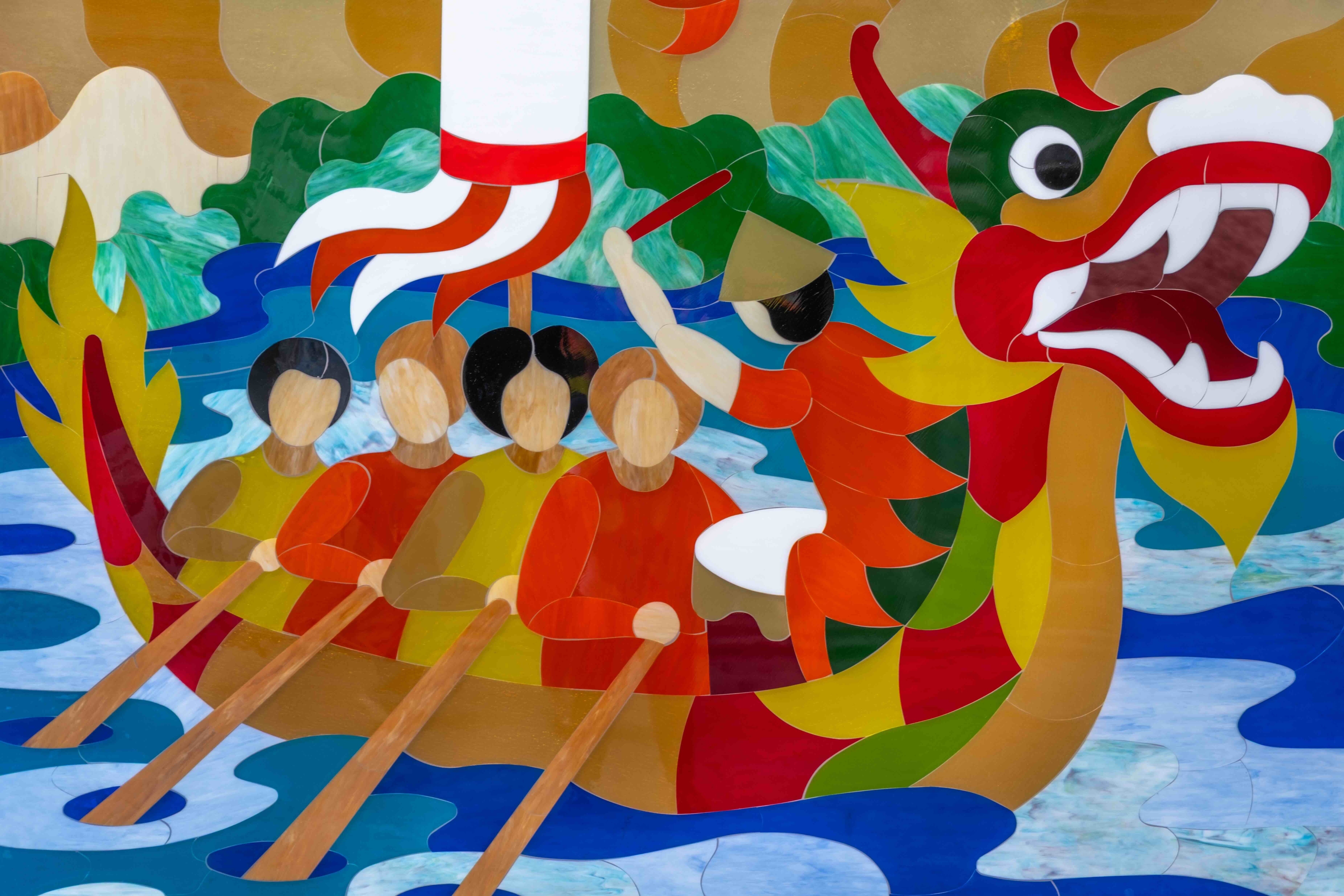
Adalberto Lonardi’s Foshan Tales ... art as a meeting point of craftsmanship, memory and identity.
- In a world transforming at unprecedented speed, technologically, socially and economically, art is no longer a passive mirror of society’s values, anxieties and aspirations.
- Beyond the Frame is an art exhibition commissioned by the World Economic Forum for its Annual Meeting of the New Champions that demonstrates that art is no longer fixed, but alive.
- It shows that innovation and heritage are not opposing forces, but interdependent ones and that technology does not replace human connection; it amplifies it.
What does art become when it transcends walls and permanence, when it is no longer something we look at, but something we move through, shape and experience?
In a world transforming at unprecedented speed, technologically, socially and economically, art is no longer a passive mirror of society’s values, anxieties and aspirations. It is becoming an active force, shaping how we interpret and navigate change. Commissioned by the World Economic Forum for its Annual Meeting of the New Champions, Beyond the Frame emerges in this moment not merely as an exhibition, but as a proposition: that art is no longer fixed, but alive.
How can augmented reality be used as a medium, not a tool?
At the heart of Beyond the Frame is augmented reality (AR), but it's used not as a tool, but as a medium. One that dissolves boundaries between physical and digital, object and experience, artist and audience. The museum, in this vision, is no longer a static container of meaning; it's an evolving, responsive environment. Artworks do not sit passively on walls; they unfold across space, responding to movement, perspective and interaction.
This shift challenges long-standing assumptions about authorship, accessibility and narrative. If art can exist anywhere, it can reach anyone. The gallery expands beyond its architecture into a decentralized, participatory field, one that invites each viewer to become an active participant in a continuous process of perception and transformation.
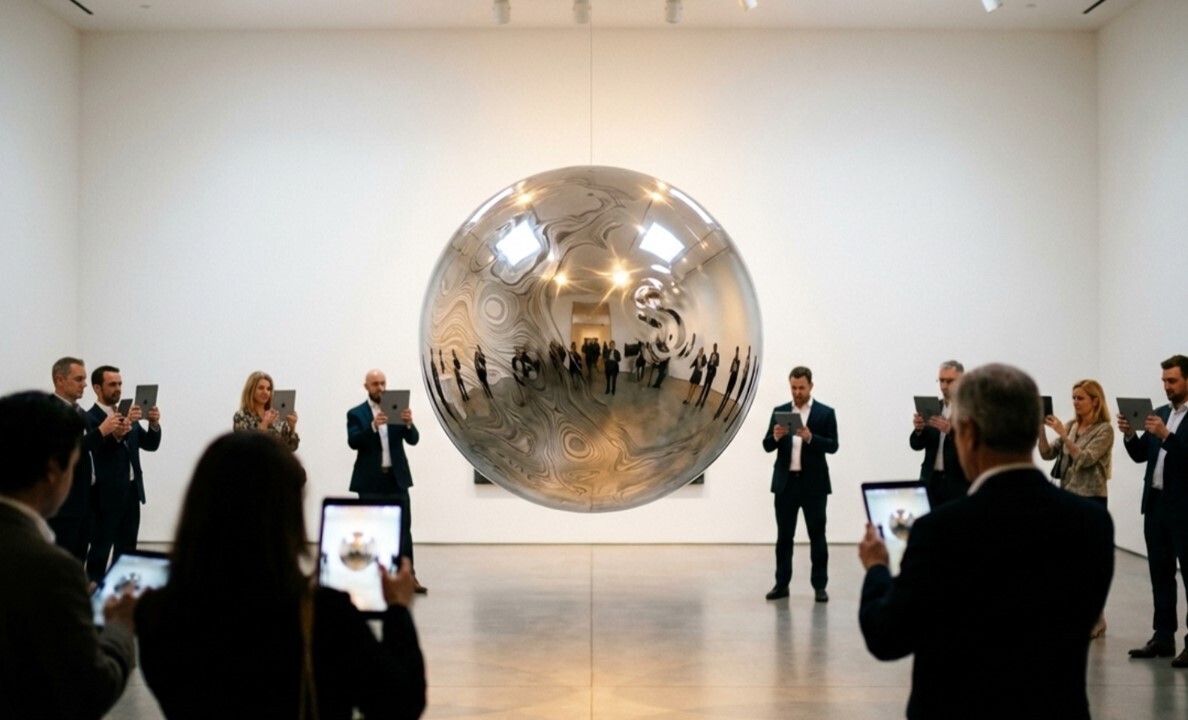
Yoichi Ochiai’s Liquid Universe Portal exemplifies this new ontology of experience. Inspired by Zhuangzi’s Butterfly Dream, the work dissolves the boundary between dream and reality, observer and observed. Forms shift endlessly, liquid crystal and become a reflective surface, solidifying into a mineral, then dissolving again. It is a sculpture defined not by permanence, but by constant transformation.
Rooted in Eastern philosophies of interdependence and the unity of form and emptiness, Ochiai’s work articulates a vision of 'digital nature,' where the distinction between the physical and computational disappears. The result is a boundless, evolving environment that invites us to question not only what we see, but what we consider real.
How can art turn navigation into narrative?
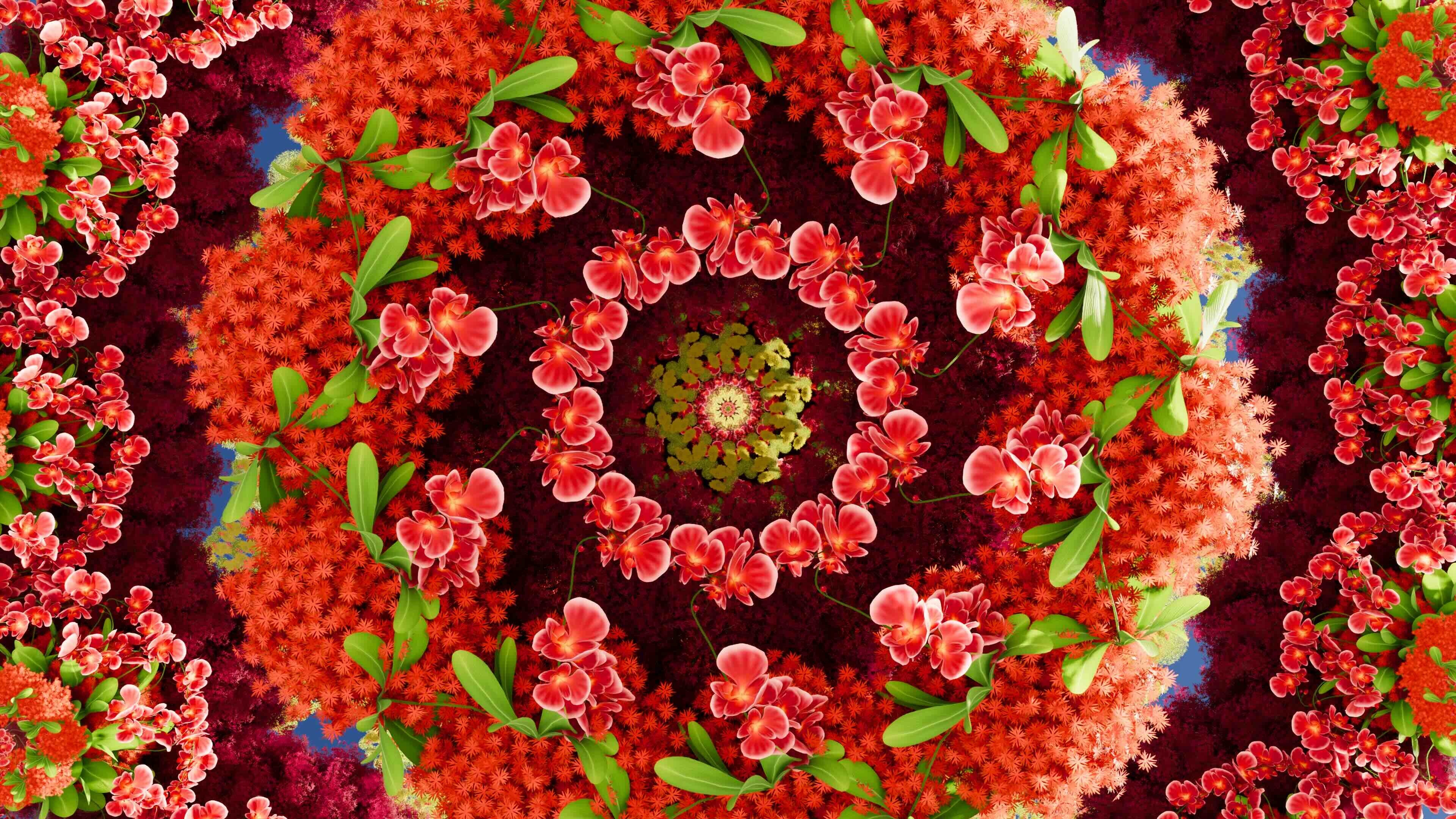
Victoria Fard’s MOMENTUM extends this exploration into the realm of embodied experience. Drawing on the Lunar New Year and the Year of the Horse, the work channels themes of renewal, discipline and purposeful motion. Its red palette, guided by the element of fire, embodies cultural symbolism and the force of transformation itself.
Yet MOMENTUM is not simply symbolic. It unfolds through the participant’s own movement, transforming navigation into narrative. The work becomes a mediation between intention and action, where presence activates meaning. In this way, it reflects a broader truth: that transformation is not something we observe from a distance, but something we enact.
Beyond the Frame points not only towards the future while remaining deeply rooted in tradition and cultural heritage.
At AMNC26, Foshan Tales by artist Adalberto Lonardi is presented as a physical exhibition, comprising four glass and steel tableaux inspired by Lingnan traditions, the lion dance, dragon boat race, Cantonese opera, and the tea house. These works explore a cultural dialogue between Italy and China, acting as a meeting point of craftsmanship, memory, and identity.
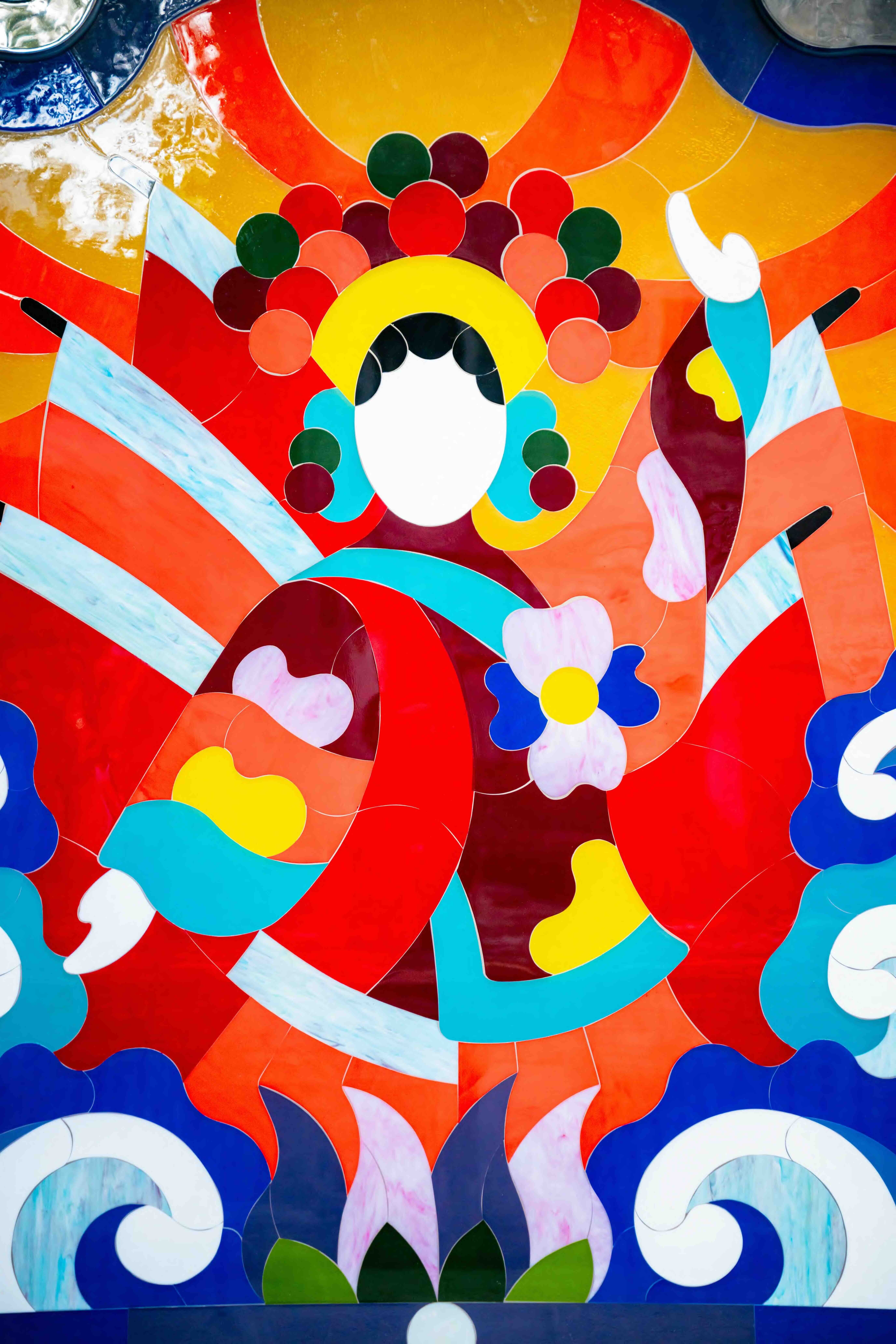
Building on this foundation, a dedicated VR layer derived from Foshan Tales forms an integral part of Beyond the Frame. Through its AR layer, Foshan Tales extends beyond its material form. The panels come alive, transforming static imagery into immersive, unfolding scenes. Tradition is not preserved as something fixed, but activated as something dynamic, continuously reinterpreted across time and context.
In this convergence of physical and digital, past and present, the work reveals that heritage is not sustained by resisting change, but by engaging with it. Culture, in this sense, is not static inheritance, but living exchange.
How does the future of culture mirror the future of society?
Together, Beyond the Frame and Foshan Tales illuminate a central truth: the future of culture mirrors the future of society. It is hybrid, adaptive and participatory. Innovation and heritage are not opposing forces, but interdependent ones. Technology does not replace human connection; it amplifies it.
Developed in partnership with Augmento, a creative studio specializing in immersive AR experiences, this vision extends art beyond the limits of space and geography. By connecting artists, audiences and environments through interactive layers, Beyond the Frame transforms how culture is shared and experienced, turning the world into a canvas: open, responsive and without borders.
This transformation carries profound implications. If art is no longer confined to institutions, what becomes of those institutions? If audiences become participants, how does authorship evolve? If culture is everywhere, how do we preserve its depth and integrity?
These questions extend far beyond the realm of art. They speak to how we might reimagine systems more broadly, institutions, economies and societies that are inclusive, responsive and resilient.
Art, in these forms, becomes both prototype and compass. It models new possibilities, while grounding them in human values, dialogue, memory and shared experience. It reminds us that progress without continuity is fragile and tradition without evolution is unsustainable.
Beyond the frame, beyond borders, beyond time, culture is already pointing towards a more interconnected and participatory future.
The question is whether we are ready to follow.
Don't miss any update on this topic
Create a free account and access your personalized content collection with our latest publications and analyses.
License and Republishing
World Economic Forum articles may be republished in accordance with the Creative Commons Attribution-NonCommercial-NoDerivatives 4.0 International Public License, and in accordance with our Terms of Use.
The views expressed in this article are those of the author alone and not the World Economic Forum.
Stay up to date:
Virtual and Augmented Reality


Forum Stories newsletter
Bringing you weekly curated insights and analysis on the global issues that matter.
More on Artificial IntelligenceSee all

Alexandra Dobra-Kiel
September 7, 2026


