The energy sector is AI's natural home. Right now, it's fumbling that edge
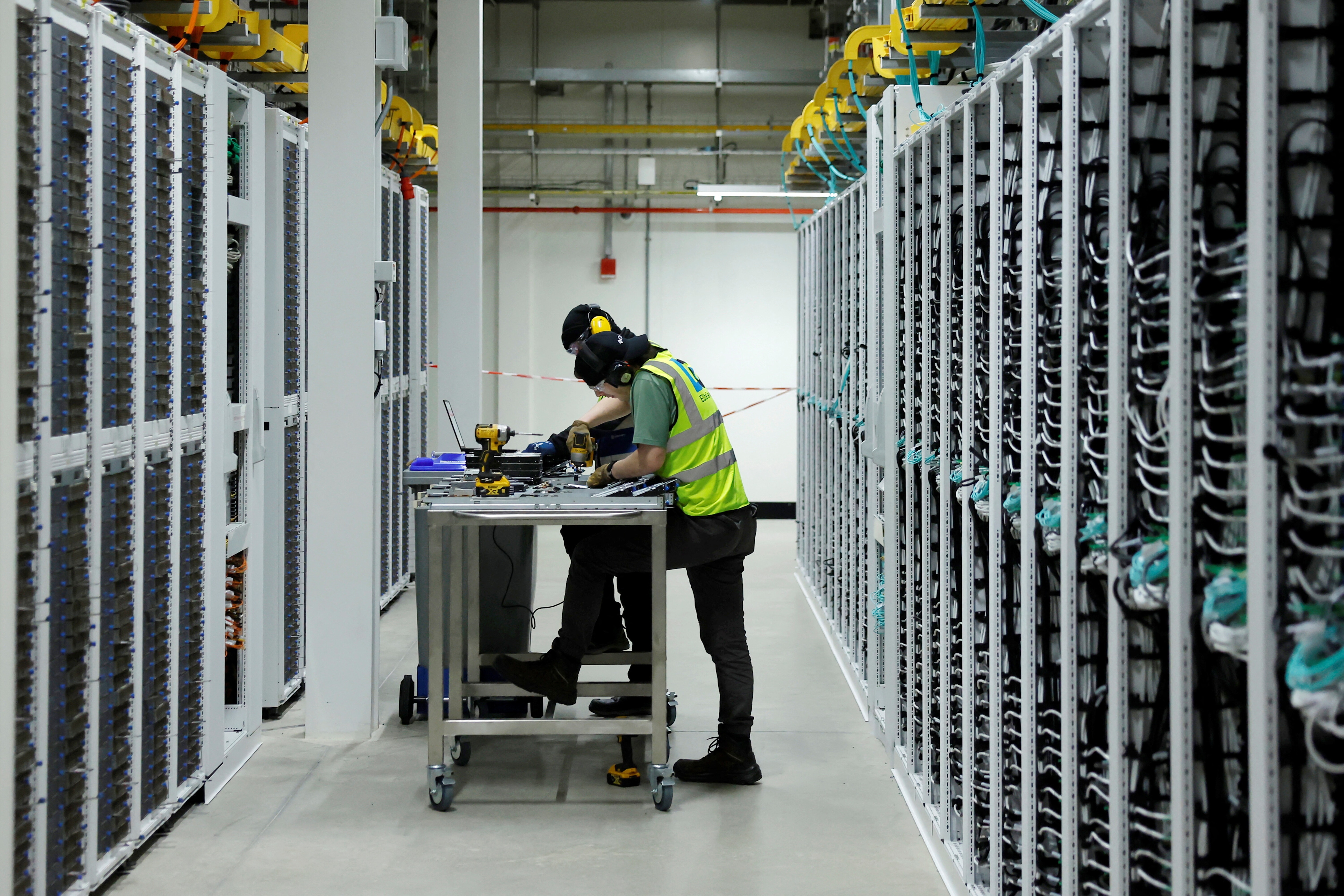
The energy sector produces vast quantities of data, making it perfect for the application of AI. Right now, it's not capitalizing. Image: REUTERS/Clodagh Kilcoyne
Andrei Covatariu
Co-Chair of the Task Force on Digitalization in Energy, United Nations Economic Commission for Europe (UNECE)- AI could cut energy costs in energy-intensive industries by 3 to 10 percentage points – yet the energy sector is not taking full advantage.
- The barriers are largely self-inflicted: data sits in proprietary silos, and utilities lose the contest for data scientists to technology firms that pay far more.
- Data centre electricity demand is set to roughly double by 2030, and AI is both a driver of that demand and one of the best tools available to manage it.
When governments and technology leaders convened in Geneva in July for the first session of the UN Global Dialogue on AI Governance, one of the four themes on the table was bridging AI divides — the digital foundations that decide who benefits from the technology.
Few sectors illustrate the issue of access to AI more sharply than energy. And few expose a more uncomfortable paradox.
The energy sector should be the natural home for AI. It generates more operational data than almost any other — meters, sensors, SCADA systems and market signals streaming in real time. The economic prize for using that data well is now quantified: the International Energy Agency (IEA) finds that proven AI applications could cut energy costs in energy-intensive industries by 3 to 10 percentage points, and that well-documented use cases could save more than 13 exajoules of energy by 2035 — about 3% of global final consumption — if the barriers to adoption fall.
The dividend the energy sector is leaving on the table
Yet the sector is fumbling its own advantage. The same IEA work finds that energy is not taking full advantage of AI, with weak digital skills and limited data availability as the binding constraints. Both are largely self-inflicted, and both are fixable. The data exists, but it sits in proprietary silos and incompatible formats, locked inside operational systems never designed to share. The skills gap is just as real: utilities and grid operators lose the contest for data scientists to technology firms that pay far more, and few have built the in-house capability to turn raw telemetry into deployable models.
This is the familiar shape of energy-transition bottlenecks. The headline ambition — cleaner, cheaper, more competitive energy — keeps colliding with the unglamorous plumbing beneath it. Just as connection queues and permitting throttle renewables, weak data foundations and thin digital skills throttle AI-driven efficiency.
Why adoption will decide the outcome
That readiness gap is why the "energy for AI" and "AI for energy" debates cannot be separated. Data centre electricity demand is set to roughly double by 2030. If the sector absorbs that load without deploying AI to offset it, the net effect on the energy system is negative — more demand, no efficiency in return. If it adopts, the efficiency dividend plus AI-enabled flexibility can tip the ledger the other way.
The flexibility piece matters. Operated more responsively, data centres could provide 50 to 60 gigawatts of flexibility to power systems over the next five years. This would help to integrate renewables and defer costly grid investment, and AI is what makes it possible. The technology creating the demand problem is, in other words, also one of the better tools for managing it — but only for the systems equipped to use it.
The net energy effect of AI is therefore not a property of the technology. It is a choice made in procurement decisions, hiring plans, data-sharing rules and regulatory design.
Fixing the plumbing, not the algorithm
In some places, the fix for this problem is being taken seriously. Take India. In 2025, the country’s Ministry of Power launched the India Energy Stack — a digital public infrastructure for the power sector, modelled explicitly on the Aadhaar identity system and UPI payments rails. Its premise is precisely the diagnosis above: data stays where it is generated, but a shared layer of unique identifiers, open APIs and consent-based exchange standardises the interface between fragmented utilities. It treats interoperable, AI-ready data as the foundation — an attempt, in effect, to dismantle the silo problem at the root rather than paper over it with another pilot.
Others are converging on the same insight from different directions. In June 2026 the European Commission published its Strategic Roadmap for Digitalisation and AI in the Energy Sector, pairing investment in grid-management AI models and a pan-European AI.grids initiative with measures on data governance and digital skills — the two binding constraints, addressed together. In the US, the Department of Energy’s Genesis Mission places AI at the centre of grid planning and nuclear deployment, drawing on decades of national-laboratory data. The Department expects decisions on grid planning, interconnection and operations to run 20 to 100 times faster, with electricity cost and reliability gains of up to 10%. It is separately turning 80 years of nuclear research into a secure, searchable database that future energy and security decisions can draw on.
India’s public-infrastructure model, Europe’s sovereign-and-shared approach and America’s laboratory-and-compute push are three different theories of the same fix, and their divergence is itself the lesson. A roadmap is not deployment, and the history of energy digitalization is littered with promising pilots that never scaled. The hard work is cross-cutting and slow: common data standards and protocols, interoperability, a workforce able to operate these tools and governance that earns trust in AI on critical infrastructure. None of it can stay national. Grids, supply chains and AI models are international; fragmented approaches will blunt the dividend and widen the very divides the Geneva meeting aimed to close.
A job too big for any one country
This is where a UN dialogue matters more than another national strategy. The energy transition will not wait for each country to solve interoperability alone, and the systems with the weakest data foundations are risk of being locked out of the efficiency gains. Turning national pilots into shared standards and transferable practice is unglamorous, multilateral work. It is also the difference between an AI dividend captured by whoever solves interoperability first and one shared across the global energy economy.
Much of the conversation in Geneva rightly focused on managing AI's growing energy demand. That work is essential, but it is only half the story. The larger opportunity lies in how AI can reduce energy use across industry, buildings, transport and power systems, while enabling greater integration of renewable energy. The efficiency gains are proven and quantified. The barriers are known and addressable. What remains is execution: better data, stronger skills, institutional will and more effective international cooperation.
Don't miss any update on this topic
Create a free account and access your personalized content collection with our latest publications and analyses.
License and Republishing
World Economic Forum articles may be republished in accordance with the Creative Commons Attribution-NonCommercial-NoDerivatives 4.0 International Public License, and in accordance with our Terms of Use.
The views expressed in this article are those of the author alone and not the World Economic Forum.
Stay up to date:
Artificial Intelligence
Related topics:


Forum Stories newsletter
Bringing you weekly curated insights and analysis on the global issues that matter.
More on Artificial IntelligenceSee all

Ahmed Al Shamsi and Najwa Aaraj
October 9, 2026


