Why biology is no longer optional for industrial resilience
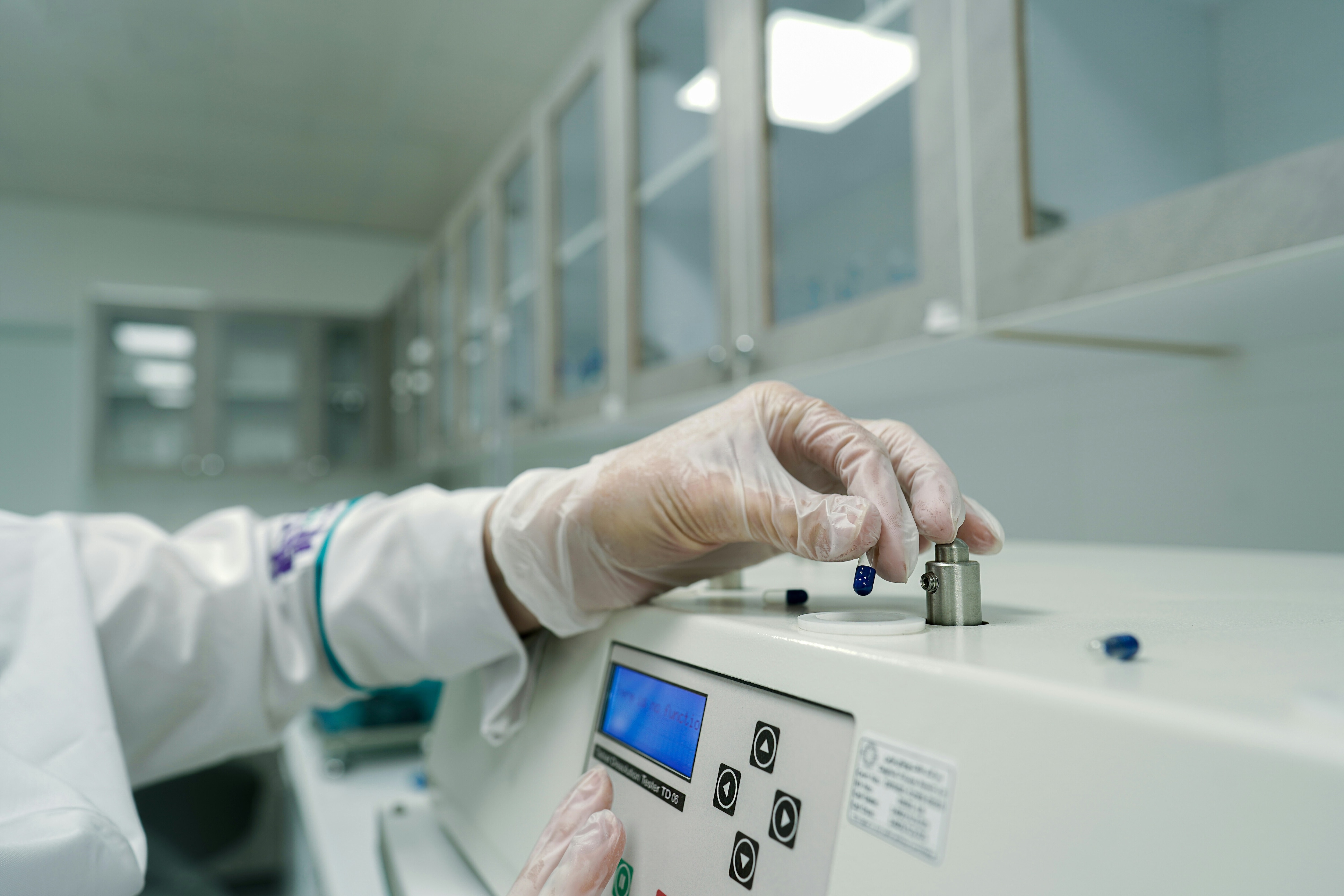
Biology is no longer optional for industrial resilience. It is one of the few tools that enables production of critical materials at home, diversification away from chokepoints, and adaptation as conditions change. Image: Mina Rad/Unsplash
- Biomanufacturing offers decentralized production to secure global supply chains against geopolitical and climate disruptions.
- AI turns variable biological processes into repeatable, scalable operations for resilient regional manufacturing networks.
- How promising ideas become scalable impact is a key focus at the World Economic Forum’s Annual Meeting of the New Champions, also known as Summer Davos, in China from 23–25 June.
For most of the past century, “industrial resilience” meant securing oil, ore and the long, concentrated supply chains that moved them. That definition is no longer sufficient. As the global economy becomes increasingly multipolar, and supply chains absorb shock after shock – pandemic, war, drought, export controls – governments are rediscovering an uncomfortable truth: the ability to make things close to where they’re needed is a strategic priority, not an afterthought.
Biology belongs at the centre of that rethink. Biomanufacturing – engineering cells to produce literally everything, including chemicals, materials, food, proteins, medicine and fuels – is uniquely suited to a world that needs production to be more flexible, more distributed and harder to disrupt. The question is no longer whether biology can do this. It’s whether countries will commit to the core industrial infrastructure that they need, or leave it parked in a niche innovation sector and fall behind as a result.
Why is the bioeconomy so important now?
The bioeconomy is already a material part of the global economy. By most estimates it is worth $4–5 trillion, with potential to reach $30 trillion by 2050. This is not a speculative frontier; it is an industrial base forming in real time. At least 50 countries now have a national bioeconomy strategy or policy, and the largest economies are moving from rhetoric to spending.
The EU published its Strategy for a Competitive and Sustainable EU Bioeconomy in November 2025, framing biology explicitly as a matter of strategic autonomy and resilience. China adopted a national bioeconomy strategy in 2022, and the US Department of Defense has committed $270 million over five years to biotechnology for resilient supply chains. When defense ministries fund fermentation, it’s clear that the paradigm has shifted.
The stakes here are highest for the Global South: feedstock-rich economies from Brazil to India have already leaned into distributed production hubs rather than raw-material exporters.
The resilience case is structural. Global supply chains for chemicals and materials are heavily concentrated, often dependent on a handful of countries with oil reserves, large agricultural bases, or specific processing capacity. That concentration is exactly what makes them fragile. Biomanufacturing offers a different geometry: production can be sited regionally, run on local feedstocks, and stood up without a petrochemical complex next door. A recent Nature Communications analysis makes the point plainly – supply chain resilience is now emerging as a design criterion for biomanufacturing alongside cost and environmental performance, valued precisely because it reduces exposure to geopolitical disruption.
The path forward: Operating biology, not just designing it
Most of the excitement around AI in biology has pointed at discovery – designing new strains, predicting protein structures, accelerating R&D. That work matters. But it addresses only half the problem. The other half is operational: how to continuously stabilize, optimize, transfer and run biological processes economically at industrial scale.
This is where AI is now moving, and where its impact on resilience will be largest. Advances in machine learning, digital twins and predictive process control let operators monitor a living process in real time and adjust before it drifts out of spec, rather than reacting after a batch is lost. Reinforcement-learning models that learn from each batch progressively tighten yields and consistency. The effect is to turn the messy, variable nature of biology into something repeatable – and repeatability is what makes distributed production viable. A process you can reliably transfer is a process you can run in many places at once.
The operational gains from AI extend beyond any single facility. Historically, bioprocess knowledge has been deeply artisanal, embedded in experienced operators, calibrated to the specific quirks of a given tank or site. That artisanal foundation is one reason scale-up fails so often: what works in one location doesn’t transfer cleanly to another. AI changes this by encoding accumulated process knowledge into models that travel with the process. When a facility optimizes a fermentation run, that learning can seed the next deployment rather than be rebuilt from scratch. For a distributed production network to function as a genuine network rather than isolated silos, this kind of portable, encoded knowledge is the connective tissue.
There is a useful precedent. Chemicals, semiconductors and energy each went through their own industrial-intelligence revolution a generation ago, when software unlocked far better ways to run plants at scale. Biomanufacturing is entering that same era now. The countries and companies that master operational intelligence for biology will be the ones that can actually build the resilient, distributed capacity the strategy documents describe.
What this asks of policy-makers
Treating biology as strategic infrastructure means three concrete shifts. First, fund the manufacturing layer, not just discovery – pilot and demonstration facilities, shared infrastructure and the data systems that make processes transferable. Economic ecosystems that reward infrastructure development are as important, and often more effective, than government-mandated and -managed efforts alone. Second, structure public-private investment for the long horizons real infrastructure requires. Third, invest in the workforce and vital tools that let a distributed network actually function as one.
Biology is no longer optional for industrial resilience. It is one of the few tools that enables production of critical materials at home, diversification away from chokepoints, and adaptation as conditions change. The science is ready. The strategic logic is clear. What remains is the harder, less glamorous work of learning to operate biology at scale – and that is exactly where countries that want to stay resilient and competitive need to focus.
The Forum is spotlighting how innovation moves from breakthrough to scale to impact ahead of Summer Davos in China, 23–25 June 2026. Follow the latest.
Don't miss any update on this topic
Create a free account and access your personalized content collection with our latest publications and analyses.
License and Republishing
World Economic Forum articles may be republished in accordance with the Creative Commons Attribution-NonCommercial-NoDerivatives 4.0 International Public License, and in accordance with our Terms of Use.
The views expressed in this article are those of the author alone and not the World Economic Forum.
Stay up to date:
Industrial Solutions and Manufacturing


Forum Stories newsletter
Bringing you weekly curated insights and analysis on the global issues that matter.