How to close the gap between what technology can do and what people are able to do with it
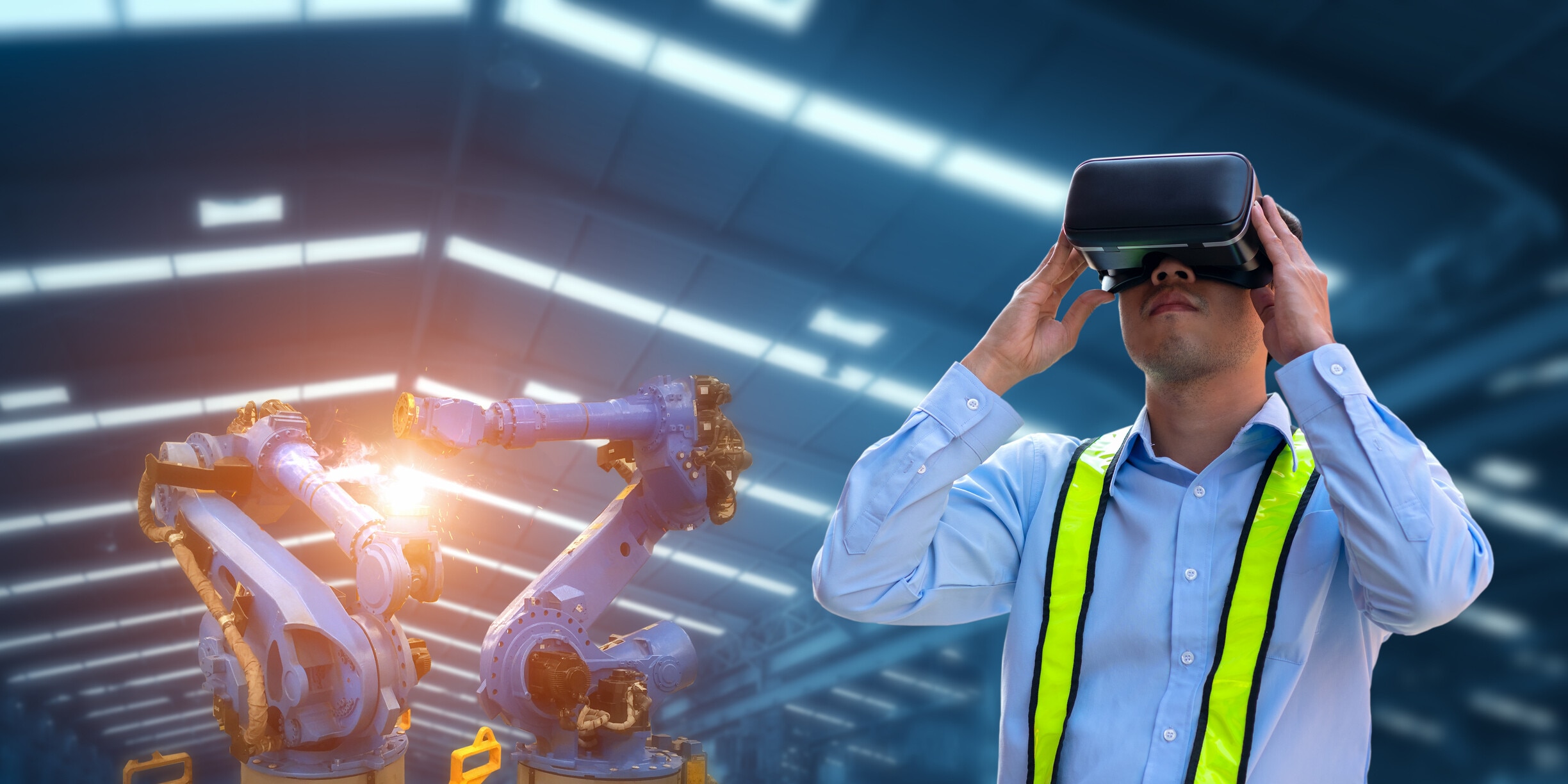
In the AI era, technology breakthroughs can only drive gains if people have both the skills and the confidence to apply new tools in practice. Image: iStockphoto/af_istocker
- In the AI era, there is a growing gap between what technology can do and what people are able to do with it.
- Organizations must work out how to translate technological progress into human progress, with human-AI collaboration being the real opportunity.
- Scaling promising ideas for impact in areas like the future of work is a key focus of the World Economic Forum’s Annual Meeting of the New Champions, also known as 'Summer Davos', in China from 23–25 June 2026.
We have entered a new phase of the artificial intelligence (AI) era, one defined less by invention and more by execution. As organizations invest rapidly in AI, the benefits of technology are advancing faster than people are able to use it effectively. This gap between capability and readiness is becoming a defining economic challenge.
Historically, technological breakthroughs have driven productivity gains by enabling people to do more with less. But those gains have always depended on widespread adoption – on people having both the skills and the confidence to apply new tools in practice.
Today, that link is under strain. In the most recent ManpowerGroup CIO survey, more than half of the nearly 2,000 respondents reported positive returns from AI investments, but nearly half of leaders say keeping pace with change is their primary barrier to growth. At the same time, while AI adoption in the workplace has risen significantly, worker confidence in using these tools has declined sharply.
Further, nearly 9 in 10 workers say they are confident in the skills required for their current role, but a growing share are uncertain about how their work will evolve in the near future. Meanwhile, 72% of employers report difficulty finding the talent they need, with AI-related skills now at the top of the shortage list.
The result is a paradox: organizations have access to more powerful technologies than ever before, but many lack the workforce readiness needed to translate those capabilities into productivity, growth and competitive advantage. This threatens to widen inequality.
Redesigning work for a new reality
Closing the gap between what technology can do and what people can do with it requires rethinking how work is structured – including how roles are defined and how tasks are distributed between humans and machines.
In many cases, rather than replacing jobs, AI is reshaping them. Tasks are being unbundled and reassembled, with technology handling data-intensive processes and people focusing on judgement, creativity and decision-making.
Human-AI collaboration represents the real opportunity of this moment, but it doesn’t happen automatically. When technology is introduced without redesign, it can increase complexity, reduce clarity and erode trust. But when work is deliberately redesigned around human and machine strengths, it can elevate both performance and experience.
And so, if work is changing, skills systems must change with it. Employers increasingly need a blend of technical and human skills. AI literacy matters, but perhaps more important is adaptability, critical thinking, resilience, collaboration, communication and judgement.
As the speed of change accelerates, learning can no longer be an occasional event. It must become a continuous part of work itself – for everyone from entry-level employees to CEOs. But today’s skills gap reflects a deeper misalignment between how quickly demand is evolving and how slowly many systems are designed to respond. More than half of workers in the ManpowerGroup survey report that they have had no recent training or mentorship.
Closing this gap requires shifting from hiring based solely on credentials to hiring for potential. In other words, identifying people with the capacity to learn and adapt as roles evolve. It means creating clearer, more visible pathways between the job someone has today and the opportunities that could come next. And it means embedding learning into work itself, so that skill-building becomes continuous rather than occasional.
Encouragingly, organizations are already investing in upskilling at scale, building internal academies and focusing as much on confidence as competence. They recognise that people must feel capable before they can perform.
The AI era leadership challenge
Most organizations are rightly focused on technology, productivity and skills. The narrative that helps people understand and embrace change is discussed less often.
This is why the leadership challenge of the AI era may prove harder than the technology challenge. Deploying technology is essential. Creating the clarity, confidence and trust that help people navigate change successfully is what ultimately determines whether organizations can capture its value.
This moment demands that leaders deliver performance today while preparing their workforce for what comes next. This is where competitive advantage is increasingly defined.
Employees generally understand that work is evolving. What creates uncertainty is not change itself, but a lack of clarity about where the organization is headed, what success looks like and how they fit into that future.
Our data shows that workers are committed but cautious. Most plan to stay with their employer, but many are actively exploring other opportunities. They’re capable in the present, but uncertain about the future.
Closing that gap requires more than training. It requires clarity and trust. People need to understand what is changing and what it means for them. They need to see how new technologies connect to their day-to-day work, and how new skills translate into real opportunities. And they need to trust that the organizations they work for are investing in their future, not just in tools.
Leaders who can provide that clarity – connecting the “now” and the “next” – will be better positioned to build resilient, adaptable workforces.
Growth depends on participation
As leaders gather at the World Economic Forum’s Annual Meeting of the New Champions 2026, the focus will rightly be on growth, resilience and inclusion. All three are increasingly tied to the same underlying factor: how broadly people are able to participate in the opportunities technology creates.
If access to skills, training and mobility remains uneven, the gap between capability and readiness will widen – and with it, the gap between those who benefit from change and those who are left behind.
If, instead, organizations and policy-makers focus on expanding access – by making skills development more inclusive, pathways more visible and work more adaptable – then the next phase of growth can be more widely shared.
This AI era challenge is immediate, but so is the opportunity. The future of work will be defined by how many people are able to take part. That is the real measure of progress.
The Forum is spotlighting how innovation moves from breakthrough to scale to impact ahead of 'Summer Davos' in China, 23–25 June 2026. Follow the latest.
Don't miss any update on this topic
Create a free account and access your personalized content collection with our latest publications and analyses.
License and Republishing
World Economic Forum articles may be republished in accordance with the Creative Commons Attribution-NonCommercial-NoDerivatives 4.0 International Public License, and in accordance with our Terms of Use.
The views expressed in this article are those of the author alone and not the World Economic Forum.
Stay up to date:
Artificial Intelligence


Forum Stories newsletter
Bringing you weekly curated insights and analysis on the global issues that matter.
More on Artificial IntelligenceSee all

Michael Byczkowski and Andy Moose
September 18, 2026


