How stronger meta-skills will prepare teams for an AI age of continual learning
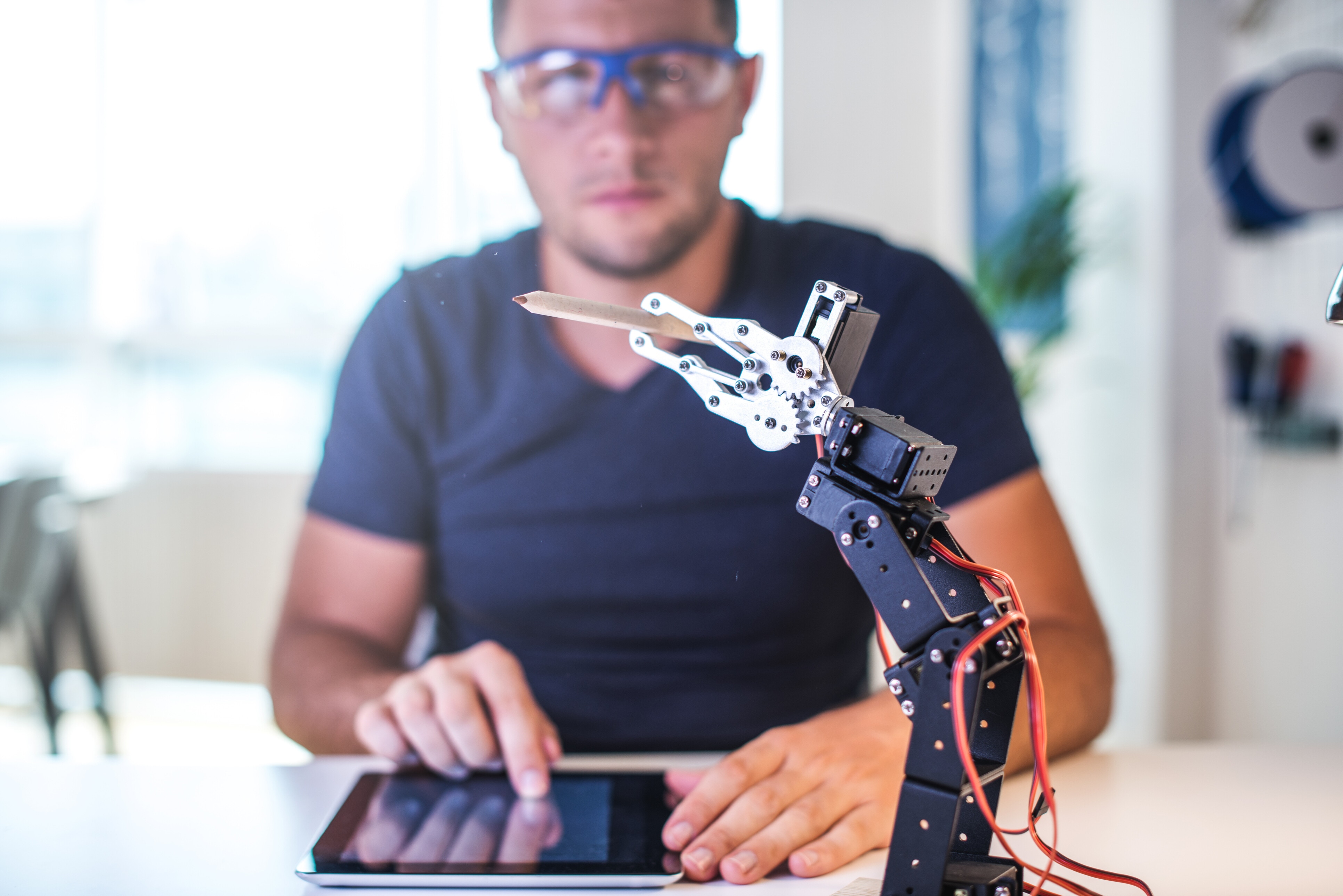
Meta-skills are focused on the work environment of tomorrow. Image: Getty Images
- In an era where skills become quickly outdated or obsolete, meta-skills represent the overarching ability to acquire new capabilities.
- Comprising both cognitive and social skills, they are integral to quick adaptation and upgrading your skills portfolio.
- Organizations can programme in meta-skills training, including through executive education that strengthens leadership capability.
We usually think of skills as the capabilities we have, such as negotiation, marketing and financial modelling. They sit in résumés and can be certified, benchmarked and compared. From this perspective, an organization’s capability is a matter of hiring enough skilled people and giving them the right tasks.
This logic is good enough in stable environments. It breaks down in the environments created by modern digital technologies, where tasks change faster than job descriptions, and technologies evolve faster than training curricula.
In such unstable contexts, instead of only asking whether employees have the right skills for the tasks on hand, leaders should ponder how fast – and how well – they can acquire the skills they will need next. This reframing shines the spotlight on a different category of capability: meta-skills.
It’s not what you know but how you know
Meta-skills do not produce output directly. Nor are they exactly the same as soft skills such as problem-solving or communication. A meta-skill’s primary effect is not on the performance of a task, but how well new skills are acquired. Meta-skills do not only or even necessarily make you better at today’s job; they make you better at becoming good at whatever the job turns into next.
Meta-skills are not defined by domain, difficulty or prestige. They are defined by what they do to your skill portfolio: how latent skills are activated to become deployed skills as tasks change.
What meta-skills are made up of
The research on learning points to two important sets of mechanisms that underlie meta-skills.
1. Cognitive skills
Some meta-skills improve how quickly and deeply people learn on their own. They include higher-order thinking, which comprises critical evaluation, disciplined experimentation and decision-making under uncertainty. This skill helps people refine mental models instead of merely accumulating facts.
Other meta-skills enable people to connect knowledge across tasks and domains. Analogical reasoning is the workhorse here. It allows you to recognize that two problems with different surface features share the same underlying structure and therefore can be solved using similar principles. This is why your experience in one domain sometimes helps you in another.
Metacognitive regulation does something even more subtle. It allows us to monitor our own understanding, detect when a learning strategy is failing and change approach accordingly.
2. Social skills
Some meta-skills pertain to social interaction, not individual problem-solving. They involve the capacity to understand and “mind-read” others, negotiate and build trust.
Individuals with these social skills can learn from and adjust to new tasks more rapidly. After all, most tasks in organizations are interdependent, and peers are a critical source of learning.
Teams of individuals with these social skills are likely to trust each other and learn together. Any disagreement is productive rather than paralyzing, and mistakes are surfaced but not punished. Such teams can outperform groups of more conventionally skilled individuals who learn in isolation.
Besides cognitive and social skills, emotional resilience and a growth mindset also help us rapidly acquire new skills when the old become obsolete.
How to measure meta-skills
Most skills translate effort into immediate output. Meta-skills translate experience into future capability. People with strong meta-skills may often look inefficient. They ask naive questions and test imperfect hypotheses while others execute confidently. But when conditions change, they may adapt faster than everyone else. However, by then, organizations may have already decided who is “high potential”.
It’s in the interest of business and government leaders to recognize and nurture this dynamic human capability. Conventional management wisdom says you can’t manage what you can’t measure. So how do you measure meta-skills? Three indicators matter:
- Learning trajectories: People with strong meta-skills acquire new skills faster, reach competence with fewer repetitions, and adapt more quickly when tasks change.
- Transfer performance: Meta-skills show up when people apply principles learned in one context to structurally similar but unfamiliar problems.
- Process behaviours: Meta-skills are visible in how people work. This could be in the form of strategy shifts, self-explanation and analogical comparisons, as well as how they cooperate with others.
Are meta-skills trainable?
The cognitive and social mechanisms underlying meta-skills are not fixed traits, but known to be plastic in both young and adult humans. Higher order thinking, metacognitive regulation, analogical reasoning and social coordination all improve with structured practice, feedback and reasonably demanding environments. Meta-skills strengthen most reliably when people face novel and complex tasks, receive timely feedback and work interdependently.
This is one reason why executive education may help. The purpose of executive education is not simply to update leaders on industry trends or teach them a new framework, it is to strengthen the cognitive and social machinery that will allow them to adapt to whatever comes next. Executive education often encompasses strategy, finance or leadership. However, its deeper value may lie in building the meta-skills – through cases, group work, simulations and problem-solving – that make leaders and their organizations fit for a world that will not stop changing.
This is also why learning how to code may continue to be useful. In my experience, programming fuels the cognitive components of meta-skills like few other things do.
Hone meta-skills to be future-ready
This brings me to our increasing reliance on AI. Using AI might help us write better reports and better code, but it can cause our skills, including meta-skills, to atrophy, reducing our employability in the long run. Think of the relationship between tasks and skills as that between leaves and roots. Tasks are leaves and skills are roots. Each leaf is nourished by many roots, and each root feeds many leaves. Removing a leaf (i.e. offloading a task to AI) can make its underlying skills (the roots) atrophy, which may then impede performance even in other tasks that we still need to do manually.
How is the World Economic Forum promoting equity in the workplace?
We often hear the expression “people are our greatest asset”. But assets can depreciate. There’s a need to balance between efficiency today and resilience tomorrow, and meta-skills could help us achieve this.
Don't miss any update on this topic
Create a free account and access your personalized content collection with our latest publications and analyses.
License and Republishing
World Economic Forum articles may be republished in accordance with the Creative Commons Attribution-NonCommercial-NoDerivatives 4.0 International Public License, and in accordance with our Terms of Use.
The views expressed in this article are those of the author alone and not the World Economic Forum.
Stay up to date:
Future of Work


Forum Stories newsletter
Bringing you weekly curated insights and analysis on the global issues that matter.
More on Artificial IntelligenceSee all

Melanie Azetmüller, Aarushi Singhania and Benjamin Schönfuß
August 4, 2026


