Generative biology is here. Is the workforce ready?
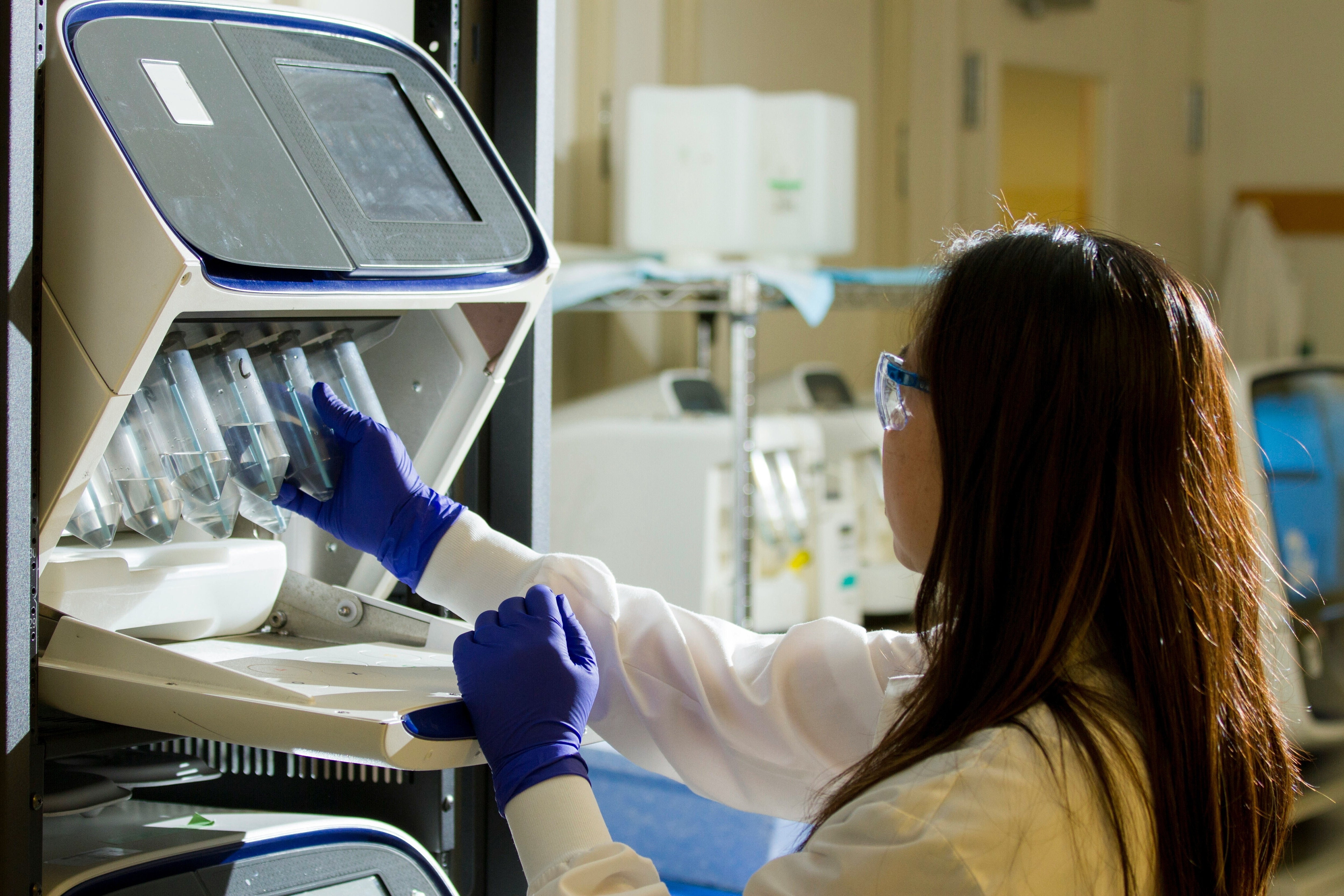
The true bottleneck to this biological revolution will not be computational power or laboratory throughput; it will be the workforce. Image: NCI/Unsplash
- Generative AI is transforming biology into an engineering discipline with a staggering $4 trillion dollar economic potential.
- Realizing this revolution requires urgently upskilling a major interdisciplinary workforce to prevent critical skills gaps.
- How promising ideas become scalable impact is a key focus at the World Economic Forum’s Annual Meeting of the New Champions, also known as Summer Davos, in China from 23–25 June.
We are witnessing the end of biology as a purely observational science and the birth of biology as a software-driven engineering discipline. By colliding the predictive power of generative AI with advanced biomanufacturing, we can now “program” physical matter as easily as we write software code.
The economic stakes are staggering. It’s been estimated that synthetic biology will generate up to $4 trillion annually over the next decade, with the potential to transform almost two-thirds of physical inputs across global industrial sectors. Biomanufactured alternatives are poised to reshape everything from food, feed and medicine, to energy, electronics and construction.
Yet, while the technology is moving at a breakneck pace, the human element is lagging behind. The true bottleneck to this biological revolution will not be computational power or laboratory throughput; it will be the workforce. Generative biology is already experiencing a profound workforce crunch. To prevent a massive skills gap, global leaders must urgently prepare a new class of interdisciplinary workers capable of operating at the intersection of AI and biology.
What is generative biology?
At its core, generative biology is the practice of designing, programming and optimizing biological systems using computational tools before they are physically synthesized and tested in living hosts.
To understand how this ecosystem operates, we can use an analogy from the semiconductor chip industry, which is divided into two distinct halves:
- The “fabless” (design) layer: Computational engineers who lay down complex chip architectures on a screen.
- The “fab” (fabrication) layer: The physical manufacturing plants where those designs are printed to exact specifications for various downstream applications.
The key difference in generative biology is the substrate: we are designing with DNA, not silicon. In practice, computer-aided design tools are used to create entirely new (de novo) DNA circuits digitally. This digital code is then chemically manufactured into physical DNA and added to a biological host – for example, a living yeast cell – which acts as a microscopic factory to grow the target material.
The three enablers driving the shift
This transition from observation to deliberate engineering has been driven by three enablers:
- The cost collapse of sequencing: A massive drop in DNA sequencing costs has yielded large-scale genomic datasets across medicine, agriculture and environmental science.
- The scaling of synthesis: Declining costs in DNA manufacturing – the physical “fab” counterpart – have made writing biological code far more accessible.
- The generative AI catalyst: Few anticipated this third enabler. Biology saw some of the most immediate fruits of generative AI because of the vast amounts of highly organized, clean datasets already available, alongside complex, unsolved problems like deciphering how proteins fold. The influence of generative AI on biology is no longer theoretical; it is already reshaping research and development across academia and industry.
The coming “jobapalooza”
By turbocharging the “fabless” design phase of biology, generative AI has radically condensed innovation timelines. Faster cycles of hypothesis generation, de novo protein structuring, biomarker discovery and automated wet-lab validation are creating a massive demand for an entirely new kind of worker.
Leaders across the world need to pay attention to this for two main reasons. First, the market is substantially large: imagine the $30-trillion synthetic biology market coalescing with a $40-trillion generative AI market. Second, it is developing fairly rapidly, moving from frontier research to real-world applications across healthcare, industrial biotechnology and sustainability. The stack is already giving way to autonomous wet-labs that leverage robotics and automation in tandem with AI guidance.
This shift naturally means there is an anticipated “jobapalooza” underway – with entirely new, interdisciplinary jobs emerging for the global economy, rather than a “jobpocalypse” of displacement.
However, realizing this potential depends entirely on workforce readiness. Competitive advantage will increasingly belong to the countries and organizations that can successfully build and deploy a workforce operating fluently at the intersection of AI and biology.
As this trend develops, we foresee the emergence of new skills and roles across three distinct layers of a pyramid:
- Frontier research and breakthrough science: These include small, interdisciplinary teams of highly specialized individuals across organizations who are fluent in biology and generative AI. These are experts, often with PhDs, in their own specific area, and are responsible for foundational breakthroughs in the field.
- Applied technical workforce: This is a larger, middle-tier of operators and practitioners trained in any of a growing list of emerging skills. They work with AI agents and automated laboratories, running AI-guided experimental workflows and scalable biomanufacturing processes.
- Broad societal literacy: This includes the wider workforce as well as the general public, which is increasingly expected to understand the foundations, opportunities and implications of generative biology. This also includes reaching primary and secondary age children, raising awareness and excitement among younger students and their parents.
The growing list of emerging roles in this space will inevitably require both near-term up-skilling and medium-term university degree programmes. These new skills will define several core archetypes, including cross-functional business leaders, AI and computational biology specialists, and the IT and cybersecurity professionals managing bio-data infrastructure.
Additionally, the industry will require biomanufacturing specialists to run robotics-enabled labs, data-literate regulatory and ethics experts to ensure safe deployment, and the educators and policy-makers tasked with preparing society for a biology-enabled economy.
What needs to change
Workforce readiness is increasingly becoming the limiting factor for scaling generative biology. Leaders and organizations across education, industry, and policy must adapt through new interdisciplinary training, reskilling, infrastructure investment and governance frameworks, both in the near and medium terms. With the explosion of new job types, generative biology offers a unique opportunity for cities and countries in areas of youth empowerment and job creation.
Generative biology is already reshaping science and industry. The question is no longer whether it will transform the workforce, but whether we are preparing the workforce quickly enough.
Don't miss any update on this topic
Create a free account and access your personalized content collection with our latest publications and analyses.
License and Republishing
World Economic Forum articles may be republished in accordance with the Creative Commons Attribution-NonCommercial-NoDerivatives 4.0 International Public License, and in accordance with our Terms of Use.
The views expressed in this article are those of the author alone and not the World Economic Forum.
Stay up to date:
Generative Artificial Intelligence


Forum Stories newsletter
Bringing you weekly curated insights and analysis on the global issues that matter.