How GCC sovereign wealth funds are tackling a fragmented global economy
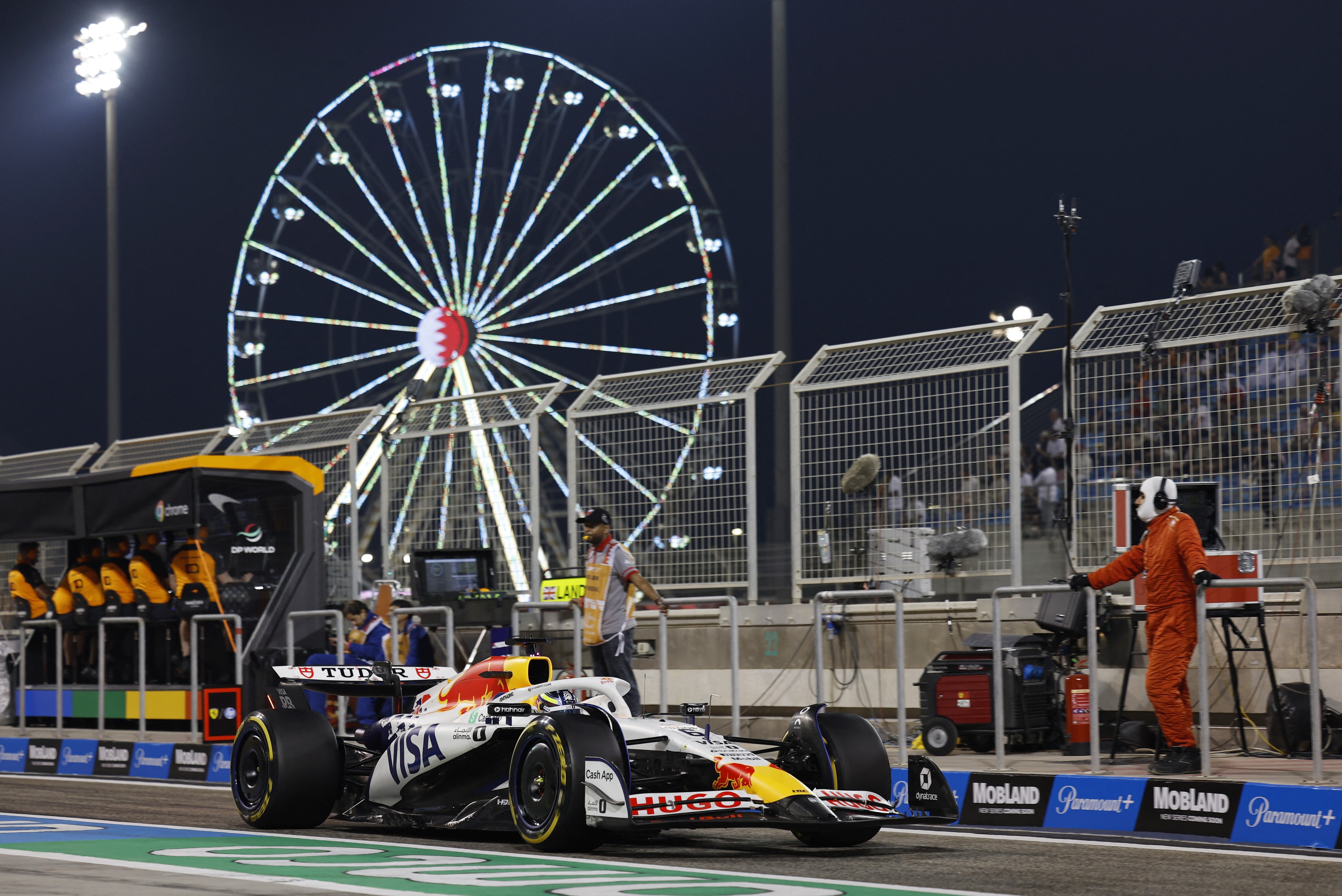
Formula 1 cars pit-side at the Bahrain Grand Prix, highlighting the nation's sovereign wealth investments in global sports. Image: Reuters/Hamad I Mohammed
- Sovereign wealth funds can be vehicles for economic resilience in a time of geopolitical turbulence.
- The Gulf Cooperation Council's sovereign wealth funds are fostering stability by increasingly focusing on investing in home markets and on regional cooperation.
- How promising ideas become scalable impact will be a key focus at the World Economic Forum’s Annual Meeting of the New Champions, also known as 'Summer Davos', in China from 23-25 June.
The global landscape is fragmenting. Protectionism and geopolitical tensions are rising, major powers are realigning, and the cumulative effect of higher tariffs, restrictions on capital flows, energy market volatility and shifting trade dynamics is weighing on growth. The US-Iran conflict and the resulting disruption to trade and energy flows through the Strait of Hormuz, a critical artery for global commerce, have deepened the strain.
Governments and policy-makers must now build more adaptive supply chains to safeguard their economies. Those that pull ahead will deploy capital with purpose, align policy to let it cross borders and treat connectivity as a multiplier for growth.
One response has been a sharper focus on sovereign wealth funds (SWFs) – state-owned investment institutions – to boost investment in high-growth sectors, open up global partnerships and steady economies through a period of geopolitical uncertainty. Once seen as niche vehicles for managing commodity revenues, SWFs are now embraced worldwide as strategic platforms for economic resilience.
Alongside advanced economies such as the United Kingdom and United States, emerging markets including Egypt, Turkey and Indonesia have launched, expanded or announced SWFs, contributing to a global industry that now manages more than $14 trillion in assets.
Across the Gulf Cooperation Council (GCC), these funds are using cross-border partnerships to unlock co-investments and de-risk growth, complementing the Gulf’s long-term economic visions.
Partnering for scale
The GCC's sovereign wealth funds are evolving their investment approach. Historically focused on international markets and diversified global portfolios, they are increasingly directing capital into their home markets and across the region. At a time of heightened uncertainty, this shift is a stabilizing force, helping sustain investment in strategic sectors.
Much of it flows through joint investment. The Saudi-Bahraini Investment Company, a subsidiary of Saudi Arabia’s Public Investment Fund (PIF), aims to invest up to $5 billion in Bahraini sectors and has opened an office in Manama. In March 2024, PIF and Bahrain’s SWF, Mumtalakat, signed a Memorandum of Understanding to deepen collaboration; meanwhile Abu Dhabi’s sovereign investor, Mubadala, has explored joint global investments with Mumtalakat since 2021, with the two vehicles exchanging best practice and establishing a platform for mutually beneficial co-investment.
By combining SWFs' capital with private-sector expertise, governments can open new investment opportunities at home. In Bahrain, Mumtalakat's investments reflect the role sovereign wealth funds play in diversification.
Singapore Gulf Bank, for example, brings together sovereign and family-office capital, backed by Mumtalakat and Whampoa Group. Since its establishment in 2024, the bank has partnered with Bahrain’s Ministry of Tourism to strengthen the tourism economy, and with the Kingdom’s Labour Fund, Tamkeen, to support the training and employment of Bahrainis in high-value roles.
What’s more, Mumtalakat’s diversification reaches across various industries. Aluminium Bahrain (Alba), a key portfolio company of Mumtalakat, has acquired Aluminium Dunkerque, the European Union’s largest primary aluminium smelter, for around $2.2 billion, a signal of confidence in cross-border growth.
That ambition extends to motorsport, where Bahrain’s passion runs deep: It hosted the region’s first Formula 1 Grand Prix and holds a long-standing stake in McLaren Racing. But the economic value reaches beyond the track. Bell Racing Helmets, part of the Mumtalakat-backed Racing Force Group, produces the helmets worn by most of the F1 grid at its Sakhir facility, where an expanded factory has doubled production capacity and a neighbouring production hub is meeting rising demand for motorsport safety products.
In healthcare, a partnership with M42, Abu Dhabi's Mubadala-backed health group, has expanded Amana Healthcare into Bahrain, bringing specialized long-term care and rehabilitation capacity to the country, while a newer partnership with SandboxAQ aims to accelerate the development of Bahrain’s biotechnology sector.
Collaborating for resilience
Recent disruption to regional trade routes and global supply chains has reinforced the need for resilience in food security, energy and digital infrastructure – sectors where commercial incentives alone may not support the investment national priorities demand. With their development-focused mandates, GCC SWFs are well placed to bridge that gap, backing sectors that take time to generate returns while strengthening the region's resilience to future shocks.
Food security is a clear example of this approach. In Bahrain, Mumtalakat launched Ghitha to strengthen domestic food production, while in Saudi Arabia, PIF is investing in agricultural technologies, including vertical farming and controlled-environment agriculture.
SWFs are also partnering with global firms to strengthen the infrastructure a resilient economy depends on. Saudi Arabia’s PIF-backed AI company HUMAIN is leading a $5 billion partnership with Amazon Web Services to deliver an “AI Zone” that will fuel innovation and create jobs across the region and beyond. In parallel, a $300 million deal between Mubadala and Stonepeak for two container-leasing businesses strengthens global trade and supply-chain efficiency while mitigating disruption in the Strait of Hormuz.
Aligning GCC markets
Increasingly aligned national policies are magnifying these benefits. In-Country Value (ICV) Certificate programmes, which provide procurement preference to suppliers meeting local-content thresholds, ease cross-border participation across GCC markets. Bahrain’s Takamul programme is one such example: Bahrain-based industrial firms gain a 10% preference in Saudi government procurement, provided they meet rules of origin requiring at least 40% local content, while Saudi firms gain equivalent preferential treatment in Bahrain.
The UAE and Bahrain have more recently extended the same reciprocal arrangement through a joint ministerial statement on their ICV programmes.
For sovereign investors, this alignment lets them treat the GCC as a unified bloc rather than separate jurisdictions, deploying capital more efficiently. For foreign direct investors, the implication is clear: These initiatives make the region easier to access.
Building connections
Integration extends to physical and digital infrastructure. Greater connectivity between member states multiplies the benefits of SWF collaboration, enhances mobility and strengthens supply chain resilience. The planned $250 billion GCC Railway, which will span 2,177 kilometres across all six member states, will reinforce connectivity and help the region absorb shocks and adapt to changing global conditions.
A new maritime link between Bahrain’s Khalifa Bin Salman Port and Saudi Arabia’s King Abdulaziz Port in Dammam offers an alternative trade route across the Gulf, strengthening the region’s resilience to disruption of the kind recently seen in the Strait of Hormuz.
The same principle applies to digital infrastructure. The Fibre in the Gulf (FIG) project, spanning Bahrain, Iraq, Kuwait, Oman and Saudi Arabia, is set to become the region’s largest sub-sea cable system, while Mumtalakat-backed Beyon Group has invested in Al Khaleej Subsea Cable, a Gulf branch of the international SEA-ME-WE 6 network. Diversifying data routes guards against disruption and advances the GCC’s ambition to become a globally connected technology and data hub.
Regional partnerships, global lessons
The GCC’s approach offers three lessons for policy-makers and investors globally.
First, capital must be deployed strategically, not passively. SWFs are moving beyond traditional portfolio allocation to shape economic outcomes: investing in new industries, building national capabilities and directing more capital into regional opportunities.
Second, investment requires an enabling environment. Supportive policy frameworks and aligned regulations can unlock larger pools of investment, accelerate project delivery and create opportunities that no single market could achieve alone.
Third, connectivity is a multiplier. Transportation networks, logistics corridors and digital infrastructure keep economies running through disruption and open new pathways for trade and growth.
As leaders gather at the World Economic Forum's Annual Meeting of the New Champions in Dalian, the GCC's experience demonstrates that resilience is built through investment, integration and collaboration. In an uncertain world, regions that mobilize their own capital, deepen cross-border partnerships and invest in connectivity will be better placed to sustain growth and withstand future shocks.
Don't miss any update on this topic
Create a free account and access your personalized content collection with our latest publications and analyses.
License and Republishing
World Economic Forum articles may be republished in accordance with the Creative Commons Attribution-NonCommercial-NoDerivatives 4.0 International Public License, and in accordance with our Terms of Use.
The views expressed in this article are those of the author alone and not the World Economic Forum.
Stay up to date:
Banking and Capital Markets
Related topics:

Forum Stories newsletter
Bringing you weekly curated insights and analysis on the global issues that matter.
More on Global CooperationSee all

Andrea Willige, Gayle Markovitz and Madeleine North
September 21, 2026