Feeding 10 billion: how strategic trade could strengthen food system resilience
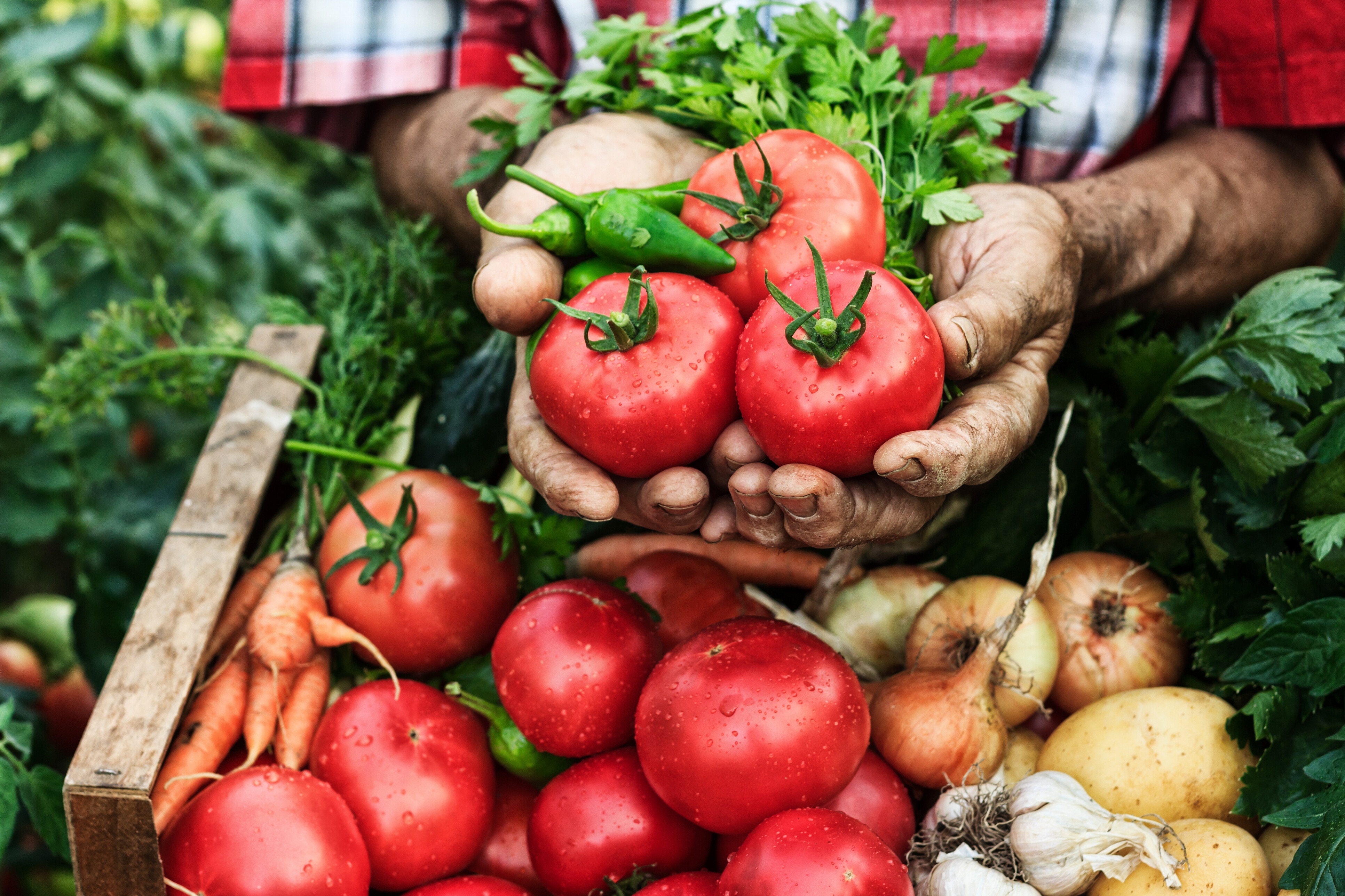
Building future-ready food systems to feed a growing global population. Image: Getty Images/iStockphoto/ValentinRussanov
- Although global population growth is slowing, the world will still need to feed nearly 10 billion people by 2050 amid rising climate and geopolitical risks.
- Economist Enterprise’s Resilient Food Systems Index finds a positive association between agricultural trade and the affordability of a healthy, diverse diet.
- Future-ready food systems combine diversified trade with strong domestic production, strategic reserves, resilient logistics and better market access for farmers.
Concerns about feeding a growing population are not new. More than two centuries ago, the economist and demographer Thomas Robert Malthus warned that population growth would eventually outpace food production, leading to widespread shortages and famine.
Technological advances, agricultural innovation and global trade have largely prevented this “Malthusian trap” from materialising. But the underlying question remains relevant: how can societies ensure food security for a growing population amid finite resources and mounting environmental pressures?
By 2050, the world's population is projected to reach around 9.7 billion, according to the UN, meaning there will be nearly 10 billion mouths to feed. Meeting that need is becoming increasingly complex. Geopolitical tensions are rising, climate-related disruptions are more frequent and supply chains are being tested by conflict and economic fragmentation. In many countries, this has reignited a familiar debate about whether nations should rely more on global trade or produce more food at home.
The reality is that resilient food systems require both.
Recent research from Economist Enterprise’s Resilient Food Systems Index, supported by Cargill, finds a positive association between agricultural trade and both the affordability of a healthy diet and dietary diversity. Trade allows countries to supplement domestic production, smooth local shortages and connect farmers to more buyers. But those gains are not automatic: producers still need roads, storage, finance and market information.
How trade shocks affect food supply
Trade shocks – from pandemic-related border closures to conflicts affecting shipping routes such as the Strait of Hormuz – show that diversification cannot be measured simply by counting suppliers on a list.
A supply chain that looks geographically diverse can remain vulnerable if it relies on the same port, transport corridor or fertilizer hub. The disruption of energy and fertilizer flows through the Strait of Hormuz shows how a shock far beyond the farm gate can ultimately affect the cost and availability of food.
The debate should therefore move beyond the binary choice between open trade and self-sufficiency. Instead, policymakers should focus on building strategic resilience. This means determining which products are best produced domestically, which can be sourced internationally, where strategic stocks are warranted and what contingency capacity is needed when a supplier or route fails.
Essential foods that are difficult to substitute may justify greater domestic capacity. For products that cannot be produced efficiently at home, diversified trade and the ability to approve alternative sources quickly may provide greater security.
Lessons in food system resilience
The UK and Singapore, two relatively strong performers in the Resilient Food Systems Index, illustrate how different this balance can look in practice.
The UK combines a substantial agricultural base with open trade. In 2023, its production-to-supply ratio was 62% for all food. But it remains highly dependent on imports of fruit, vegetables and seafood, while domestic production relies on fertilizer, energy, labour and functioning ports. Strategic resilience therefore means keeping farming competitive while identifying bottlenecks across the wider food chain.
Singapore starts from the opposite position. It imports more than 90% of its food. Its Singapore Food Story 2 strategy spreads risk across diversified imports from more than 180 countries, government-to-government partnerships, stockpiles and targeted local production.
Malaysia's 2022 ban on live-chicken exports tested Singapore’s model. Importers pivoted to chilled and frozen chicken from other markets and Singapore accredited a new source within weeks. In July 2026, Singapore and New Zealand implemented a first-of-its-kind agreement committing not to impose unnecessary export restrictions on essential goods during disruptions.
The UK and Singapore have very different constraints, but the underlying principle is the same. Resilience comes from maintaining credible options and the ability to switch between them, rather than depending on any single source of supply.
The benefits of diversified food systems
Strategic resilience does not mean retreating from global trade, it means strengthening relationships with reliable partners while diversifying across geographies, suppliers and transport routes.
“Friendshoring” should not harden into narrow food blocs, however. Political alignment is only one dimension of reliability – a trusted partner can still be affected by drought or infrastructure failure. And so resilient trade requires diversification by risk exposure as well as geography.
Domestic production remains an important part of this portfolio. It can reduce exposure to external disruptions and preserve capacity that would be difficult to rebuild after a crisis. But pursuing self-sufficiency as an end in itself can create new vulnerabilities, particularly where water stress or climate risk is intensifying.
How regulation affects food system resilience
Assembling a diversified portfolio is not enough on its own. Its value depends on whether countries can shift between sources quickly when disruption strikes. This makes regulatory cooperation an often-overlooked component of resilience.
Across the 60 countries covered by the index, the number of non-tariff measures applied to agricultural imports ranges from zero to more than 1,800. Many serve legitimate safety objectives, but where requirements diverge unnecessarily, exporters face duplicated testing and certification that raises costs and slows the redirection of trade during a crisis.
These frictions are tangible at the farm gate. A smallholder may produce a saleable crop but, without affordable storage or working capital, they may be forced to accept the first offer after harvest, when prices are weakest.
Evidence from Uganda shows how modest interventions can help. The country's maize farmers can use a mobile marketplace connecting them to traders and sharing price information by SMS. This increases trade flows and reduces price variation between markets. Market access depends not just on tariffs, but on storage, transport, finance and interoperable standards.
How to build future-ready food systems
These challenges are becoming more urgent as the global trading system fragments. Like microchips and critical minerals, food is increasingly affected by export restrictions and shifting alliances. But food carries a different human consequence because delays and price increases are transmitted directly into household budgets and access to nutritious diets.
Building future-ready food systems will require a portfolio of mutually reinforcing measures: diversified trade relationships, productive domestic sectors, strategic stocks, resilient logistics, regulatory cooperation and practical infrastructure connecting farmers to markets.
Food security will not be built by choosing self-sufficiency over trade. It will be built by making interdependence more manageable, so that when one supplier, route or market fails, another can take its place.
Don't miss any update on this topic
Create a free account and access your personalized content collection with our latest publications and analyses.
License and Republishing
World Economic Forum articles may be republished in accordance with the Creative Commons Attribution-NonCommercial-NoDerivatives 4.0 International Public License, and in accordance with our Terms of Use.
The views expressed in this article are those of the author alone and not the World Economic Forum.
Stay up to date:
Trade and Investment
Related topics:


Forum Stories newsletter
Bringing you weekly curated insights and analysis on the global issues that matter.
More on Supply Chains and TransportationSee all

Pim Valdre and Joy Shumake-Guillemot
September 17, 2026


