Why building ‘stress intelligence’ is essential for decision-making in an age of constant crisis

Stress intelligence is becoming an essential and strategic leadership capability Image: Unsplash+/Getty Images
- In a polycrises environment, more than half of C-suite leaders report being very stressed, with most saying stress has increased over the past year and is likely to rise further.
- While moderate stress can improve performance, sustained high stress impairs memory, creativity, judgment and risk assessment, leading to poorer decisions during crises.
- "Stress intelligence" is becoming a strategic leadership capability i.e. understanding how stress affects decision-making, building resilience and creating systems that protect decision quality under pressure.
Leaders are moving from one crisis to the next – from COVID-19 to geopolitical rupture, economic shock and technological disruption – with scarce time to stabilize before the next wave arrives. Dealing with crisis, once an exceptional demand on leaders, has become the baseline condition of the job.
The Brunswick Leadership Stress Index has tracked the pressures facing leaders since 2019; strikingly, recent stress levels are higher than they were even during the pandemic. One business leader we spoke to put it plainly: "During the pandemic, there was a clear enemy, a shared enemy. Now it's coming from all directions. It's hard to even know which decisions to prioritize."
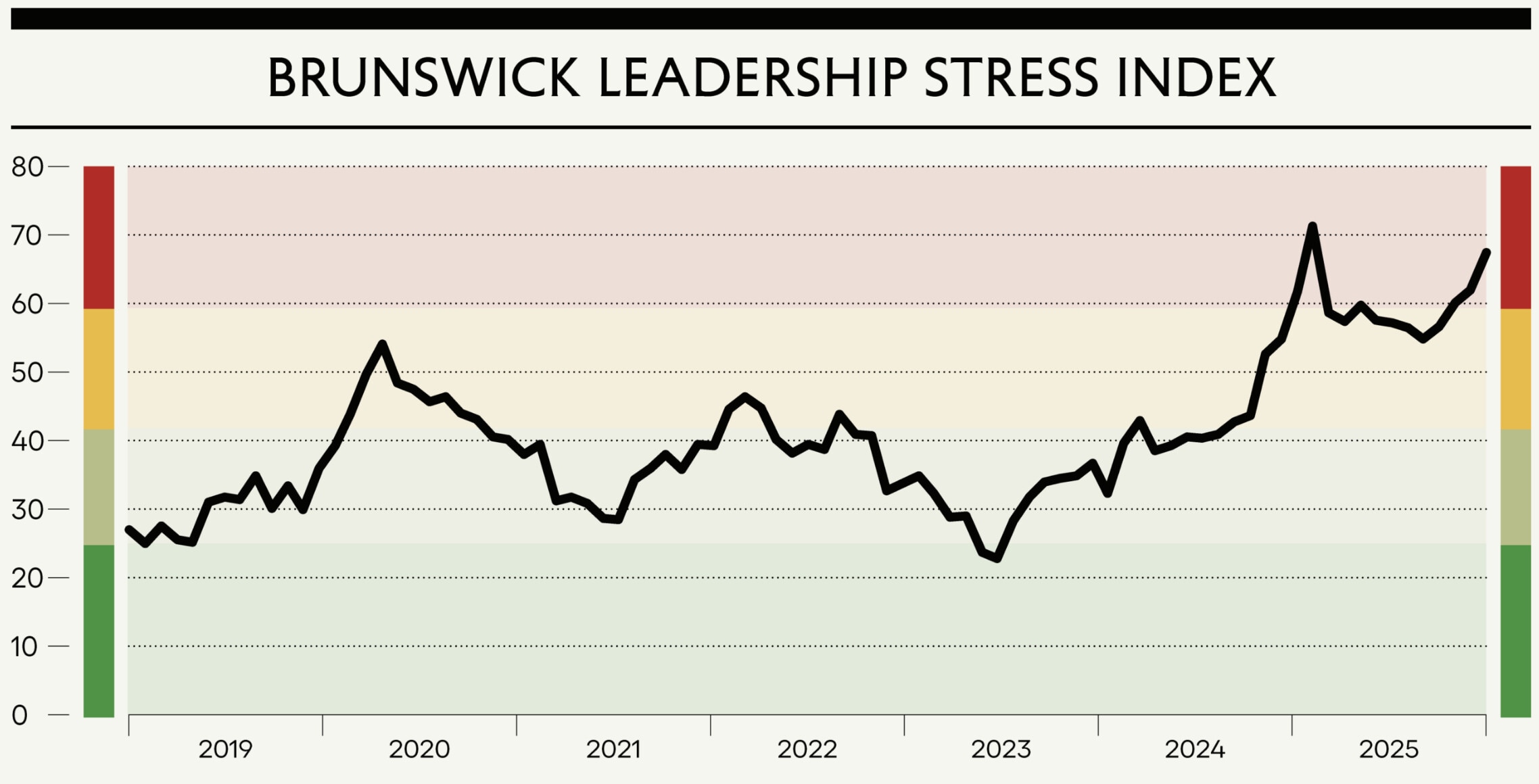
In Brunswick’s international survey of C-suite leaders, more than half (51%) describe themselves as very stressed. Two-thirds (65%) say their stress has increased over the past year. And over half (51%) expect it to increase further in the year ahead, suggesting that leaders themselves see no relief on the horizon.
On the face of it, this may seem like a story about leadership wellbeing but this constant pressure can also affect performance and risk. Sustained, elevated stress undermines leaders’ ability to make good decisions, which in turn leads to poorer outcomes and a perpetuating cycle of stress and crisis.
Stress can undermine decision-making when it matters most
Most high-performing leaders know that some degree of stress can be useful. It can sharpen focus, accelerate thinking and enhance performance. When leaders experience demands as challenges they believe they can meet, they enter what psychologists call “eustress,” a positive, energizing state that enhances rather than undermines capability.
However, the line between optimal and excessive stress is thinner than most leaders realize and in today's environment, it is being crossed routinely.
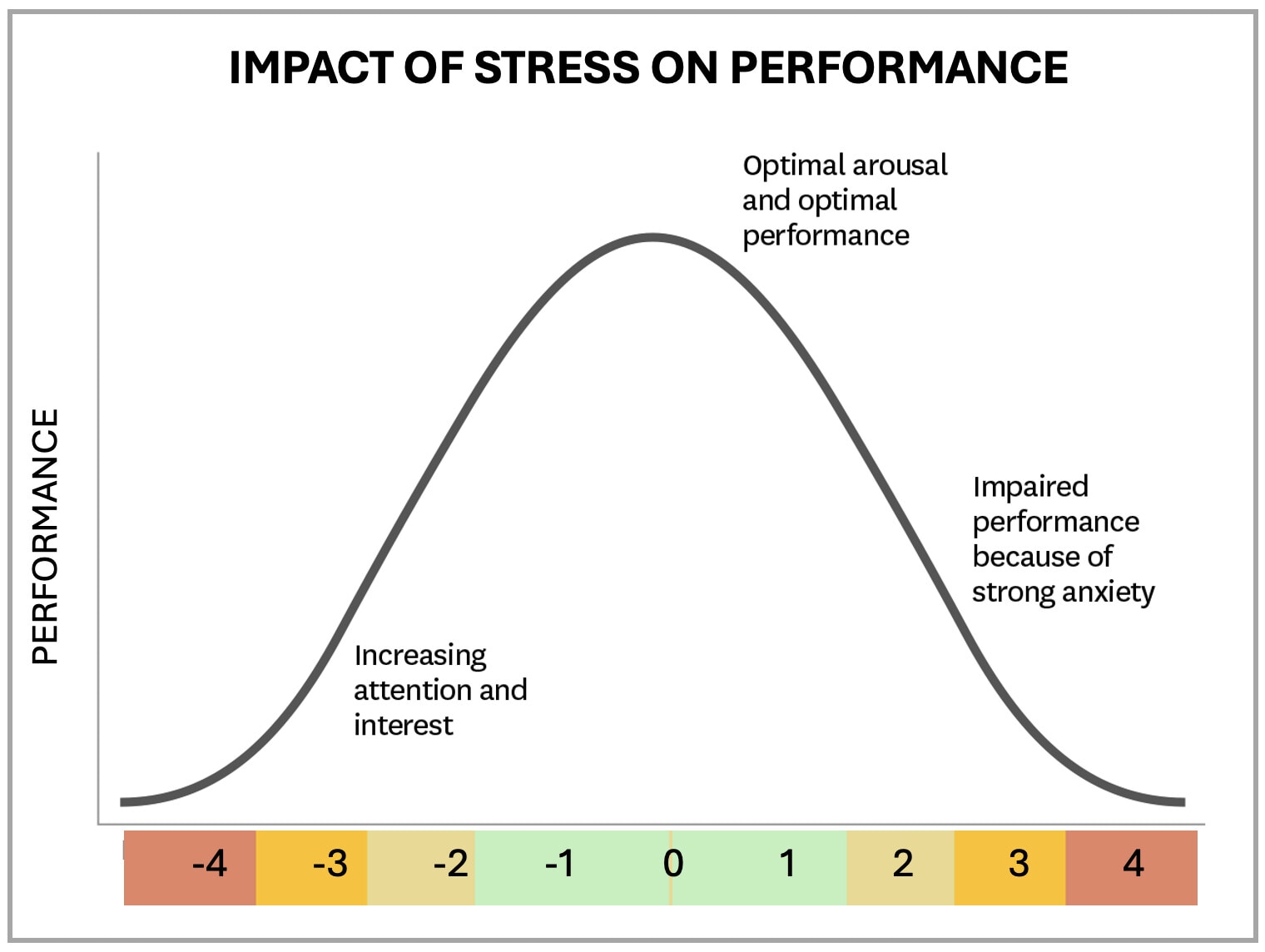
When stress becomes chronic i.e. when expectations persistently exceed capacity, without recovery, the picture reverses. Leaders enter a state of overstress in which cognitive and emotional functioning begins to deteriorate.
The Yerkes-Dodson curve, adapted for leadership contexts, captures this precisely: performance improves as stress rises through the eustress zone but beyond a critical threshold, further pressure impairs rather than enhances decision quality. This is the zone in which many of today's leaders operate.
The neuroscience is unambiguous. Under high stress, leaders experience reduced working memory and impaired recall, narrowed attention and rigidity of thinking, weakened emotional regulation and distorted risk perception. These effects can corrupt every stage of the decision-making process.
In the first phase of decision-making capability – framing the decision – stress leads leaders to gather less information, avoid unwelcome data and restrict communication with their teams at precisely the moments when diverse input is most needed.
During the second stage – exploring solutions – stress reduces cognitive flexibility and creativity and biases leaders towards short-term fixes at the expense of longer-term consequences.
The final stage – choosing an option – is where stress distorts risk assessment, undermines decisiveness and creates a dangerous oscillation between paralysis and impulsive action.
The cumulative effect is a compounding of errors: decisions made on incomplete information, with too little deliberation, driven by a distorted perception of risk. In an ordinary business environment, this is costly; however, in our age of high-stakes global crises, it is dangerous.
‘Stress intelligence’ is now a critical variable in addressing global risks
Decisions being made today by business and political leaders will shape the trajectory of global risks for decades. Yet those decisions are being made under conditions of chronic stress that science shows degrade the quality of human judgment.
We are living through a period of unprecedented systemic turbulence and leaders are ill-equipped for the speed, scale and relentlessness of high-stakes decisions they now face daily. We are not neurologically wired for sustained stress at this intensity and our nervous systems were not designed for this pace.
This is the hidden multiplier of global risk: not just the complexity of the challenges themselves but the cognitively taxed state of the people being asked to navigate them.
What is needed is a new capability: stress intelligence.
This is not stress management in the conventional sense, such as breathing exercises and wellbeing apps; it is far more fundamental, involving the capacity to understand stress as an integral feature of leadership, to recognize how it operates on cognition and emotion in real time and to actively protect decision quality under pressure.
Over the years, we’ve seen that different leaders often respond very differently to pressure. Stress intelligence begins by developing awareness about your individual patterns. Leaders need to ask: how does stress impact my decision-making? Do I have a strategy for maintaining performance under intense pressure?
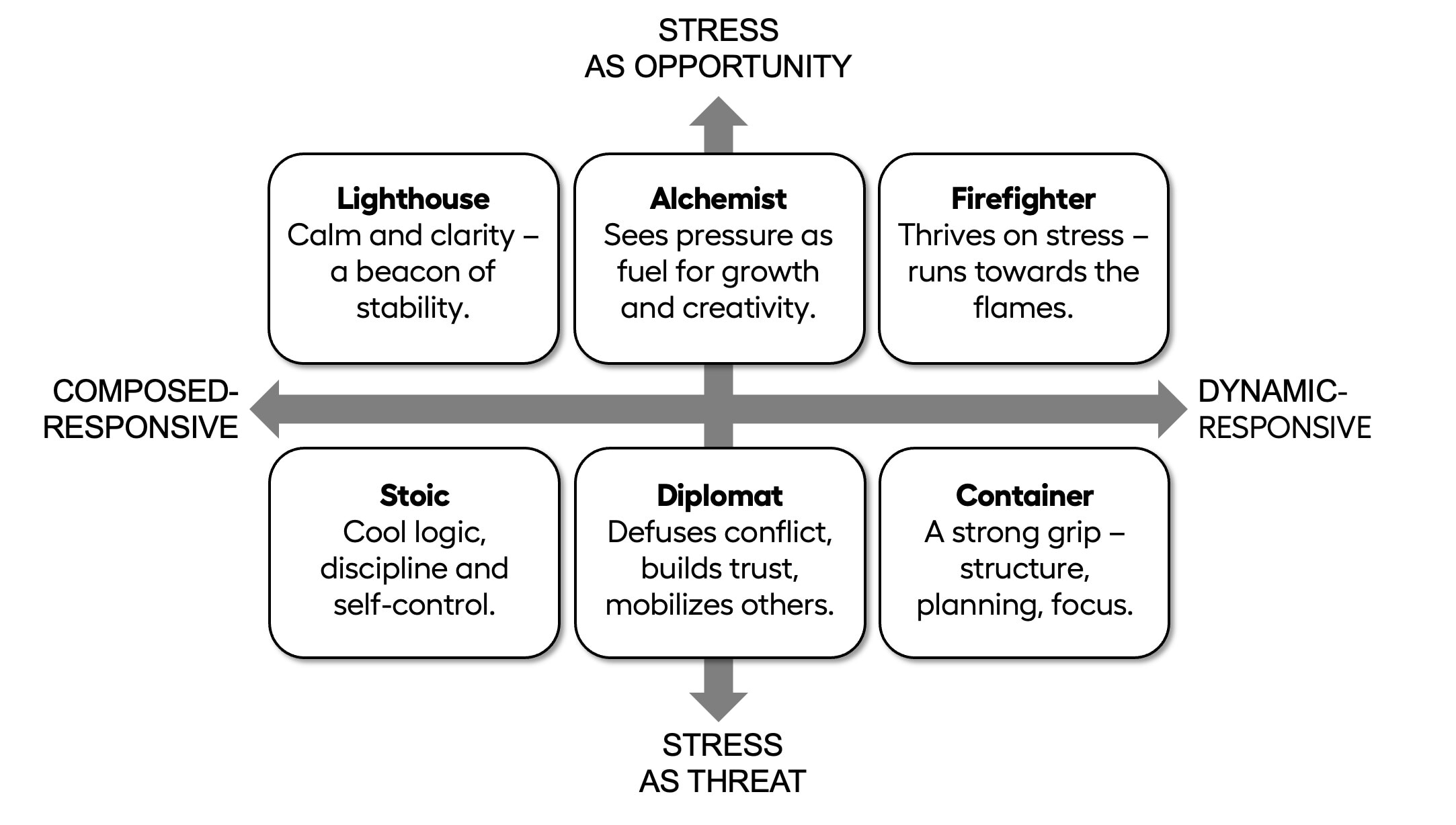
Under pressure, leaders tend to gravitate toward one of six reaction types, shaped by how they read the moment and regulate themselves. We describe these “leadership stress response types” in our new Harvard Business Review article.
Each type is positioned along two dimensions: whether leaders react with composure or leap into dynamic action and whether they approach a crisis as an opportunity or a threat.
The good news is that stress intelligence can be learned. Leaders can come to recognize their individual stress response type, reframe pressure as a condition for wiser decisions and build the cognitive resilience that sustains high-performance demands.
Teams can develop shared practices that protect the quality of collective decision-making under fire. Systems can be designed to catch and correct the errors that stressed individuals inevitably make.
The new Center for Stress Intelligence aims to explore these areas so that leaders can understand, manage and even harness their stress to improve decision-making under fire.
The crises facing the world are real and serious. The quality of the decisions made in response to them will depend, more than we typically acknowledge, on the stress intelligence of the people making them. This is a hard strategic reality and it is time to treat it as one.
Don't miss any update on this topic
Create a free account and access your personalized content collection with our latest publications and analyses.
License and Republishing
World Economic Forum articles may be republished in accordance with the Creative Commons Attribution-NonCommercial-NoDerivatives 4.0 International Public License, and in accordance with our Terms of Use.
The views expressed in this article are those of the author alone and not the World Economic Forum.
Stay up to date:
Cybersecurity
Related topics:


Forum Stories newsletter
Bringing you weekly curated insights and analysis on the global issues that matter.
More on LeadershipSee all

Mykhailo Bno-Airiian
September 18, 2026


