How the UAE and Asia are co-creating the next horizon of growth
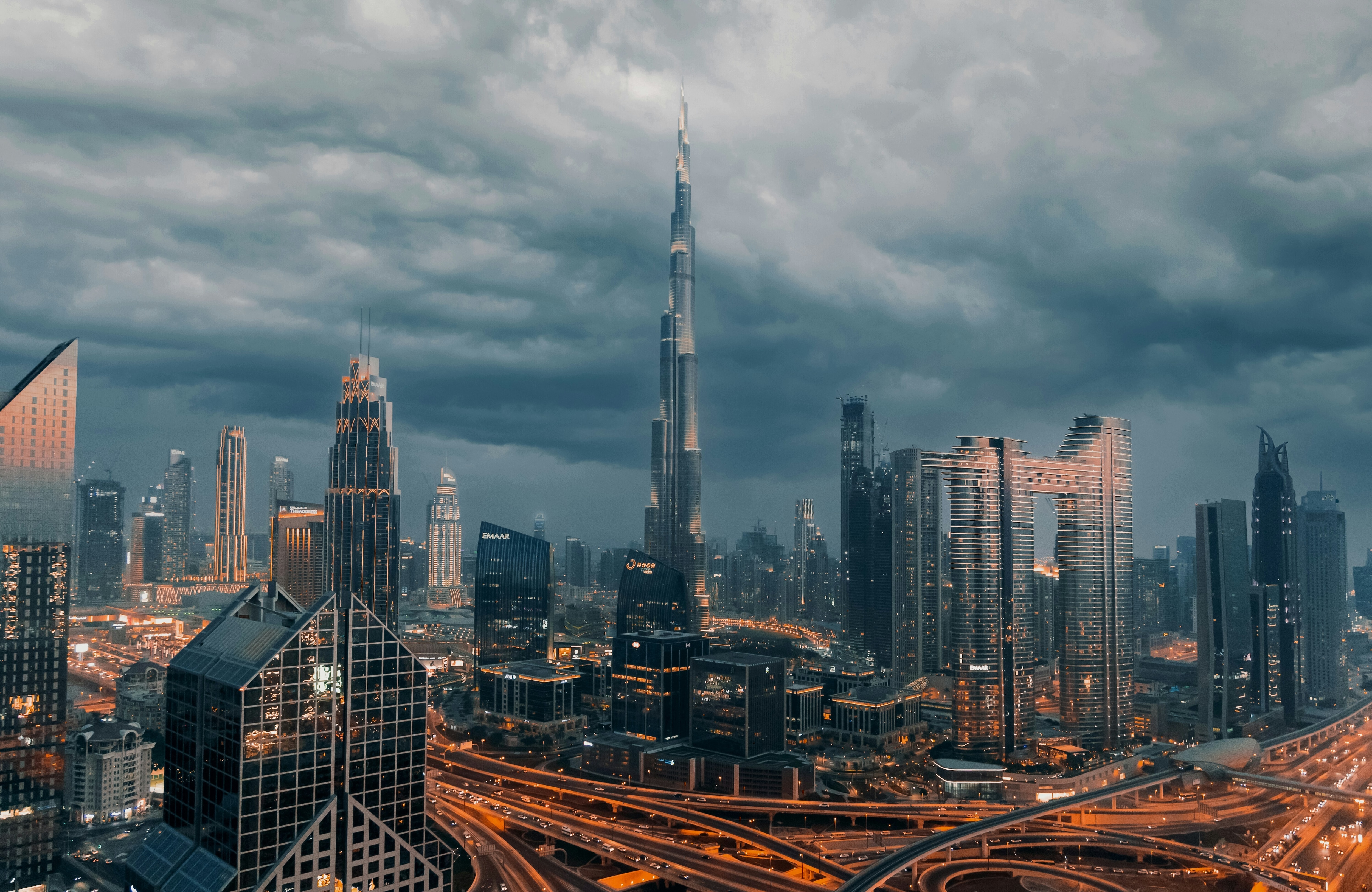
The reciprocal UAE and China partnership can act as a powerful bridge to scale borderless innovation. Image: Ahmed Aldaie/Unsplash
- Long-term investments across Asia are allowing the UAE to build industrial capability and spread market risks.
- The reciprocal UAE and China partnership can act as a powerful bridge to scale borderless innovation.
- How promising ideas become scalable impact is a key focus at the World Economic Forum’s Annual Meeting of the New Champions, also known as Summer Davos, in China from 23–25 June.
If you want to understand where the world economy is heading, look at Asia. The IMF expects the region to remain the biggest driver of global growth, contributing about 60% this year and next, even as trade tensions and tariffs reshape the global economy. Most of the world’s new economic activity is now concentrated in Asia, which is driving new demand, pioneering new industries, and scaling global innovation.
For the UAE, this is not a recent discovery. The decision to anchor part of our economic future in Asia’s rise was made years ago, in keeping with a principle that has long guided the country: invest early, build locally and prepare before the need becomes urgent. The case for it has only sharpened. Supply chains that once felt permanent have proven fragile; trade routes can no longer be taken for granted, and diversification enables countries and companies alike to spread markets while building real capability at home. This is what the UAE has spent years doing. Moments of pressure are exactly when long-term investors should lean in rather than pull back.
The UAE is already building across Asia
This is not a story about capital waiting to be deployed. The UAE’s companies are operating across the region today. The UAE’s renewable energy company, Masdar, is expanding through a $2.2 billion joint venture with TotalEnergies that spans nine Asian markets, from Japan and South Korea to Indonesia and the Philippines. Similarly, Mubadala Energy’s gas-led portfolio in Southeast Asia, including recent developments in Indonesia’s Andaman basin, focuses on long-term regional energy infrastructure.
What these examples share is a way of operating. We are a responsible investor that partners with governments and industry to build capability on the ground, transferring expertise and creating jobs for the long term. Our aim is to grow Asia to 20% to 25% of Mubadala’s portfolio by 2030, with China, Japan, South Korea and India as the core markets.
China: A core engine of our strategy
Mubadala manages around AED 1.4 trillion ($385 billion) in assets and contributes roughly AED 45 billion to Abu Dhabi’s economy each year, about 5.7% of its non-oil GDP, while supporting close to 98,000 jobs. That scale lets us take a long-term view in markets like China.
Mubadala has invested in China for more than a decade, and the country is a core engine of our global strategy and the centre of our Asia platform. We anchor it with more than 30 professionals based in Beijing and a China portfolio of around $20 billion, built through more than 100 investments across consumer, healthcare, technology, industrials, business services and infrastructure.
The bilateral backdrop has reached a scale that few predicted. Non-oil trade between the UAE and China reached $111.5 billion last year, up 24.5% in a single year, making China the UAE’s largest trading partner. The relationship is fundamentally about what the UAE and China can build together, and value now flows in both directions.
A two-way relationship
The most overlooked feature of the UAE–China relationship is its reciprocity. The UAE has become a stable, innovation-driven launchpad for Chinese companies expanding into the Middle East, Africa and South Asia, while Chinese innovation opens opportunities for Gulf investors inside China. More than 15,000 Chinese companies now operate in the UAE, alongside a community of over 300,000 Chinese citizens. They choose the UAE for the same reasons other global firms do: a stable, pro-business environment, supportive innovation policies, and open access to fast-growing markets. We make that pathway concrete through Hub71, Abu Dhabi’s technology ecosystem, which runs dedicated programmes with Hong Kong partners to help mainland Chinese and Hong Kong founders scale into the region: a working bridge into new markets rather than an incentive on paper.
The second part of this partnership runs the other way. We partner with government, industry and leading domestic investors to co-create opportunities that drive China’s growth, and we invest through cycles, because that is what underpins a portfolio built to last. The opportunity now is to scale innovation across borders – the challenge this year’s Annual Meeting of the New Champions puts at its centre. In the sectors shaping the region’s future, healthcare and life sciences, advanced technology and AI, and the clean-energy transition, the two economies are complementary: China brings depth in manufacturing, applied technology and scale, while the UAE brings capital, connectivity into fast-growing emerging markets, and a stable platform from which to reach them. Together, an innovation that works in one market can scale across several.
The next horizon of growth
The UAE and China have set themselves a target of $300 billion in trade by 2030. Targets like that are met not by governments alone but by thousands of companies, founders and investors choosing to build with one another. That is the real measure of the relationship, and the reason we are accelerating.
This deep commercial network creates a stabilizing effect that extends far beyond bilateral trade numbers. In a world that rewards those who prepare early, the partnerships built to last are the ones that diversify risk, create capability on both sides, and open up new avenues for shared prosperity. Ultimate success in this evolving economic corridor demonstrates how long-term, cross-border integration can successfully transform global friction into mutual opportunity.
Don't miss any update on this topic
Create a free account and access your personalized content collection with our latest publications and analyses.
License and Republishing
World Economic Forum articles may be republished in accordance with the Creative Commons Attribution-NonCommercial-NoDerivatives 4.0 International Public License, and in accordance with our Terms of Use.
The views expressed in this article are those of the author alone and not the World Economic Forum.
Stay up to date:
Trade and Investment


Forum Stories newsletter
Bringing you weekly curated insights and analysis on the global issues that matter.