Development finance is key to boosting economic clusters – and regional competitiveness. Here's why
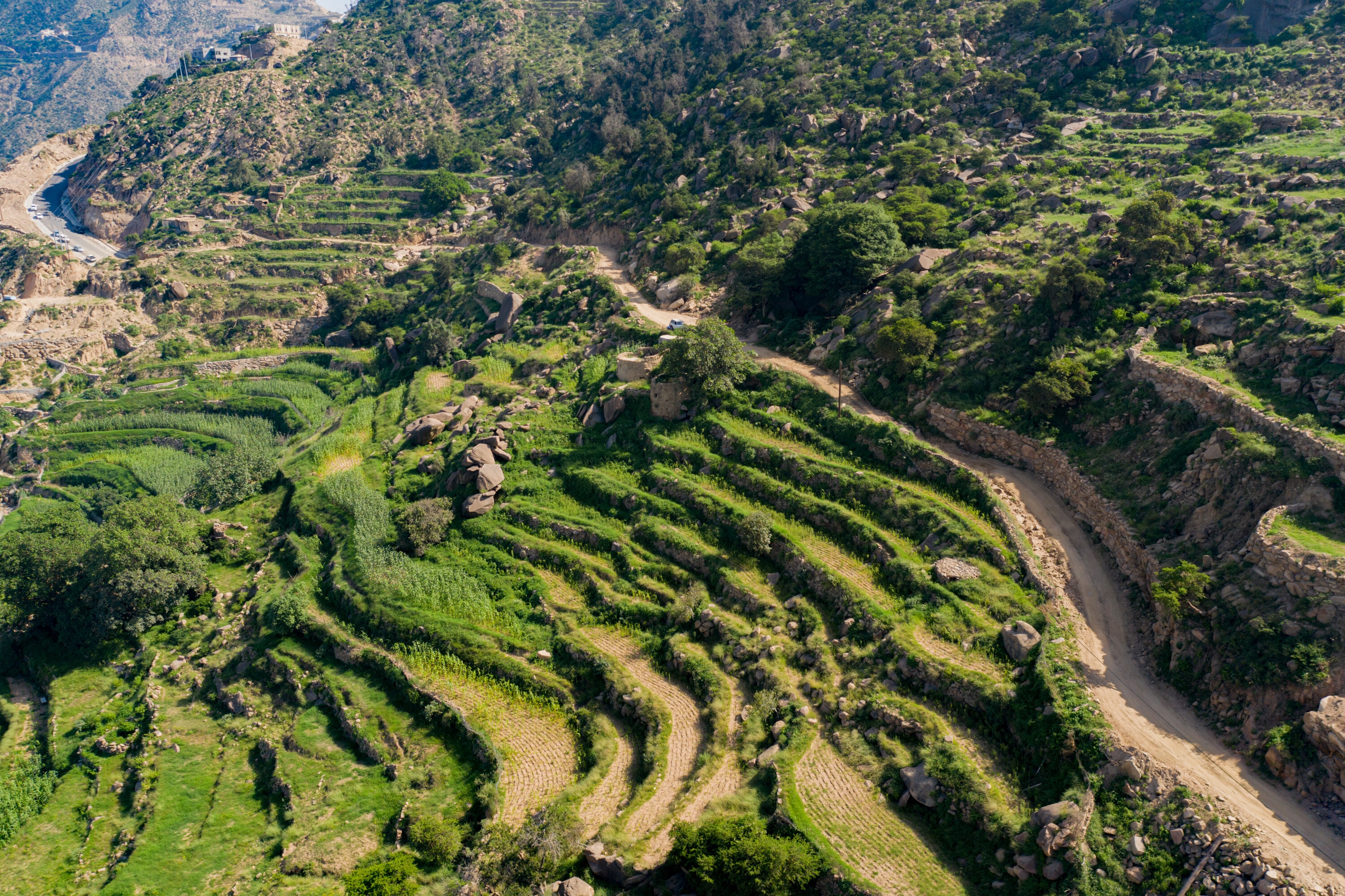
Saudi Arabia's Jazan region is home to a growing coffee industry that has been spurred on by development finance. Image: National Development Fund of Saudi Arabia
- As the global economy shifts, building competitiveness is a key priority.
- In Saudi Arabia, the state is building regional clusters to enhance the competitiveness of various industries.
- In the country’s Jazan province, for example, a growing coffee industry is emerging thanks to strategic development finance.
As the global economy evolves, bolstering competitiveness is one of the keyways economies and regions can sustain growth. That’s not always easy, but Saudi Arabia’s support for its growing coffee industry could offer lessons for others seeking to bolster competitiveness.
Enhancing regional competitiveness at a sub-national level involves focusing on a particular region's competitive advantage and taking measures to improve the performance of economic activities that align with it.
Through his research, Professor Alfred Marshall introduced the concept of economies of agglomeration, which refers to the idea that productivity increases when similar economic activities are clustered together in the same geographical area. Meanwhile, when economic activities are developed based on the region's competitive advantage, there is also greater potential to create additional sub-activities that serve the main economic activity. These dynamics provide the conceptual ground for understanding how targeted development finance can catalyze cluster formation and drive regional competitiveness.
Economic clusters are increasingly recognized as important drivers of economic growth and development. For instance, according to the World Economic Forum’s initiative on Transitioning Industrial Clusters, 40 clusters across different countries that contribute approximately $508 billion to global GDP and create or maintain 4.6 million jobs. Such clusters foster innovation, attract investment, and strengthen public-private partnerships, which demonstrate their strategic value for sustainable development.
Deploying strategic development finance
The National Development Fund (NDF) of Saudi Arabia serves as a development finance institution (DFI) that leads the coordination of 12 affiliated development funds and banks with the aim of maximizing their developmental impact. Each one of the 12 funds and banks has a particular focus on specific sectors, business activities and segments. Another important role of the NDF is the capacity to swiftly respond to development priorities.
Furthermore, coordinated development finance identifies financing needs and development priorities, usually including emerging sectors and underserved segments that private financing institutions and banks do not serve. The NDF, through its affiliated funds and banks, supports these sectors and segments, which in turn attracts more private investment and encourages more private financing institutions to participate, enabling multiple players to contribute to creating highly competitive sectors that advance various development agendas.
Coffee in Saudi Arabia: A case from Jazan Province
Enhancing regional development requires collective efforts from various actors, including integrating local competitive advantages with coordinated investments, finance and public-private partnerships. Enhancing regional competitiveness has many benefits, such as enhancing self-sufficiency, expanding export capacity and increasing the sectoral and regional contribution to GDP. Furthermore, it enhances competition and expands the use of innovative and digital solutions that support the creation of quality jobs and specialized firms.
In 2024, the Agricultural Development Fund, one of the NDF affiliates, supported coffee bean-related activities in production, manufacturing and marketing. The total funding reached SR 49.1 million ($13.09 million) as part of the Sustainable Agricultural Rural Development Program, marking a 54% increase in funding compared with the prior year. The Kingdom has over 2,500 coffee farms with over 400,000 trees, producing more than 800 tons of high-quality coffee beans annually. The goal is to increase the number of coffee trees to 1.2 million by 2026 particularly in the southwestern regions.
This is an illustrative example of how development finance can strengthen potential economic clusters in coffee farming in the country's southern regions, particularly in Jazan Province. By leveraging Jazan's competitive advantages in agriculture, this potential cluster is expected to directly contribute to local employment, improve productivity and enhance the region’s capacity to export high-quality coffee beans to global markets.
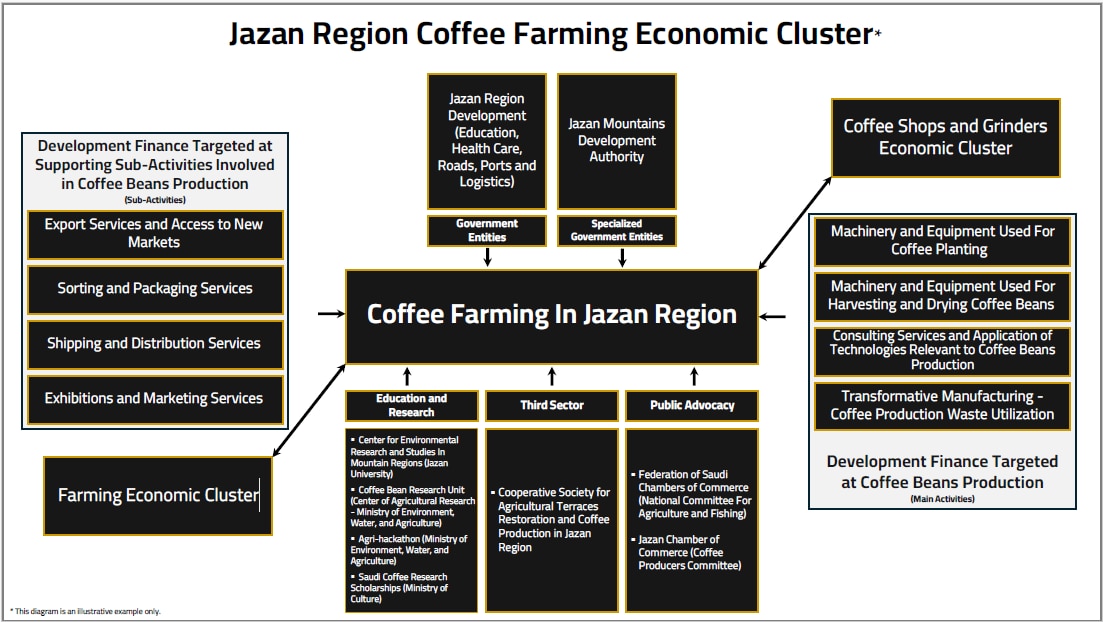
Development finance and Saudi Arabia's development goals
The NDF's strategic reach extends beyond agriculture to include various development priorities, including emerging sectors and activities. The NDF's coverage aligns with Vision 2030’s diversification objectives. Across the Kingdom, it supports emerging sectors including tourism in Aseer Province, olive farming and olive oil in AlJawf Province, advanced energy technologies in NEOM, and much more across all 13 Provinces of Saudi Arabia.
Through NDF-affiliated funds and banks such as the Saudi Industrial Development Fund and the National Infrastructure Fund, the NDF has participated in major strategic projects, including financing over SR 10.3 billion ($2.7 billion) for a green hydrogen plant in NEOM as part of a partnership with domestic and international banks. This is an example of how NDF contributes to different transformative projects and how development finance can drive sectoral diversification, innovation and sustainability.
Furthermore, the National Development Fund offers targeted development financing across various emerging sectors in the Kingdom, while also supporting specific beneficiary segments and specialized business activities. For example, the SME Bank offers a range of financing solutions to support SMEs across various sectors in the Kingdom. Another example is the Saudi Export-Import Bank, Saudi Exim Bank, which promotes the Saudi non-oil economy across sectors by facilitating access to global markets. The bank's mission is to support Saudi exporters by offering innovative products and services to bridge financing gaps and mitigate export risks.
Regional development finance efforts can support regional competitiveness and help create potential clusters across diverse sectors. As global economies seek diversification pathways and sustainable development, lessons from the Kingdom's institutional coordination, governance and de-risking investment efforts could help unlock the private sector's potential to help bridge the gap between development finance and national development priorities and requirements.
The National Development Fund, through its 12 affiliated development funds and banks, aims to continue uplifting emerging sectors and enabling them to thrive, becoming key contributors to national, regional, and sectoral competitiveness. This approach aligns with Vision 2030's broader objective of positioning Saudi Arabia as a leader in a high-value economy while enhancing living standards across all regions and segments.
Don't miss any update on this topic
Create a free account and access your personalized content collection with our latest publications and analyses.
License and Republishing
World Economic Forum articles may be republished in accordance with the Creative Commons Attribution-NonCommercial-NoDerivatives 4.0 International Public License, and in accordance with our Terms of Use.
The views expressed in this article are those of the author alone and not the World Economic Forum.
Stay up to date:
Development Finance
Related topics:


Forum Stories newsletter
Bringing you weekly curated insights and analysis on the global issues that matter.
More on Financial and Monetary SystemsSee all

Rebecca Geldard
August 12, 2026


