3 key factors that will define the next generation of data centres
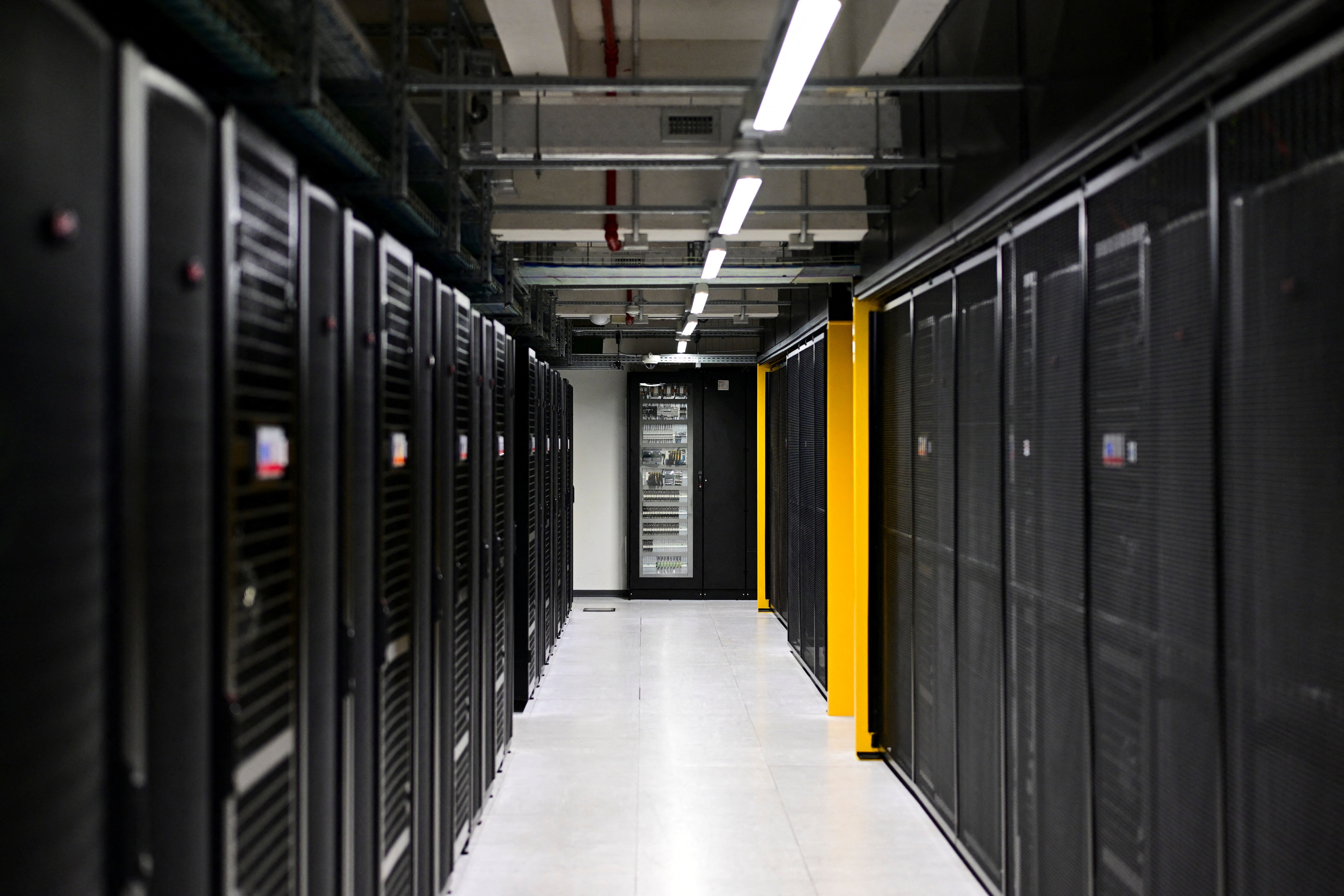
Climate risk is becoming a key consideration for data centre construction. Image: Reuters/Daniele Mascolo
- The rapid digitalization of the global economy has led to a surge in data centre construction, backed by investment into new facilities worldwide.
- When evaluating sites for a new data centre, climate risk is becoming a critical consideration alongside other factors such as power availability.
- The next phase of data centre construction will be defined by resilience, with climate risk, engineering decisions and community priorities all key.
The race to build data centres has become one of the defining infrastructure stories of our time. Driven by artificial intelligence (AI) and the rapid digitalization of the global economy, investment is pouring into new facilities around the world, with estimated $7.3 trillion expected to be invested globally in the digital infrastructure value chain by 2030, according to Aon data.
The conversation has largely centred around how quickly new capacity can be brought online. The United States alone currently has 37 GW of live data centre capacity, DC Byte data shows, representing greater than $500 billion in infrastructure, yet that footprint is only a fraction of what is coming.
More than 250 GW is already in the development pipeline in the US, representing nearly seven times today's operating capacity.
Digital infrastructure’s role in modern life
That level of growth reflects the increasingly central role digital infrastructure plays in modern life as it underpins economic activity, digital services and the continued expansion of AI.
As reliance on this infrastructure grows, so do the consequences of disruption, and the central question becomes: are we building data centres that can withstand the conditions they will face over the next several decades?
At this scale, resilience must be central to every conversation. The focus needs to expand beyond power availability, land and permitting to include climate risk, water availability, energy demand, increased cooling needs, insurability and community acceptance as determinants of long-term success.
Resilience here rests on three pillars: where you build, how you build and who you build alongside.
Site selection as a climate consideration
When organizations evaluate sites for a new data centre, climate risk is becoming a critical consideration alongside other vital factors such as power availability, connectivity, permitting and economic incentives.
Aon estimates that 17% of live data centre capacity in the US is in locations exposed to high risk of natural catastrophes. The drivers of this risk are familiar, taking into account earthquakes in California, wildfires across the US west coast and hurricanes in the country’s south-east, as well as select high-value locations adjacent to major rivers that are known to flood regularly.
In some cases, the markets that offer the strongest advantages for development also carry significant exposure to climate and catastrophe risks. Texas is a prime example. The state represents about 20% of total US data centre capacity, but accounts for almost 50% of capacity at high risk to natural catastrophes.
According to Aon data, projects in the development pipeline in Texas represent 18% of total US data centre capacity, DC Byte data shows, but account for almost 50% of capacity at high risk to natural catastrophes.
This risk does not mean these locations should be avoided, but that there is a level of vigilance now required for developers to understand how climate risk could shape the long-term performance of an asset.
Climate analytics and catastrophe modelling are increasingly helping organizations understand how a site's risk profile may evolve over time, enabling them to compare locations, identify vulnerabilities and make more informed investment decisions before construction begins. These assessments influence design and investment decisions, and ultimately long-term access to insurance capacity and financing.
The most resilient projects treat climate risk as a core input to site selection, instead of a challenge to address after a location has already been chosen.
Resilience starts before data centre construction
Choosing the right location is only part of the equation. Many of the decisions that shape a data centre's long-term performance are made before construction begins.
Campus layout, equipment placement and cooling system design all influence how a facility responds to future conditions. Those decisions are becoming increasingly important as developers plan for a climate that is changing almost as fast as the infrastructure itself.
Heat mitigation is a prime example. While catastrophic events dominate risk discussions, many of the most persistent challenges facing data centres are slower moving. Rising temperatures can increase cooling costs, strain infrastructure and, in extreme cases, force operators to reduce computing loads to prevent critical systems from overheating.
About 54% of data centres already operate in markets facing chronic heat or drought risk, with 79% exposed to significant acute hazards such as flood, wind or wildfire.
This is worth a deeper look simply because heat risk rarely exists in isolation. In many regions, higher temperatures coincide with growing pressure on water resources, just as cooling demands are increasing.
The challenge extends beyond keeping facilities operational. It means ensuring that they can continue to operate efficiently while placing less strain on already-stressed local resources.
For decades, resilience planning has largely focused on recovering from catastrophic events. That remains essential, but leaders must also prepare for gradual shifts that can affect performance year after year.
Rising temperatures, changing water availability and other chronic climate stresses may be less visible than a hurricane or wildfire, but their impact can be just as consequential over the life of an asset.
The facilities that endure will be the ones designed for the realities of a hotter world.
Resilience requires community trust
Community acceptance belongs in the same resilience conversation as natural catastrophe exposure and design decisions. A data centre that is physically resilient but fails to account for stakeholder concerns is not, ultimately, a resilient investment.
As a result, developers and investors who are planning for the realities of a changing climate should be considering stakeholder engagement as an equivalent risk mitigation tactic.
As digital infrastructure campuses become larger, more resource-intensive and more visible, questions around energy demand, water use and local infrastructure often arise, and often long before construction breaks ground.
These concerns do not necessarily represent opposition to development. More often, they reflect a desire to understand how growth will affect local communities and resources.
The most successful projects are likely to be those that engage local governments, utilities and community stakeholders early, before key decisions are finalized. Doing so can help surface potential concerns, inform planning decisions and build confidence that projects are being developed with long-term community needs in mind.
Just as climate resilience is strongest when considered at the outset, community resilience is strongest when stakeholders have a seat at the table from the beginning.
In that sense, resilience is much more than asset protection. It is ensuring that critical infrastructure can support economic growth while remaining aligned with the communities that host it.
Data centre growth will be defined by resilience
The first phase of data centre growth was defined by scale, but the next phase will be defined by resilience.
Climate risk, engineering decisions and community priorities increasingly shape the same outcome.
The organizations that succeed will be those that bring these considerations together from the earliest stages of data centre development.
Don't miss any update on this topic
Create a free account and access your personalized content collection with our latest publications and analyses.
License and Republishing
World Economic Forum articles may be republished in accordance with the Creative Commons Attribution-NonCommercial-NoDerivatives 4.0 International Public License, and in accordance with our Terms of Use.
The views expressed in this article are those of the author alone and not the World Economic Forum.
Stay up to date:
Built Environment and Infrastructure


Forum Stories newsletter
Bringing you weekly curated insights and analysis on the global issues that matter.
More on Artificial IntelligenceSee all

Ben Colman
October 8, 2026


