What a Nigerian masquerade can teach the creative economy about keeping culture alive
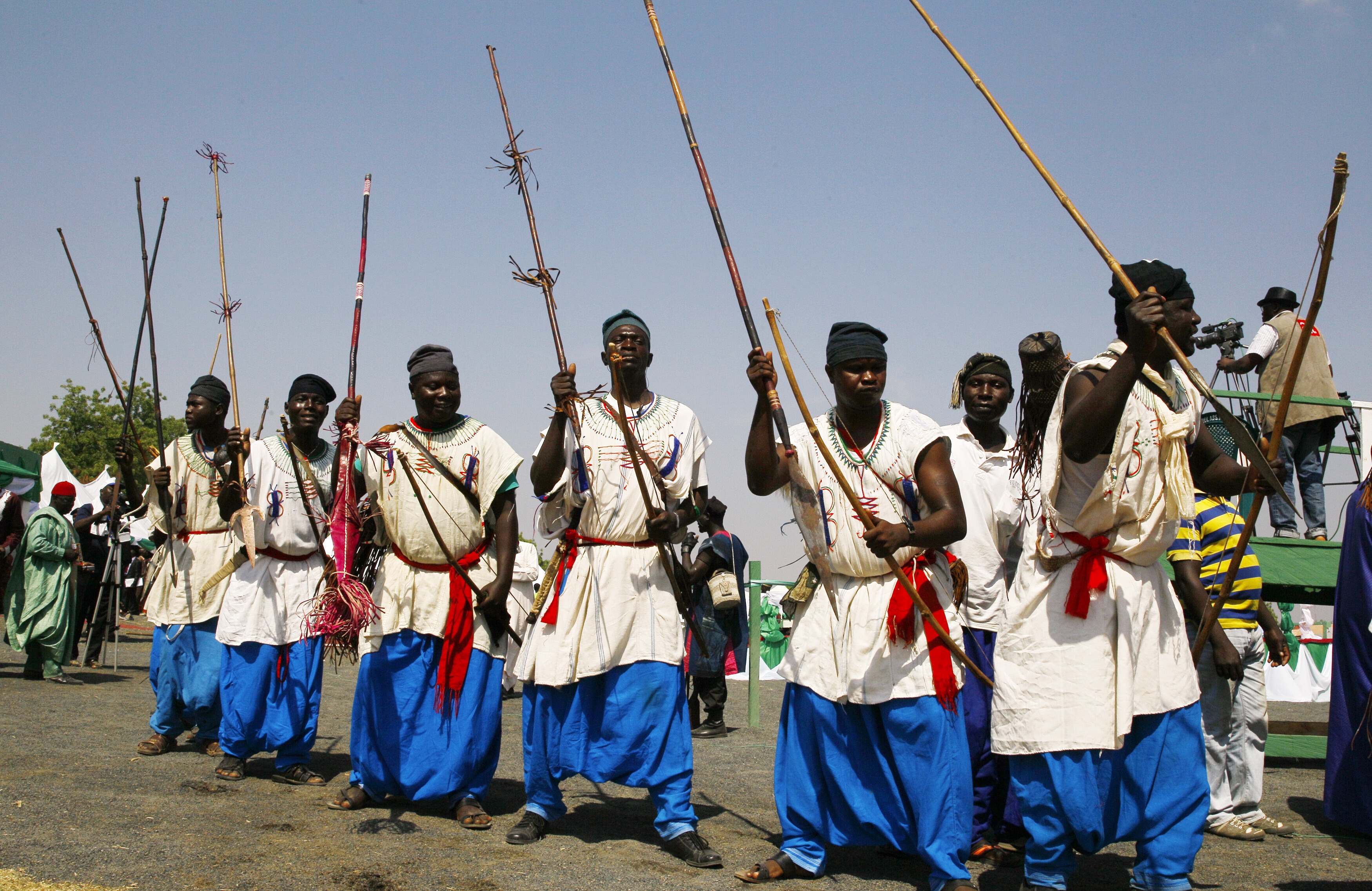
A UNESCO-recognized cultural festival in Nigeria holds lessons on the importance and opportunity of preserving and building out the cultural economy. (Stock image not representative of the Ijele) Image: REUTERS/Afolabi Sotunde
- Cultural and creative industries already account for around 3.1% of global GDP and nearly 50 million jobs. In Africa, culture could add $20 billion and 20 million jobs.
- Nigeria's Ijele masquerade takes 100 people six months to build and performs just a single afternoon – yet much of the economic activity it generates never reaches a national accounts spreadsheet.
- Living heritage drives a real economy - but only the makers who build it can keep it alive. Right now, almost none of them get paid.
When the Ijele masquerade enters the square in Onitsha, a bustling city in Anambra State in south-eastern Nigeria, every other masquerade falls silent. It stands approximately four metres tall. A python, eke, coils across its middle, dividing the upper tier, mkpu ijele, from the lower, akpakwuru, and its body is crowded with small figures: warriors, elders, the occasional animal. It appears during the dry season to evoke fertility and a good harvest, and it commands the arena as the acknowledged “king of masquerades”.
According to UNESCO, the Ijele takes a hundred people six months to build, and it performs for a single afternoon. Then it is dismantled. Nothing about it is made to last. And yet, it has outlasted empires.
In 2009, UNESCO inscribed Ijele on its list of intangible cultural heritage, naming the real risk; not the loss of an object, but the loss of the people who carry the knowledge. That paradox is the point. Ijele survives precisely because it lives in skill rather than in stone, in a lineage of makers traced to Umudiana in Umueri who first performed it for neighbouring towns. Ijele is brought to life by a system of carvers, weavers, drummers and the apprenticeships that bind them, and it disappears the moment that system stops being practised.
This matters now because the economics are no longer marginal. Cultural and creative industries already account for around 3.1% of global GDP and nearly 50 million jobs. In Africa the trajectory is even steeper: UNESCO and Afreximbank estimate the continent's creative industries could create more than 20 million jobs and add $20 billion to GDP, and its film sector alone already employs around five million people. Afrobeats listenership grew 550% in six years. However, living heritage is the under-counted half of this same economy.
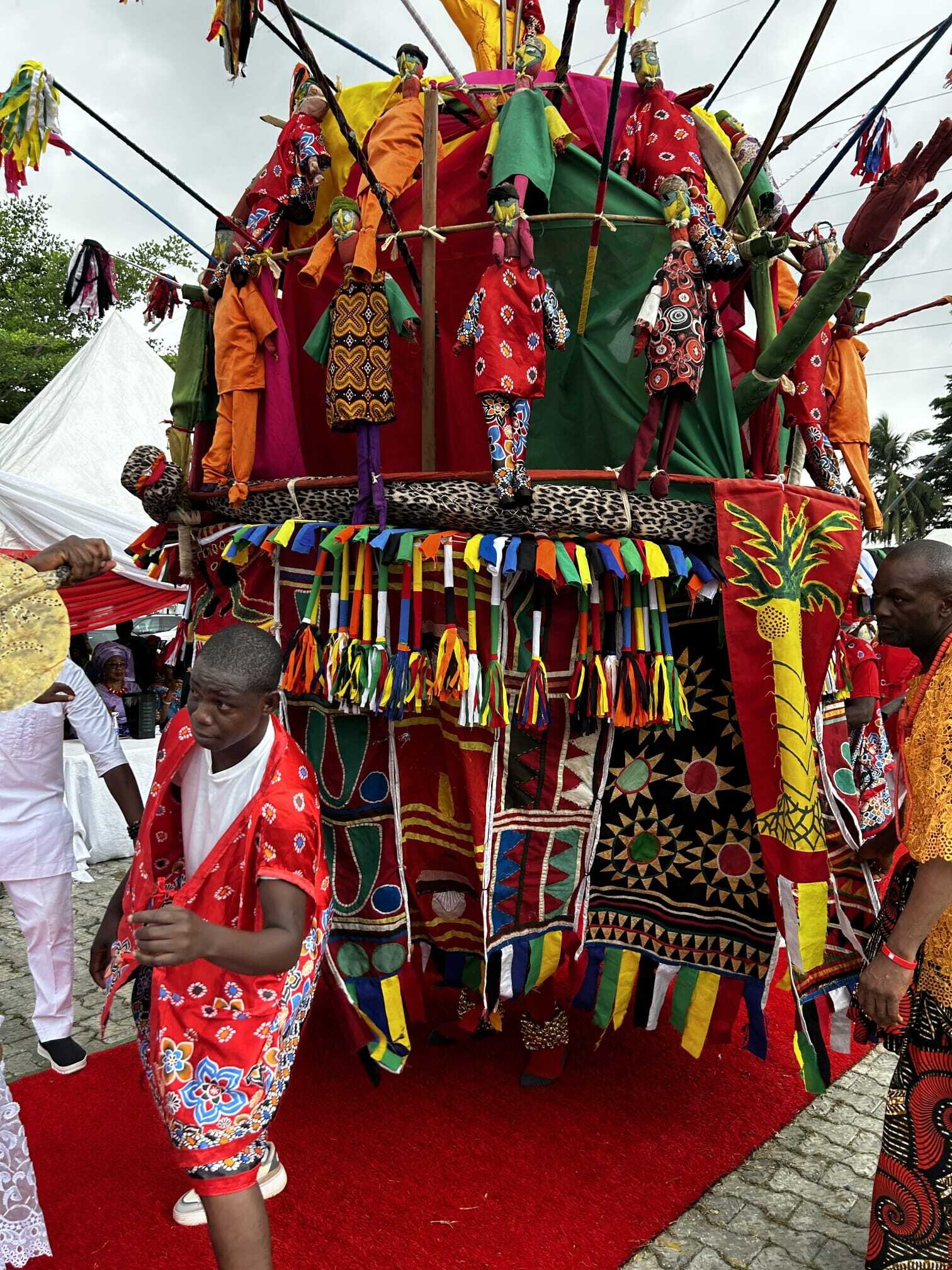
What Nigeria's Ijele can teach us about preserving culture
A single Ijele outing shows how tightly culture and economics are bound together. The costume is not and cannot be bought. Rather, it is commissioned; a community-funded project that puts master woodcarvers and cane-weavers to work on the frame, textile artists and embroiderers on months of beadwork and brocade, and blacksmiths on the mirrors and bells fixed across the upper tier. Drummers and Akunechenyi musicians – who make the sacred namesake music of Ijele - are paid to perform. When Ijele dances, patrons customarily spray money onto its attendants, capital that is often pooled toward community projects. The outing draws crowds to host towns such as Onitsha and Aguleri, with the lodging and trade that follow; researchers studying Anambra State now describe this masquerade-driven tourism as a development engine in its own right. Much of this activity never reaches a national accounts spreadsheet, and it is too often overlooked in creative-economy strategy. Crucially, what is not measured is rarely funded.
This is where contemporary artists come in - not as saviours but as channels. Hervé Youmbi, for example, in his series Visages de Masques, makes masks with the consent of Ku'ngang society leaders in the Nigerian Grassfields. The masks are danced in ritual and then enter museum collections, and the carvers, beaders and ritual specialists he works with are supported in the process. His work has been acquired by institutions including the New Orleans Museum of Art, whose 2025 exhibition, New African Masquerades, placed his work beside that of Sierra Leone's Sheku Fofanah and Burkina Faso's David Sanou, masquerade-makers whose costumes likewise move between society performance and the gallery. Artist Refik Anadol has built a similar collaboration with the Yawanawá people of Brazil. Different continents, same principle: cultural value can generate income for the tradition-bearers.
I work inside one of these traditions myself, as a painter documenting Igbo masquerades on canvas. It has taught me what a painting can hold that a photograph cannot. It has also taught me the limits of what any single artist can do. Documentation is not transmission; a canvas can record a tradition, but only people can carry it forward.
Because the obvious objection is real. A gallery can strip a sacred practice of its context, turning a living rite into a decorative asset, and a UNESCO listing is not a livelihood. Ijele has carried its safeguarding status for seventeen years but the title alone has not paid the hundred people whose labour built it. If contemporary art is to help rather than extract, it cannot mean auction prices in London while the apprenticeship in Anambra quietly closes. The Youmbi model is instructive precisely because it begins with consent and routes money back to the makers. That is the difference between safeguarding and souvenir.
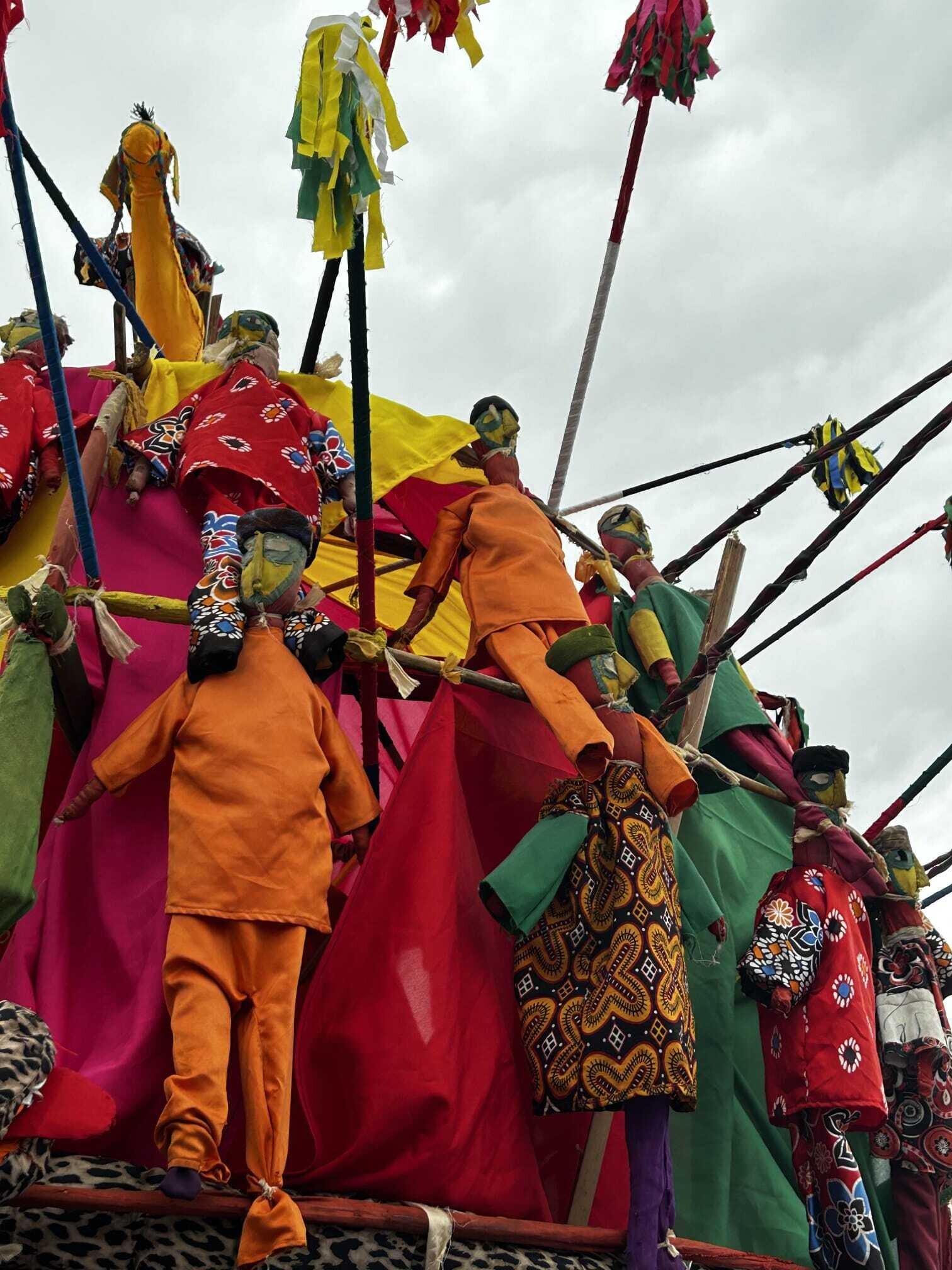
3 lessons for the cultural economy
So, what would it take to fund the system rather than just admire the spectacle? Three concrete, testable measures.
1. Commissioning rules: festivals, museums and tourism boards that draw on living heritage could be required to commission directly from recognised tradition-bearers, paying for the skill rather than acquiring only the finished object.
2. Apprenticeship grants tied to nationally listed or UNESCO-recognised practices, so that teaching the next generation of carvers, weavers and drummers is funded as deliberately as a digital-skills programme.
3. Tax incentives for private-sector and diaspora patrons who already sponsor cultural outings, turning informal generosity into a reliable revenue stream. The Forum's own Crystal Award tradition of honouring artist-builders such as Diébédo Francis Kéré shows the appetite is there but what’s missing is the plumbing.
The timing is right. UNESCO's safeguarding committee meets again in December, and creative-economy strategy is live across the continent. Ijele itself makes the closing argument. Its costume has always absorbed the new, stitching aeroplanes and policemen beside ancestral pythons, showing that tradition and innovation were never opposites here. A culture that adapts is a culture that employs, and the most innovative thing any heritage can do is stay alive.
Don't miss any update on this topic
Create a free account and access your personalized content collection with our latest publications and analyses.
License and Republishing
World Economic Forum articles may be republished in accordance with the Creative Commons Attribution-NonCommercial-NoDerivatives 4.0 International Public License, and in accordance with our Terms of Use.
The views expressed in this article are those of the author alone and not the World Economic Forum.
Stay up to date:
Circular Economy
Related topics:


Forum Stories newsletter
Bringing you weekly curated insights and analysis on the global issues that matter.
More on Arts and CultureSee all

Maximiliano Frey
August 4, 2026


