
We can make sure Globalization 4.0 leaves no one behind. This is how
As governments retreat from global commitments, the private sector and NGOs have to step up. Here's how they can do it.
Børge Brende is President and CEO of the World Economic Forum. Previously he was the Norwegian Minister of Foreign Affairs, Minister of Trade and Industry, and Minister of Climate and the Environment. He served as Deputy Chairman of the Norwegian Conservative Party as well as MP. He was also full-time city counsellor in his hometown of Trondheim. He was Chairman of the UN Commission on Sustainable Development and Secretary-General of the Norwegian Red Cross. He was Board Member of Statoil and the Norwegian School of Economics. He was the Chair of Mesta, Norway’s largest contracting group in road and highway maintenance. He was a Director of the Philanthropy Asia Alliance. He is currently a Member of the Advisory Board of the Hoffman Centre for Global Sustainability, a Member of the Advisory Council, Harvard International Negotiation Program, the China Council for International Cooperation on Environment and Development (CCICED), the Strategic Committee of Sciences Po, and is on the Board of the Bilderberg Meetings.
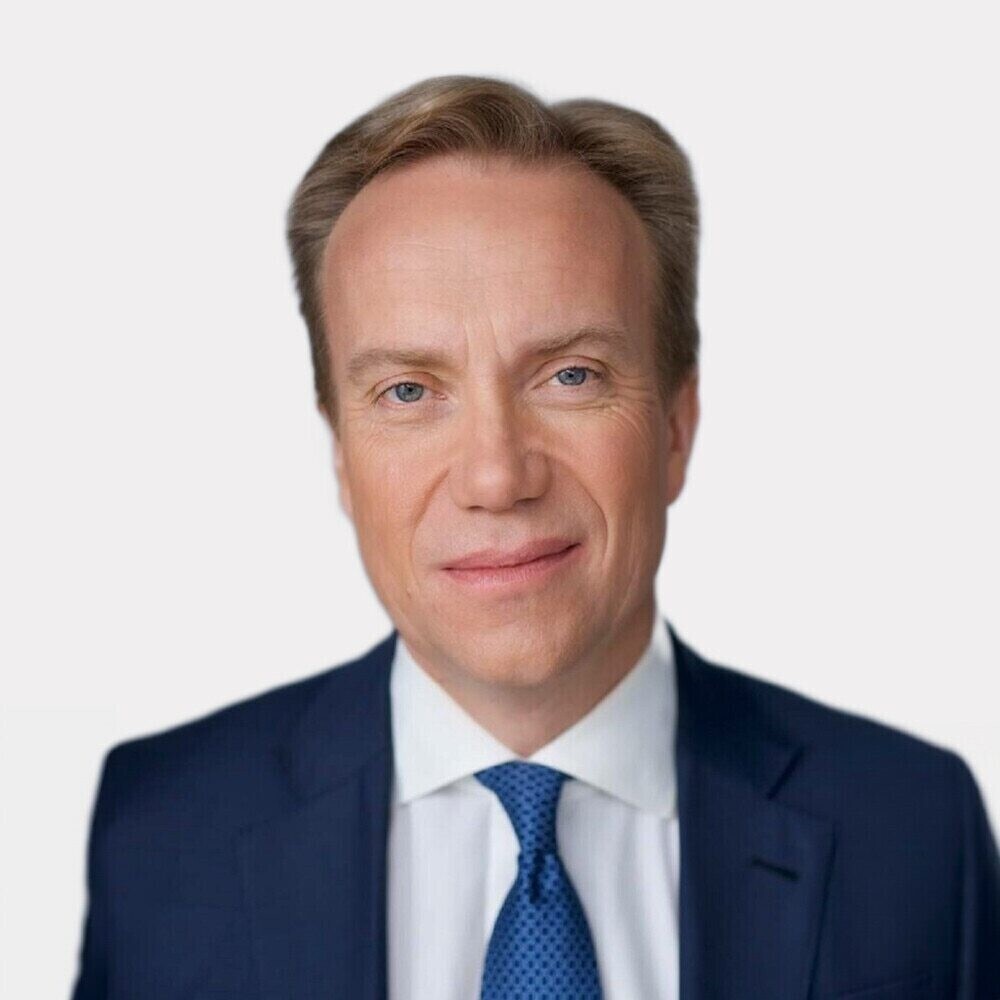
Former: Minister, Norwegian Foreign Affairs, Trade and Industry, Environment; Deputy Chairman, Norwegian Conservative Party; Member, Norwegian Parliament; Member, Standing Committee on Finance and Economic Affairs and Deputy Chairman, Standing Committee on Energy and Environment; Chairman, UN Commission on Sustainable Development; Secretary-General, Norwegian Red Cross; International Vice-Chairman, China Council for Int'l Cooperation on Environment and Development; Board Chairman, Mesta; Board Member, Statoil; Board Member, Norwegian School of Economics and Partnership for Maternal, Newborn & Child Health, WHO; Board Director, Technology for Ocean Foundation, Centre for the Fourth Industrial Revolution, Ocean; Managing Director, World Economic Forum. Political Adviser to Conservative Party Chairman; Chairman, Young Conservatives; CFO, KB Entreprenør; Director, Philanthropy Asia Alliance. Since 2017, President and CEO, World Economic Forum. Member: Board, China Council for International Cooperation on Environment and Development Phase VII; Strategic Committee, Paris School of Int’l Affairs, Sciences Po; UN High-level Advisory Group for Every Woman Every Child; Municipal Executive Board, Trondheim; Advisory Board of the Hoffman Centre for Global Sustainability; Core Advisory Council, Harvard Int’l Negotiation Program; Steering Committee, Bilderberg Meetings; Board of Directors, Partnering for Green Growth and Global Goals 2030. BA, Norwegian Univ. of Science and Tech.
As governments retreat from global commitments, the private sector and NGOs have to step up. Here's how they can do it.
The Fourth Industrial Revolution presents a tremendous opportunity for India to bypass traditional phases of development and improve the quality of life of its citizens.
ASEAN has important decisions to make about its role in regional affairs. If it make the right ones, the bloc can turn disruption into an opportunity.
With more than 50% of its population under the age of 27, India will play a pivotal role in shaping the Fourth Industrial Revolution in a responsible, scalable and inclusive manner.


