

Health and Healthcare Systems
COVID-19 is increasing multiple kinds of inequality. Here’s what we can do about it
As well as a public health crisis, the COVID-19 pandemic has had a devastating impact on poverty levels and inequality.
Dr. Robert Muggah is a political economist focused on geopolitical risk, smart cities, digital safety and security, and climate tech and adaptation. He cofounded the Igarapé Institute, an award-winning think and do tank devoted to leveraging new technologies to tackle global challenges in 2010 . He’s also the co-founder and principal of SecDev Group, a cybersecurity and digital risk firm. He advises senior leadership in government and the private sector in Latin America, Eurasia, South Asia and Africa.
For two decades Robert has provided strategic advisory services to global energy and tech companies (Bytedance, Google, Meta), McKinsey’s, UN agencies, the IADB, IMF, and the World Bank. He is a non-resident fellow at Singularity University, Princeton University, the Graduate Institute in Geneva, the Chicago Council for Global Affairs, Bosch Foundation, and the Canadian Global Affairs Institute.
At WEF, Robert served three terms on the Global Agenda Council on the Future of Cities and Councils devoted to humanitarian action and conflict prevention. He is an advisor to the Global Risk Report (2018-present). Robert is also a fellow with the Global Initiative Against Transnational Organized Crime; Know Violence in Childhood Initiative, and Co-Chair of the Lancet Commission on Violence.
Robert provides keynote talks in a wide range of international audiences, including TED talks on fragile and resilient cities in 2019, 2017 and 2015. In 2023 he coordinated a TEDx event in the Amazon, bringing together over 50 speakers and 1,000 participants, including from all 8 countries in the region.
Robert is involved in a number of start-ups and is working on issues of AI governance. He is a co-founder of Bioverse, a forest data inventory company that leverages remote sensing and fixed wing drones to assess biodiversity abundance. He is also supporting SuperNature, a regenerative urban design studio that reimagines the future of cities. With support from GIF, Robert recently set-up a global task force on AI ethics and safety in 2022 which includes representatives from the Americas, Europe, Africa and South and Southeast Asia.
An avid map collector, Robert creates data visualizations and predictive analytics on homicide, arms, and cities, all of which have been featured by the BBC, CBC, CNN, FastCompany, Financial Times, Foreign Affairs, New York Times, Washington Post. and Wired. A columnist at Foreign Policy, he is the author of eight books, dozens of articles, most recently Terra Incognita: 100 Maps to Survive the next 100 Years (Penguin/Random House).
Robert has a PhD from the University of Oxford.
As well as a public health crisis, the COVID-19 pandemic has had a devastating impact on poverty levels and inequality.

The digital economy can drive our recovery from the pandemic, but governments need to start ensuring it is sustainable and equitable – starting today.

La pandemia de COVID-19 ha caído con más fuerza no sólo en las ciudades sino en los barrios más pobres y superpoblados. Pero, la inclusión puede fomentar poblaciones más sanas.

The COVID-19 pandemic has fallen hardest not just on cities but on poorer, overcrowded neighborhoods. But, inclusivity can foster healthier populations.

Deforestation is rising across the Amazon – and 90% of it is illegal. A huge collective effort is needed to prevent the region reaching a tipping point.
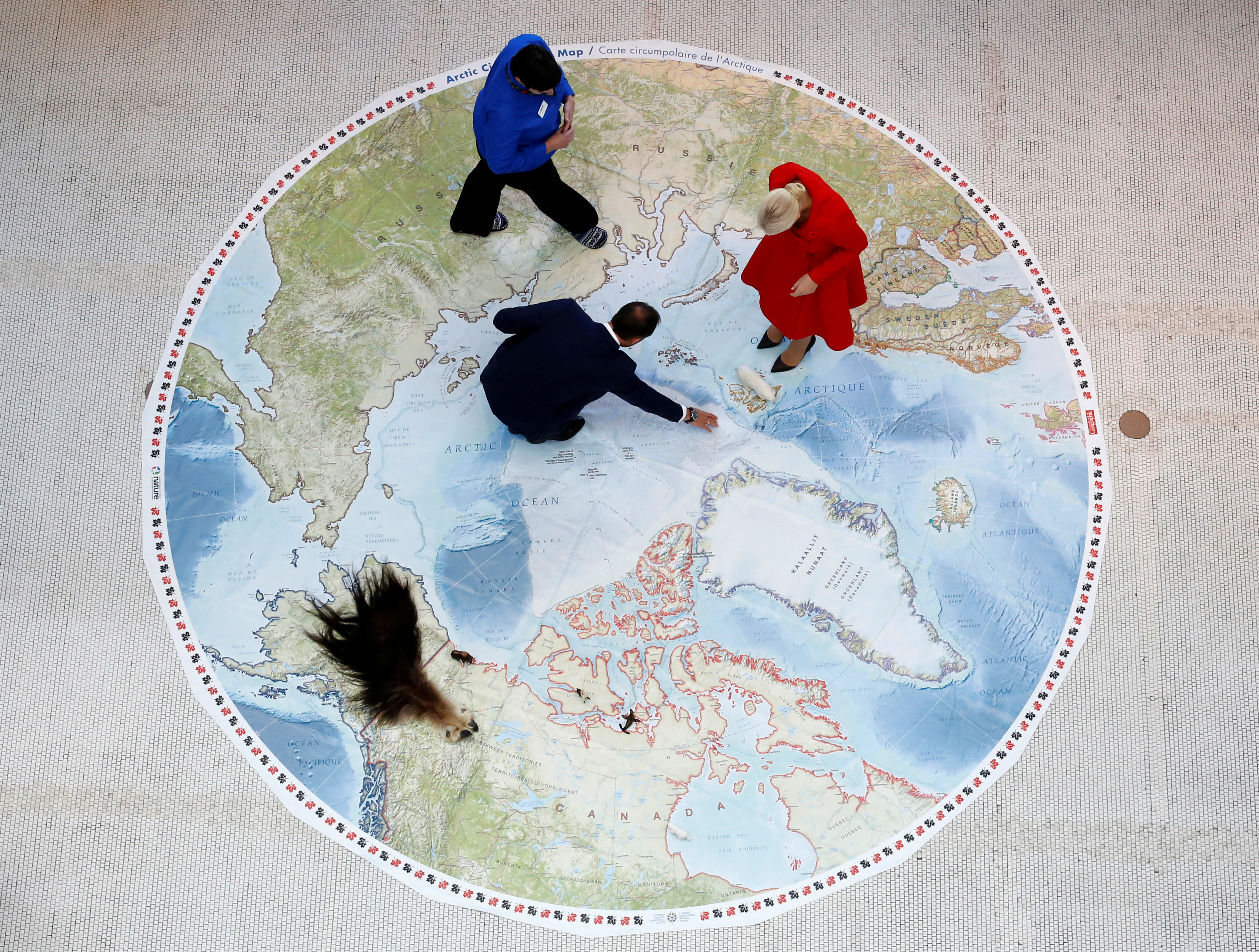
How maps have shaped our understanding and response to the COVID-19 pandemic and the mapping technology we need to prepare for future pandemics and crises

High densities, overcrowded homes and a lack of basic services are among the factors that make the world's poorest cities the most vulnerable to COVID-19.

Cities in developing countries face particular challenges in the battle against COVID-19. Investment in primary healthcare is the best way to overcome them

During this pandemic, the leadership demonstrated by city mayors and the skills and resourcefulness of migrants are showing international leaders the way.

COVID-19 is tipping the world into a dangerously volatile new era. Here are five steps global leaders should take to head off emerging security threats.

Nous devons réfléchir aux raisons pour lesquelles la communauté internationale n’était pas préparée à une épidémie si inévitable.

An up-to-date dashboard that tracks the capacity of cities to manage pandemics could hel.p build safer urban centres

In virtually every city, the vast majority of violent crime is concentrated in just a few neighbourhoods. Inequality in all forms is a huge contributing factor.

As many nations fail to do enough on problems such as climate change, city authorities around the world are stepping up.

Even the world's greenest cities are at risk of massive climate disruption – but all cities can prepare if they focus on local self-sufficiency, adaptability and resilience.


