

Economic Growth
Building an anticipatory governance strategy for an increasingly risky world
Anticipatory governance helps organizations anticipate crises, rather than simply react to them. It could be a crucial tool in increasingly volatile times.
Dr. Robert Muggah is a political economist focused on geopolitical risk, smart cities, digital safety and security, and climate tech and adaptation. He cofounded the Igarapé Institute, an award-winning think and do tank devoted to leveraging new technologies to tackle global challenges in 2010 . He’s also the co-founder and principal of SecDev Group, a cybersecurity and digital risk firm. He advises senior leadership in government and the private sector in Latin America, Eurasia, South Asia and Africa.
For two decades Robert has provided strategic advisory services to global energy and tech companies (Bytedance, Google, Meta), McKinsey’s, UN agencies, the IADB, IMF, and the World Bank. He is a non-resident fellow at Singularity University, Princeton University, the Graduate Institute in Geneva, the Chicago Council for Global Affairs, Bosch Foundation, and the Canadian Global Affairs Institute.
At WEF, Robert served three terms on the Global Agenda Council on the Future of Cities and Councils devoted to humanitarian action and conflict prevention. He is an advisor to the Global Risk Report (2018-present). Robert is also a fellow with the Global Initiative Against Transnational Organized Crime; Know Violence in Childhood Initiative, and Co-Chair of the Lancet Commission on Violence.
Robert provides keynote talks in a wide range of international audiences, including TED talks on fragile and resilient cities in 2019, 2017 and 2015. In 2023 he coordinated a TEDx event in the Amazon, bringing together over 50 speakers and 1,000 participants, including from all 8 countries in the region.
Robert is involved in a number of start-ups and is working on issues of AI governance. He is a co-founder of Bioverse, a forest data inventory company that leverages remote sensing and fixed wing drones to assess biodiversity abundance. He is also supporting SuperNature, a regenerative urban design studio that reimagines the future of cities. With support from GIF, Robert recently set-up a global task force on AI ethics and safety in 2022 which includes representatives from the Americas, Europe, Africa and South and Southeast Asia.
An avid map collector, Robert creates data visualizations and predictive analytics on homicide, arms, and cities, all of which have been featured by the BBC, CBC, CNN, FastCompany, Financial Times, Foreign Affairs, New York Times, Washington Post. and Wired. A columnist at Foreign Policy, he is the author of eight books, dozens of articles, most recently Terra Incognita: 100 Maps to Survive the next 100 Years (Penguin/Random House).
Robert has a PhD from the University of Oxford.
Anticipatory governance helps organizations anticipate crises, rather than simply react to them. It could be a crucial tool in increasingly volatile times.

Roughly 2 billion people live in war-affected countries. Conflict ranks as the greatest danger facing the world according to the 2025 Global Risks Report.

Rising militarization, cyber warfare, and economic realignments are heightening geopolitical tensions. To stop global fragmentation, we must focus on cooperation.

到2025年,网络犯罪所带来的经济损失每年可能达到10.5万亿美元。网络犯罪的目标包括个人、政府以及关键基础设施。网络犯罪者的活动跨越国界,因此我们也需要通过制定国际规则来打击网络犯罪。

El coste de la ciberdelincuencia podría ascender a 10,5 billones de dólares anuales en 2025. Los ciberdelincuentes tienen alcance internacional y necesitamos un enfoque global para hacerl...

The cost of cybercrime could be $10.5 trillion annually by 2025. Cybercriminals have an international reach, and we need a global approach to tackling them.

Overheating cities face stark climate change impacts, especially in the second most urbanized region in the world - Latin America. But these cities are fighting back and sharing some of t...

Governments, businesses and multilaterals are being forced by the new global systemic risk environment to re-evaluate risk in fundamentally new ways.

COVID-19 has compounded pre-existing inequalities in cities. Interactive maps can provide situational awareness to help support vulnerable populations.

Most people are unaware of how much data they are voluntarily sharing. That's why we need a global approach to tackle cyber security and data protection.

Following key principles of digital risk management will separate those companies that will thrive in the digital age from those that will not.

COVID-19 exposed vulnerabilities and deep-rooted inequalities in cities, but with careful planning and investment they can become the new sustainability hubs.

We need to do globalization differently, or else deglobalization will take hold. This will ruin the world's chances at solving critical global challenges as a united front.
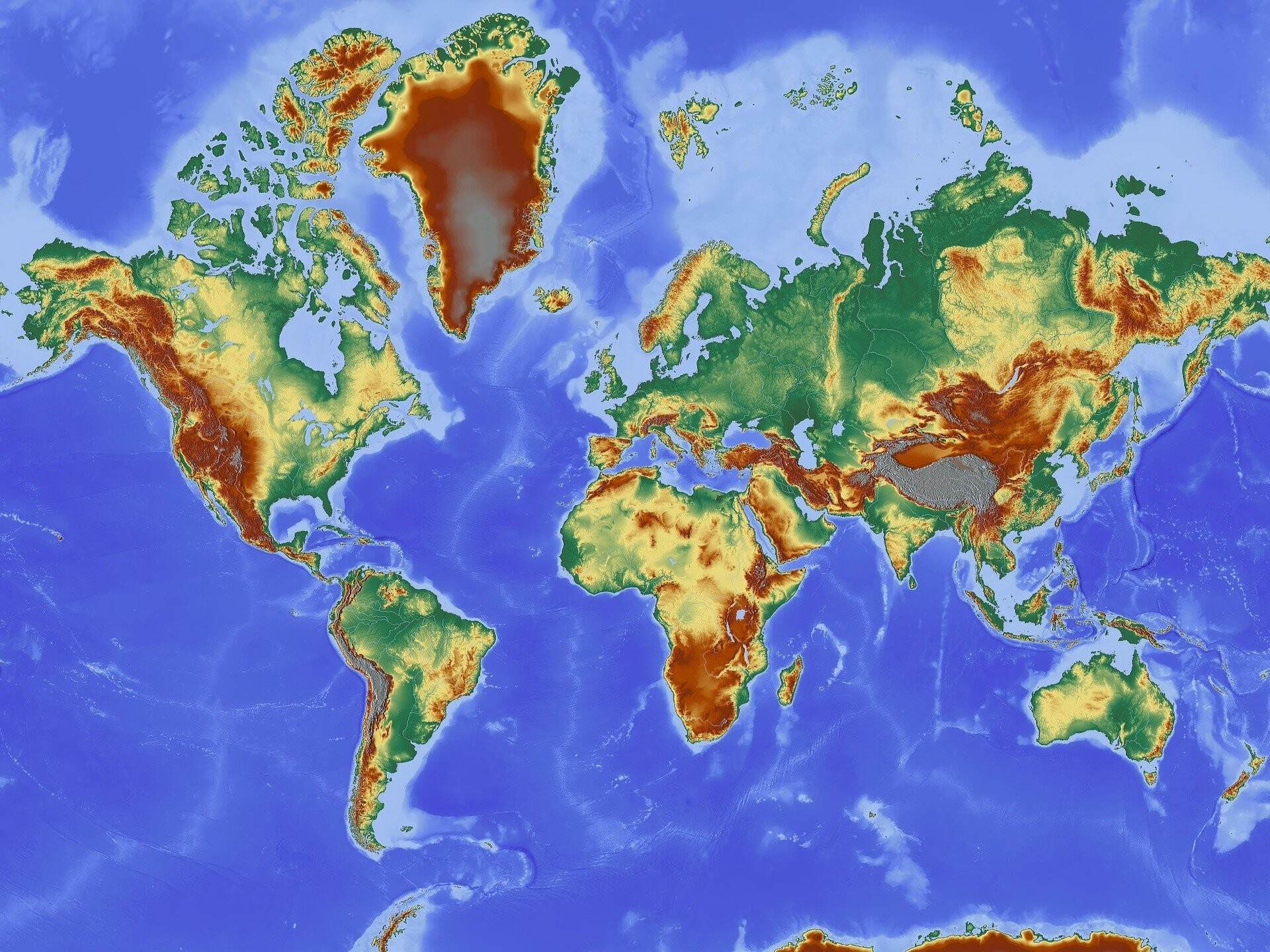
From life expectancy to climate change, maps show human progress and highlight where inequalities still exist. Here's how we can use what they teach us.

デジタル経済の時代がついに到来しました。1990年代半ば、テクノロジーマニアは、インターネットやスーパーコンピューターの急速な普及によって、新たな効率性、イノベーション、規模の経済性が生まれると予測しました。しかし、ドットコムバブル(ITバブル)が崩壊し、それと同時に電子ビジネスや電子商取引において期待された革命は、勢いを失ってしまいました。しかし、それ以来、世界のデジタ...


