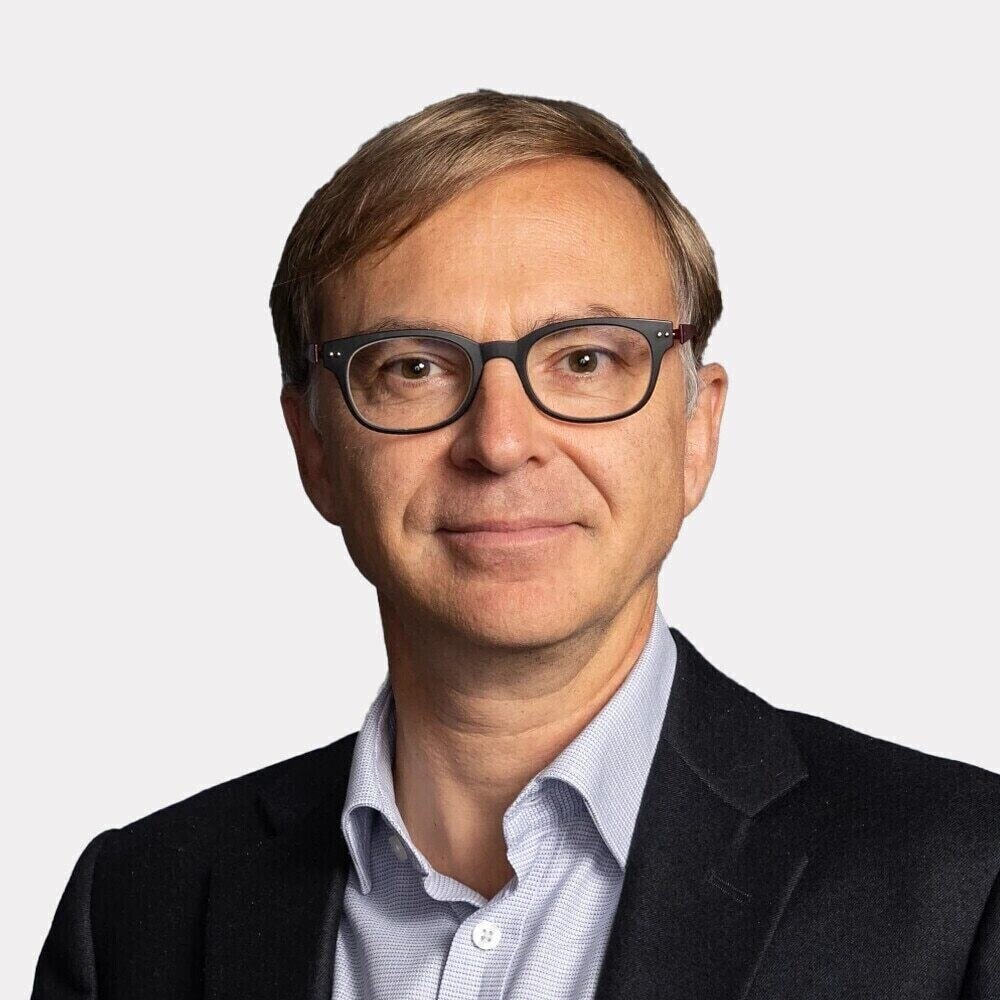
Roberto directs a dynamic team focused on advancing high-impact collaboration among industry, government, and civil society to accelerate the energy and materials transitions at national, regional and global levels. Under his leadership, the Centre works to bring together leaders from companies and countries to create insights, shape solutions, and drive action toward a secure, sustainable, and equitable energy system that supports economic and social development. Roberto engages stakeholders across oil and gas, utilities, energy technology, mining and metals, chemicals, and infrastructure to address shared challenges and opportunities.
The activity led by Roberto spans a broad range of critical topics, including transitioning industrial clusters, securing critical minerals, enabling responsible renewable deployment, advancing clean fuels, transforming power systems, and mobilizing finance for clean energy. He also leads strategic initiatives that provide fact-based insights and benchmarking to support decision-making during this period of industrial transformation.
In addition to his role as Head of the Centre for Energy and Materials, Roberto also leads the Content and Programming team at the Forum’s Beijing office. In this capacity, he bridges the work of the Centres and ensures that Forum initiatives are curated and deployed in China across four main thematic areas: Health, Wealth and Security; Nature and Climate; Economy, Trade and Jobs; and Industrial Transformation. He drives strategic engagement with government, business and media, and forges partnerships with academia, thought leaders and innovators to bring foresight and insight to Forum stakeholders in the region.
Before joining the Forum in 2009, Roberto was at BP for 14 years, most recently as Director, Emerging Consumer Markets in BP Alternative Energy, with previous responsibilities in Strategy, Business Development, Supply and Trading, Sales, Marketing, in multiple postings (France, UK, Poland, India, South Africa, China, Viet Nam). Before BP, Roberto worked at Telecom Italia and Unifarma. He holds a degree in Business and Economics from the University of Turin in Italy.