Why healthcare systems need pathways, not just pilots
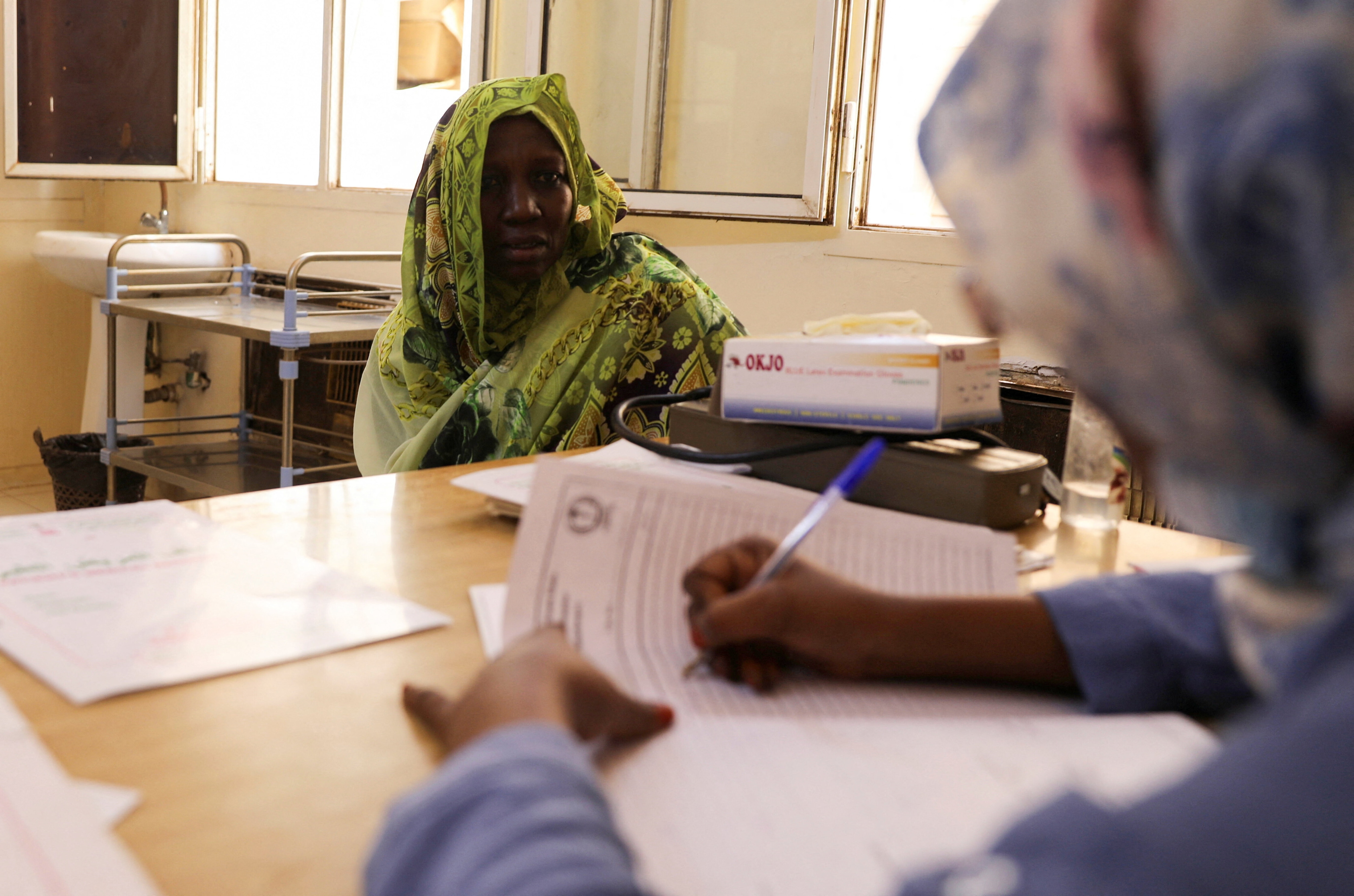
Healthcare systems globally need to focus on moving patients through treatment pathways as well as getting them through the door in the first place. Image: REUTERS/El Tayeb Siddig
- For a growing number of people, the key healthcare issue is no longer access, but whether the system can carry them through care once they enter it.
- Non-communicable diseases, for example, killed at least 43 million people in 2021, yet most require continuous care rather than a single intervention.
- Technology and pilots can prove that interventions work, but outcomes depend on what happens after the first encounter.
In healthcare, first-step success is not system success. A positive test result is not the same as treatment. A referral is not the same as care. A pilot that works in one clinic is not the same as a health system that works for everyone.
While a pilot can show that an intervention works in a controlled setting, a pathway shows whether people can move from the first signal of risk to diagnosis, treatment, follow-up and financial protection without being lost along the way. Success is the difference between proving that something can work and making sure that it works routinely for the people who need it most.
This matters now because the pressure on health systems is rising while progress is slowing. The World Health Organization says progress towards universal health coverage has slowed since 2015. In 2023, about 4.6 billion people were still not fully covered by essential health services, and in 2022, 2.1 billion faced financial hardship from out-of-pocket spending. The question is no longer only whether people can enter the system. It is whether the system can carry them through care once they do.
The Lancet Global Health Commission on high-quality health systems made the broader point clearly: access alone is not enough if care is delayed, fragmented or ineffective. Health systems can expand screening, roll out new tools and count more first contacts, but outcomes depend on what happens after the first encounter. A result has to trigger action. A referral has to lead somewhere. Treatment has to be sustained long enough to matter.
The real bottleneck is what happens next
Non-communicable diseases show why this is urgent. They killed at least 43 million people in 2021, equivalent to 75% of non-pandemic-related deaths globally, according to the World Health Organization. Many of these conditions, including cardiovascular disease, diabetes, cancer and chronic respiratory disease, require continuous care rather than one-off intervention.
Hypertension is one of the clearest examples. The WHO hypertension fact sheet estimates that 1.4 billion adults aged 30 to 79 lived with hypertension in 2024. Yet 44% were unaware they had it, and only 23% had it under control. Screening more people is necessary, but it is not enough. A patient also needs confirmation, affordable medicines, repeat visits, lifestyle support and a system that notices when treatment is interrupted.
This is what makes WHO’s HEARTS technical package important. It treats blood pressure control as a primary care pathway: simple treatment protocols, reliable medicines, team-based care and monitoring systems working together. Its companion hypertension protocol tool makes the operational point even more clearly: standardized treatment protocols are the backbone of scale.
Screening is not the same as care
Cervical cancer offers a different but equally clear lesson. It is largely preventable through HPV vaccination and regular screening, and often curable if detected and treated early. Yet the World Health Organization estimates around 604,000 new cases and around 280,000 deaths in 2024, with the highest burdens in low- and middle-income countries.
WHO’s elimination strategy is explicitly pathway-based: 90% of girls vaccinated by age 15, 70% of women screened by ages 35 and 45, and 90% of women with precancer or invasive cancer receiving treatment. The third target matters just as much as the first two. A positive screen does not save a life if no one explains the result, if referral is not completed, or if treatment is too distant or too expensive to reach.
Technology must shorten the distance to care
The same logic now applies to digital health and artificial intelligence. New tools can identify disease earlier, support triage and reduce pressure on stretched workforces. But technology can also add one more layer of fragmentation if it is not connected to the patient journey.
An OECD analysis of digital health notes that many systems still rely on outdated and fragmented technologies, and that it can take 17 years for leading practice to become common practice. That is a systems problem.
A recent npj Digital Medicine review of AI-assisted diabetic retinopathy screening points in the same direction. The review found that AI-assisted screening was associated with higher referral uptake than standard care, while also noting that results varied across settings and the evidence remains early. The studies that did best were not simply “AI versus no AI.” They combined faster results, targeted referrals and patient-facing follow-up such as reminders or proactive scheduling. In other words, the technology worked best when it shortened the distance between detection and care.
From pilots to dependable systems
This is also an operational and economic issue. The McKinsey Health Institute has argued that scaling proven interventions could help add as many as 45 billion extra years of higher-quality life over the next decade. But scaling what works depends less on launching one more promising intervention than on building systems that make proven care easier to complete.
Before a pilot is scaled, health systems should be able to answer a few practical questions: who acts on the result, how the patient is reached, how the next visit is paid for, how follow-up is tracked and who remains accountable if the patient drops out. These are the conditions that determine whether innovation has an impact.
Pilots still matter. They help systems learn and adapt. But they should be the beginning of system change, not the end of it. The future of health systems will not be defined by how many innovations they test, but by how reliably they carry people from risk to care. This is now the benchmark that matters.
Don't miss any update on this topic
Create a free account and access your personalized content collection with our latest publications and analyses.
License and Republishing
World Economic Forum articles may be republished in accordance with the Creative Commons Attribution-NonCommercial-NoDerivatives 4.0 International Public License, and in accordance with our Terms of Use.
The views expressed in this article are those of the author alone and not the World Economic Forum.
Stay up to date:
Health and Healthcare


Forum Stories newsletter
Bringing you weekly curated insights and analysis on the global issues that matter.
More on Health and Healthcare SystemsSee all

Hong Yew Lim
October 7, 2026


